
Europe delays approval of Tesla’s FSD, while Mercedes sets a date for its own system — Coincidence?
Europe still has not granted joint approval for Tesla’s TAD, which is already in use in 10 countries with the Czech Republic and Slovakia being the latest to do so, while European manufacturers prepare their own alternatives. In this context, Mercedes’ announcement that it will launch its own proposal goes beyond mere technology considerations: the time it takes to secure approval also gives its competitors a chance to close the gap. And the German brand has already set a date for its next move.
The vote to authorize the deployment of supervised FSD across the European Union, which was expected in October, has been postponed, and according to Reuters, the next opportunity won’t come until December. This suggests it would be unusual for approval to be granted before the first quarter of 2027, four years after the United States and almost two years after China.
Why the delay in Tesla’s TAD approval?
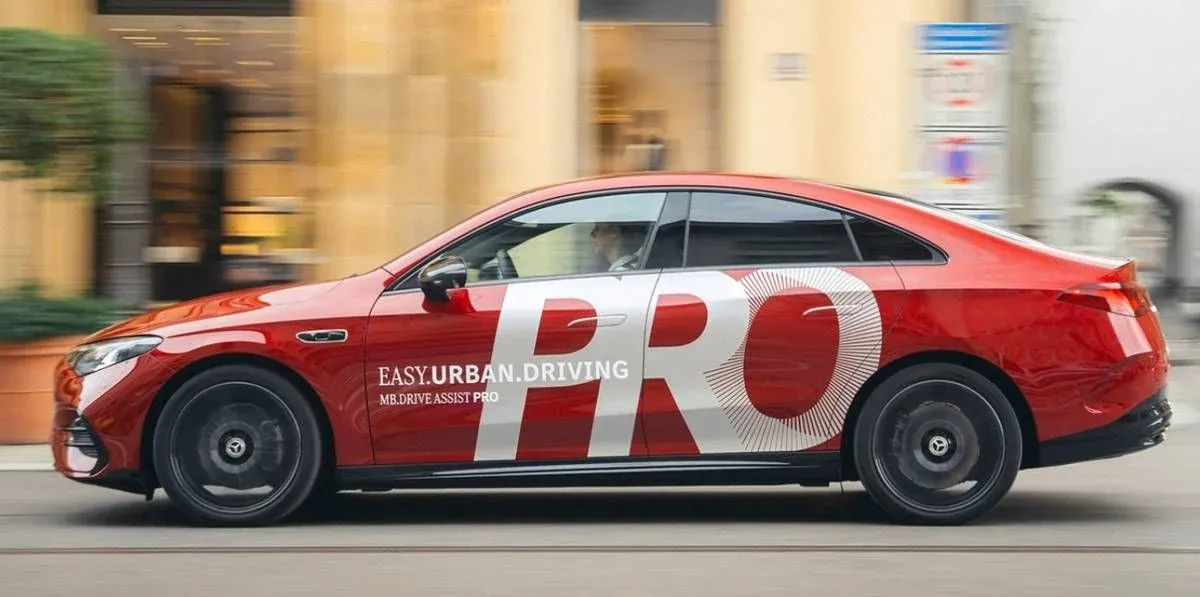
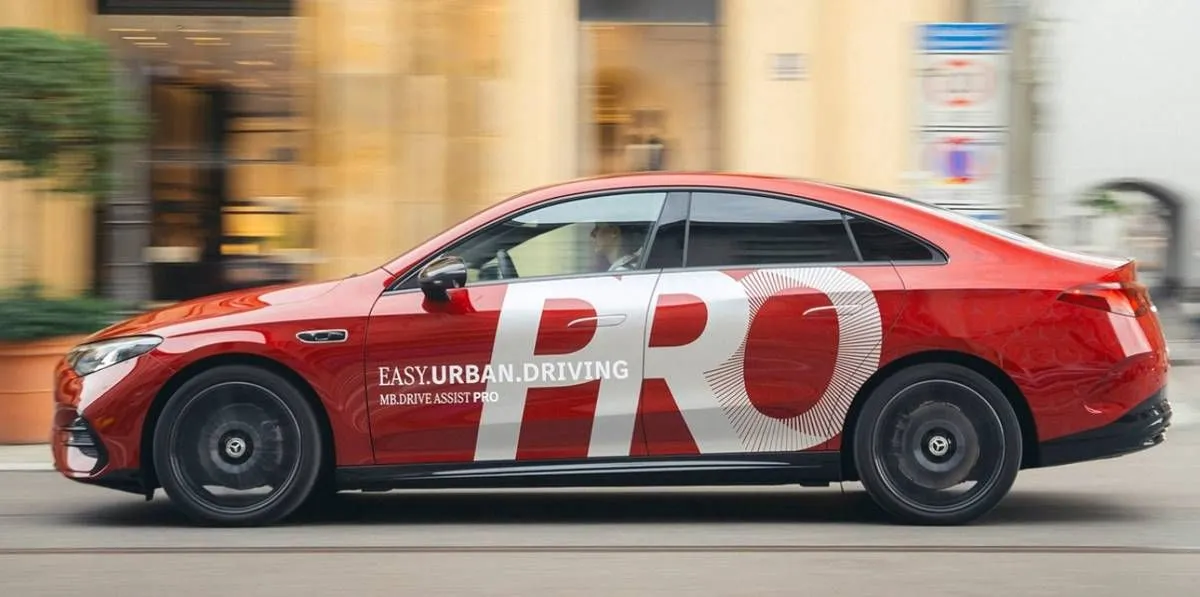
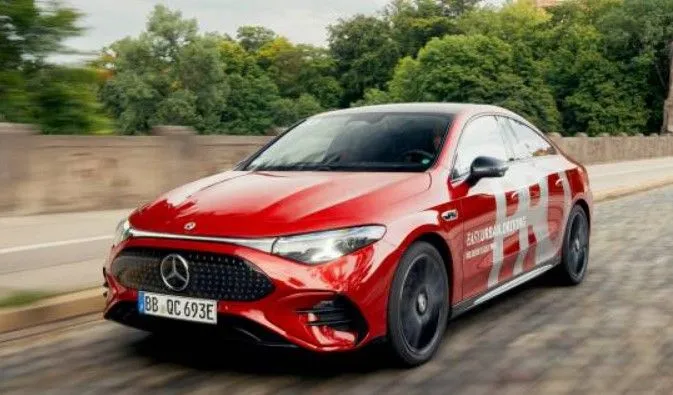
This is where European automakers come in. Mercedes has announced that its MB.Drive Assist Pro will be available for purchase in Germany during the first half of 2027. Developed in collaboration with Nvidia, it is a level 2 driving assistant capable of completing entire routes guided by the navigation system, including in urban traffic. This is precisely one of the areas where Tesla has been focusing much of its efforts for some time.
The coincidence prompts an uncomfortable question: are European deadlines giving valuable time to manufacturers that arrive later in terms of such features? The commercial impact seems clear: the longer a general approval is delayed, the more time competitors have to prepare their proposals. What isn’t proven is that the delay stems from a decision to protect the European industry. Mercedes’s announcement supports this interpretation, but it doesn’t turn it into a fact.
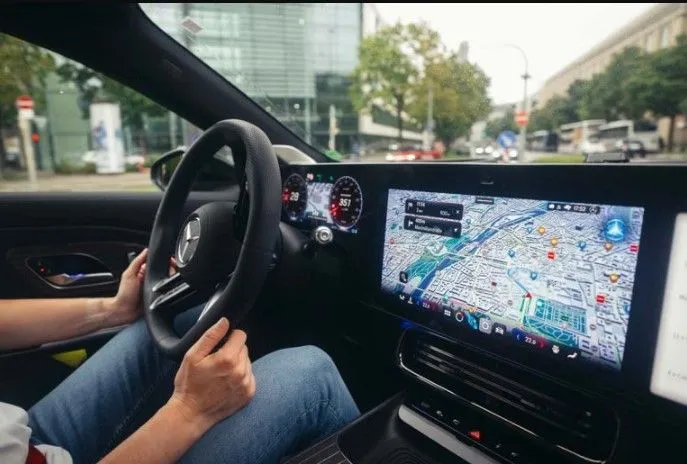
The German system will assist the driver when changing lanes, finding the appropriate lane to follow the route, turning at intersections, and stopping or resuming driving at traffic lights. It also covers entering and exiting highways, as well as driving on streets with heavy traffic. To activate it, the navigation must be running, and a button on the steering wheel must be pressed.
Mercedes will begin with a select group of customers in Stuttgart and Munich at the end of 2026. Vehicles equipped with the necessary hardware will receive this feature via a wireless update, and the experiences of these early users will help improve the system. This is a pre-launch phase that allows testing of how the system performs outside of the brand’s demonstration settings.
Mercedes approaches Tesla’s territory as Europe continues to deliberate
The proposal was developed in accordance with the UN R171 regulatory framework, which governs these advanced driver assistance systems. According to Mercedes, this basis would allow the feature to be introduced in other European Union markets without additional regulatory approval. This opens the door for future expansion, though the announcement does not set a date for Spain nor implies simultaneous release in all countries.
It’s also not appropriate to assume that Mercedes and Tesla are following exactly the same process. Tesla’s initial system approval was granted through the exception pathway for new technologies outlined in Article 39 of European homologation regulations. Extending this to the entire Union requires additional steps and a vote by member states. Comparing the timelines is relevant; attributing any differences to preferential treatment requires more evidence.
In terms of technology, Mercedes uses 27 sensors: ten cameras, five radars, and twelve ultrasonic sensors, all connected to a computer capable of processing up to 254 TOPS. This combination gathers information from the environment using various technologies, aiming to handle more complex situations than typical assistance systems for staying in lane and maintaining distance on highways.
The MB.OS operating system works alongside Nvidia Hyperion architecture, the Halos safety system, and the Alpamayo program. On paper, Mercedes has created an alternative with sufficient ambition to compete in advanced urban driving assistance. What remains to be seen is its performance in real-world use, how often it requires intervention, and its limitations. A similar list of functions does not alone prove equivalent performance.
The core issue is how much ground Europe can gain while Tesla’s approval is being resolved. Mercedes already has a timeline for its response, and every month of delay narrows the gap between the two launches. This warrants attention and calls for transparency regarding the approval criteria and timelines, though it’s not enough to claim that Brussels is deliberately delaying European manufacturers.
Then there are the Chinese companies, led by Xpeng, which possess the technology but also must go through the cumbersome approval process in our market. This path is gradually clearing up, despite the obstacles that Brussels’ bureaucrats are placing in the way of a system that saves lives.