
Europe may 'lose' another strategic sector under Chinese pressure: just like with electric cars, policy and regulation might not be enough
The European wind energy industry is preparing for a new landscape. Chinese wind turbine manufacturers, who have had a very limited presence on the continent for years, are trying to turn Europe into one of their key international markets. Ming Yang Smart Energy is likely the clearest example of this strategy.
The Chinese company is developing platforms tailored for the European market, has established its own commercial and technical structure on the continent, and is even seeking to build a factory there. Its stated goal goes beyond selling machines manufactured in China: it aims to turn the technologies developed for Europe into global products.
Three wind turbines to enter Europe by land and sea
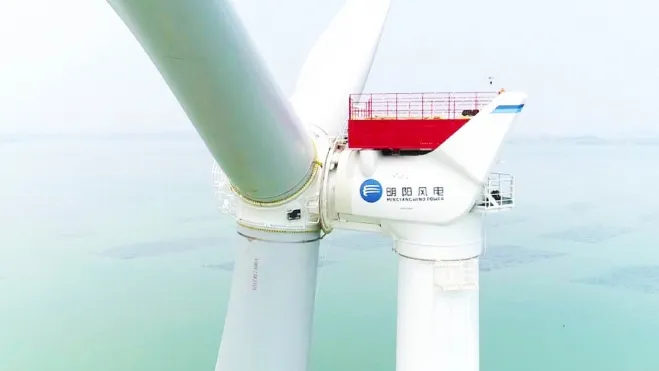
Ming Yang has devised a strategy based on three platforms. The first is the MySE 6.25-172/182, a 6.25 MW onshore wind turbine designed specifically for areas with weaker winds in southern Europe, with Spain, Italy, and Portugal among its target markets.
It features rotors measuring 172 or 182 meters and is designed to operate in winds ranging from 6 to 6.5 m/s. This platform builds on technology the company has been using in China since 2020, where hundreds of units have been installed.
European certification is expected by the end of 2026. In Serbia, 25 MySE 6.25-172 units have already been ordered for the Black Peak project. The company also signed contracts for 125 MW in Bulgaria back in 2012, though that project used an earlier generation of turbines.
For northern and western Europe, Ming Yang is developing the MySE 8.0-175, with an output of 8 MW and a rotor diameter of 175 meters. It uses a permanent magnet synchronous generator and is designed for locations with wind speeds above 7 m/s. Certification is expected by the end of 2027.
But the most ambitious project is in offshore wind. The MySE 18.5-260 boasts an output of 18.5 MW and features a rotor diameter of 260 meters. Ming Yang positions it as a platform suitable for the North Sea, English Channel, and Atlantic Ocean.
The figure is particularly significant because the largest commercial turbines from European manufacturers currently range around 15 MW. China’s strategy is to use a more powerful machine to reduce the number of wind turbines needed in each park, thereby cutting installation, operation, and maintenance costs. Ming Yang itself claims this can lower the CAPEX and LCOE of projects.
The technology does not start from scratch. The MySE 18.5-260 is based on the company’s previous platforms, including the MySE 16-260 and an 18 MW platform with a 292-meter rotor.
It was precisely this last prototype that became involved in one of the incidents that have raised doubts about the new generation of giant turbines. Installed in China in 2024, it later suffered the breakage of two blades during tests. Ming Yang attributed the incident to extreme and abnormal conditions that caused the blades to exceed the intended load limits.
Europe already has Chinese wind turbines installed
This development comes at a particularly sensitive time for Europe’s wind energy industry, which is trying to maintain its own supply chain in the face of technological advancements and cost reductions by Chinese manufacturers.
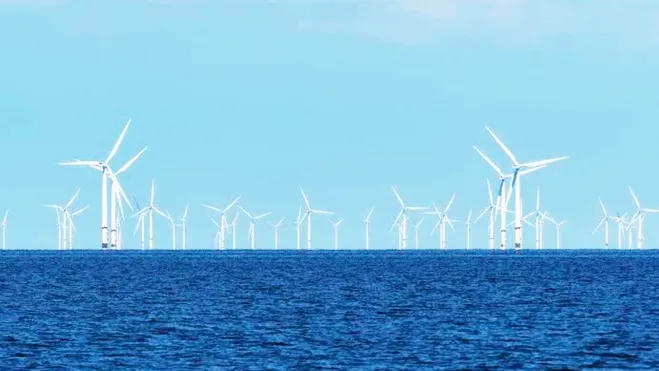
Ming Yang’s entry into Europe is also not entirely new. In Italy, the Beleolico offshore park off the coast of Taranto operates with ten MySE 3.0-135 turbines, totaling 30 MW. It was one of the first European offshore projects to use wind turbines manufactured by a Chinese manufacturer.
In addition, the company is involved in the Med Wind project, a massive 2.8 GW floating wind farm planned off the coast of Sicily. Renexia and Ming Yang have made progress on developing this project and propose using turbines with a capacity of around 18 MW.
This shows the direction the company aims to take: not limiting itself to supplying onshore wind turbines, but also competing in the offshore sector, particularly in floating offshore wind power.

Europe is not China
However, this expansion faces an obstacle that is not technological: industrial policy and energy security.
The British case is particularly significant. Ming Yang had planned to invest up to 1.5 billion pounds in an offshore wind turbine factory in Ardersier, Scotland, with up to 1,500 direct jobs in the first phase. But in March 2026, the British government announced it could not support the use of Ming Yang’s turbines in UK offshore wind projects for reasons related to national security.
The result was that the company began exploring other locations in Europe, including Spain. Reuters confirmed in May that Ming Yang was considering potential European sites for a new factory following the UK’s rejection.
This move also aligns with Spain’s industrial strategy of attracting Chinese investment as long as it generates technological capabilities, integration into local value chains, and job creation. During Pedro Sánchez’s visit to China in April 2026, Spain and China strengthened their economic and technological cooperation.