
Europe provides figures for the real cost of driving an electric car, and yes, gasoline cars fare quite poorly in comparison.
11/09/2026 16:30
Updated to
11/09/2026 16:30
The falling price of batteries, an increasing supply, and the expansion of charging infrastructure are changing the dynamics surrounding electric cars in Europe. Upfront costs remain a barrier in certain segments, especially among smaller models, but the gap narrows when considering the expenses associated with using the vehicle over its lifetime.
The latest EV Transition Check 2026 report, prepared by the International Council on Clean Transportation (ICCT), finds that battery electric cars currently in use across the European Union require significantly less money on average to cover their travel costs compared to equivalent gasoline vehicles. In 2025, the energy cost was approximately 33% lower when combining private and public charging.
There’s still an advantage even without home charging
The price trend of vehicles themselves is also beginning to show a corresponding change. Taking Germany as a reference due to its status as Europe’s largest automotive market, electric vehicles saw their real price drop by approximately 18% between 2020 and 2025, after adjusting for inflation and accounting for improvements in performance. During the same period, equivalent gasoline-powered models saw their prices rise by around 2%.
Behind this evolution lies a particularly important factor: the battery. According to the organization’s calculations, its overall cost has dropped by about 35% over five years, while the average range provided by new electric vehicles has increased by roughly 30%. As a result, BEVs have already reached price parity with internal combustion engine cars in the mid-range, mid-to-high-end, and luxury segments, although there is still a greater gap between the most affordable urban and compact models.
From just a few dozen models to nearly 160
The market available to European buyers is also very different from that at the beginning of the decade. Germany offered around 40 electric vehicles in 2020 and ended 2025 with 159 different models. Of these, nearly 35 had a price below 30,000 euros, compared to a much more limited selection just a few years earlier. Meanwhile, the catalog of combustion engine vehicles decreased from 275 to 194 models during the same period.
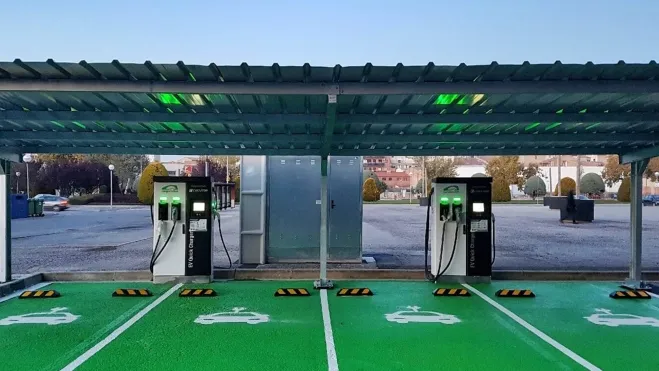
The charging network has grown in parallel with this increase in offerings. By June 2026, the European Union had approximately 1.16 million public chargers, almost eight times more than in 2020, while fast charging stations with at least 150 kW covered 92% of the main TEN-T network. However, progress is not uniform: the Netherlands, Germany, and France account for 55% of all public chargers in the bloc.
The combination of these factors is leading to an acceleration in vehicle registrations. Battery electric vehicles accounted for around 22% of new European registrations during the first half of 2026, following years of increased supply, falling battery costs, and expanded charging infrastructure. ICCT itself believes that this combination leaves room for vehicle prices to continue falling in the coming years if the current trends persist.