
Europe opens its first large-scale underwater CO2 storage facility: it will be able to store up to 8,000,000 tons per year
25/09/2026 16:00
Updated to
25/09/2026 16:00
Europe has just put into operation an infrastructure that it has been preparing for years. The Greensand project, led by INEOS Energy alongside Harbour Energy and the Danish state fund Nordsøfonden, has begun its commercial phase in the North Sea and becomes the EU’s first large-scale permanent CO2 storage site.
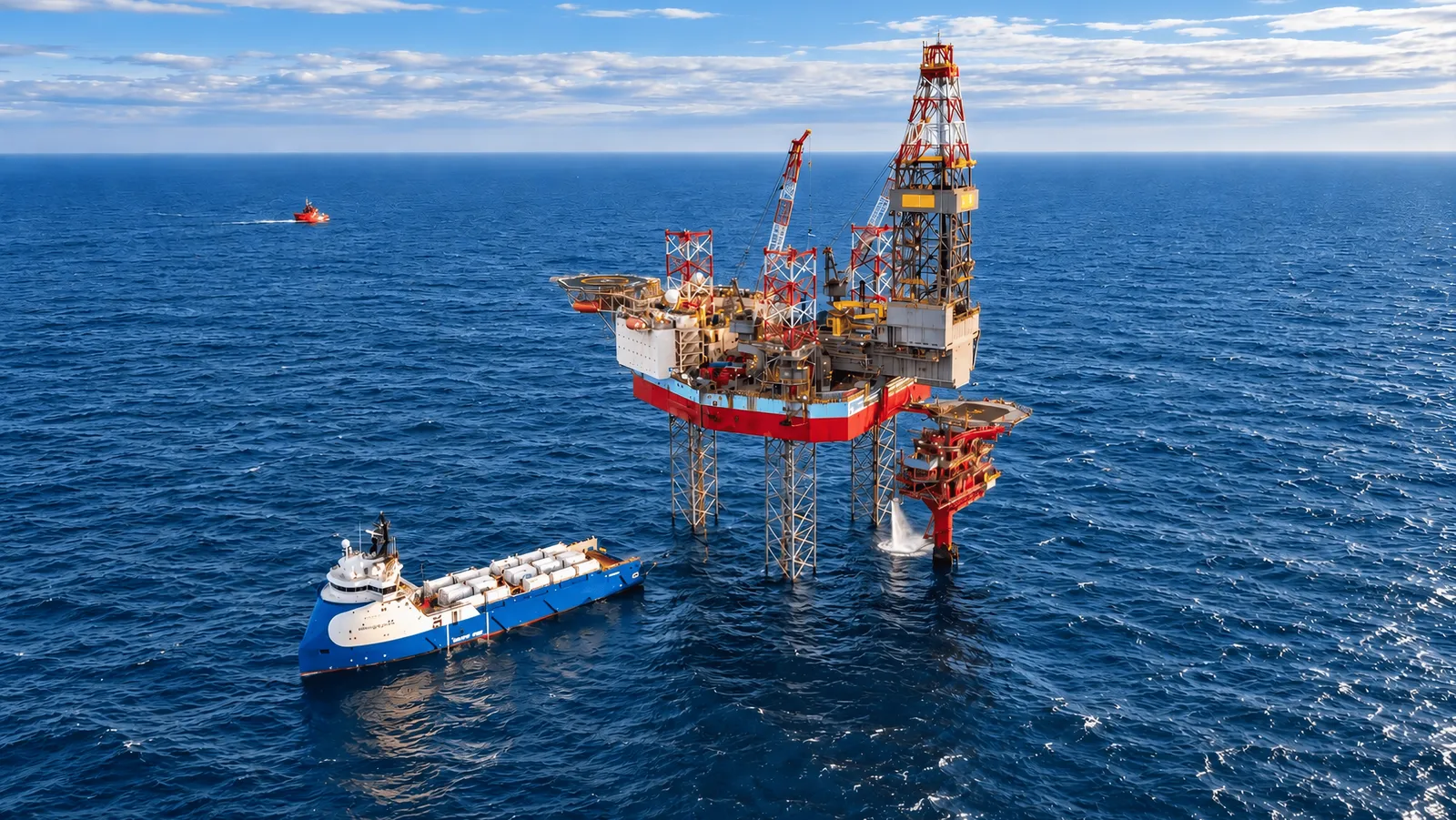
The facility is located at the former Nini West oil field, about 250 kilometers from the Danish coast and approximately 1,800 meters below the seabed. In its initial phase, it will be able to store up to 400,000 tons of CO2 per year, though the project is designed to expand to a potential capacity of 4 to 8 million tons per year.
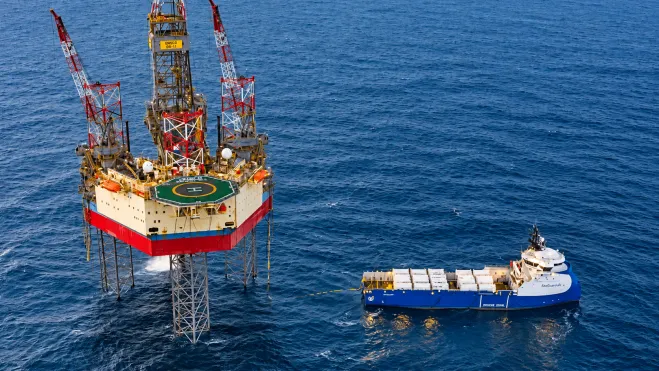
CO2 travels by road and ship before being stored
The operation of Greensand begins far from the sea. In this initial phase, the CO2 will come mainly from Danish biomethane plants. There it is captured and liquefied before being transported by road to a dedicated terminal at the Esbjerg port.
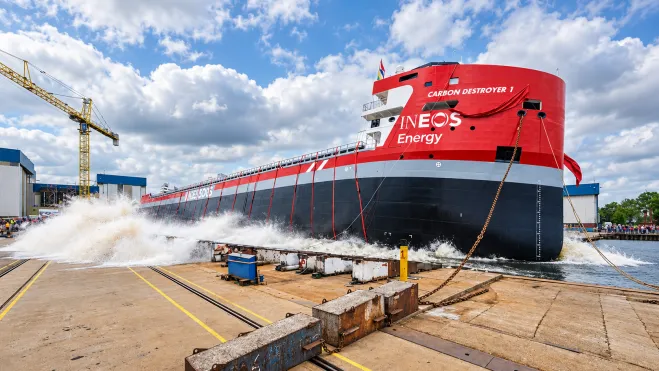
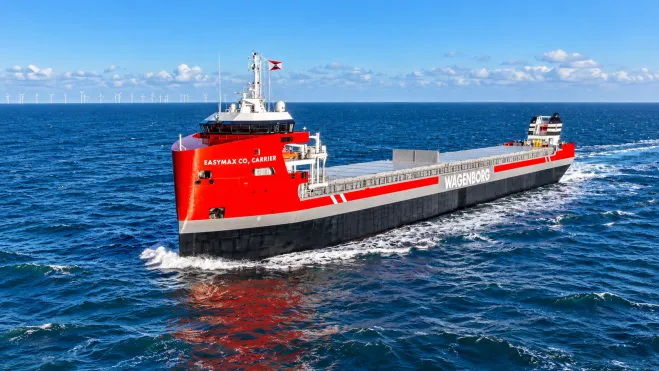
From there, the CO2 is loaded onto the Carbon Destroyer 1, which INEOS describes as the EU’s first ship built specifically for transporting CO2. The ship carries the liquefied gas to an offshore platform, from where it is injected into the geological formations of the former Nini West field for permanent storage.
The official inauguration was attended by Denmark’s King Frederik X, INEOS CEO Jim Ratcliffe, and European Energy Commissioner Dan Jørgensen. For the company, going live marks the transition from years of testing and planning to a full commercial chain for capturing, transporting, and storing carbon dioxide.
Ratcliffe argued during the opening that Europe needs to reduce emissions without shutting down its industries. According to INEOS CEO, Greensand shows that carbon storage can already function as a commercial activity rather than just an experimental project.
From 400,000 to 8 million tons of CO2
The initial scale is relatively modest compared to total European emissions, but the key lies in its growth potential. Greensand starts with up to 400,000 tons per year, although INEOS plans to increase this figure to 4-8 million tons annually as demand rises and new industrial customers are acquired.
The project also builds on prior experience. In March 2023, Greensand carried out what its promoters described as the world’s first offshore cross-border CO2 injection, demonstrating the full process from capture to underwater storage. That pilot phase served as the foundation for the commercial facility now coming online.
The European Commission views geological carbon storage as one of the necessary tools to reduce emissions from industries that are difficult to electrify, such as cement, steel, or certain chemical processes. The Commission estimates that the EU will need around 250 million tons of storage capacity per year by 2040 to meet its climate goals.
Greensand will therefore not be a one-size-fits-all solution, but rather one of the first components of an European infrastructure that still needs to expand significantly. Similar projects exist in Norway, the Netherlands, Greece, and the United Kingdom, though the Danish site is the first in the EU to enter commercial operation on a large scale.