
Europe: charger shortage, higher energy costs, unequal opportunities. Electrification still lacks solid foundations
In short:
The drive transformation in Europe is still accelerating
The increase in charging stations and changes in operating costs are not driven by improvements in structural conditions — notes Transport & Mobility Leuven
Inequal access to infrastructure continues to hinder widespread electrification
Infrastructure is struggling in countries such as Italy, the Czech Republic, Spain, Greece, Bulgaria, and Poland
There are 1.2 million charging points in the EU. The EC’s goal for 2030? 3.5 million points
Industrial energy prices in Europe are 2.5 times higher than in China
Europe: many problems to solve
European mobility is moving toward electrification. No one doubts this, but latest data show that the foundations for this transformation remain fragile. In the second quarter of 2026, Europe’s electric vehicle market showed progress in terms of infrastructure and operating costs, yet the Transport & Mobility Leuven (TML) report leaves no room for illusion: “many structural conditions necessary for mass electrification remain unresolved.” This statement, though it sounds like a diagnosis from previous years, takes on particular urgency now.
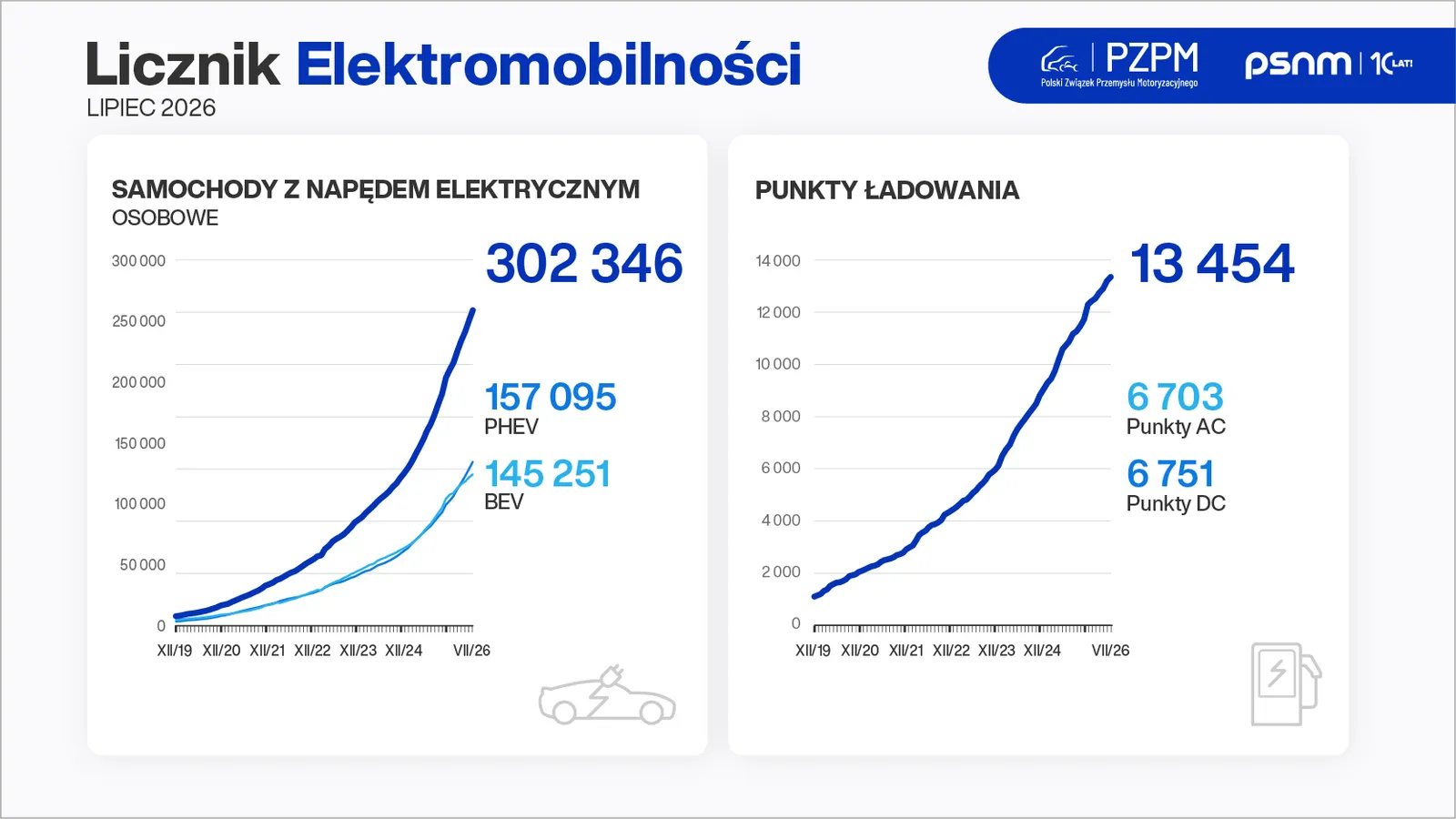
ACEA, citing this report, notes that public charging infrastructure in the EU is growing rapidly but still not fast enough. By June 2026, the total capacity of public chargers reached 41.6 GW, representing a 29% year-on-year increase. The number of charging stations rose by 21%, reaching around 195,000 by May 2026. According to the PSNM and PZPM Electromobility Counter, there are currently nearly 13,500 chargers along the Vistula River.
Nevertheless, there are only about 1.2 million charging points across the Union, which is far below the European Commission’s target of 3.5 million by 2030. Geographic disparities are equally evident.
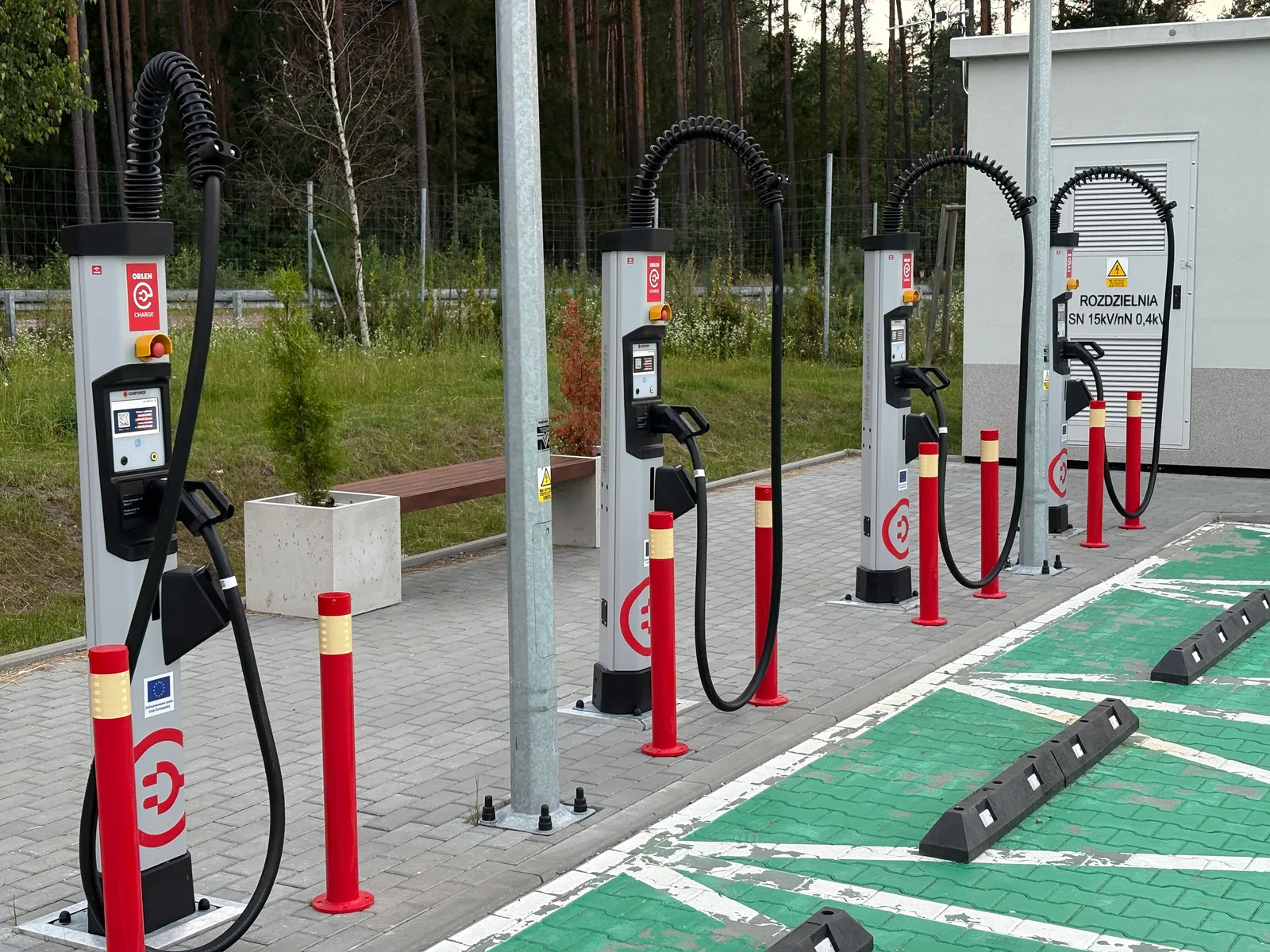
The greatest disparities between the number of charging stations and traditional gas stations exist in Italy, Czech Republic, Poland, Spain, Greece, and Bulgaria. This is not just statistics; it’s a real indicator of the accessibility of electric mobility for drivers who still more often see gas stations than charging points – according to industry experts.
Everything hinges on costs
The operating costs of electric vehicles also require careful interpretation. TML notes that BEVs have become more cost-competitive when using only public fast charging compared to the second quarter of 2025. However, this is not due to lower energy prices. The key factor is a 17 percent year-on-year increase in gasoline prices. In other words, electric cars haven’t gotten cheaper; instead, fossil fuels have become more expensive.
At the same time, charging costs remain highly dependent on location and charging method. Public charging is more expensive than home charging in all countries analyzed, with public fast charging being particularly costly. Drivers without access to private chargers are still in a significantly worse financial position.
Behind these changes, the issue of high energy prices in Europe persists. TML notes that despite a slight reduction compared to the first half of 2025, industrial electricity prices in the EU remain almost twice as high as in China and about 2.5 times higher than in the US.
For energy-intensive electric vehicle and battery production, this constitutes a structural barrier that weakens the competitiveness of European manufacturers. In practice, this means that even if European factories are technologically ready for mass production of BEVs, their operating costs remain incomparably higher than those of global competitors.
Plan Implementation Based on Indicators
TML goes a step further in its project for ACEA by developing a set of key performance indicators (KPIs) to monitor progress in Europe’s automotive industry toward zero-emission mobility. This builds on an earlier analysis that identified four main barriers: the electricity grid’s capacity to handle increasing charging demand, the availability and attractiveness of EVs from a consumer perspective, the distribution of charging infrastructure, and manufacturers’ energy competitiveness and production capabilities. The new indicators are intended for mainstream audiences, which TML emphasizes will “provide decision-makers and industry leaders with a clear, data-driven picture of the transition to zero-emission vehicles.”
This is supposed to be a tool that measures progress and also identifies where the transformation has stalled. And as the data from the second quarter of 2026 shows, there are still many such areas. Charging infrastructure remains insufficient and unevenly distributed, energy costs are high, and the economics of using EVs depend more on where one lives and access to private charging than on the technology itself. Europe is making progress, but so far mainly on paper.
Oskar Włostowski