
Europe steps in to save the day! The electric car market remains strong while others decline.
16/09/2026 11:00
Updated to
16/09/2026 11:00
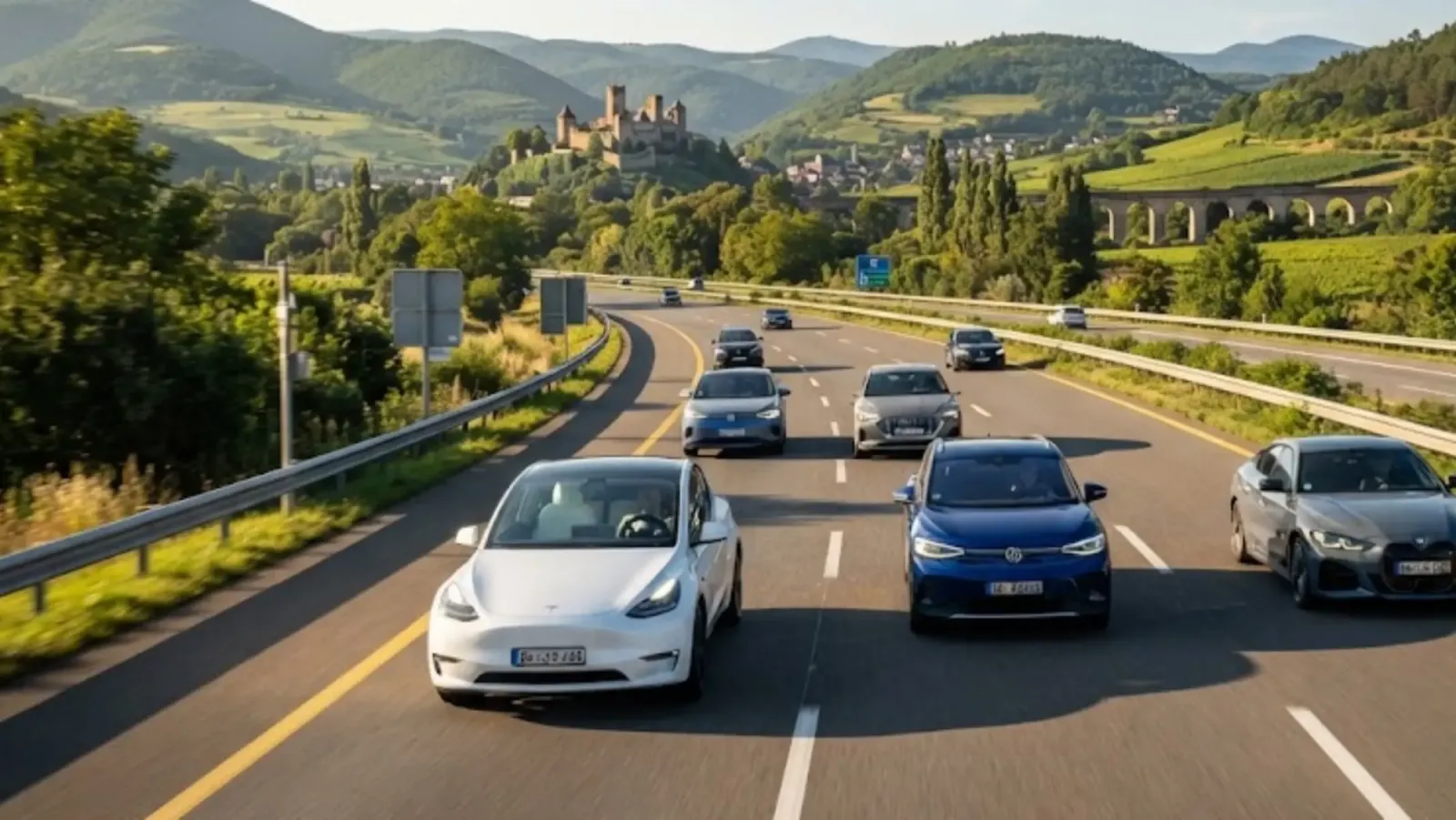
In August 2026, the global industry saw a modest 2% increase in sales of electric and plug-in hybrid cars, with over 1.8 million units registered. However, behind this positive figure lies a geographical shift in demand: while the world’s two largest markets, China and North America, experienced declines, Europe has become the main driver of global growth, recording an annual increase of 36%.
This sharp rise highlights the impact of regulations, tax incentive cycles, and the maturity of charging infrastructure in various regions. It also explains why more and more Chinese brands are focusing on Europe to continue growing in the global market.
Growth in Europe, Decline in China and North America
The strong performance of the European market in August can be attributed to a combination of factors. Registrations of electric vehicles on the continent approached 280,000 units, driven mainly by stricter emission targets for manufacturers within the Union and the introduction of new models in more affordable segments. Countries such as Germany, the United Kingdom, and France led this growth, offsetting declines recorded in other continents.

In North America, demand dropped by more than 20% compared to the same period last year. Uncertainty over federal incentive policies, combined with high interest rates and uneven penetration of ultra-fast charging infrastructure outside metropolitan areas, has slowed down the adoption of these vehicles among bulk buyers.
A Key to the Future of Electric Cars
Europe’s ability to absorb the slowdown in the other two major regions demonstrates the gradual maturity of the electric vehicle ecosystem on the continent. Unlike previous phases when sales relied almost exclusively on direct government subsidies, current growth is driven by a more balanced product lineup. The advent of advanced battery architectures, ultra-fast charging capabilities exceeding 300 kW, and a wider range of vehicle types—from compact urban cars to family SUVs—has allowed for greater diversity among buyers.

On the other hand, stabilization in the prices of battery raw materials such as lithium and nickel has enabled brands to offer competitive costs compared to traditional internal combustion engines. This economic equivalence, combined with the expansion of zero-emission zones in cities, keeps demand at high levels.
The August 2026 outlook shows that the electrification of transportation is not advancing at a uniform pace globally, but rather through interconnected regional cycles. While Asia and North America are going through phases of adjustment and consolidation, Europe’s acceleration ensures sustained growth for the industry on a global scale.