
EU Parliament: Environment Committee also votes in favor of relaxing CO2 rules
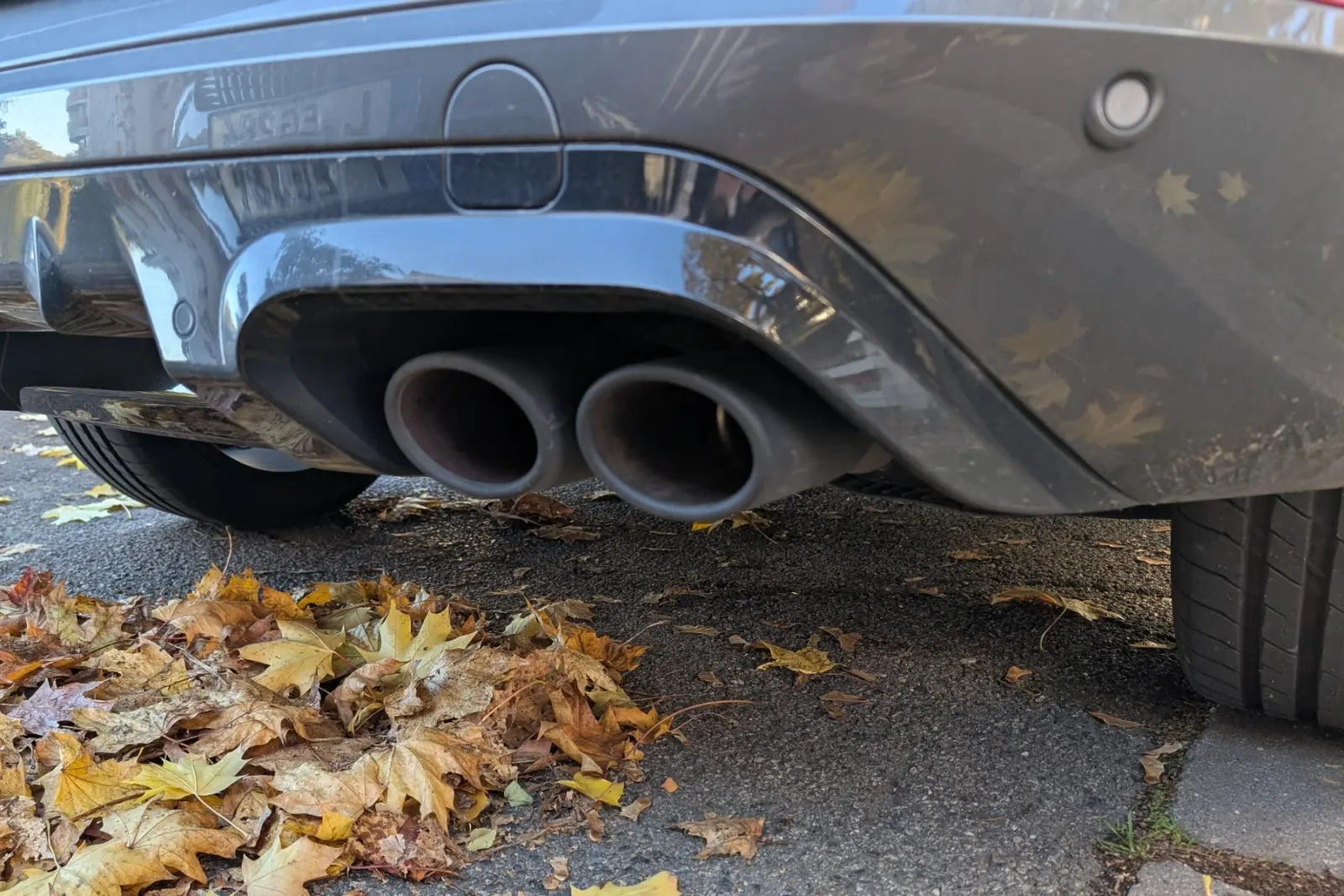
In the European Parliament, after the Industry and Transport Committee, the Environment Committee has also voted in favor of relaxing the ban on internal combustion engines. The entire European Parliament is expected to make a decision in December. The previous votes are seen as an important guide.
Image by: Florian Treiß
In the European Parliament, three key committees have already voted on a central part of the automotive package (specifically on a draft regulation) — and this week the Environment Committee did the same. The result: The majority favors relaxing CO2 rules for cars and vans, as agreed upon internally by the so-called Middle Platform in October. The voting in the Industry and Transport Committee earlier this week followed a similar outcome.
Thus, a decision on this important aspect of the automotive package is becoming increasingly clear in the European Parliament, where the de facto ban on new internal combustion engines in the EU set for 2035 is intended to be relaxed. The three factions of the so-called Center Platform reached an agreement on a position about three weeks ago. The subsequent committee votes on October 22 by the Industry and Transport Committee, and on November 4 by the Environment Committee, represent the first tangible results of this internal consensus-building, following repeated leaks regarding the still-internal negotiation positions.
CO2 rules are also set to be relaxed for vans
Specifically, on Wednesday the Environment Committee voted overwhelmingly in favor of a proposal drafted by negotiators from the conservative EVP, the social democratic S&D, and the liberal Renew Europe group after intense negotiations. Regarding CO2 fleet targets, this draft proposes that manufacturers must reduce the CO2 emissions of their new cars by only 95 percent by 2035 instead of 100 percent (compared to 2021), though they may reduce emissions by an additional 7.5 percentage points if they use climate-friendly steel produced in Europe in their vehicles as a compensation. Thus, in extreme cases, the reduction target under this draft could drop to 87.5 percent by 2035.
The deputies from the three mentioned factions propose a reduction target of 35 percent by 2030 for trucks, compared to 40 percent in the Commission’s draft text and 50 percent under current regulations. The target for 2035 should drop from 100 percent to 80 percent according to the Middle Platform’s vision (with a credit of up to 7.5 percentage points for low-CO2 steel applied here as well). Thus, according to the three factions, there should still be room for further new registrations of internal combustion engine and hybrid vehicles even after 2035.
Regarding the period up to 2035, the majority of the Environment Committee members also support allowing credits for low-CO2 steel to be applied during this time frame, starting from the entry into force of the amendment until the end of 2034. The amount in question is a maximum of three percentage points.
48 Yes, 30 No votes and two abstentions
According to a statement from the European Parliament, this proposal received 48 votes in favor, 30 against, and two abstentions during the vote in the Environment Committee. The draft regulation—part of the broader Auto Package—was thus approved. Earlier, the Industry Committee saw 49 votes in favor, 27 against, and five abstentions. And according to the minutes, the Transport Committee recorded 27 votes in favor, 18 against, and one abstention. As reported by the “Handelsblatt,” all MEPs from the EVP, S&D, and Renew groups voted in favor of this proposal in the Industry Committee, indicating strong unity. This is not confirmed for the other two committees. Ultimately, it will depend on the decisive vote in plenary, which is scheduled for December.
The Italian EVP MEP Massimiliano Salini commented on the recent vote as follows: “Our agreement marks a turning point for the European automotive industry. Allowing vehicles with internal combustion engines without any compensation requirements would remain possible, thereby preserving technological freedom and restoring prospects for the entire supply chain.” He added, “Decarbonization does not mean prescribing a single technology — we also recognize as emission-free vehicles those powered exclusively by renewable fuels that comply with the renewable energy directive, just like electric vehicles.” Furthermore, carbon-free steel produced in Europe could be used immediately, which rewards European production and strengthens the Union’s strategic autonomy.
The EU Commission’s original draft went further
For context: The EU Commission acted on the warnings from the automotive industry at the end of 2025 with its “Auto Package,” which addressed concerns that sticking to a de facto ban on new internal combustion engine vehicles by 2035 would exacerbate the industry’s crisis. This move was also made under pressure from Germany. In the Commission’s proposal, a new CO2 fleet target of a 90 percent reduction compared to 2021 was set, equivalent to an CO2 emissions level of 11 grams per kilometer — rather than zero grams. The Commission did not specify a date for achieving the 100 percent target in its draft.
Important: Brussels insists in its draft that the remaining 10 percent be fully compensated through the use of green steel and climate-friendly fuels. While the Middle Ground platform’s compromise also mentions green steel as a compensation measure, it does not go so far as to demand full compensation up to the 100 percent mark.
As is well known, Federal Chancellor Friedrich Merz and French President Emmanuel Macron recently agreed on a common position regarding the phase-out of internal combustion engines. That agreement calls for a 90% reduction in CO2 emissions by 2035 — without any compensation. According to Spiegel, this compromise between Germany and France is considered “pivotal for the voting in the EU Member States’ Council.” The Council must vote after the Parliament, and changes are always possible during this legislative process.
Voting in the European Parliament and Council is Approaching
We recall that as early as the beginning of October, the European Parliament’s Transport Committee postponed its vote on the “Auto Package” by two and a half weeks. This vote was originally scheduled for October 5th. At that time, the reason given was that the Center Party platform needed more time to reach an agreement.
To pass the package, the EU Parliament must approve it soon (where the EPP is the largest faction), followed by the member states in the EU Council. A simple majority is sufficient in the EU Parliament, but a so-called “qualified majority” is required in the EU Council. This means approval from at least 15 countries that together account for at least 65 percent of the EU’s population is needed.
During the consultation process, various interest groups may attempt to modify the draft in their favor. Against this backdrop, the Commission intended for the “auto package” to be broad from the outset, so as to offer benefits to as many countries as possible. As is known, in addition to Germany, six other EU countries (all with relatively low shares of electric vehicles in their new vehicle registrations) advocated for weakening CO2 targets and supporting internal combustion engines. However, France, which has previously been opposed to this policy, seems to have switched sides. Yet it did so not without demanding concessions elsewhere: reportedly, France will now receive support from Germany regarding the so-called “Buy European” requirements.