
The EU climate chief criticizes the German-French push to end internal combustion engines.
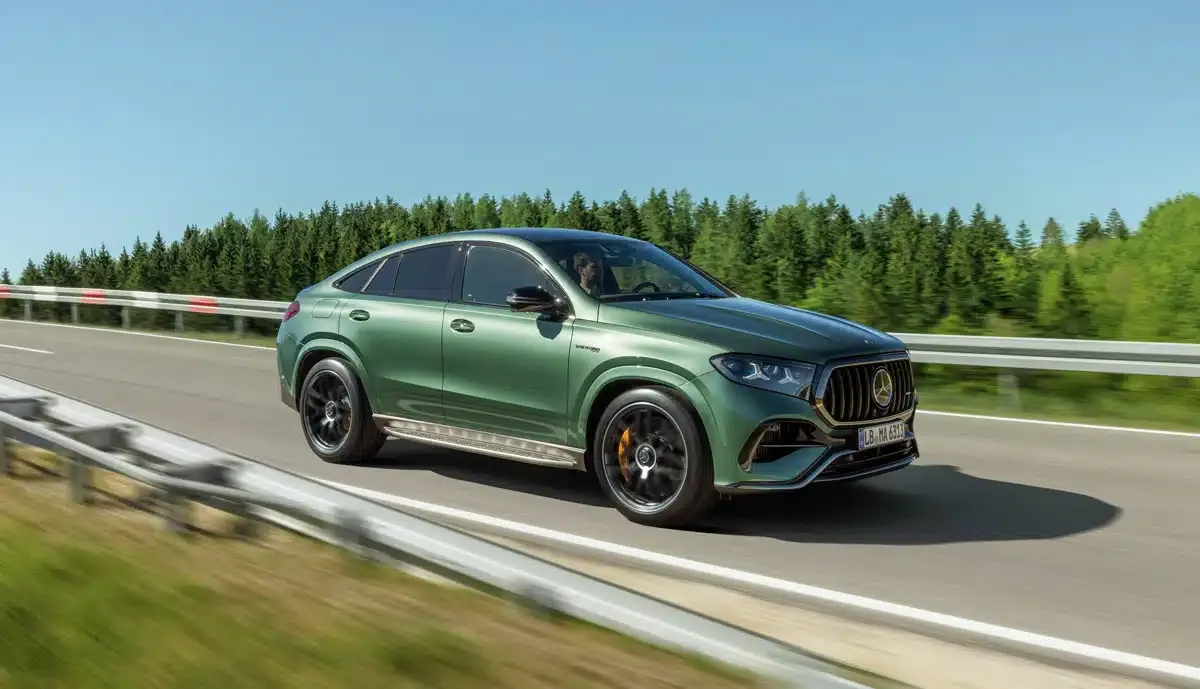
Image: Mercedes‑Benz (illustrative)
In October, German Chancellor Friedrich Merz praised an agreement reached with France regarding the future of the automotive industry. He described the deal as a way to put an effective EU ban on internal combustion engines “into history.”
Germany and France agreed last month on a common position regarding the relaxation of Europe’s ban on internal combustion engines starting in 2035. The Franco-German declaration calls for greater regulatory flexibility for automakers as well as stronger incentives for European vehicle production. This could allow new cars with internal combustion engines to remain approved in the EU even after 2035.
Wopke Hoekstra, the EU climate chief responsible for overseeing automakers’ emission rules, has now expressed concerns about this deal. According to Bloomberg, he fears that the agreement, which is meant to protect the industry, could do more harm than good.
In an interview with the news portal, Hoekstra pointed to a significant increase in electric vehicle sales since the war in Iran. Continuing with the electrification trend is crucial not only for the climate but also helps struggling European automakers keep up with Chinese competition.
The EU climate chief expressed skepticism about the solidity of the Germany-France agreement. “I’m not impressed by the intellectual logic,” he said, adding, “I seriously doubt this is wise.” These remarks highlight the core dilemma of European climate policy: addressing the challenge of combating global warming without losing key industries to other parts of the world. Hoekstra sees these goals as interconnected. However, he is positive about the “Made in Europe” criteria outlined in the Germany-France agreement.
Initial votes have already taken place in the European Parliament regarding the relaxation of the end-of-fuel-engine rule. The proposals call for average CO₂ emissions of newly registered cars in the EU to drop by 95 percent by 2035 compared to 2021 levels. By using climate-friendly steel produced in Europe, manufacturers could reduce the actual required emission cuts by up to 7.5 percentage points to 87.5 percent, avoiding penalty payments. The Parliament is expected to finalize its position in December.
Did you spot any errors? Please let us know
by email
about them. Thank you!
Also interesting
About the author
Thomas Langenbucher is an expert in electromobility with professional experience in the automotive industry and finance sector. Since 2011, he has been covering electric vehicles, sustainable technologies, and mobility solutions for ecomento.de. Learn more.
Reader interactions