
These 8 electric cars have seen their prices drop sharply in Spain: some now cost less than half.
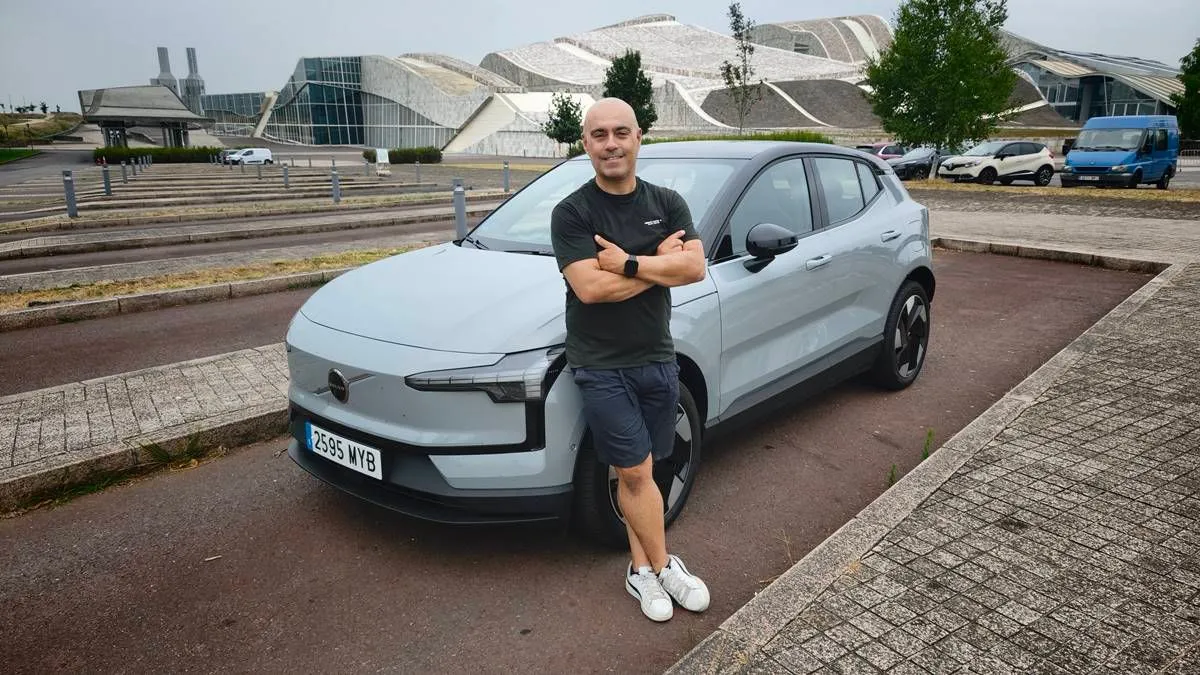
Purchasing a used electric car is one of the best decisions these days, as it provides access to an efficient vehicle with low operating costs, enjoyable to drive, and in many cases offering benefits for driving or parking in various cities. Additionally, Spain’s used electric car market is growing as competition increases with the entry of leasing and rental options in 2021 and 2022, putting pressure on sellers and driving down prices.
A drop in prices does not necessarily mean these cars have become outdated. They still offer good performance, sufficient range for most users, and batteries that can likely last many more years. The problem is that the constant arrival of new models with better range and increasingly competitive prices has completely changed what buyers are willing to pay for a used car.
For this analysis, we used prices currently available on the Spanish market as a reference, focusing especially on models from the years mentioned in the original article. The figures can vary significantly depending on mileage, trim level, battery condition, and seller, but they provide a clear idea of how much depreciation has occurred.
Why Do Electric Cars Lose So Much Value?
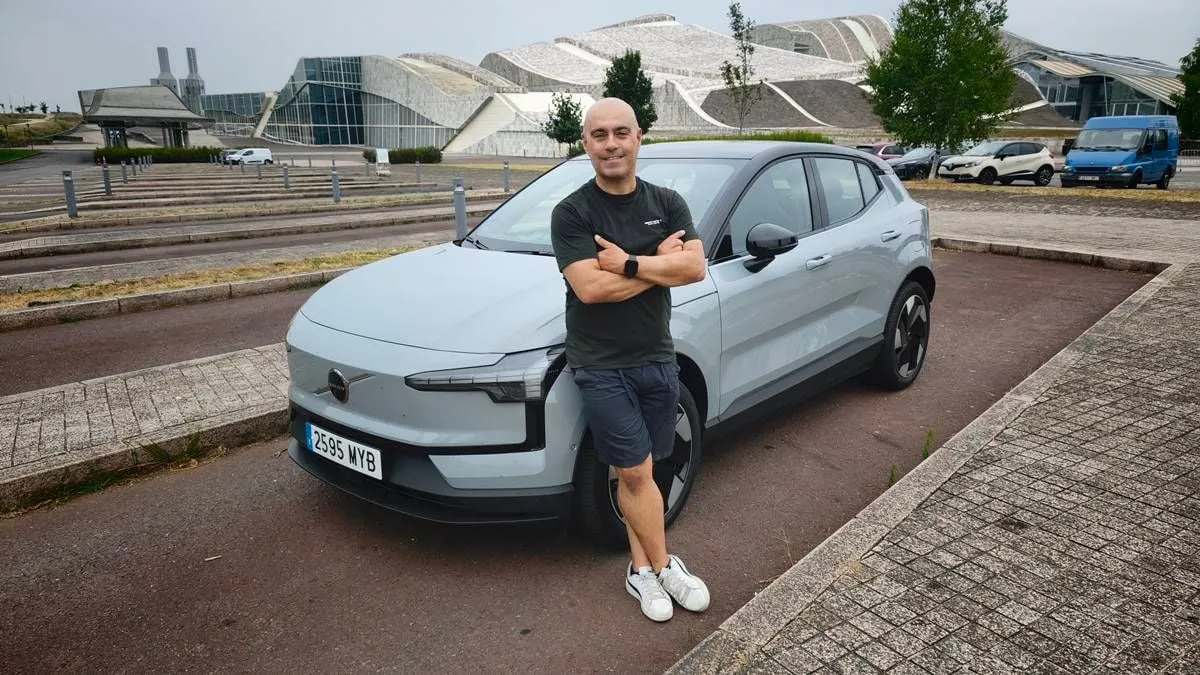
There’s a fairly obvious first reason: technology is advancing much faster than it did a few years ago. An electric car that seemed to have cutting-edge technology in 2021 or 2022 may now face new competitors offering greater range, faster charging, and better multimedia systems at a similar price. And with fewer annoying noises than modern cars these days.
This particularly affects models that were launched during the first wave of electric cars. The Volkswagen ID.3 is a good example. The initial units came equipped with technology that Volkswagen deemed sufficient to compete in the European market, but newer versions have since appeared with different batteries, higher charging power, and improved multimedia systems.
The second reason relates to the increased supply of used cars. Many electric cars that were sold through financing or leasing agreements during the years of peak growth are now entering the used car market. This increases competition among similar vehicles and forces sellers to adjust their prices.
And there’s a third issue that shouldn’t be overlooked: the price of new electric cars has dropped significantly in certain segments. The entry of Chinese manufacturers, marketing campaigns by traditional brands, and much fiercer competition have narrowed the gap between some new and used cars.
For buyers, this situation is intriguing. An electric car three or four years old may have lost a large portion of its original value, yet it can still be perfectly suitable for everyday use. Depreciation might be bad news for its first owner, but it becomes an opportunity for the second.
Eight electric cars worth considering now
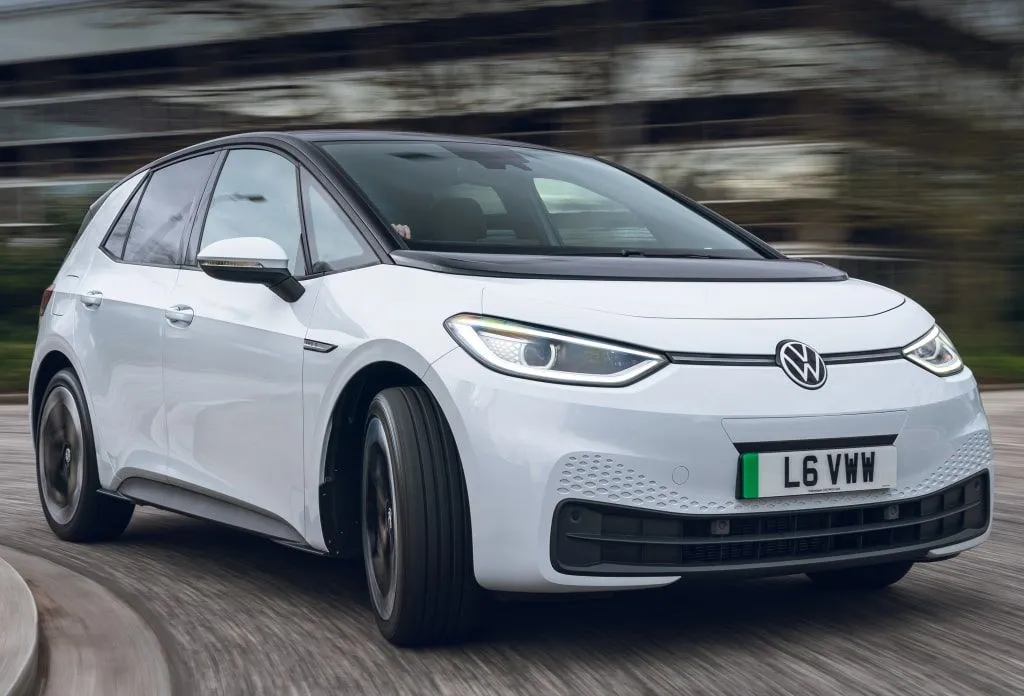
1. Volkswagen ID.3: depreciation makes this electric compact car an attractive option
The Volkswagen ID.3 is probably one of the clearest examples of how the market has changed. A 2022 model with a large battery could originally cost around 48,000 euros, depending on the trim and equipment. Today in Spain, we can find models from that year for about 20,000 euros, though they usually have a considerable mileage. For instance, a 2022 ID.3 Pro S Life model with 77 kWh capacity is available for 20,350 euros and has just over 100,000 kilometers on it. There are also 2021 models with around 34,500 kilometers for 21,500 euros.
This means that some units have lost approximately half or even more of their original value, depending on the finish and mileage. And here’s the interesting part: the ID.3 remains a perfectly valid family compact car. Its 204 horsepower, the option of having a 77 kWh battery, and its comfortable interior mean it doesn’t feel like an old car when driven.
The main point to check are the earlier models. The multimedia system in the first ID.3s received quite a few criticisms for its performance, and Volkswagen later introduced improvements. Therefore, if the price difference isn’t too large, it’s better to look for an updated unit and ensure it has received all the necessary updates and software upgrades.
2. Hyundai Ioniq 5: 800-volt technology at a much lower price
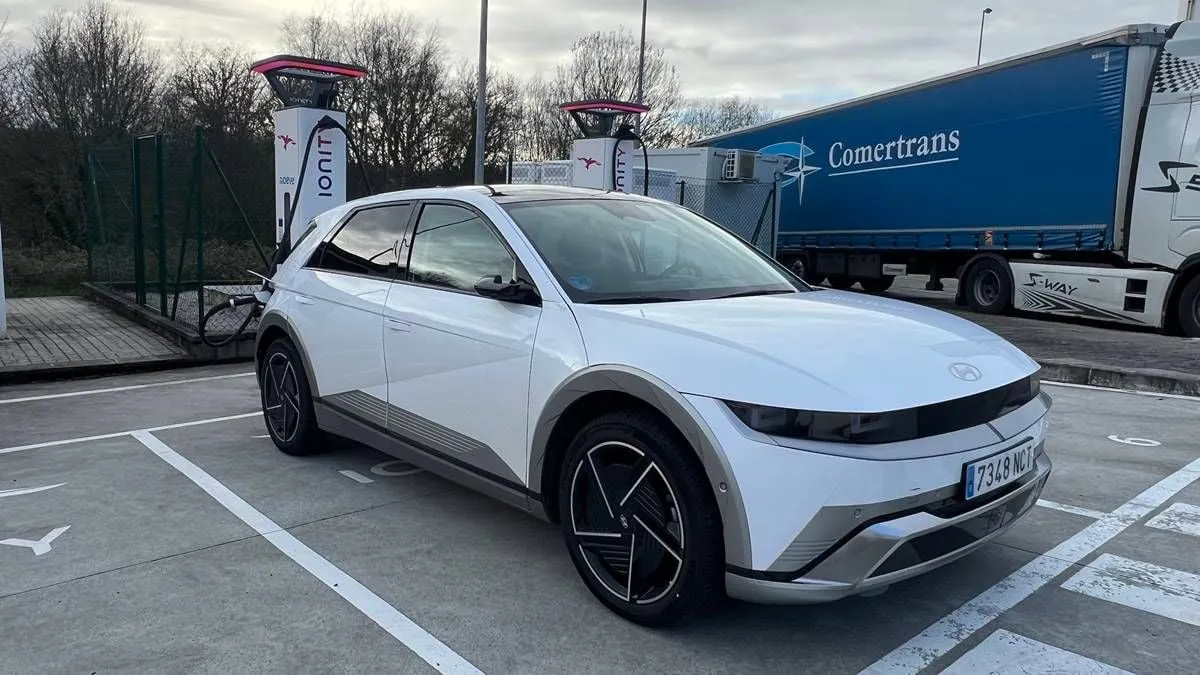
The Hyundai Ioniq 5 is probably one of the most interesting cases. Its design still looks modern, the interior is very spacious, and its 800-volt platform remains one of its major advantages over many new cars.
In the Spanish market, 2022 models with a 73 kWh battery are currently available for around 25,900 euros, while others cost between 28,000 and 29,000 euros. A 2022 model with a 73 kWh battery, 218 horsepower, and about 79,000 kilometers on the odometer is priced at 25,900 euros, whereas another with 74,000 kilometers is listed at 27,990 euros.
Given that certain versions of the Ioniq 5 cost around 47,000 euros when new, this represents a price reduction of nearly 45%, though the exact figure depends heavily on the trim level.
The recommendation is clear: if it’s intended for traveling, it’s worth looking for a model with a larger battery. The earlier versions with smaller capacities have more limited range, and given the current price difference, a larger battery is much more attractive.
3. Skoda Enyaq: plenty of space and prices that are becoming hard to ignore
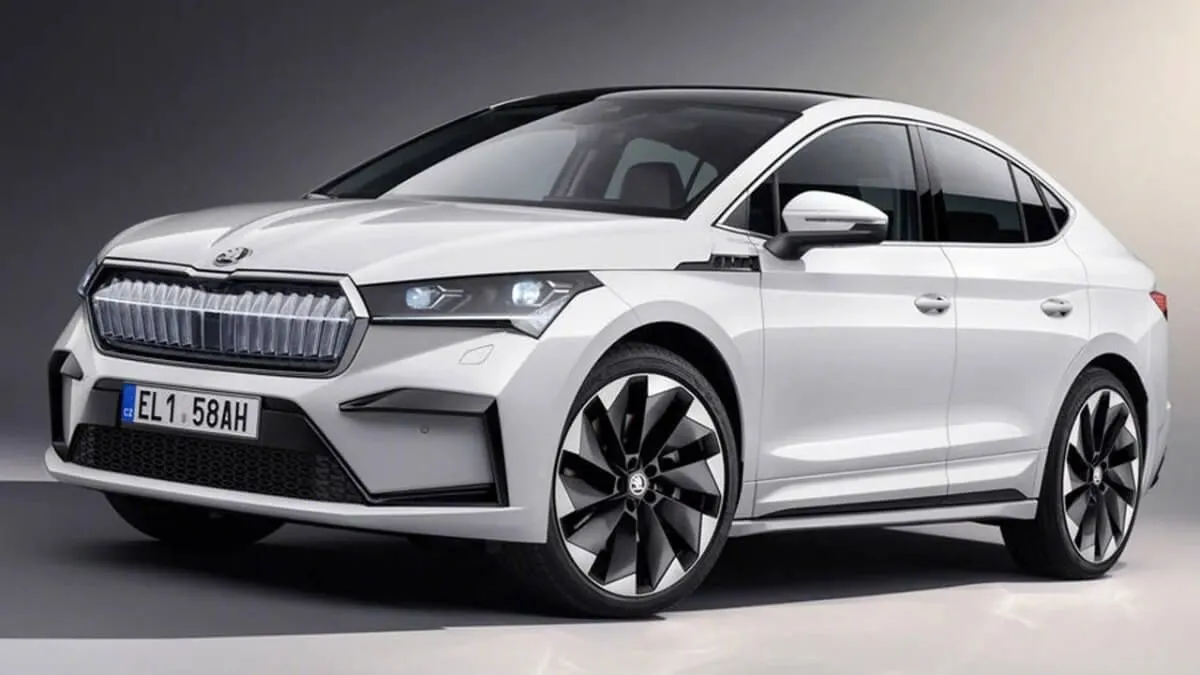
The Skoda Enyaq is another car that has experienced significant depreciation despite remaining a very practical option. Its spacious interior, 585-liter trunk space, and family-oriented design make it still a sensible choice as a used electric vehicle.
In Spain, 2022 models with a 58 kWh battery are already available starting at 22,500 euros. An example is an Enyaq iV 60 with 180 horsepower and 73,416 kilometers on the odometer. Versions with a 77 kWh battery are more expensive but also offer much greater range and improved performance.
Using a new price of around 43,000 euros for equivalent versions as a reference, depreciation can approach 48% on the more affordable models. And this is where one of the key factors in making this purchase lies: the Enyaq doesn’t need to be particularly fast or sporty to be interesting.
The arrival of the Skoda Elroq has also changed the game. The new model is more compact and features newer technology, but the Enyaq still holds a significant advantage: it’s larger and offers a much more familiar driving experience.
4. Fiat 500e: one of the city cars with the biggest price drops
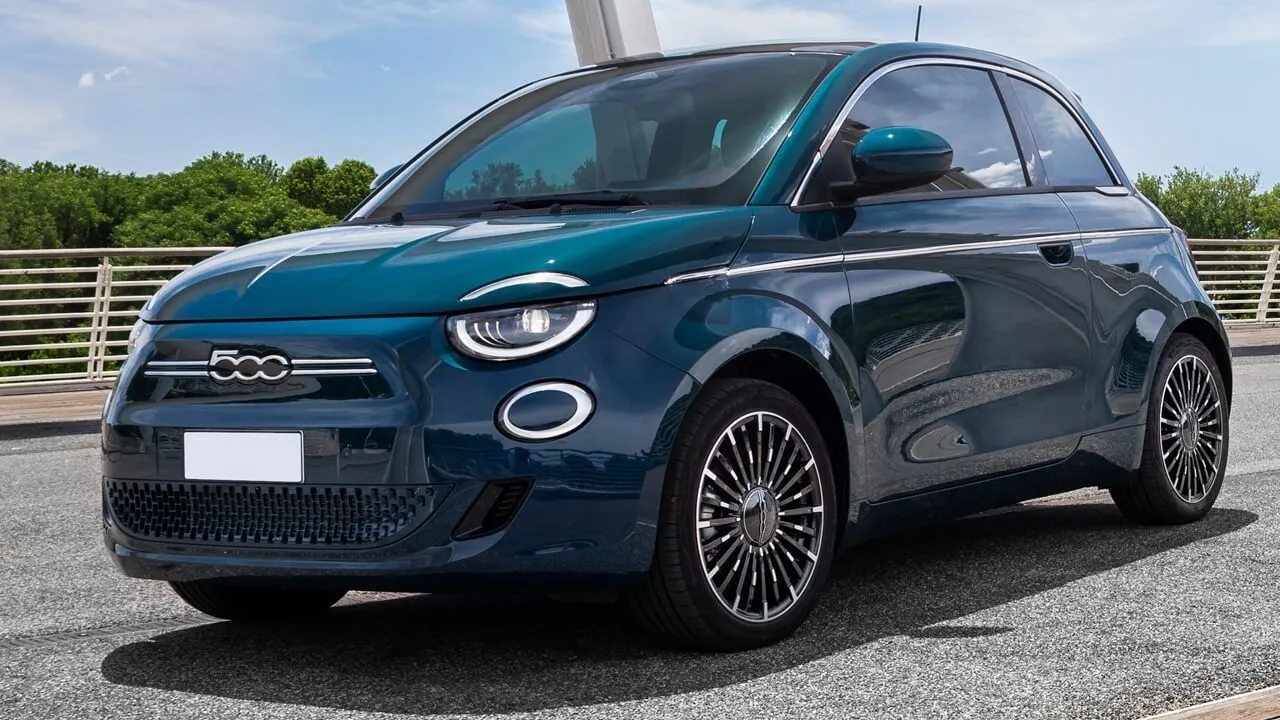
The Fiat 500e is a different case. It isn’t intended as a car for driving hundreds of kilometers on the highway, but rather as a small urban electric vehicle whose design remains one of its main selling points.
And precisely for that reason, its depreciation is particularly interesting. In Spain, 2021 models with a 42 kWh battery and 118 horsepower can already be found for around 16,000 euros. A 2021 3+1 model with 25,000 kilometers on the odometer is currently available for 15,900 euros, while there are also 2024 models with few kilometers on them for just under 18,000 euros.
If we take as a reference the over 36,000 euros that a well-equipped model could once cost, the depreciation easily exceeds 50% in certain units.
The choice of battery is important. The 24 kWh version is sufficient for purely urban use, but the 42 kWh version is clearly more attractive for those who want to use the car on roads as well. Its approximately 300 kilometers of certified range allows for much greater ease in handling daily trips.
5. Hyundai Kona Electric: one of the best bargains in the used car market
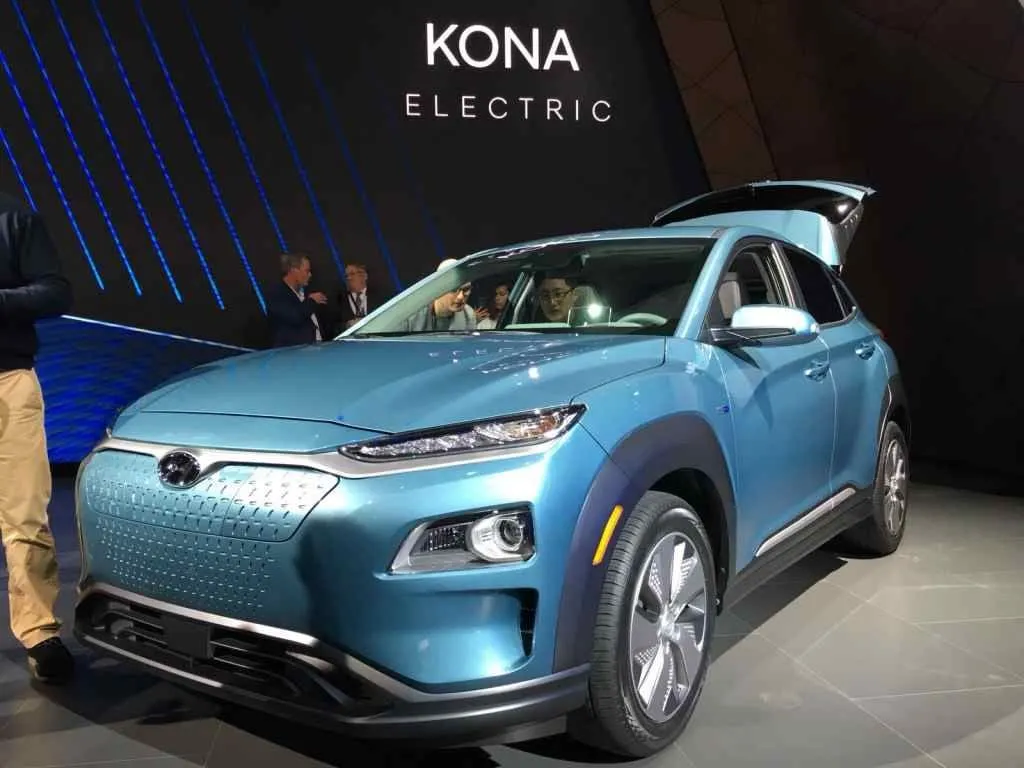
The Hyundai Kona Electric has never had the same prominence as other models, but that very fact may work in its favor now. The previous generation still offers a quite interesting combination of size, range, and fuel efficiency.
In Spain, there are currently 2022 models with a 64 kWh battery and 204 CV of power available for around 22,000–23,000 euros. A 2022 Kona EV Maxx with 67,914 kilometers on the odometer is listed at 22,290 euros, while another with 51,800 kilometers is priced at 22,900 euros.
Compared to the approximate 39,590 euros it would cost new, the discount amounts to nearly 44% in these examples. It’s not the 52% seen in some European markets, but it remains a significant depreciation.
The 64 kWh battery allows for around 450 kilometers of WLTP range in certain versions. Additionally, its relatively compact size makes the Kona convenient for city driving without sacrificing sufficient range for longer trips.
That said, before buying a unit from the early years, one should check its campaign history and battery inspections. It’s not a reason to rule it out, but it is something worth verifying.
6. BMW iX3: a premium SUV that has lost a huge amount of value
Here we have one of the most striking cases. The BMW iX3 entered the market at a high price, but subsequent developments in BMW’s electric lineup have caused its early models to experience particularly severe depreciation.
In Spain, 2022 BMW iX3 models are already available for less than 30,000 euros. A 2022 unit with an 80 kWh battery, 286 horsepower, and 109,467 kilometers on the odometer is priced at 27,850 euros, while later models with fewer kilometers may cost around 40,000 euros. The average listed price for the iX3 is currently around 39,418 euros due to the inclusion of much newer models as well.
Compared to a 2022 unit with an original price of nearly 74,000 euros, the depreciation of the cheaper models can exceed 60%. This is an impressive figure for a premium SUV that still boasts 286 horsepower and a certified range of around 460 kilometers.
The downside is that the older iX3 uses a platform shared with the gasoline-powered X3 and lacks the 800-volt architecture found in BMW’s more modern electric vehicles. Its maximum charging capacity is also more limited.
But if the goal is to get a premium SUV with high power and excellent finish at less than 30,000 euros, it’s worth adding it to the list.
7. Genesis G80 Electrified: the big unknown...for now
The Genesis G80 Electrified is likely the most exotic model in this lineup. Hyundai’s premium sedan electric vehicle offers 370 horsepower, all-wheel drive, an 87.2 kWh battery, and an 800-volt architecture.
We need to make a brief aside here: Genesis is not yet available in Spain, although it has been in Europe for a few years. However, rumors about its launch in our country have intensified, and everything suggests it will happen by the end of this year or early next year. So if we find a used vehicle in Europe, we’ll then have technical support available in Spain.
Genesis offers a very interesting range of electric vehicles — essentially Hyundai with a premium approach. But their main issue hasn’t been the products themselves so much as the lack of presence in many European markets and little awareness in those where they do operate. The brand still has a much smaller sales network compared to BMW, Mercedes-Benz, or Audi, which ultimately affects the value of their used cars.
In the European market, units from 2022 are currently available for around 46,000–48,000 euros, though the supply is very limited. There are 2022 models with 25,000 kilometers on the odometer for about 46,600 euros, and later models with battery health ratings below 48,000 euros.
Starting from new prices near 90,000 euros for highly equipped configurations, the depreciation can approach 50%.
We also have the GV60, which is a SUV related to the Ioniq 5 but with a different design and premium interior. A model that cost over 60,000 euros at launch, now available for less than 28,000 euros in markets like Germany.
Here, an important warning for Spanish buyers: this is not a purchase as straightforward as one would be for a Hyundai, Volkswagen, or BMW. The availability of units and after-sales service need to be checked before making a decision. In return, you get a luxury sedan with performance and charging technology that remain highly competitive.
8. Peugeot e-208: an urban car that can already be bought for much less
The Peugeot e-208 completes this list and is likely one of the easiest models to recommend for those looking for a small electric car.
In Spain, 2022 models are currently available for around 16,000 euros, with even 2020 and 2021 models available for less than that amount. A 2022 model with 17,163 kilometers on the odometer is priced at 16,495 euros, while 2020 models are also available starting at 12,990 euros.
With a launch price that could reach around 38,000 euros for certain trims and equipment, the value loss can exceed 55% and approach 60% in some units.
The original e-208 used a 50 kWh battery and offered an WLTP range of nearly 340 kilometers. Its fast charging capacity of up to 100 kW is not impressive by today’s standards, but it remains sufficient for the intended use.
Additionally, there is an important detail: a used e-208 must be carefully compared with offers for new or brand-new units. Intense competition in the electric city car segment has caused some new models to approach the price of certain used units dangerously close.
Depreciation at a glance
Model
Approximate new price
Observed used price in Spain
Average depreciation
Volkswagen ID.3
~48,735 euros
starting from 20,350 euros
~58%
Hyundai Ioniq 5
~47,000 euros
starting from 25,900 euros
~45%
Skoda Enyaq iV
~43,000 euros
starting from 22,500 euros
~48%
Fiat 500e
~36,000 euros
starting from 15,900 euros
~56%
Hyundai Kona Electric
~39,590 euros
starting from 22,290 euros
~44%
BMW iX3
~73,975 euros
starting from 27,850 euros
~62%
Genesis G80 Electrified
~90,000 euros
starting from ~46,600 euros
~48%
Peugeot e-208
~38,000 euros
starting from ~16,000 euros
~58%
The figures are approximate and compare the estimated new prices of the listed versions with current examples from Spain’s used car market. They do not represent an official valuation, as mileage, finish, battery condition, and equipment can significantly affect the final price.
What to check before buying a used electric car
Depreciation may seem attractive, but it should not be the only criterion. With a used electric car, one factor deserves special attention: the battery condition.
The battery’s health status, commonly referred to as SOH, indicates what capacity it retains compared to when it was new. A value of 95% means the battery still has about 95% of its original capacity. The higher this figure is relative to 100%, the better, although some loss over time and mileage is entirely normal.
That’s why it’s advisable to request a battery report before purchasing. If the seller cannot provide one, an independent inspection can be a worthwhile investment, especially in a car that is already several years old.
It’s also advisable to check what fast charging system the car uses. Current European models primarily use CCS, while some older electric vehicles, such as the Nissan Leaf, rely on CHAdeMO. For those who travel frequently, this difference can turn out to be quite important.
And don’t forget about the maintenance checks. Before finalizing the purchase, make sure all manufacturer-suggested inspections and updates have been carried out. In some early-generation electric vehicles, issues were resolved through software updates or repairs to specific components.
Buy used or new?
The answer depends heavily on the model. In smaller electric cars, the difference between a used unit and a new one can be relatively small due to current promotions. In such cases, a used Peugeot e-208 or Fiat 500e should always be compared with offers for new and brand-new vehicles.
The situation changes when considering larger models. A Volkswagen ID.3, Hyundai Ioniq 5, Skoda Enyaq, or BMW iX3 can offer much better value as used cars than when they were new.
And that is precisely the great paradox of the electric vehicle market in 2026. For those who bought one of these cars three or four years ago, depreciation can be painful. For those looking for their first electric car now, however, it could represent an extraordinary opportunity.
Technology hasn’t disappeared just because the car’s value has dropped. The battery is still there, the electric motor continues to deliver its performance, and operating costs remain low. What has changed is the price the market is willing to pay for all of these elements.
Therefore, before assuming that a used electric car has lost too much value simply because it’s “old,” it’s important to consider how much it actually costs and what it offers for that money. In some cases, depreciation has been so severe that a second owner can now afford a car that was out of reach just a few years ago.