
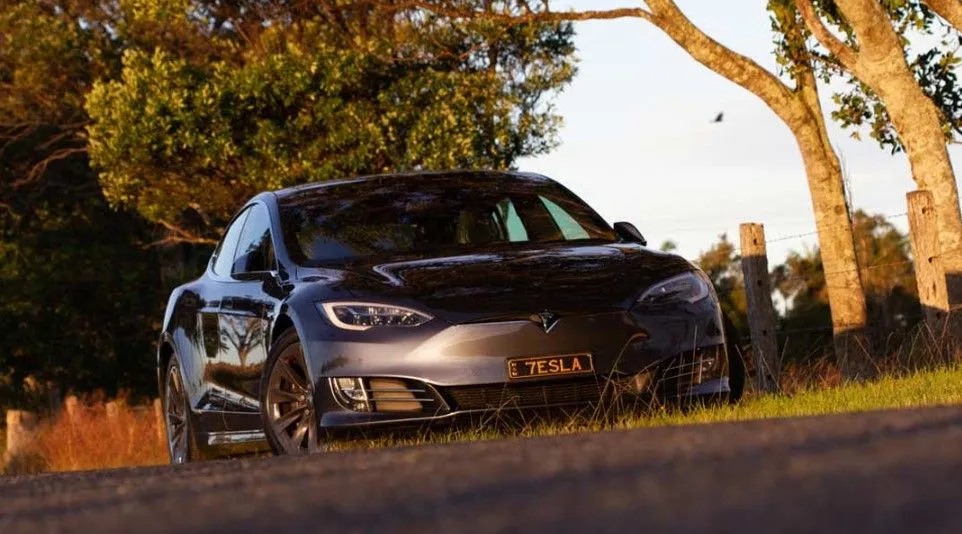
This Tesla Model S has racked up nearly a million kilometers and only had its battery replaced once.
There are cars that accumulate many miles over the course of their lifetime, while others operate at a completely different level. This is the case with a Tesla Model S that serves as a passenger transport vehicle in Australia, which, after more than eight years of use, continues to cover mile after mile.
Its owner has shared the progress of his car over the years. Now he has reached another milestone, with a figure that illustrates just how much an electric car can be used when it becomes a daily work tool.
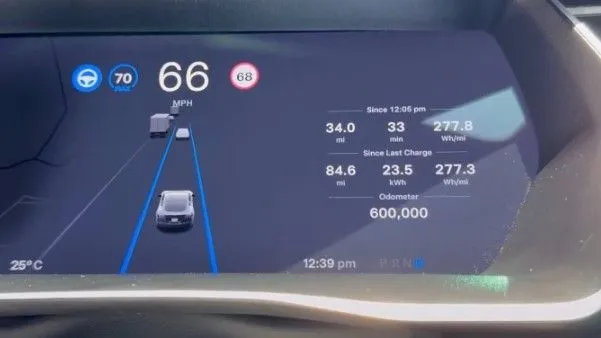
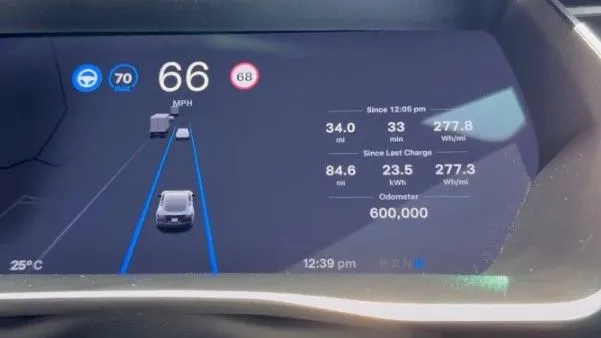
The Tesla Model S 75D has covered over 600,000 miles, or about 965,600 kilometers, after just over eight years on the road. And what’s most remarkable isn’t just the distance traveled, but also the maintenance it has required throughout this time.
Raynard explains that the car had only one battery replacement, which was done under warranty. The replacement came after the vehicle encountered an error after traveling 666,666 kilometers—a number that is quite intriguing, especially for superstitious people. At that point, a 90 kWh battery pack was installed to replace the original one.
Since then, the owner claims the car still works like new. In fact, the next round number is already very close: the Model S is nearing one million kilometers of mileage, a distance it could reach in little time if it maintains its current usage rate.
The total distance traveled is roughly equivalent to 2.5 round trips to the Moon or about 24 full orbits around Earth. These are striking comparisons, but they help illustrate what almost one million kilometers represents in a vehicle that continues to perform its regular tasks.
The tires, logically, have had a very different history. The owner estimates that each set allows him to travel between 50,000 and 75,000 kilometers, so over these eight years he has had to replace them several times. It is one of the wear components that shows the greatest difference compared to parts like the battery or brakes.
It has also provided an interesting figure regarding consumption. Since the battery replacement and the subsequent period of use, the Model S has achieved an average efficiency of 18.6 kWh/100km—a figure that is particularly significant considering the total mileage driven and the intensive use pattern of the car.
But there is another number that helps explain why this owner continues to use the Model S as a work vehicle. According to the car’s own estimates, it has saved approximately 100,000 Australian dollars in fuel over the years, which is around 61,600 euros at current exchange rates. The calculation obviously depends on the energy and fuel prices used as references, but it gives an idea of the impact that energy costs can have when driving hundreds of thousands of kilometers.
Now, at approximately 965,000 kilometers, the next goal is clear: to reach one million. It will achieve this with a rather unique maintenance history for a car that has been used professionally for eight years, with only one battery replacement recorded in the most recent records, and very minimal brake wear thanks to regenerative braking.