
This supermarket breaks the price of recharging with a fee of 17 cents per kWh.
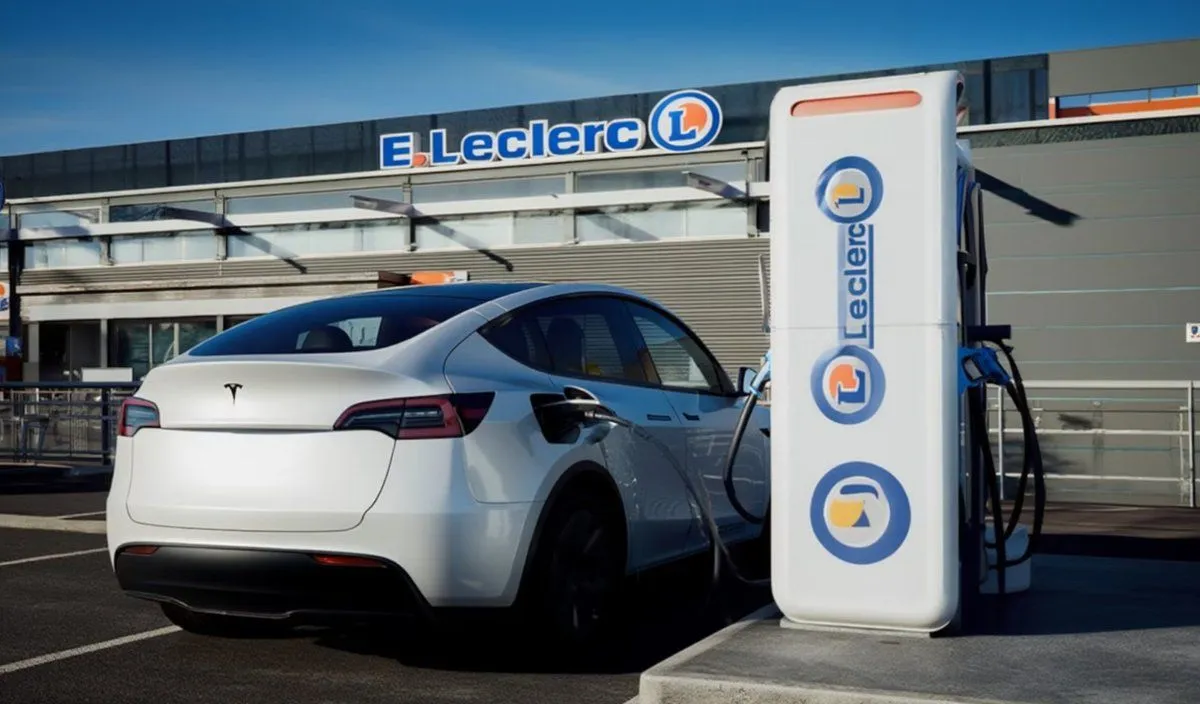
While refueling has become a nightmare for millions of Europeans, something quite remarkable is happening in France on the other side of the equation. Some major retail chains are starting to use electric vehicle charging as a tool to attract customers, which is sparking a slight price war.
The latest move comes from the giant E.Leclerc, which has decided to lower its charging prices again. The company has announced a rate that, on paper, makes some of its stations cheaper than charging an electric vehicle at home under certain circumstances.
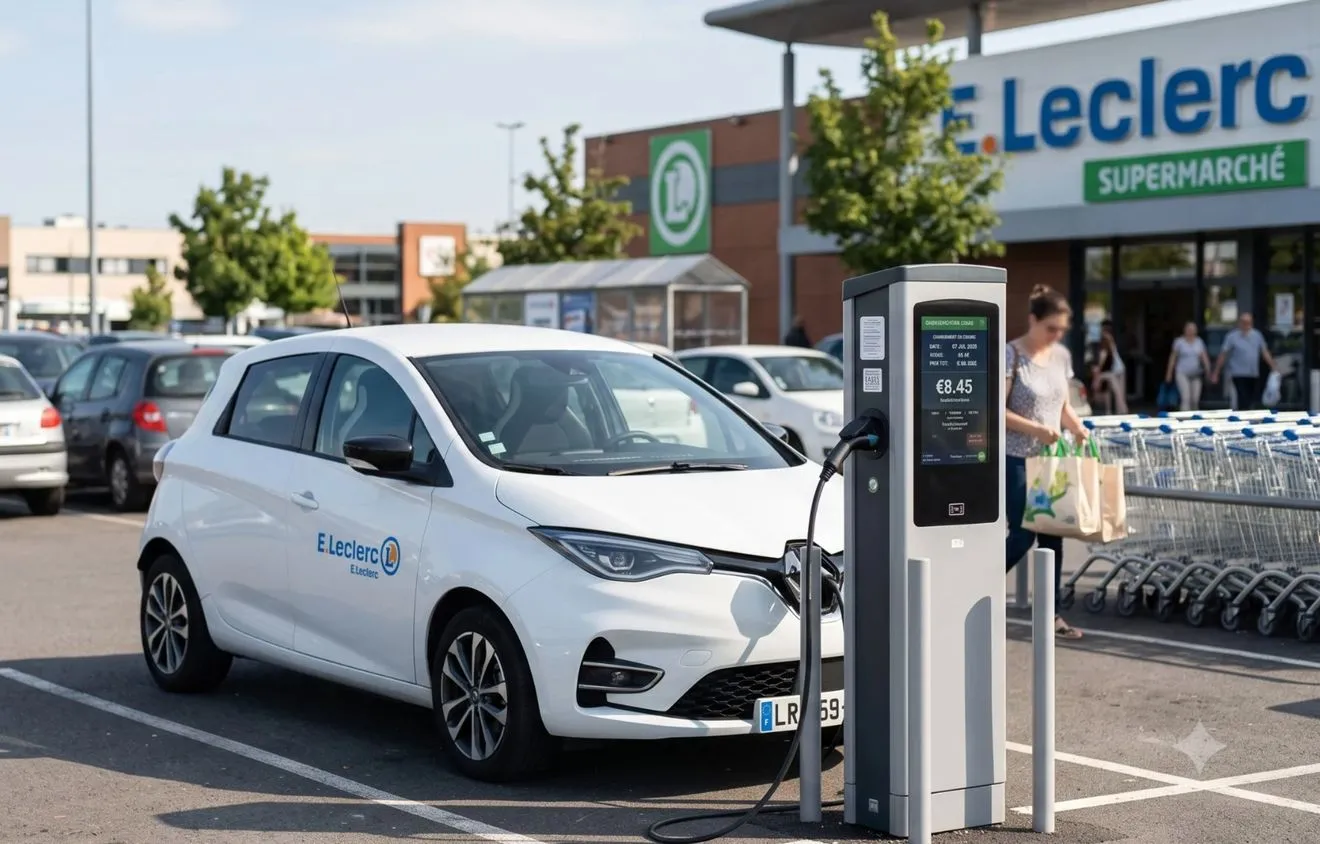
The key point is that this isn’t about a temporary promotion lasting just a few hours or a discount tied to a specific electricity rate. E.Leclerc has set the price at 0.17 euros per kWh, without requiring customers to sign up for a subscription, though there is an important condition: it applies only to the standard 22 kW charging stations available at 330 of its stores in France.
This measure takes effect on October 5 and affects the Charge E-Lec network, which currently has over 3,000 charging stations located in the parking lots of E.Leclerc stores. Stations situated in highway areas are excluded from this rate.
The strategy is particularly interesting given the timing. Fuel prices are once again at high levels, and the cost of operating a gasoline-powered car has become a major concern for many families. In this context, a major retail chain offering electricity for cars at 0.17 euros per kWh significantly changes the picture regarding operating costs.
And that’s where the calculations come in
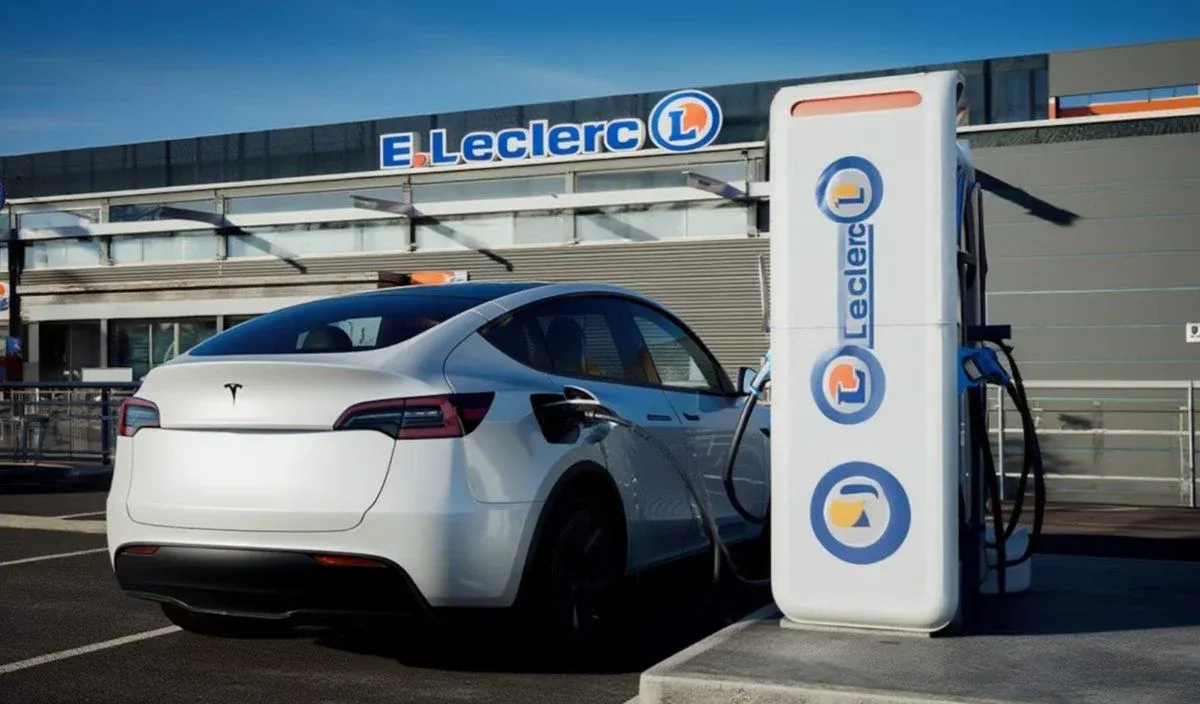
With a consumption of 17 kWh/100 km, a reasonable figure for a medium-sized electric car used under normal conditions, traveling 100 kilometers using E.Leclerc charging stations would cost around 2.89 euros. It is this figure that allows the company to claim that 100 kilometers can be covered for less than 3 euros.
There is no need to rely on a particularly efficient car to achieve this cost. With 15 kWh/100 km, the cost would be 2.55 euros, while even with 20 kWh/100 km, it would be 3.40 euros per 100 kilometers. Note that this refers only to the cost of energy and not other associated vehicle expenses.
Sometimes cheaper than charging at home
The comparison with Spain is even more interesting. The PVPC changes every hour, and at the time of preparing this analysis, the average price on October 3 was 0.16933 euros/kWh before taxes. In other words, E.Leclerc’s price of 0.17 euros/kWh is practically identical to the average energy price in Spain’s regulated market.
The difference becomes apparent when comparing it to the cost of a full home charge. The Ministry for Ecological Transition currently estimates that electricity used to travel 100 kilometers via home charging costs 3.29 euros. With the same reference consumption of 17 kWh/100 km, E.Leclerc’s price of 2.89 euros means about 40 cents less per 100 kilometers.
It might seem like a small difference, but it matters when considering annual usage. A driver who travels 15,000 kilometers per year would spend around 433.50 euros on electricity by consistently using this E.Leclerc rate. With MITECO’s reference household cost, the expense would be around 493.50 euros. The difference amounts to approximately 60 euros per year.
The comparison with PVPC requires a bit more care. If we use solely the average energy price on October 3, the 17 kWh needed for those 100 kilometers would cost almost the same at home as at E.Leclerc: around 2.88 euros versus 2.89 euros. However, the tax-exclusive PVPC does not on its own represent the full final cost borne by a household, whereas MITECO’s reference includes its comparative methodology for usage costs.
There’s another important detail: the home charging price can be much lower if the owner takes advantage of the cheapest hours on the PVPC. For example, on October 3rd itself, there was a period around 1:00 p.m. with a price of just 0.04848 euros/kWh before taxes. Under such conditions, charging at home remains clearly cheaper. The problem is that not all drivers can shift their charging to the cheapest hours, nor do they all have a parking spot with a charger available.
That’s exactly where a public tariff of 0.17 euros/kWh becomes particularly interesting. For those who live in an apartment, park on the street, and don’t have their own charging point, being able to charge their car while shopping at this price level completely changes the comparison.
With a diesel car that consumes 5 liters per 100 kilometers, the differences are even greater. Using a price of 1.934 euros per liter of diesel, the cost for those 100 kilometers amounts to 9.67 euros. Over 15,000 kilometers per year, that would be around 1,450.50 euros just in fuel.
If we make the same comparison with a gasoline car that also consumes 5 liters per 100 kilometers and use a price of 2.10 euros per liter, the cost comes to 10.50 euros per 100 kilometers. Over 15,000 kilometers, the total cost would be 1,575 euros.
The cost breakdown is as follows: around 2.89 euros to travel 100 kilometers with a fully charged electric car at 0.17 euros/kWh, compared to 9.67 euros with a 5-liter diesel vehicle and 10.50 euros with a 5-liter gasoline vehicle. Over an annual distance of 15,000 kilometers, the difference exceeds 1,000 euros in both cases.
This explains why the competition over charging prices is becoming far more significant than it might seem. Until now, one of the main economic advantages of electric cars was having access to a charging location at a low price. If large retail chains manage to offer public charging at below 0.20 euros/kWh, this advantage will start extending to those who don’t have a home charger as well.
That said, there’s an important detail. The 22 kW advertised by E.Leclerc refers to alternating current, and the actual power output will depend on the charger built into each car. For example, a model limited to 11 kW won’t charge at 22 kW just because the station is capable of providing that power.
Therefore, this isn’t an option designed for stopping for a few minutes during a long journey. It’s a charging solution meant to make use of the time the car spends parked while shopping. And that’s precisely E.Leclerc’s business model: drivers get cheap electricity, while the store gains the opportunity to turn that charging time into a visit to the supermarket.
In addition, new users are eligible for a welcome promotion in which E.Leclerc refunds 50% of the cost of their first top-up via vouchers. The company also remains committed to its goal of having 10,000 charging points by 2030, following its announcement of an investment of over 200 million euros to develop this infrastructure.
The situation is intriguing. While fuel prices are once again straining drivers’ budgets, public charging for electric cars is entering a price war in some European markets. E.Leclerc has just set the rate at 0.17 euros/kWh, after previously reducing it to 0.19 euros/kWh.
And if other companies respond with further price cuts, we might be witnessing an interesting shift: charging an electric car outside one’s home no longer necessarily meaning paying more. In certain places and under specific circumstances, the exact opposite could start to happen.
