
This electric car captures the particles generated by its own tires and brakes while it is in motion.
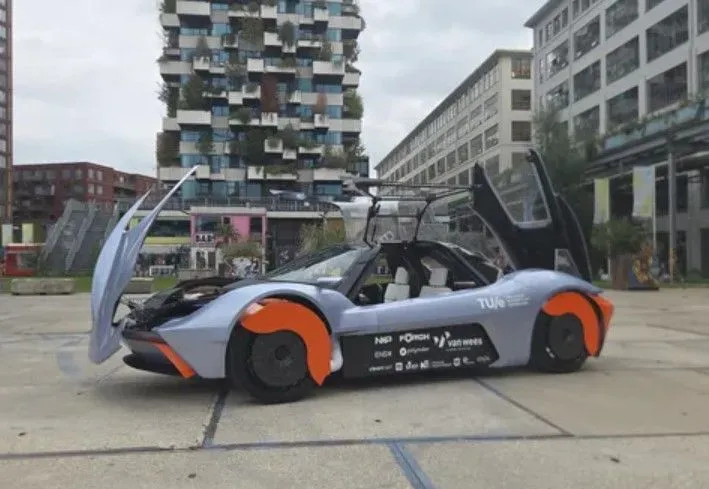
Electric cars have managed to eliminate one of the main sources of pollution associated with automobiles: emissions from exhaust pipes. But that doesn’t mean they are completely free from particles generated during driving. Tires, brakes, and the contact with asphalt still produce particles, and it is precisely here that a group of students has decided to focus their efforts.
The proposal comes from Eindhoven University of Technology in the Netherlands, where the TU/ecomotive team has developed a prototype that attempts to address this problem in a quite different way. It’s not just about reducing the particles produced by the car, but also about capturing some of them while the vehicle is in motion.
The result is called Ventra and combines several solutions that work in the same direction. On one hand, it tries to reduce wear before it occurs. On the other hand, it captures the particles that manage to escape, and it also analyzes driving patterns to help the driver generate less wear during their trips.
An electric car that captures particles around the wheels
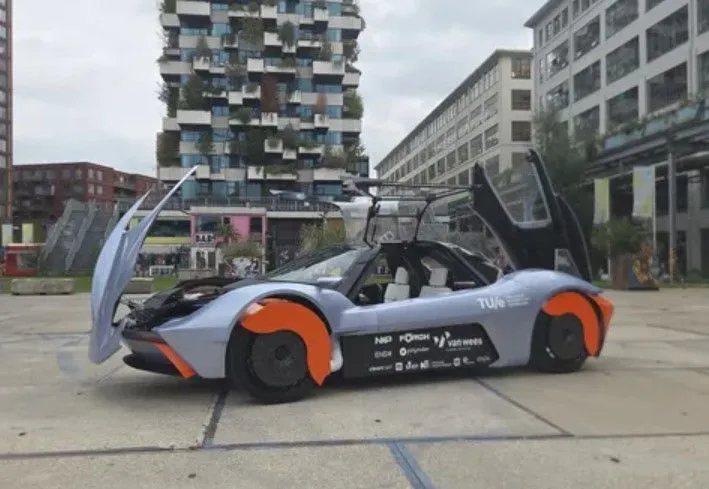
The Ventra operates on a relatively simple idea. Particles from tire and brake wear appear around the wheels, so the device has been designed to target that area directly rather than attempting to filter all the air surrounding the vehicle.
The system, called T.R.A.C.E., uses electrical charge to attract particles toward collection surfaces. This way, the dust generated during driving is trapped near its source. Afterwards, those surfaces can be cleaned and the collected material reused.
According to simulations conducted by TU/ecomotive, the system can capture more than 24% of the particles released by tires when the car is traveling at speeds between 50 and 80 km/h. In urban driving conditions with lower speeds, the system uses fans to move air around the wheels, achieving a collection rate of up to 42% of the particles.
This approach is particularly interesting because it doesn’t rely solely on a conventional filter. The particles are given an electric charge and drawn toward the collection surfaces, which can then be removed to retrieve the accumulated material. TU/ecomotive has even used the captured particles to create an interior coating for the prototype itself.
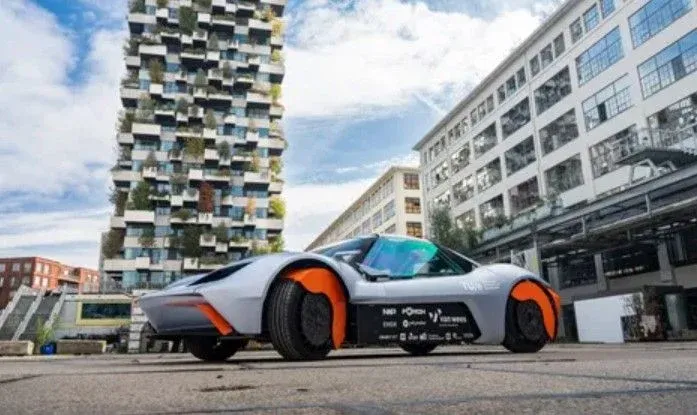
But the team has also worked on the other side of the problem: preventing those particles from being generated in the first place. One of the most notable measures has been reducing the car’s weight, which is especially important for electric vehicles due to the additional mass typically carried by batteries.
The Ventra uses a chassis that is largely made of composite panels reinforced with carbon fiber. Thanks to this solution, the entire chassis weighs about 135 kg, while the monocoque structure weighs just 45.5 kg. This combination allows for a weight reduction of around 100 kg compared to a conventional equivalent design.
The prototype weighs a total of 790 kg and has an estimated range of 290 km. The goal behind this weight reduction is not only to improve fuel efficiency. By putting less pressure on the tires, it also reduces their wear and thus the amount of particles released into the environment.
The Clean Drive system complements this approach. The car analyzes parameters such as acceleration, braking, and steering movements, providing the driver with guidance to drive more gently. The aim is to avoid sudden accelerations, unnecessary braking, and excessive steering movements, all of which can increase tire and brake wear.
And here lies one of the most interesting aspects of this project. The regeneration of electric cars already allows for a significant reduction in the use of conventional brakes, but the tires remain a component that comes into direct contact with the asphalt. Additionally, the instant torque delivery from an electric motor can enable powerful accelerations that increase wear if overused.
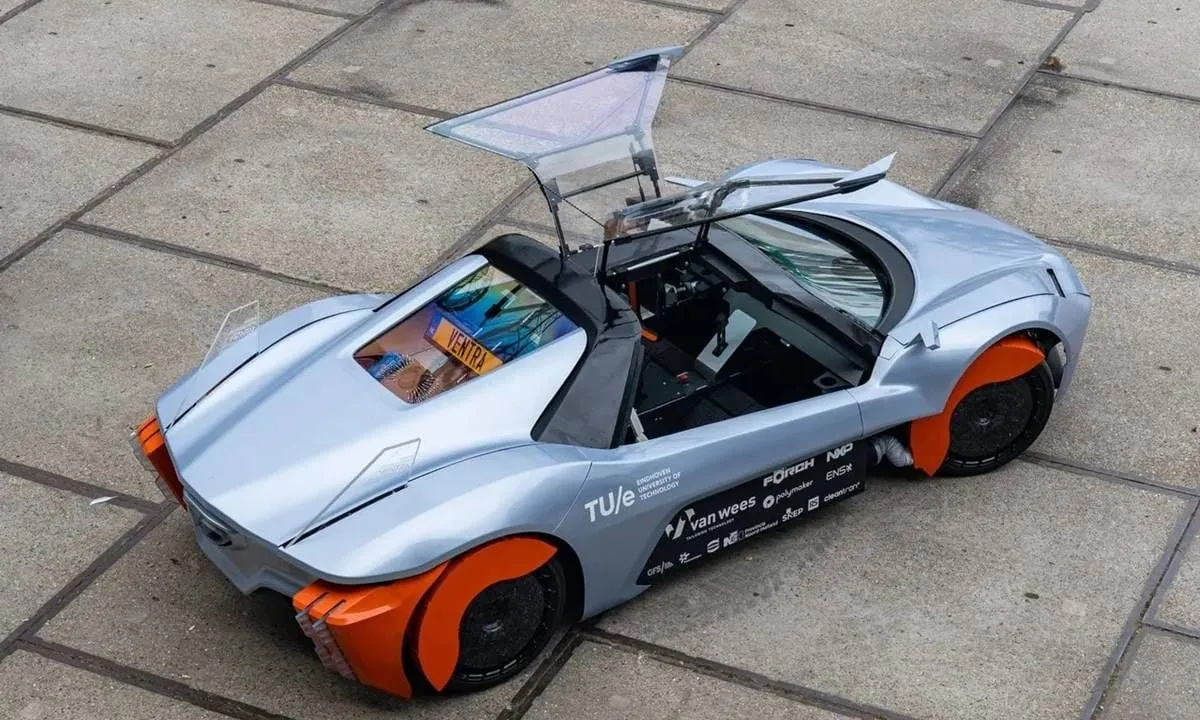
Ventra aims to address both issues: reducing weight to minimize particle generation, improving efficiency in driving to further reduce wear, and incorporating a system capable of capturing some of the particles that are still produced.
The project comes at a time when European regulations are beginning to pay much greater attention to these emissions that do not originate from the exhaust. Euro 7 introduces specific requirements for particles from brakes and tire wear for the first time, in addition to maintaining other regulations related to emissions and battery durability.
That said, it’s important to place the dates in context. For cars and vans, Euro 7 will apply to newly approved models starting November 29, 2026, and to new vehicles starting November 29, 2027. The specific limits regarding tire abrasion will also be implemented later and in phases.
Regarding brakes, the regulations set a PM10 particle limit of 3 mg/km in the standard driving cycle for cars and light vehicles starting January 1, 2035. The European Union has also developed the necessary procedures to verify compliance with these limits during 2026.
Therefore, although the Ventra is still a prototype developed by students and not a solution we can find in dealerships tomorrow, its approach addresses an issue that will become increasingly important. Eliminating exhaust emissions does not mean eliminating all particles generated by a car, and electrification is shifting some of the focus toward elements that have received much less attention so far.
TU/ecomotive’s approach offers a potential solution by combining several relatively simple methods: manufacturing lighter cars, changing driving habits, and capturing particles directly at the wheels. Perhaps none of these methods alone is sufficient to solve the problem, but together they provide an interesting pathway toward creating electric cars that not only emit less pollution while in operation but also reduce the particles generated during driving.
Source | Tuecomotive
