
This historic Japanese brand aims to develop cars in half the time and make its factories 50% more efficient by 2030.
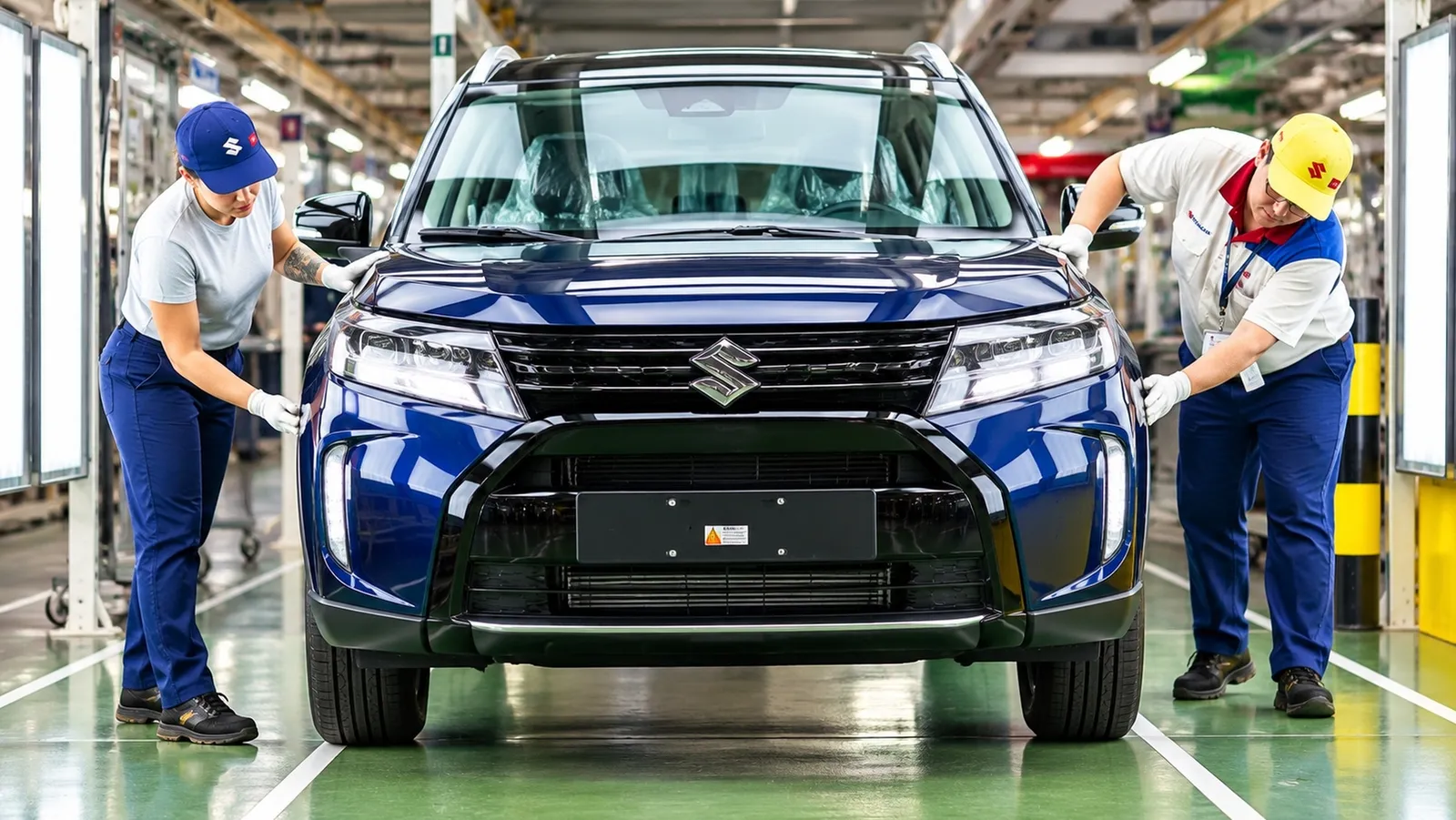
Suzuki Motor Corporation has unveiled its new Technology Strategy 2026, a ten-year roadmap that outlines how it will develop, manufacture, and adapt its future vehicles for different regions around the world. The company aims to address challenges such as rising energy costs, pressure on raw materials, and increasingly stringent environmental and safety regulations.
The most notable goal relates to timelines. Suzuki intends to cut the time required to develop new vehicles in half by 2030, while improving the efficiency of its development processes by 30% and boosting manufacturing efficiency by 50%. To achieve this, it will rely on greater digitalization, increased modularity, and closer coordination between engineering and production teams.
The strategy is based on two concepts that the company had previously introduced. One is “Energy Minimization,” introduced in 2024, and the other is “Essential Value Maximization,” added a year later. The combination of these two gives rise to the philosophy “Right × Light Mobile Tech,” through which Suzuki aims to offer only the functions and technologies that are truly necessary for each customer.
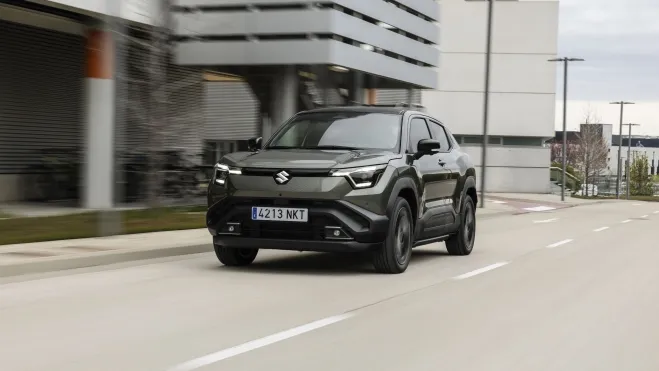
Suzuki does not want to rely on a single technology
Toshihiro Suzuki, president of Suzuki Motor Corporation, explained this during the strategy presentation. “Each country has its own energy mix and fuel conditions. Additionally, the level of infrastructure development also varies, so the optimal energy source changes depending on the region,” said the executive.
For Suzuki, this approach will enable faster responses when market conditions change. “When something changes, we must be able to offer the best product immediately. We believe that a multi-pronged approach precisely means being prepared for that goal,” added Toshihiro Suzuki during his speech.
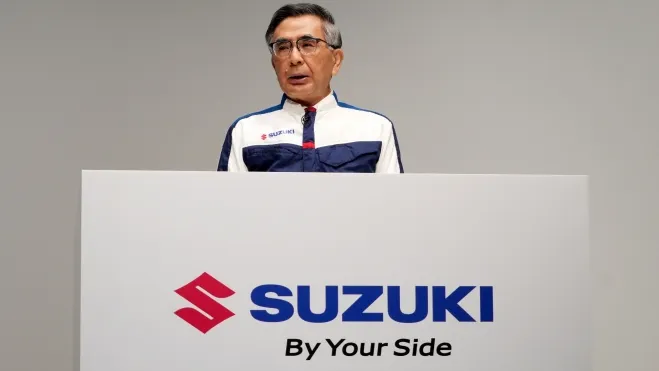
The company’s top executive also emphasizes that the key isn’t to add technology just for the sake of it, but to determine what value and functions are truly necessary for each customer. This idea is what Suzuki summarizes under the concept of “Just-Right,” which aims to become one of the core principles of its upcoming vehicles.
To make such a rapid response capability feasible, the company will transform its development and production areas simultaneously. Suzuki aims to promote joint engineering and manufacturing efforts, increase the use of digital tools, and advance modularization in order to reduce both the time and costs associated with launching new models.
India Will Gain Even Greater Importance in Suzuki’s Global Structure
The technological strategy will also have a strong industrial dimension. Suzuki will strengthen its global structure by relying primarily on Japan and India, though each market will have distinct roles. Japan will continue to focus much of the technological development, while India will become even more important as a major production and export hub.
The company has set a goal to achieve an annual production capacity of around 4 million vehicles in India starting from the fiscal year 2030. This capacity will serve both to meet domestic demand and to supply vehicles to other markets, making the country an even more important part of Suzuki’s international structure.
India will also play a significant role in the brand’s energy strategy. Suzuki is developing a biogas business there using cow dung, taking advantage of the high penetration of CNG vehicles as well. Suzuki’s third biogas plant in the country began operations in August 2026.
The model involves using livestock waste to produce fuel and returning organic fertilizer to local communities as a byproduct. The company aims to create a circular economy system where energy production, mobility, and agriculture are interconnected, while reducing the environmental impact associated with transportation.
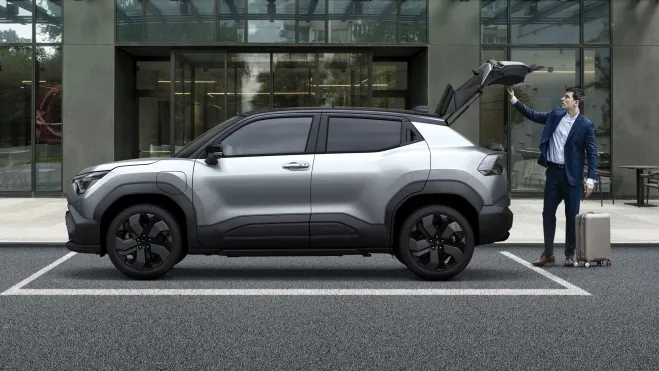
This initiative is part of “Japan-India Cooperative Biogas for Growth,” a project agreed upon by the governments of Japan and India in July 2026. Suzuki wants to integrate this activity into its multi-pronged strategy and leverage technologies tailored specifically to the energy and mobility conditions in the Indian market.
Another component will be the so-called “Team Suzuki,” a working approach based on collaboration among different areas, markets, and departments to avoid duplication and speed up decision-making. According to the brand, this approach has already allowed for a significant increase in autonomy during the development of “e SKY” thanks to better coordination among various teams.
Batteries tailored to real-world use
Electrification is another key focus of the strategy, though Suzuki aims to differentiate itself from other manufacturers by avoiding a constant race to install increasingly large batteries. The company adopts a philosophy called “lean battery,” which involves adjusting the battery capacity to match the actual usage of each vehicle owner.
Suzuki’s technology head, Katsuhiro Kato, explained that this approach will help reduce weight and resource consumption. “We will pursue a ‘lean battery’ approach, adjusting the battery capacity to match customers’ actual use of their vehicles, thereby cutting resource usage and weight,” he said during the presentation.
The brand also aims to standardize its battery systems more extensively, while retaining enough flexibility to use different technologies depending on each region. “Standardizing the battery system while maintaining the flexibility to choose the optimal battery for each region: that is Suzuki’s battery strategy,” said Kato.
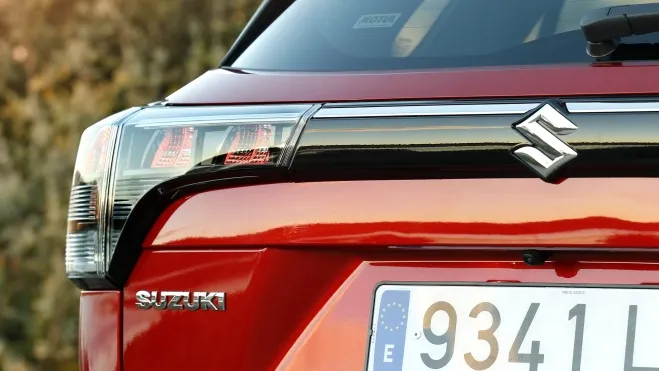
Suzuki will not limit itself to pure electric cars. Under the Right × Light Mobile Tech initiative, there are also series hybrid systems, a new hybrid system tentatively named Super Ene Charge, new direct-injection turbo engines, and various solutions aimed at reducing weight and energy consumption.
The roadmap also includes S Light, a technology focused on creating lighter structures without compromising safety, and SDV Lite, a simplified approach to the concept of software-defined vehicles. Suzuki intends to combine these solutions differently depending on the market and the intended use of each vehicle.
The ultimate goal is to create a more flexible, lightweight, and efficient range that can quickly adapt to regulatory, technological, and demand changes. By 2030, Suzuki aims for this transformation to result in cars developed in half the time, 30% greater development efficiency, and 50% higher manufacturing efficiency, as India strengthens its role as a major global production hub.
