
This should be the estimated range of the Citroën 2CV.
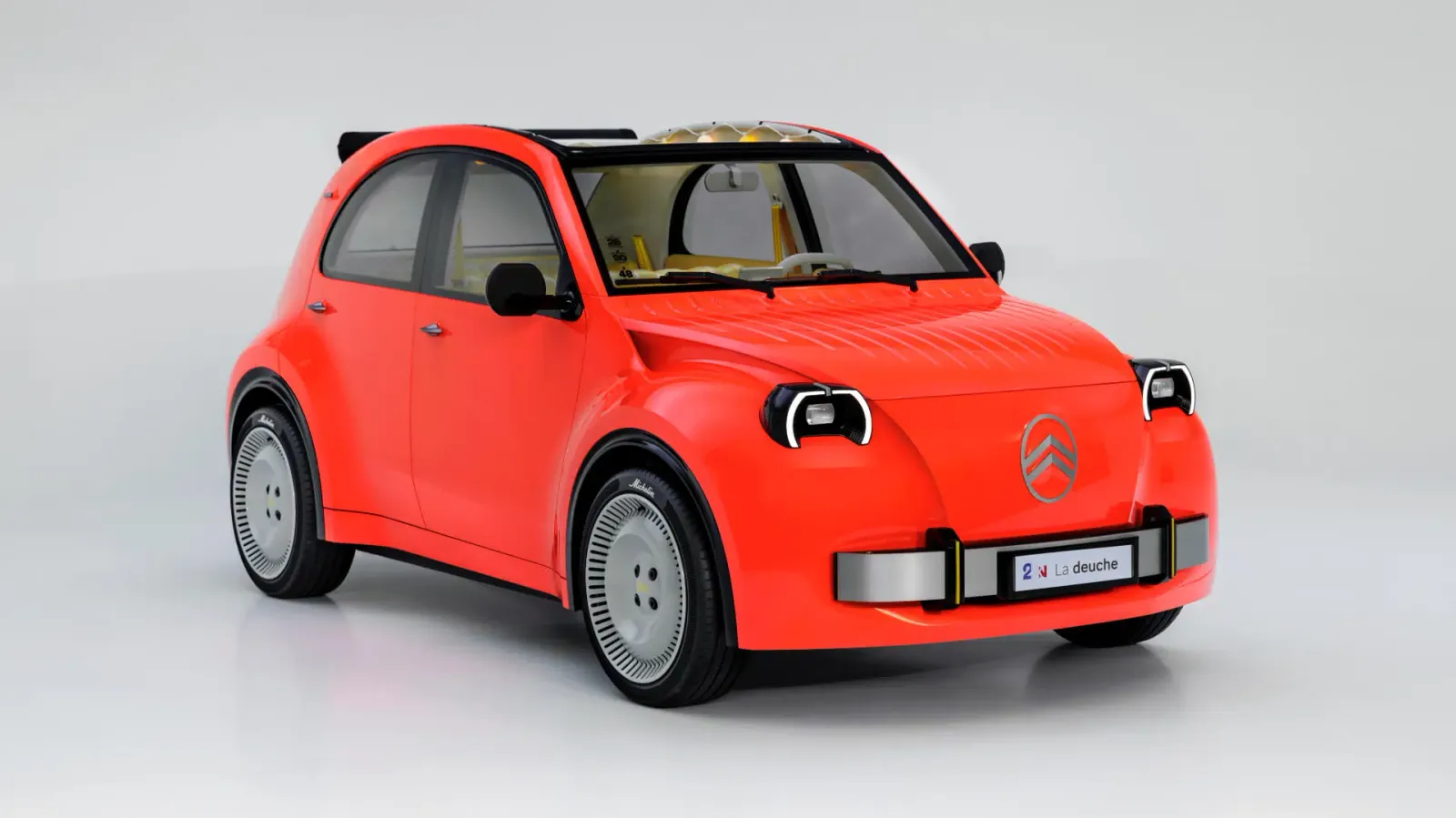
Xavier Chardon, CEO of Citroën, did not commit to a specific range figure for the new 2CV, but provided some clues.
Presented as one of the most important projects for Citroën’s future, the new 2CV has a mission similar to that of the original model: making mobility accessible to more people. But now with an additional challenge: achieving this with a 100% electric powertrain without compromising the price.
In a conversation on the side at the 2026 Paris Motor Show, where Razão Automóvel was present, Xavier Chardon, the brand’s executive director, revealed that the range of the entry-level version of the future 2CV should be very close to what the original model offered in 1948.

The official did not provide a specific figure, however, making it clear that the development of the car is still in progress. “The range of the new 2CV will be very close to that of the 2CV launched in 1948,” said the executive director.
If we do the math, we have to go back almost 80 years. The original 2CVs used a fuel tank capacity of only 20 liters. Their fuel consumption ranged from five to seven liters per 100 km, resulting in ranges of between 285 km and 400 km.
By comparing these figures with the French brand’s ambition to launch an electric 2CV at a price starting from 15,000 euros and with a weight as close as possible to 1,000 kg, Razão Automóvel’s estimates naturally point to a lower range of around 285 km. Using a current model as reference, the Renault Twingo has a 27 kWh battery that provides just over 260 km of range.
Xavier Chardon did not commit to any specific estimate. However, he added that, given European drivers’ average daily mileage of 30 to 34 km, future owners of the 2CV will likely need to charge their battery about twice a week.
Discover your next car:
Weight and price are priorities
As mentioned, Citroën has set two challenging goals for the new 2CV: a price starting at 15,000 euros and a weight as close as possible to 1,000 kg.
According to Chardon, achieving this weight is particularly difficult in an electric vehicle, but it is important for controlling the cost and size of the battery, and thus the final price.
Cost control also involves restoring the simplicity that made the original 2CV so affordable. Chardon argued that the new model should offer only what is necessary, resisting the temptation to add features without clear utility.
The official acknowledged that there are still decisions to be made and that technical development is ongoing. The production model is expected to be unveiled within two years, coinciding with the 80th anniversary of the 2CV.