
This city aims to lead by example in reducing emissions: new VTC licenses are only available for electric vehicles.

25/10/2026 12:00
Updated to
25/10/2026 12:00
London is preparing a major change to the rules for operating driver-driven transport vehicles like those used by Uber. Transport for London (TfL) has launched a public consultation requiring that, starting July 3, 2028, all vehicles applying for a VTC license for the first time must be fully electric. This proposal would exclude new gasoline, diesel, conventional hybrid, and plug-in hybrid vehicles. The measure has not yet been approved and includes a temporary exemption until July 2030 for vehicles modified for transporting people in wheelchairs.
London aims to ban plug-in hybrids from new VTC licenses
The proposal involves tightening the conditions that London has applied for several years to private transportation vehicles.
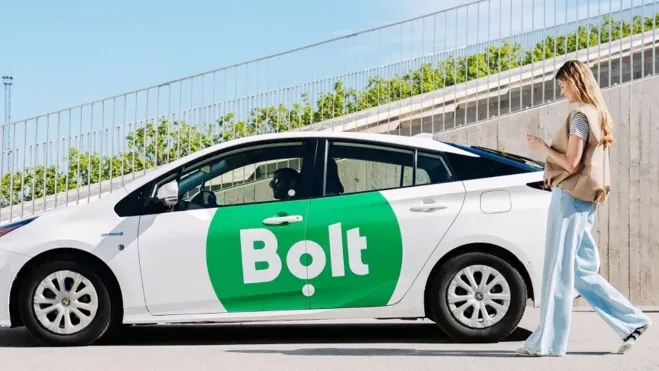
Currently, cars applying for a new license must meet certain zero-emission driving requirements, a condition that allows both pure electric and plug-in hybrid vehicles to be used.
However, TfL believes it is time to move toward a fully electric fleet. Starting July 3, 2028, only battery-electric vehicles would be able to obtain an initial VTC license, if the amendment is ultimately approved.
The restriction would affect services like Uber and other private transportation operators, but it does not mean the automatic withdrawal of hybrid vehicles that already have authorization. Traditional London taxis, subject to different regulations, would also not be included in this specific requirement.
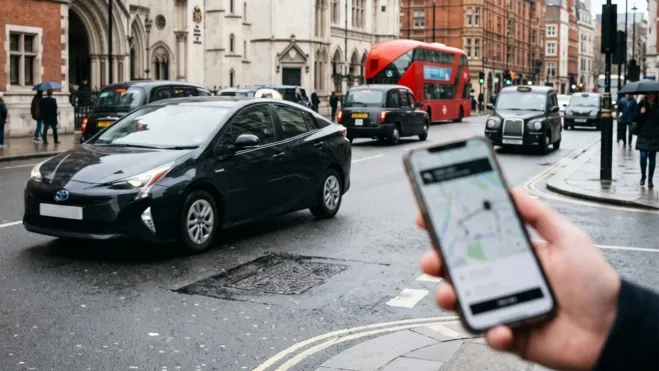
Over 33,000 plug-in hybrids could be affected by the change
This decision comes at a time when the electrification of London’s VTCs has already reached significant levels. According to data from September 2026, London had 94,661 authorized private transportation vehicles.
Of these, 35.5% were fully electric, while another 35.2% were plug-in hybrids. This means that around 33,600 vehicles operated solely on batteries, and another 33,300 combined electric propulsion with internal combustion.
Despite these figures, the London authority believes that plug-in hybrids still emit pollutants when using their internal combustion engine.
Their estimates suggest that the new regulations could reduce CO2 emissions by 35% and nitrogen oxide emissions by 9% among VTCs during the first ten years of implementation, compared to maintaining current requirements.

Adapted vehicles will have two more years
The proposal includes an exception for vehicles adapted for transporting people in wheelchairs, which would have until July 1, 2030, to meet the new requirements.
TfL is also considering limiting the maximum age of VTCs to ten years and reducing the time frame for renewing an expired license from 24 to 12 months. The public consultation will remain open until December 2, 2026, so the final terms could still change.
For Spanish cities such as Madrid or Barcelona, where VTC services are widely available, this initiative raises an important question: to what extent will plug-in hybrids continue to be considered a valid solution for electrifying professional transportation.
London has not yet approved its exemption from the new licenses, but its proposal indicates a clear direction: shifting from requiring vehicles capable of running without emissions to requiring them to have no internal combustion engine.