
Is it dangerous to charge an electric car during a storm? Here’s the answer!
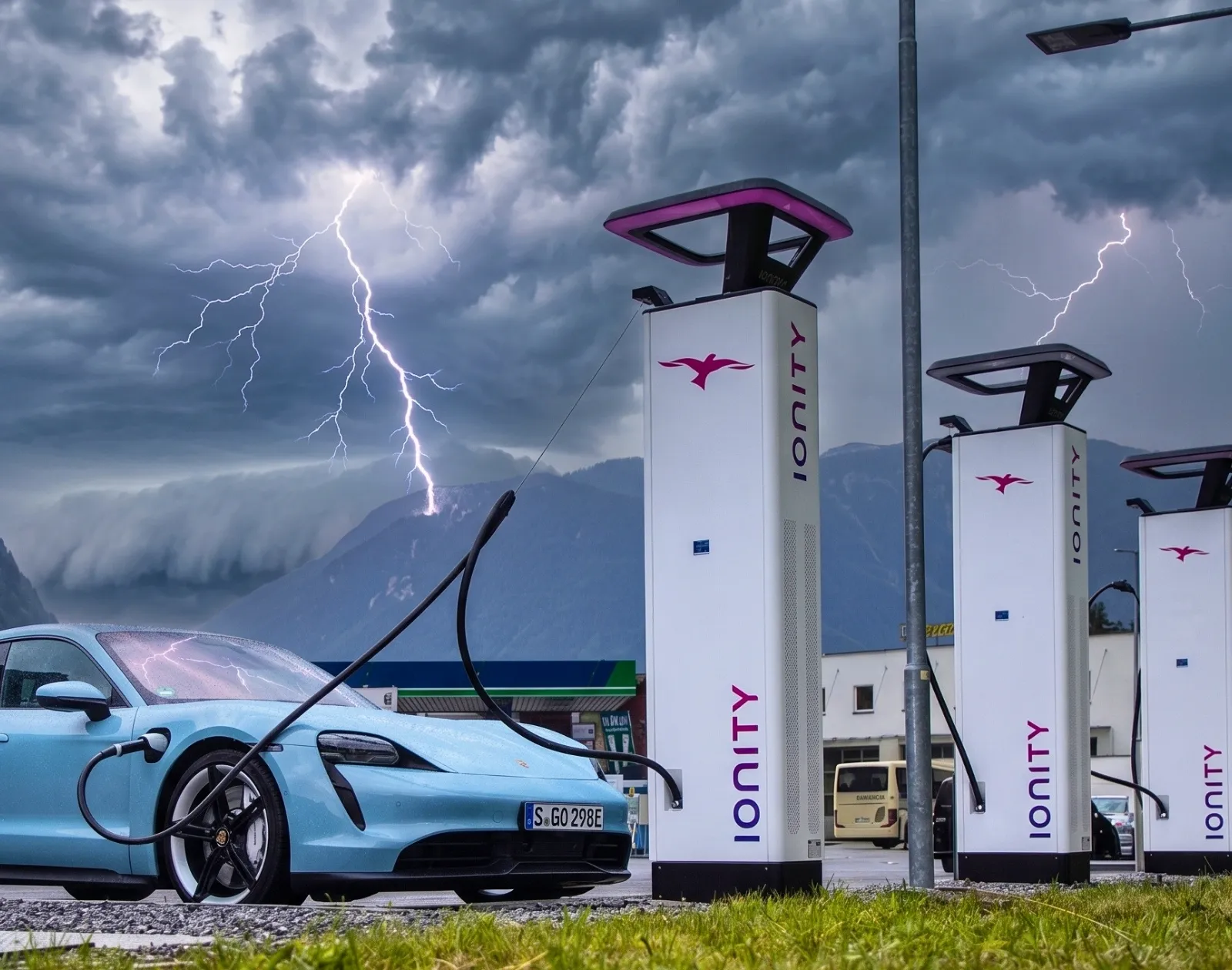
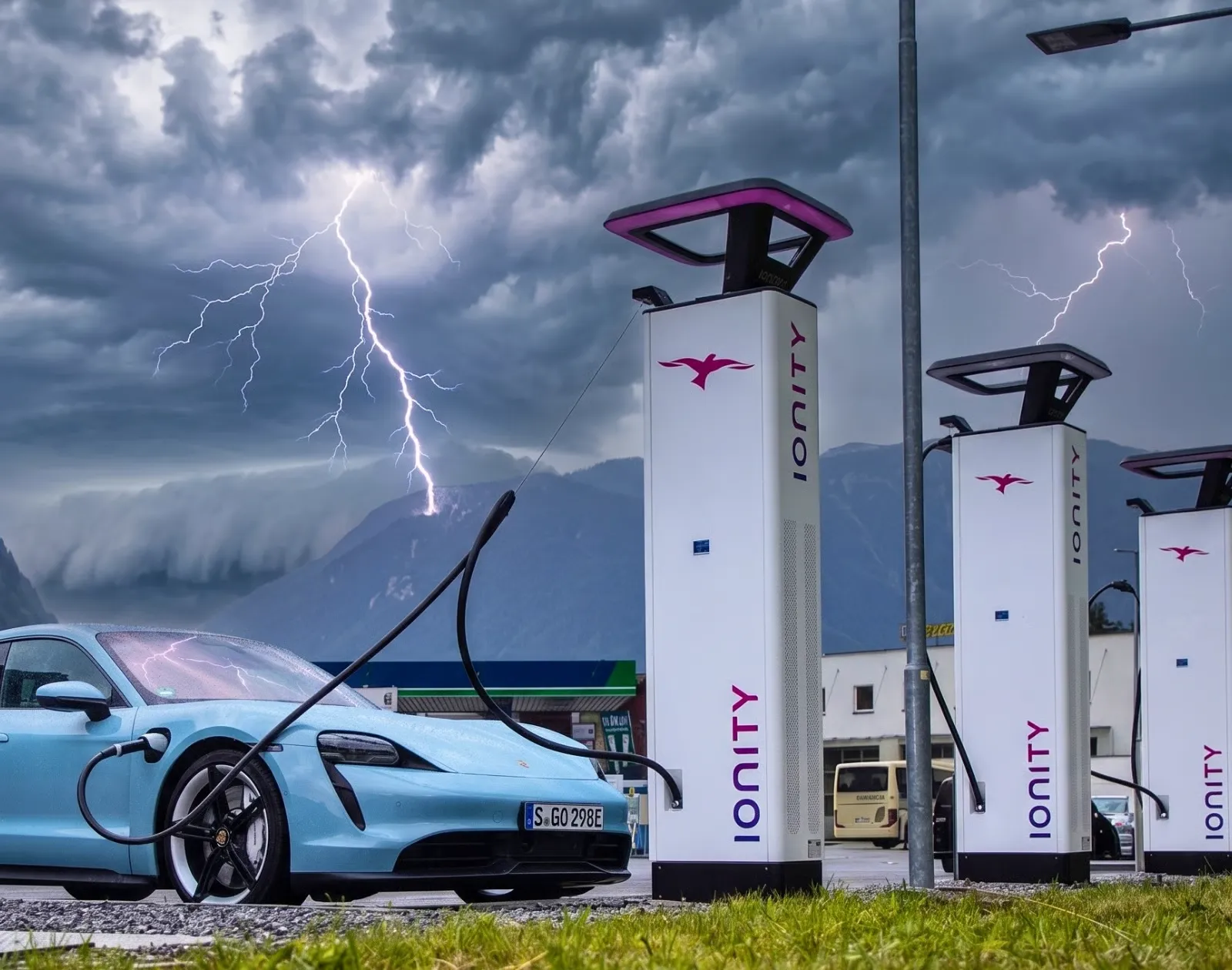
This question often arises among electric vehicle owners: should they unplug their cars during storms? It’s a valid concern given the damage lightning can cause, especially to electronic devices. In reality, no major incidents involving electric vehicles due to storms have been reported so far. While some precautions should be taken during thunderstorms, they aren’t specific to electric cars.
Unplugging one’s internet router, computer, or television is a habit many people develop during storms. It’s not uncommon for these sensitive devices to stop working after a lightning strike hits a nearby power line. One might therefore think it’s useful to do the same with an electric vehicle. Depending on where you charge and the level of protection in your electrical system, this precaution can indeed help prevent damage to components in your electric vehicle. Overall, the risk remains quite low.
Also read
Green Stamp – Plug-in or electric car, in what order should one connect to charge?
Risks of charging at home
The highest risk of hazards exists at home, as electrical installations are not always perfectly constructed. Only a high-quality grounding system and a lightning protector on the main power supply can protect appliances from overvoltage and the effects of lightning. According to standard NF 15-100, a lightning protector is required in residences located in areas with high thunderstorm risk, when the home is powered by an overhead power line, or in rare cases where it is less than 50 meters away from a lightning rod.
Some wallboxes include overvoltage protection that cuts off power in case an anomaly is detected, at varying speeds. On the vehicle side, there are also safety measures to prevent damage caused by abnormal current and voltage. Theoretically, three layers of protection safeguard the car when it is connected.
However, this does not eliminate the risk entirely. A direct lightning strike on the power line near the home can generate a surge of voltage far exceeding what protective devices can handle. In this extremely rare scenario, an electronic component in the vehicle or wallbox can be damaged, just like any other electrical appliance. In fact, very few things can withstand a direct or nearby lightning strike, even non-electrical elements. Tall trees can be shattered and rocks cracked by a bolt of lightning.
Also read
Reinforced outlet for electric vehicles: here are the best alternatives to Legrand’s Green’up
Charging is significantly safer at public charging stations
For public charging points, the NFC 15-100 standard is stricter as it requires the installation of a lightning protector at all times. As a result, the level of protection is statistically higher than that of home charging stations. Moreover, manufacturers of charging stations, especially expensive DC fast chargers, typically incorporate highly effective lightning protectors to safeguard their equipment.
Italian company Alpitronic, a European leader in this field, states that its charging stations are equipped with lightning protectors of classes 1, 2, and 3. Combined with often excellent grounding quality in public charging stations, this ensures maximum safety. Although zero risk does not exist anywhere, one can still charge at a public station with confidence during storms.
Also read
Comparison: What are the best fast charging stations?
Beware of insurance issues in case of damage caused by lightning
Even the most advanced lightning protectors cannot guarantee complete immunity against such a random and unpredictable phenomenon. Each lightning strike is entirely different: its voltage and intensity can vary significantly from one impact to another, as can the path taken by the current. Lightning may very well spare sensitive components if it finds a shorter route between the cloud and the ground (or vice versa).
An accident can still occur in an electric vehicle, even when it is plugged into the safest charging station. In this extremely rare case, insurance policies—whether for the home or the vehicle—do not automatically cover the cost of repairs. Insurance contracts can be complex, and it is important to thoroughly understand what exactly is covered in the event of damage caused by lightning or overvoltage. Simply purchasing the “electrical damage” option is not always sufficient.
Also read
Electric vehicles: why have insurance prices risen so much?
What if lightning strikes while driving?
In operation, an electric car behaves exactly like a conventional vehicle when faced with a direct lightning strike: the metal body acts as a Faraday cage. The electricity flows along the body to the ground without penetrating the cabin. Several cases of electric cars being struck by lightning while in motion have been observed worldwide, with no significant damage to the vehicle or injuries to its occupants.