
Xpeng P7+ Review: A Powerful Electric SUV for Under 50,000 €
The Chinese flagship sedan stands out for its price-to-performance ratio. Yet it also faces some challenges.
Xpeng is making progress. Beyond effectively managing reviews on media outlets and specialized EV YouTube channels, the Guangzhou-based brand is seeing its sales rise as expected. The company aims for 6,000 registrations in France this year and is on track to meet that target. While waiting for the highly anticipated L03, its lineup was expanded in spring with a long-wheelbase and competitive P7+. It certainly has a striking appearance.
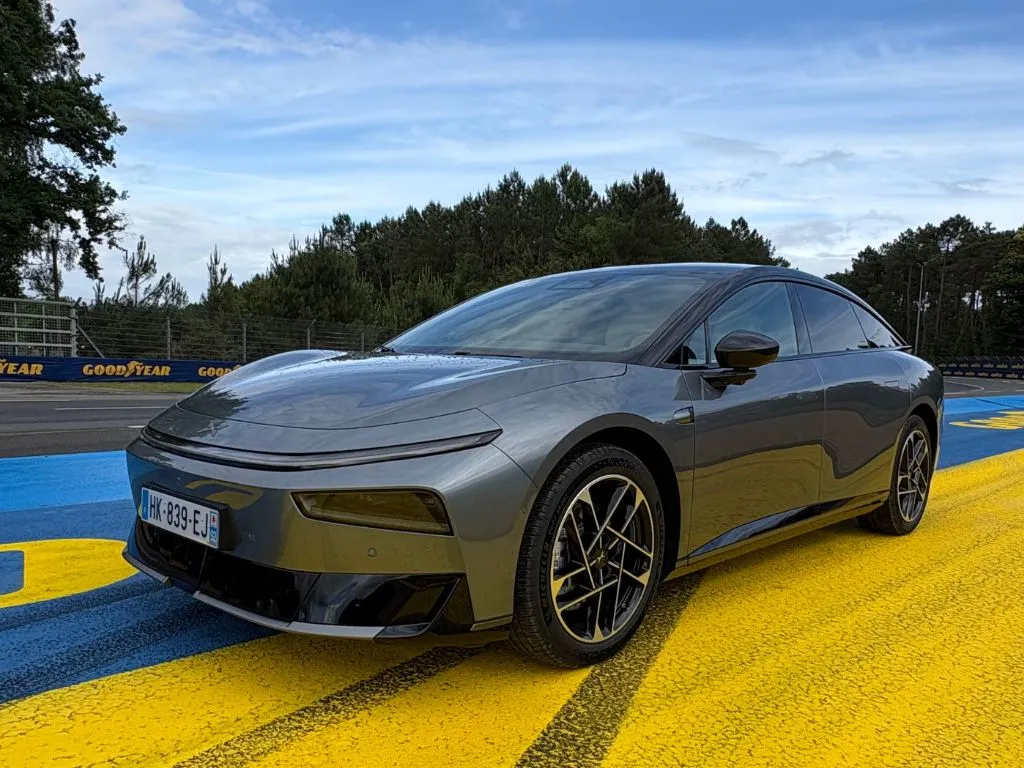
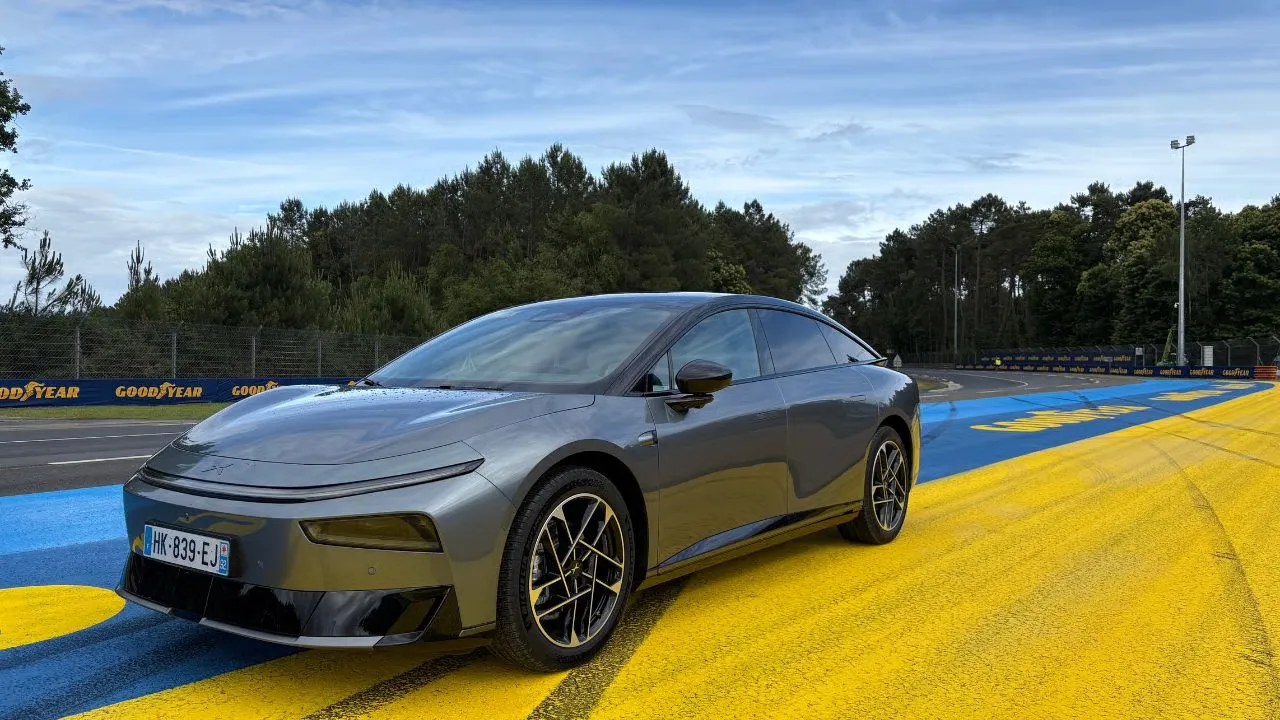
Let’s start with some aesthetic considerations: the sedan stands out due to its sleek lines, short hood, and rear fenders. Add to that the two-tone paint and the stone-textured finish on its surfaces.
Dimensions of the Xpeng P7+
Length: 5.07 m
Width: 1.94 m
Height: 1.51 m
Wheelbase: 3.00 m
Exposed handles and thin LED strips running across the entire width of the vehicle are typical features of modern electric vehicles. The large 20-inch five-spoke wheels also add to its elegance.
At the front, the large air intakes open or close depending on cooling needs. With their XL size, these smoked elements have a significant impact on the P7+’s drag coefficient. The 0.211 Cx value listed in the specifications is still quite impressive.
Interior and Trunk of the Xpeng P7+
This is perhaps the most interesting aspect of this model. The P7+’s interior is enormous, modern, and crafted with great care. This undoubtedly explains the success of this sedan in the People’s Republic, where 75,000 units were sold last year—a figure oddly identical to the registrations of Volkswagen ID.7 in Europe in 2025.
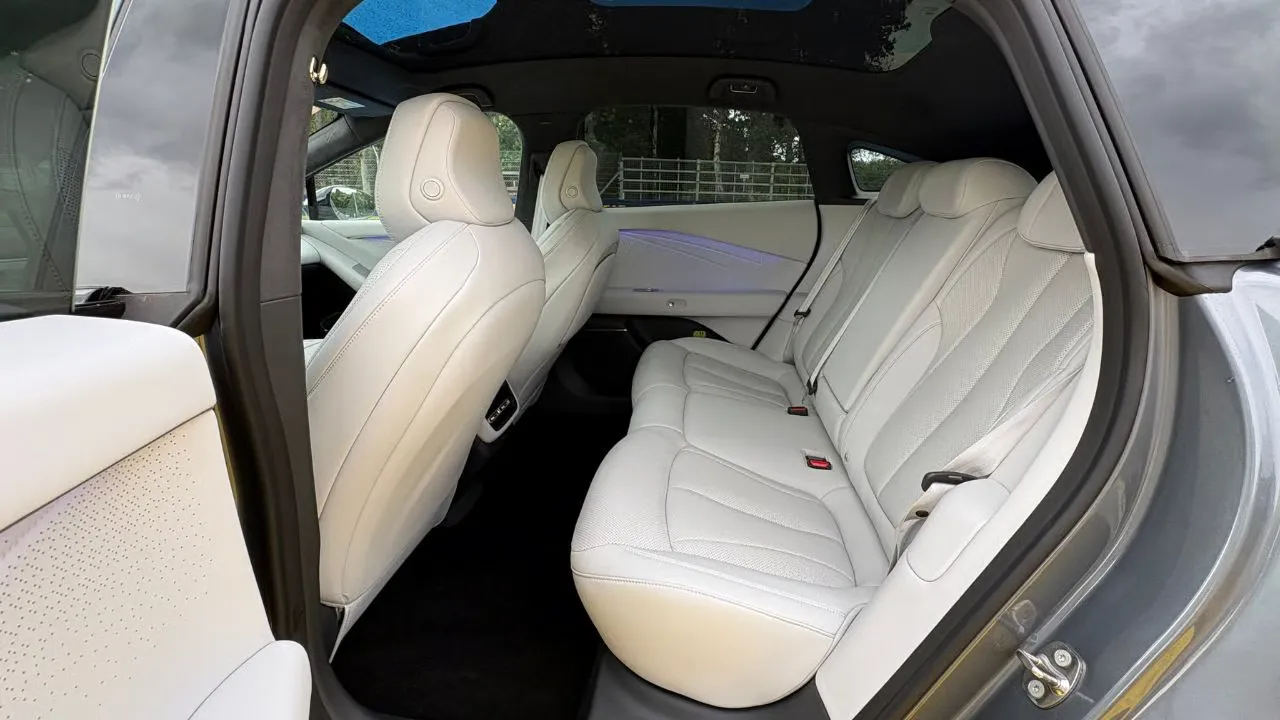
First, the materials. You sit in spacious seats covered with Napa leather. They all come equipped with ventilation, heating, and massage functions. There are no visible flaws in the fit, and no disappointing inserts to be found. The door panels are covered with nice felt. The decorative LED lighting is indirect, which is appreciated at night. The extensive use of white in our test model contributes to the sense of space.
Also Read
10 to 80% in 6 minutes: Does BYD’s ultra-fast charging damage batteries?
The two-spoke steering wheel stands out with its thick rim and impressive hub. Functions are organized around two sets of buttons and dials. We might have preferred something thinner, but that’s a matter of personal preference. The instrument cluster features a screen styled like a mailbox opening. It’s small, but it shows the essential information. The data is also displayed on the windshield via a head-up display that smartly stays just below the horizon line. The center console includes two ventilated charging docks for phones and a large storage area under the armrest (the compartments in the side doors are also very spacious).
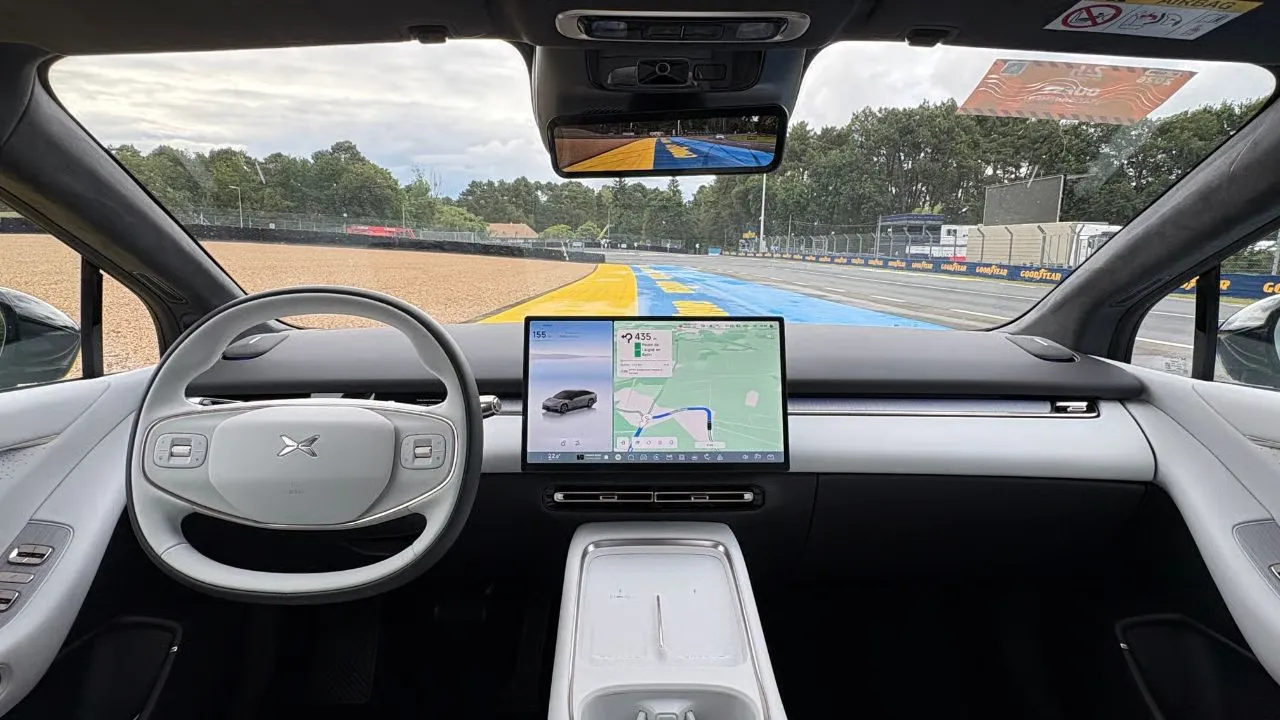
But, like in Tesla’s models, the key component remains the 15.6-inch landscape display. The overall menu layout features themes on the left and their content occupying three-quarters of the right side. Animations are quick, but the menus can be cluttered and sometimes translated inaccurately. Swiping down reveals some essential shortcuts (rearview settings, screen brightness, seat controls, alerts, glove box access, etc.). As you can see, this P7+ leans toward the fully touch-based approach in modern vehicles.
Let’s return to the physical world. The rear seats offer a bit of extra space. The kneecaps are still far from the front seats. The floor is high, lifting the knees slightly. But you can place your feet under the seats. Additionally, the inclination of the rear backs is adjustable. Both the seats and backs here are heated and ventilated. This feature is especially useful since the large panoramic roof doesn’t have a sunshade... It’s hot.
The trunk is deep. Despite the engine being on the rear axle, it can hold up to 573 liters. The double bottom allows cables to be stored under the thick carpet. A 12-volt outlet and ski tray are available. However, it’s surprising to note the complete absence of a trunk cover; passersby can see your luggage through the glass. This is all the more regrettable since the Xpeng P7+, with its short hood, also lacks a frunk.
The Xpeng P7+ in the city
Let’s start out on the streets of Le Mans using the control button behind the steering wheel. The P7+ starts quietly. Well, almost… To keep the cabin at reasonable temperatures, the air conditioning produces a noise level that’s quite loud for this price range.
This is a large sedan. It’s long (5.07 m), wide (1.94 m), and has a long wheelbase (3.00 m). It also lacks rear steering wheels. Nevertheless, its turning radius of 11.7 m remains acceptable given its size. The short hood and not-too-high body line help in maintaining orientation. For maneuvering, the external cameras on the center screen are sufficient.
The center screen displays images from the blind spots when the turn signal is activated. But does one really look at the screen while preparing to turn? The frameless, generously sized exterior mirrors are more useful.
An inconvenient interior mirror
The P7+’s interior mirror is digital. Good. But in practice, it’s less convincing. First, because in sunny conditions, reflections do appear on the mirror/screen. This gives the impression of having two cars of different sizes in the mirror. A photo is better here than a long explanation.
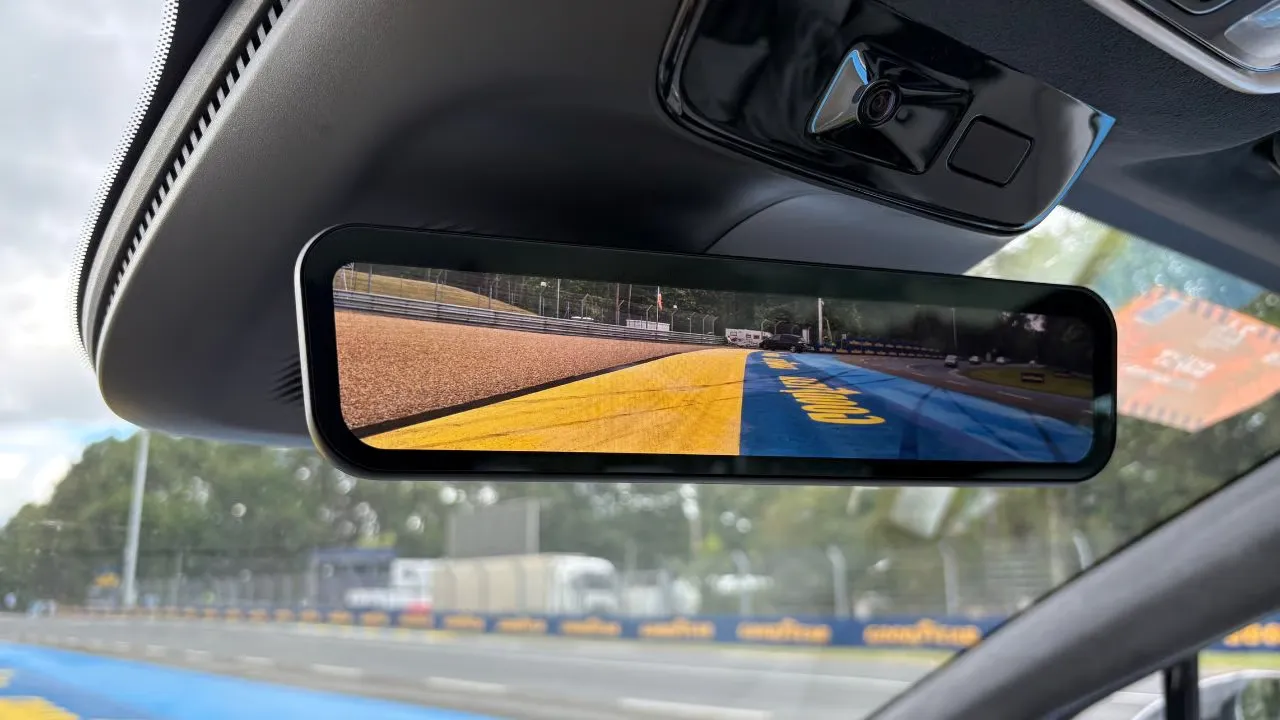
A tenth of a second of hesitation during a routine check shouldn’t exist… Additionally, the device tends to become saturated at night. In short, we quickly reverted to an old-school “mirror” mode.
The extremely soft steering also makes things difficult in urban areas, even though a lot of wheel turns are required. More direct gear ratios would be advisable for the engineers in Guangzhou.
The pedal-only driving mode, favored by tech enthusiasts, is certainly available. However, it must be activated or adjusted through the central screen. There’s no need for sudden braking, as the P7+ handles smoothly. The same applies to cornering. The adaptive suspension effectively absorbs these bumps, even on 20-inch tires, without delivering the floating sensation of a “pneumatic” tire.
The Xpeng P7+ on the road
Smooth in urban conditions, but slightly soft on highways. Indeed, the P7+ is a high-performing vehicle: it accelerates from 0 to 100 km/h in 6.2 seconds, and its permanent magnet synchronous motor delivers 313 horsepower. Yet, the driving experience is severely compromised due to issues with the chassis and suspension. The steering is unresponsive, the gear ratios are exaggerated, and the wheels don’t seem to respond properly during steering corrections near the center line.
At the first noticeable corner, the Michelin Pilot Sport EV tires with their relatively thick sidewalls show signs of strain. It’s not a lack of grip, but rather an effort to handle the weight of this heavy sedan (2,100 kg), further increased by its LFP batteries. Unfortunately, we didn’t test the Xpeng in wet conditions, but these tires are typically not at their best on wet roads.
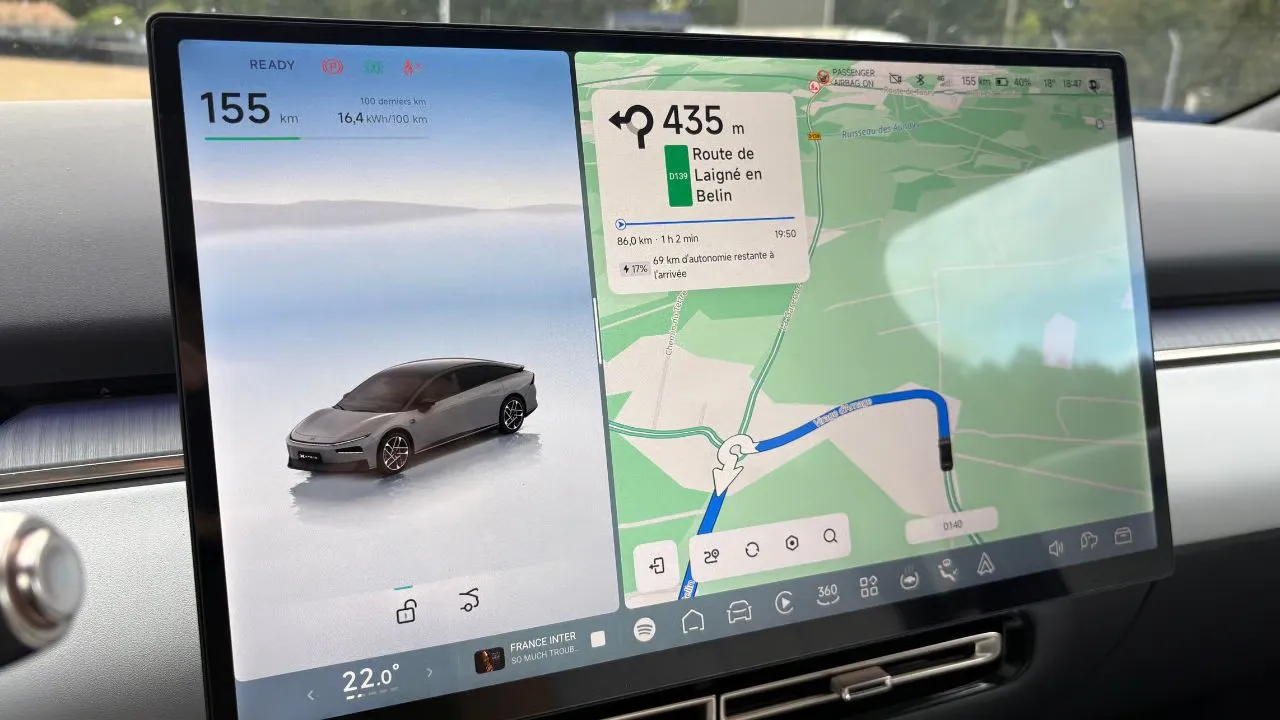
Piloted damping does not eliminate worn-out asphalt surfaces and even introduces some somewhat artificial adjustments. Body roll is noticeable. It’s still better than the G6 Phase 1 we tested the previous year: on curves, it felt like the wheels were “retracted” inward while the body rocked above them.
The driving character stands out only during hard braking, when the weight at the rear is clearly felt. The brake pedal feels spongy, but the car still brakes very strongly. ABS corrects effectively, ensuring safety. However, if you’re used to a Tesla sedan, BMW, or Alfa Romeo, this P7+ will seem quite bland at the wheel.
The Xpeng P7+ on the highway
The P7+ is a true modern highway cruiser, naturally handling well on long stretches of road. Stable, quiet, and bright, with comfortable seats, its cabin feels like a cozy cocoon during these journeys. Rugs and thick side windows absorb wind and rolling noise. Our sound meter showed an excellent 67 dB at 130 km/h.
The excellent standard sound system is also worth mentioning. When Spotify mysteriously suggested we listen to Mangez-moi, we discovered tracks, backings, and bass levels we hadn’t known existed before. This was thanks to the 20 speakers installed even in the trunk, not the “psycho” singing that plays with souls and opens the windows of perception, to use the wording from this 1994 song title.
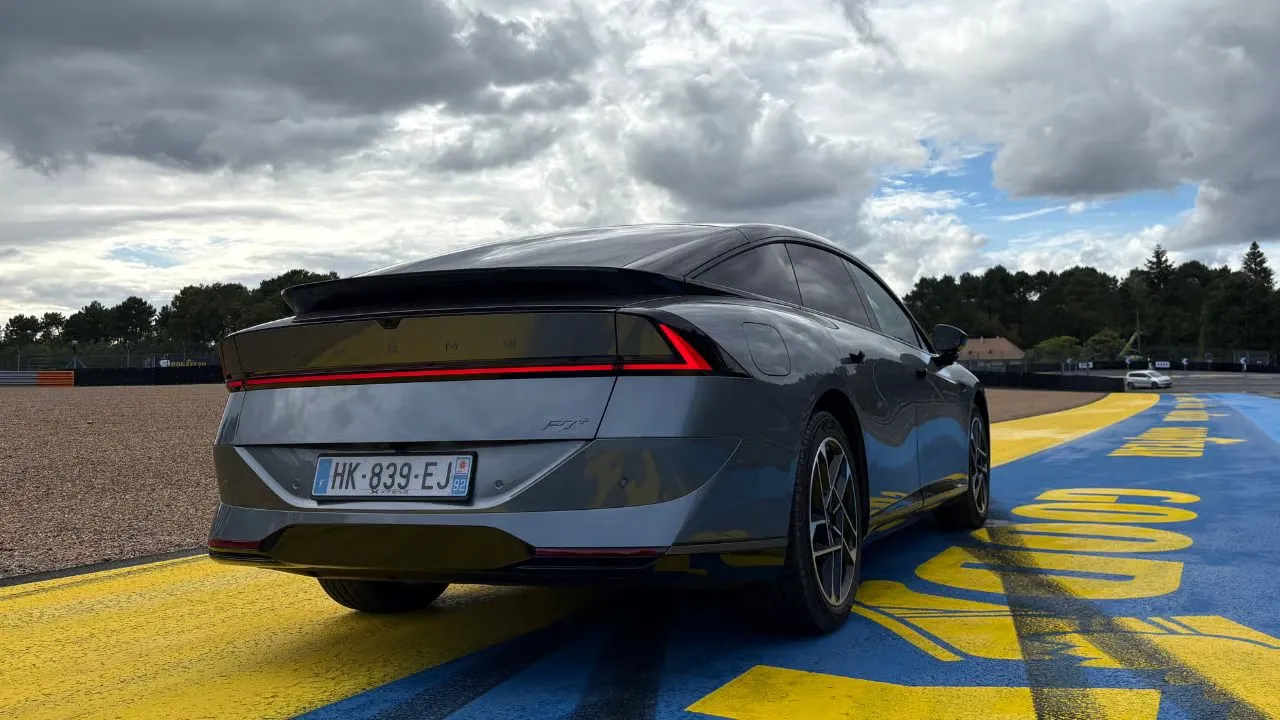
But problems are also starting to arise for the P7+. First complaint: our trips around Le Mans were constantly disrupted by errors in the cameras’ ability to read road signs. No, this highway is not limited to 50 km/h. Yes, that construction zone was finished a long time ago. Not to mention the camera aimed at the driver that suggests a break at the slightest yawn—even if you’ve only been driving for 5 minutes.
Worse still, the driving assistant is plagued by phantom braking, sudden corrections, and irregular pacing (when it decides to engage at all). The adaptive cruise control comes a bit closer to current standards by managing distances from other vehicles properly. But overall, the driving aids in more basic models are better tuned. This calls into question the brand’s entire narrative, which relies on grand events to highlight its progress in humanoid robots or AI...
The voice assistant isn’t very useful either:
Question: “Can you plan a route to Strasbourg via Amiens?”
Response: Setting up navigation to Strasbourg... without going through Amiens.
Tesla’s Grok or the systems in the latest Mercedes GLC are clearly more advanced. Will these shortcomings be fixed through updates? We can always hope so.
Consumption, Range, and Charging of the Xpeng P7+
On the other hand, the P7+’s highway fuel consumption is quite impressive, likely thanks to its excellent aerodynamics. At a steady speed of 130 km/h on the flat terrain of Beauce, we recorded 21 kWh per 100 km. The competition typically ranges around 23 kWh per 100 km. With a 75 kWh battery, this indicates a range of approximately 260-300 km on straight roads at 70-80% battery capacity.
Over the entire week of driving, the figure is closer to that of competitors at 17.5 kWh/100 km. It should be noted that these measurements were taken under very favorable temperatures. Logically, at low speeds, the figures displayed by the P7+ are less impressive compared to lighter vehicles. As a result, the range is around 430 km. This is still very good for an M-sized battery.
WLTP Range: 530 km
WLTP Consumption: 16.4 kWh/100 km
Range during test: 430 km
Consumption during test: 17.5 kWh/100 km
This is especially true since we never stop for long at fast charging stations. A few real-world figures using frequent 300 and 400 kW chargers speak louder than any long explanation.
Charge 1
300 kW charger
Charging status: 17% → 90%
Charging time: 16’34”
Energy: 61.2 kWh
Peak power: 299 kW
Power at 80%: 136 kW
Average power: 226.9 kW
Charge 2
Charger: 300 kW
Charge status: 5% → 86%
Charging time: 17’41”
Energy: 68 kWh
Peak power: 299 kW
Average power: 231.3 kW
Charge 3
Charger: 300 kW
Charge status: 21% → 79%
Charging time: 11’52”
Energy: 48.3 kWh
Peak power: 300 kW
Average power: 226.9 kW
Charge 4
Charger: 400 kW
Charge status: 15% → 91%
Charging time: 16’20”
Energy: 65.9 kWh
Peak power: 390 kW
Average power: 249.0 kW
As you can see, we only exceed 15 minutes when reaching load levels above 80%. Additionally, the average under full load is well above 200 kW, even when not using the most powerful chargers on the market. This is truly remarkable.
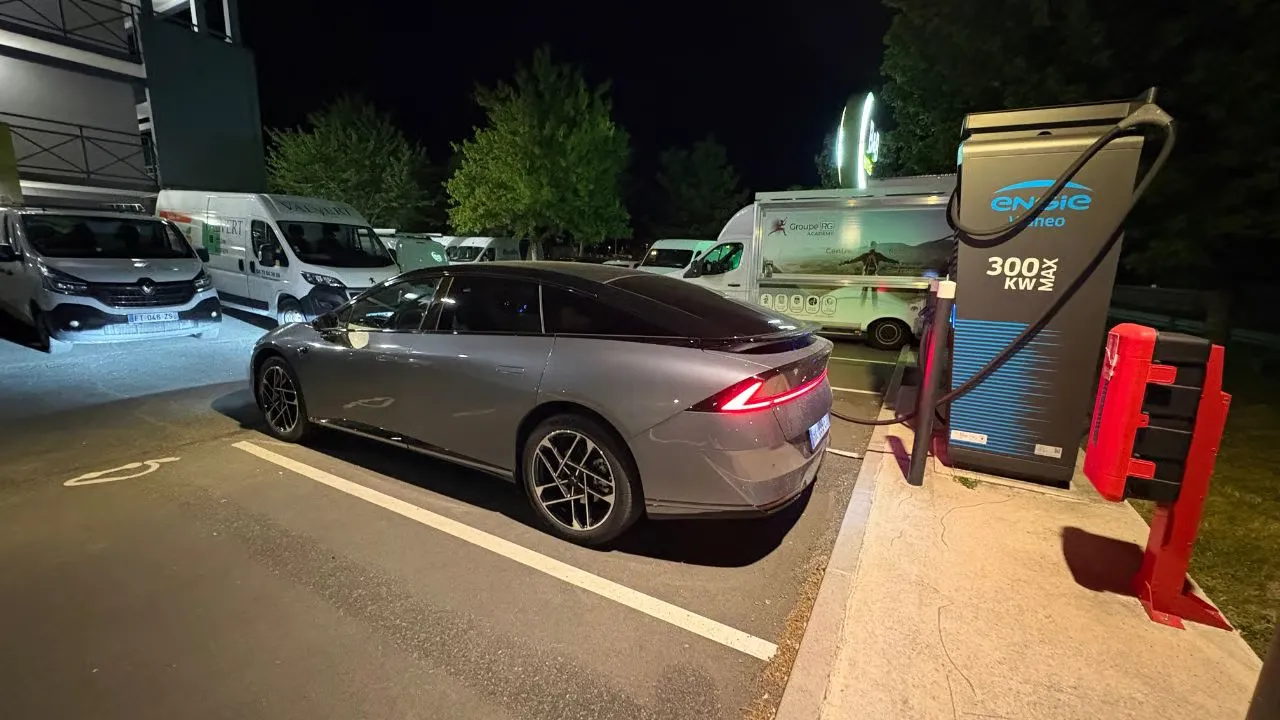
For more details, I recommend checking my colleague Soufyane’s comprehensive test. My results are roughly consistent with his. During our stops, with the front windows open and the high noise level emitted by this Xpeng, it’s clear this remains a demanding task. Nevertheless, the P7+ allows for long and fast travel while still adhering to speed limits. This means we can cover the Lyon-Paris distance in 4 hours and 33 minutes—typical of a high-performance road vehicle.
Pricing and Features of the Xpeng P7+
There’s no need to get too excited here, as almost everything comes standard. Ventilated, massaging, and heated seats, head-up displays, driving assistants, and so on. The only thing missing is adaptive headlights... and that’s about it.
Also Read
With its humanoid robot Iron, Xpeng launches an 80% automated production line, gaining a competitive edge over Tesla
The Long Range version costs 49,990 euros. To get a German car with similar features, you’ll have to pay significantly more... Still, keep an eye on its resale value. Despite all their advantages, sedans don’t hold much value. The price-to-performance ratio will make up for these minor shortcomings.
What We Liked
Price-to-feature ratio
Cushioned comfort
Vast spaces
We weren’t as fond of it
Driving aids
Boring driving experience
No trunk space