
Test Volkswagen ID.Polo: a versatile city car... truly versatile?
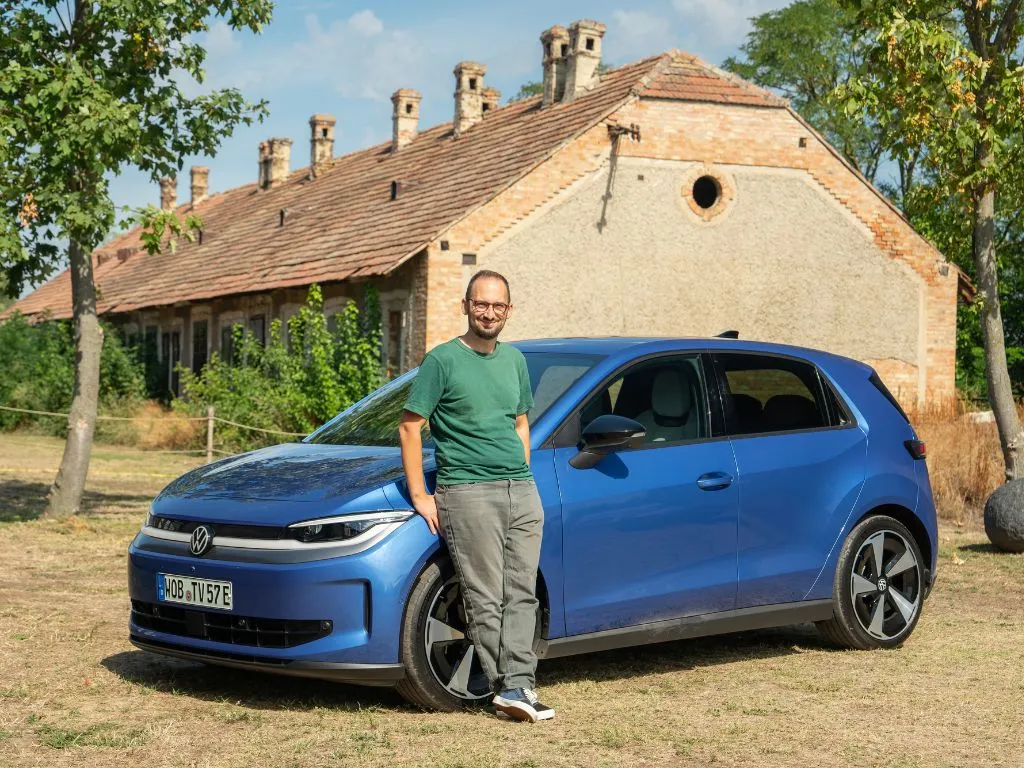
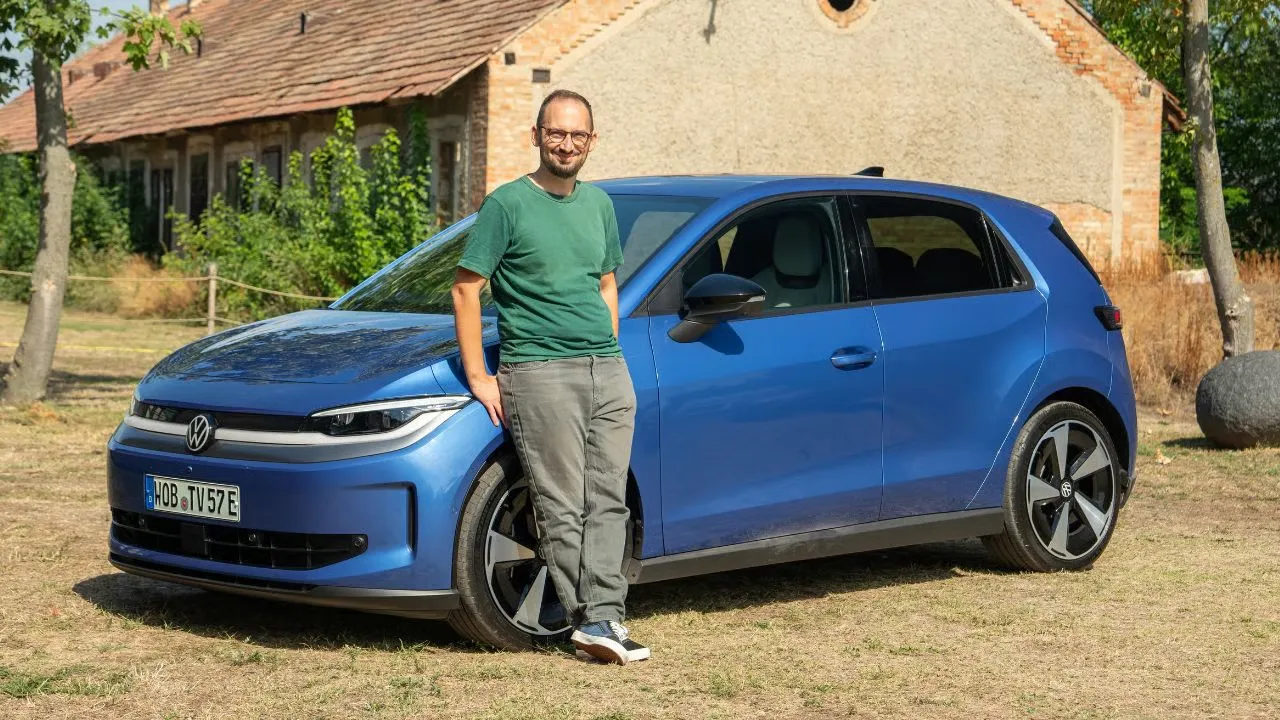
The Volkswagen ID.Polo looks just like a Polo... except for the internal combustion engine. Spacious, comfortable, and highly reliable on the road, this new electric city car has especially delivered an excellent surprise in terms of fuel efficiency. Andy took the wheel in Austria to see if Volkswagen had finally created its versatile electric compact car.
This is the German answer to a very French demand. In our country, the B-segment—home to the “versatile city cars”—dominates the automotive market. Renault Clio or Peugeot 200-something models have shared the top spot in registrations for decades.
Or, with the advent of the EV era, French automakers have somewhat avoided this obstacle. Here, Renault continues with a slightly outdated e-208 based on a hybrid thermal/electric setup. Elsewhere, PSA Group splits its efforts between a Renault 5 that is noticeably smaller than the Clio and a Renault 4 with a more cubical design and SUV-oriented features...
The Volkswagen ID.Polo thus arrives in a format that is extremely familiar to our eyes, streets, and wallets.
Dimensions and Exterior of the Volkswagen ID.Polo
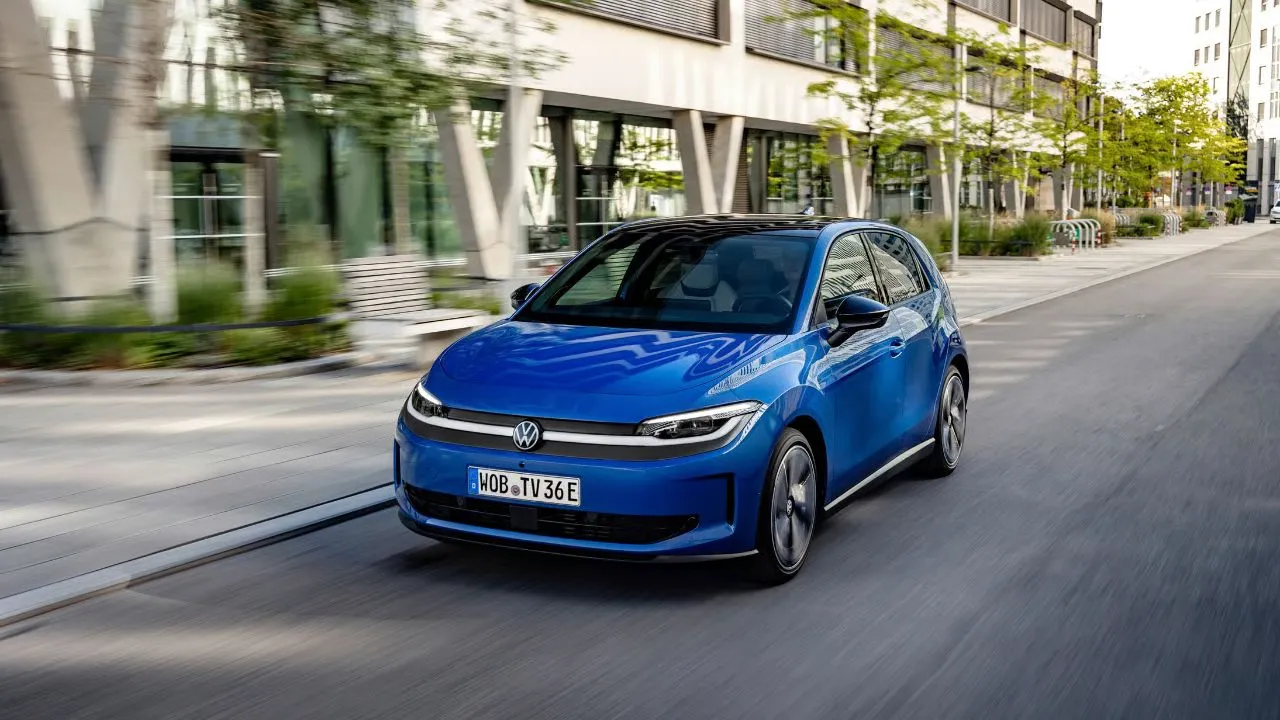
It starts with the shape. This is undoubtedly a Polo—a model that has been ubiquitous, having sold nearly 20 million units worldwide over the past 50 years.
Length: 4.05 m
Width: 1.82 m
Wheelbase: 2.60 m
Trunk space: 441 liters
Frunk: no
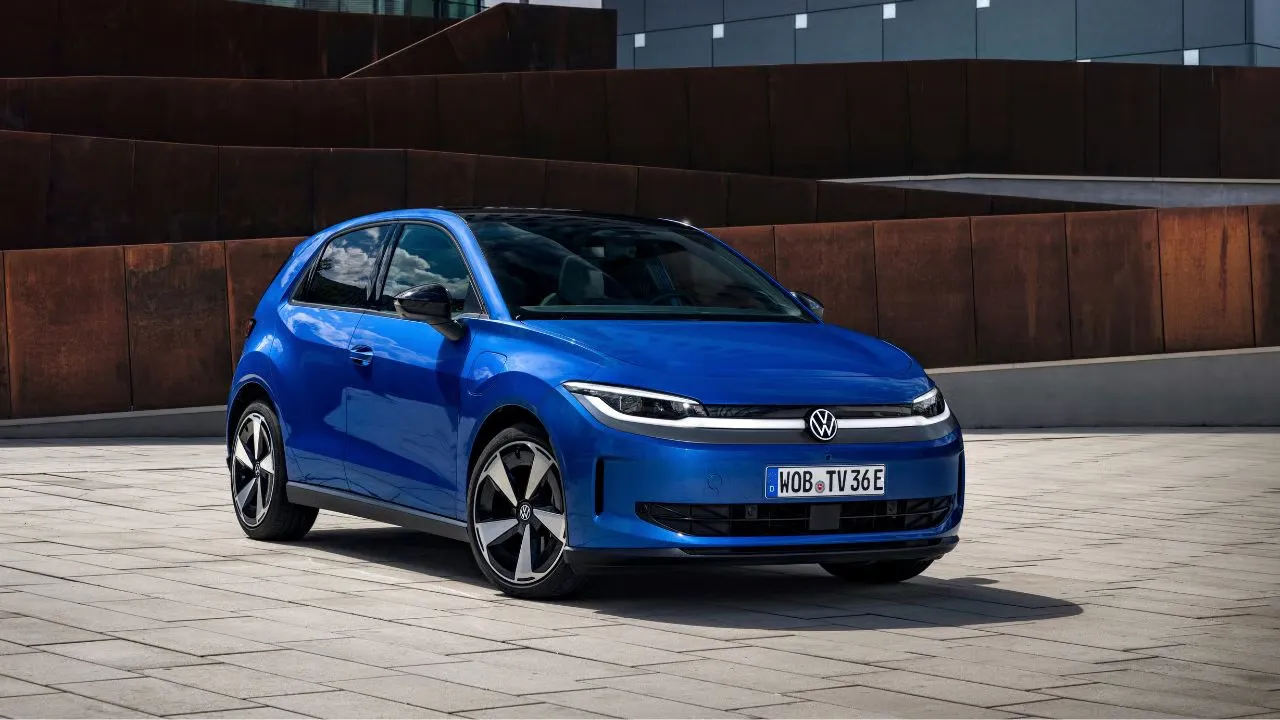
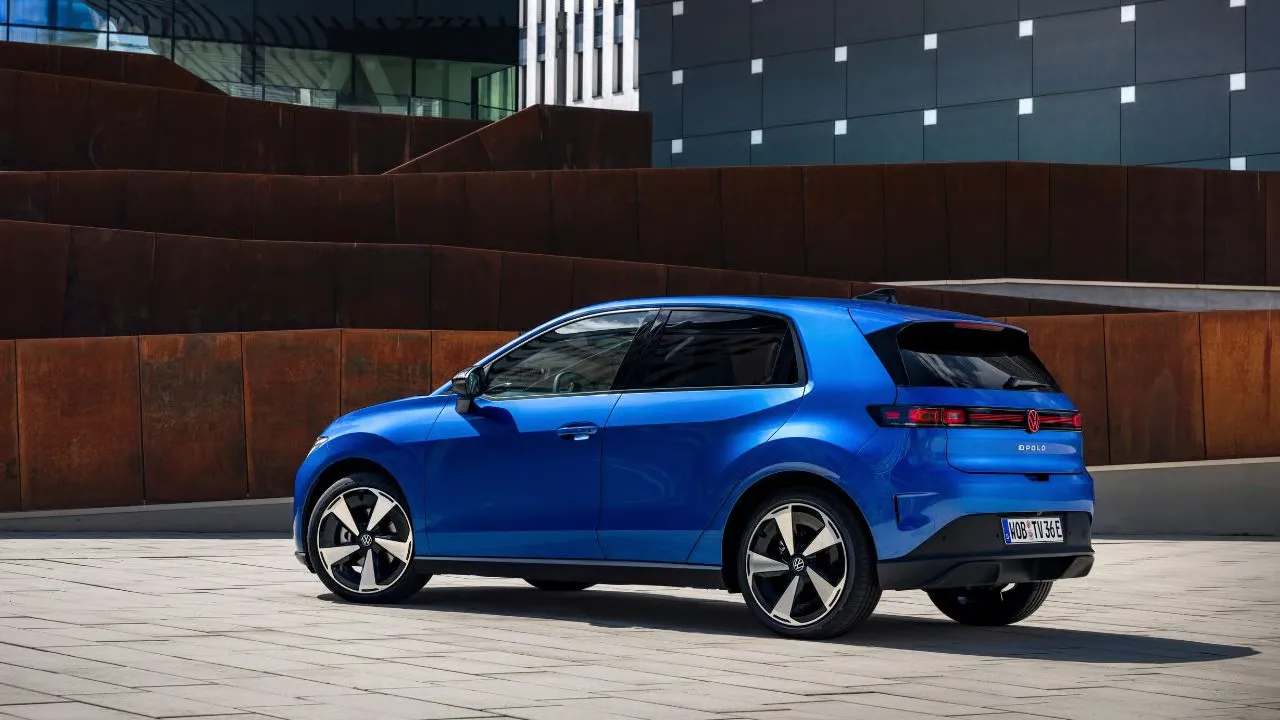
The traditional Volkswagen styling returns after the aesthetic experiments seen in the ID.3 and ID.4 models. There’s a clear separation between the hood and side panels, with horizontal lines dividing large flat surfaces, and the C pillar (between the rear windows and the roof) is emphasized.
Useless information
Since the Polo IV (2001-2009), this German city car featured a third side mirror on the C pillar. That’s not the case here... and it has an implication, as you’ll see in a few lines.
The designers still added a few touches from the new version of the ID “family.” Such as the slightly smiling white line connecting the front headlights. At the back, the square lights are designed in a 3D style within glass-like elements, their shape reminiscent of thick whiskey glasses.
Also read
Volkswagen ID.Polo, Skoda Epiq, Cupra Raval: The success of these new electric cars poses a problem
The Cx value is also very good for a vehicle of this size, at 0.264.
Our test model:
Volkswagen ID.Polo Style
Power: 211 hp
Torque: 290 Nm
Battery: 52 kWh (net)
WLTP range: 452 km
Price: 39,490 euros (excluding bonuses and discounts)
The interior of the Volkswagen ID.Polo
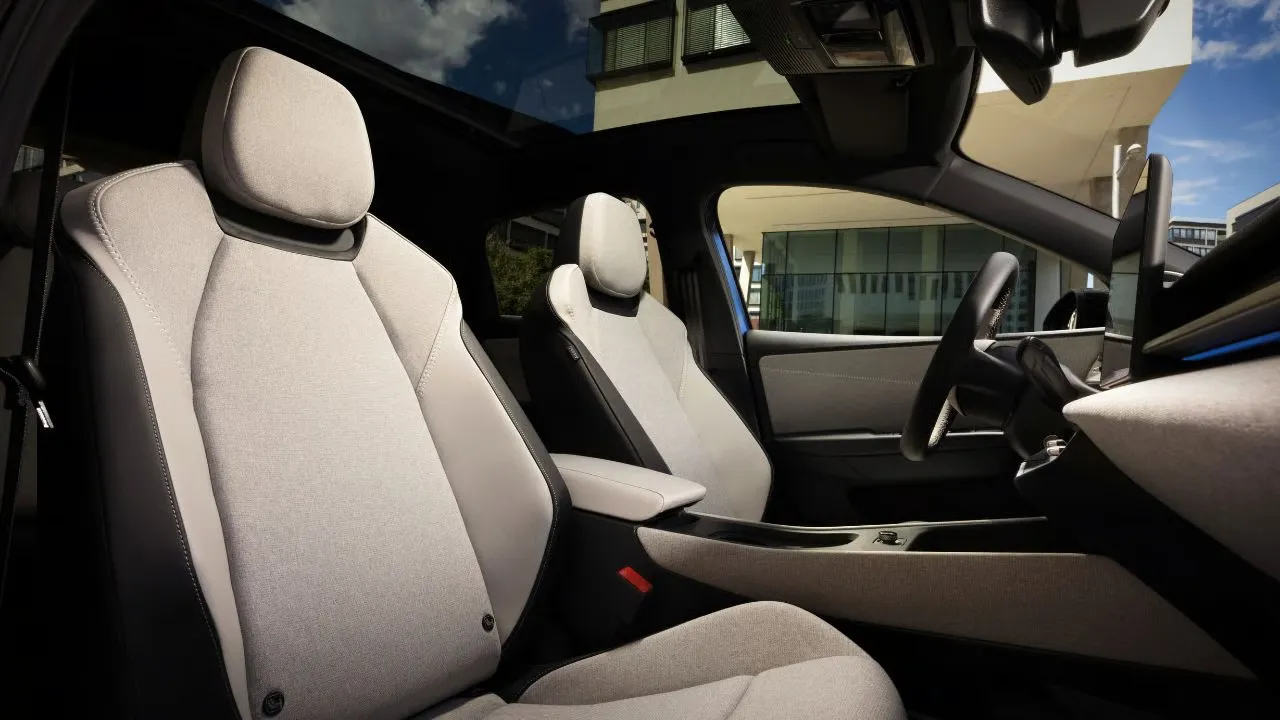
Volkswagen has regained its composure. After the missteps of the ID.3 era, we see once again the fundamentals that made Lower Saxony’s interiors so popular—namely, a serious design approach, high-quality materials, and thoughtful ergonomics. In terms of design, it’s understated. The light-colored materials in our test model added a touch of brightness to the austere, clean, and modern atmosphere.
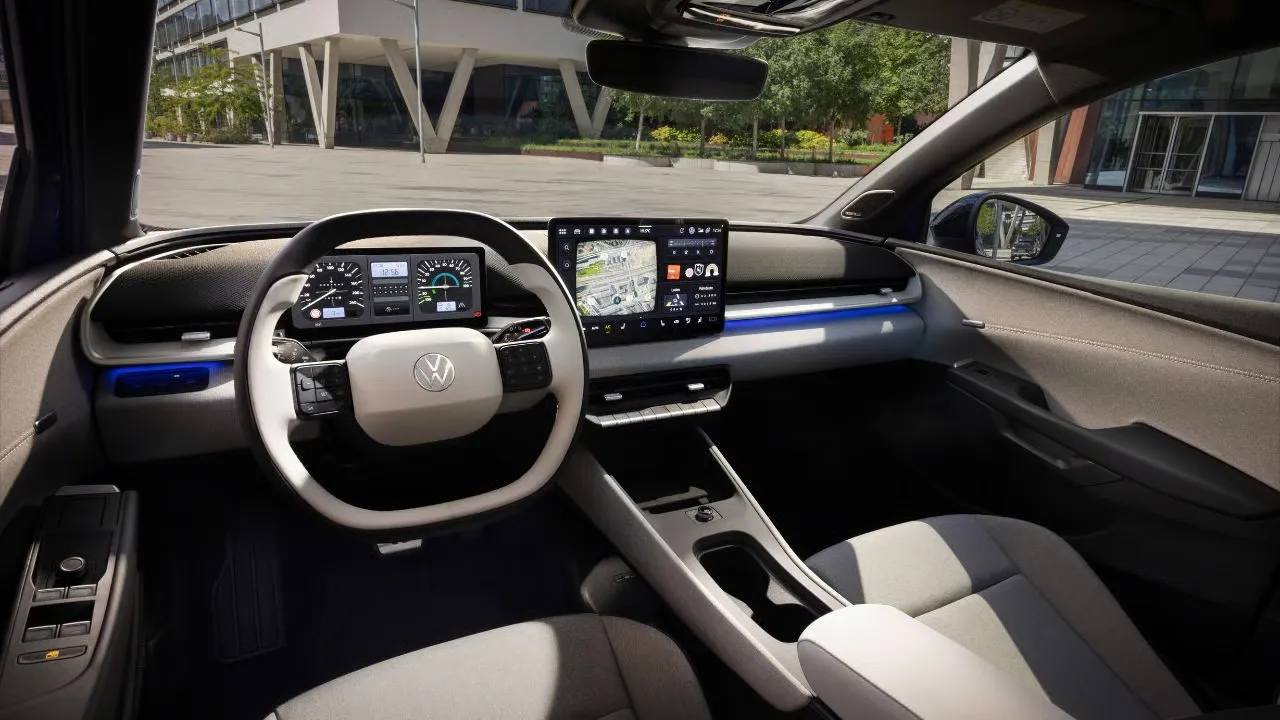
As for material quality, it’s quite good for a B-segment vehicle. While there are hard plastics present, the upper part of the dashboard is padded. This will surely excite automotive journalists (what a nasty bunch!). The joints and alignments are flawless.
In terms of ergonomics, it’s back to square one. There are indeed four pulls on the rear door for the window lifters, buttons to adjust the climate control, a knob to fine-tune the audio, and buttons on the steering wheel instead of haptic controls. (We really wish we could have attended the meetings from the 2010s where these essential features were removed to analyze how VW went astray on this issue…).
There are still a few UX issues, particularly related to the large-format (12.9 inches) central screen that comes standard. The “death circle” or loading cursor appears too often, indicating that the system is working hard to process tasks. The layout of the menus can sometimes be confusing: why does one have to search through the list of apps to find the average power consumption? And why is it necessary to go to the central screen to turn off various warning beeps? A single button would have sufficed, as Renault has shown in recent years. Finally, a minor note: the View button on the right side of the steering wheel hub allows you to change the display on the instrument cluster. The most useful version is “navigation,” while the most nostalgic is the “dials” option, reminiscent of the 1974 Golf 1.
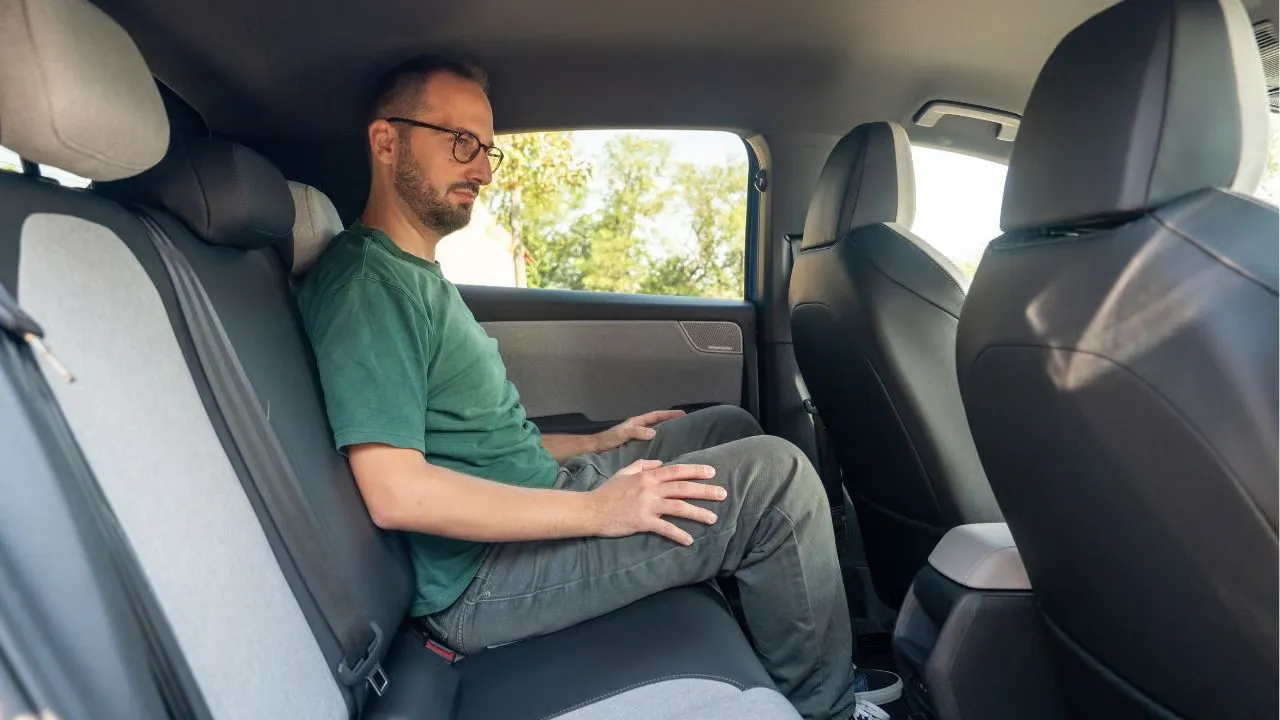
And what about the space in all this? It’s generous. The rear seats offer ample knee room, nearly up to the standards of a compact sedan. The backrests are comfortably contoured, and the seating position feels natural. The issues lie upstairs. First, Volkswagen didn’t include a handhold. Well, we can do without it. Next, the small window opens… very little. Even when pressing hard on the window lift, the glass doesn’t descend more than halfway. It’s impossible for rear passengers to sit with their elbows against the door. Okay, fine. Finally, the door’s cutout ends quite low relative to the roofline. In short, the author bumped his head three times while sitting in the rear seats despite being only 1.77 meters tall. (You’re free to draw your own conclusions about the author’s foolishness.)
It’s much better when the trunk lid (which isn’t motorized) is opened. The cargo space ranges from 435 to 441 liters here. This is a figure befitting a B-segment SUV (rather than a city car). Wow, it far exceeds the Renault 5 (277 liters per VDA standards) and even the Renault 4 (375 liters per VDA standards). The Renault 4 still has an advantage in terms of loading height, as its floor is much lower than that of the ID.Polo. If the floor is raised to a higher position, the surface becomes flat all the way to the front seats. If it’s lowered, there’s ample vertical space that would allow, for example, transporting a cactus upright. Just be careful not to scratch the audio compartment.
The Volkswagen ID.Polo in the city
This car comes at a price. From the very first maneuver, with the steering wheel hitting its limit, it’s clear why: the MEB+ platform has lost its competitive edge in terms of maneuverability. While the ID.3 turns in 10.2 meters, the ID.Polo needs 10.9 meters between two curbs. These are standards for conventional multi-purpose city cars. In the electric segment, the Peugeot e-208 and Renault 5 perform significantly better in this regard.
We’re still helped with our maneuvers by the rear camera (360° in higher trims). The resolution is decent. On the screen, a button allows cleaning the camera, which can sometimes get covered in snow or dust. In such cases, the rear windshield wiper sprays water on the mirror—and thus the sensor. Clever!
As for the rest, driving in the city is done with great smoothness. The long travel distance of the accelerator pedal helps regulate speed without causing nausea in passengers. The introduction of the new APP290 engine enables one-pedal driving, activated via section “B” on the gear selector lever. Only a minimal brake application at the very end of deceleration slightly affects this smoothness.
The Volkswagen ID.Polo on the road
Again, this is very serious business. In our test model, the performance meets expectations. The engine delivers 211 horsepower and 290 Nm of torque to the front wheels. Even before the GTI arrived, the ID.Polo competes with the Alpine A290’s 220 horsepower. With a 0 to 100 km/h acceleration time of 7.1 seconds, no one will hesitate before attempting to overtake.
During our tests on dry and gravelly roads in Lower Austria, the front axle never seemed to struggle with torque management. With an engine at the front and discs at the back, while regenerative braking handles everyday decelerations, the braking system adopts a more conventional setup, ditching the drums found in the ID.3/5/7 or Buzz models. A firm press on the brake pedal confirms this—the ID.Polo stops quickly, straight ahead, with minimal activation of the ABS. There’s no jarring transition between regenerative and friction braking, and the pedal feels not too spongy. Managing this functionality within a single control unit (“one box”) has its advantages.
When approaching a tight curve, the front end remains stable with excellent grip. However, the steering system tends to be quiet, and the gear ratio is a bit high for our taste. As the ID.Polo climbs over a crest, the rear end doesn’t bounce around, though its torsion bar is less refined compared to the multi-link suspension of the Renault 5 and Alpine A290. The only drawback is its higher weight compared to its competitors (1,576 kg). Losing even a quarter of a ton would improve its handling while also adding some extra efficiency. In other words, a Renault 5 would likely be more enjoyable to drive.
But this city car is top-notch. That’s worth noting. A discerning colleague wrote after testing a Chinese newcomer: “The chassis became increasingly unstable as the speed increased.” On the contrary, the ID.Polo proves otherwise: in Europe, they still know how to build cars that stay firmly planted on all four wheels.
A Flawed Story
We conducted this test with an ID.Polo equipped with Michelin Pilot Sport 5 Energy tires. These 19-inch tires, which are optional in Germany, offered excellent grip... but they likely won’t be available in France. Back home, VW will probably opt for Hankook iON tires, which are better known for their efficiency and quiet operation. This will satisfy hypermilers more than those who prefer dynamic driving.
The Volkswagen ID.Polo on the Highway
Let’s now test the ID.Polo on the highway. At 130 km/h, the intelligent cruise control performs well. It even allows some extra headroom when approaching other vehicles. When getting too close to a truck, the braking is firm but not abrupt. Another advantage: the camera makes few mistakes in reading traffic signs. The noise from the tires and wind is slightly louder than in other models. Let’s check by opening the front windows slightly—it’s just standard glass.
The comfort, however, is very good thanks to the seats in our Style trim. They offer good lateral support, a sufficiently long seat length, and the right balance between softness and firmness.
Volkswagen ID.Polo Fuel Consumption and Charging
After our approximately 250 km journey, we recorded an average “computer” fuel consumption of 14.5 kWh/100 km. This is therefore close to the official WLTP figures, which range from 13.3 to 13.8 kWh/100 km depending on tire pressure and equipment.
Also read
Electric cars: why official range and consumption figures don’t match reality
This places the ID.Polo’s fuel consumption in the same range as smaller, narrower, and lighter city cars like the Renault Twingo or Hyundai i10. Could it be the new Miiverse? It’s an excellent score, even considering the favorable test conditions detailed below. The Renault 5/Renault 4 duo seems behind, despite the minor improvements made a few weeks ago.
PS: An inverter converts the direct current from the battery into alternating current for the engine.
Production Process
Location: around Vienna (Austria)
Route conditions:
25% highway (130 km/h)
35% regular roads
40% urban and suburban areas
Maximum temperature: 32°C
Under this type of driving cycle and conditions, this test indicates an range of around 350 km on mixed routes for a 52 kWh (net) battery. This is sufficient to handle daily tasks without needing to recharge.
WLTP Range: 452 km
At the charging station, the ID.Polo is just as competitive against its direct rivals. VW claims a peak power of 105 kW with its 52 kWh battery (90 kW for the 37 kWh version). For Renault or Stellantis models (Peugeot e-208, Fiat 600, Opel Corsa, etc.), the peak power tops out at 100 kW.
Most importantly, the Volkswagen is theoretically capable of achieving a 10-80% charge in 24 minutes, while its competitors estimate it takes half an hour.
10 to 80% (manufacturer): 24 minutes
Charging power (peak): 105 kW
Location of the charger port: front right
V2L compatibility: available as an option for 210 €
Heat pump: available as an option for 1,150 €
As demonstrated by my colleague Soufyane’s Supertest, vehicles produced by the VW group tend to perform better in “real life” than according to their theoretical specifications. As always, we encourage you to wait for the results of our own supertest to get a more accurate picture of fuel consumption, charging curves, and driving times. But the early signs are highly encouraging for the German group.
Price and Features of the Volkswagen ID.Polo
It’s not cheap. The prices for the ID.Polo range from 24,995 euros (Trend, 37 kWh) to 39,990 euros (Style Exclusive, 52 kWh). On the configurator, our 52 kWh Style version is listed at 39,490 euros.
The following are standard on the Style version:
Keyless entry
Matrix headlights
Inductive charger
Optional:
Pack « IQ Drive » (line change controller, assisted parking, 360° view): 1,205 €
Heat pump: 1,150 €
Panoramic roof: 870 €
19-inch wheels: 880 €
Currently, VW offers an automatic discount of 3,000 € on the ID.Polo. The price drops by another amount. Additionally, this city car made in Spain is eligible for the famous government subsidies. This results in an additional discount of 3,500 to 5,700 €. For our test model, the price falls below 33,000 €. We should also keep in mind the cost savings over time, especially since diesel or unleaded fuel costs exceed 2 euros per liter...
Caveat: VW is not (yet) able to guarantee that the battery cells are of European origin. Until its own subsidiary, PowerCo, increases production in Salzgitter (Germany) and Valencia (Spain), this city car does not yet benefit from the additional support reserved for electric vehicles with batteries made locally.
By opting for a smaller battery, a simpler setup, and depending on income levels, the price can drop below 20,000 euros. At this price, you get a solid, reliable electric vehicle with a deep trunk and enough space for a (small) family. Isn’t that exactly what a versatile city car should offer?
In a nutshell
It exudes reliability and stands out for its fuel efficiency.