
Porsche Cayenne Turbo Coupé Electric Review: Don’t buy it!
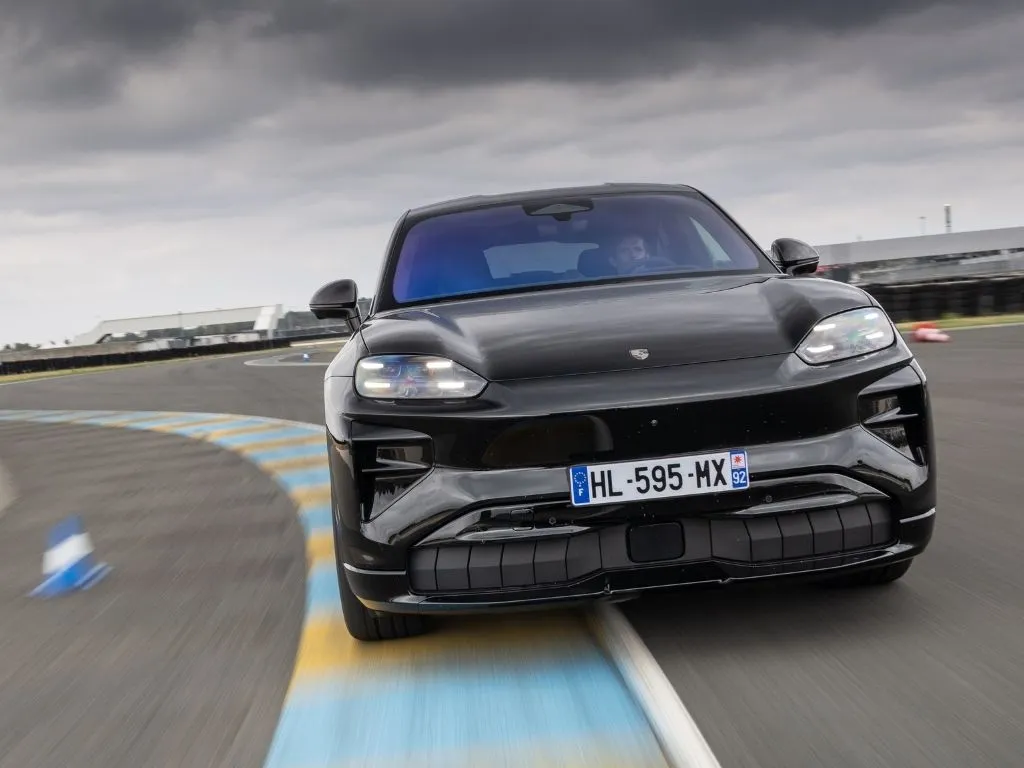
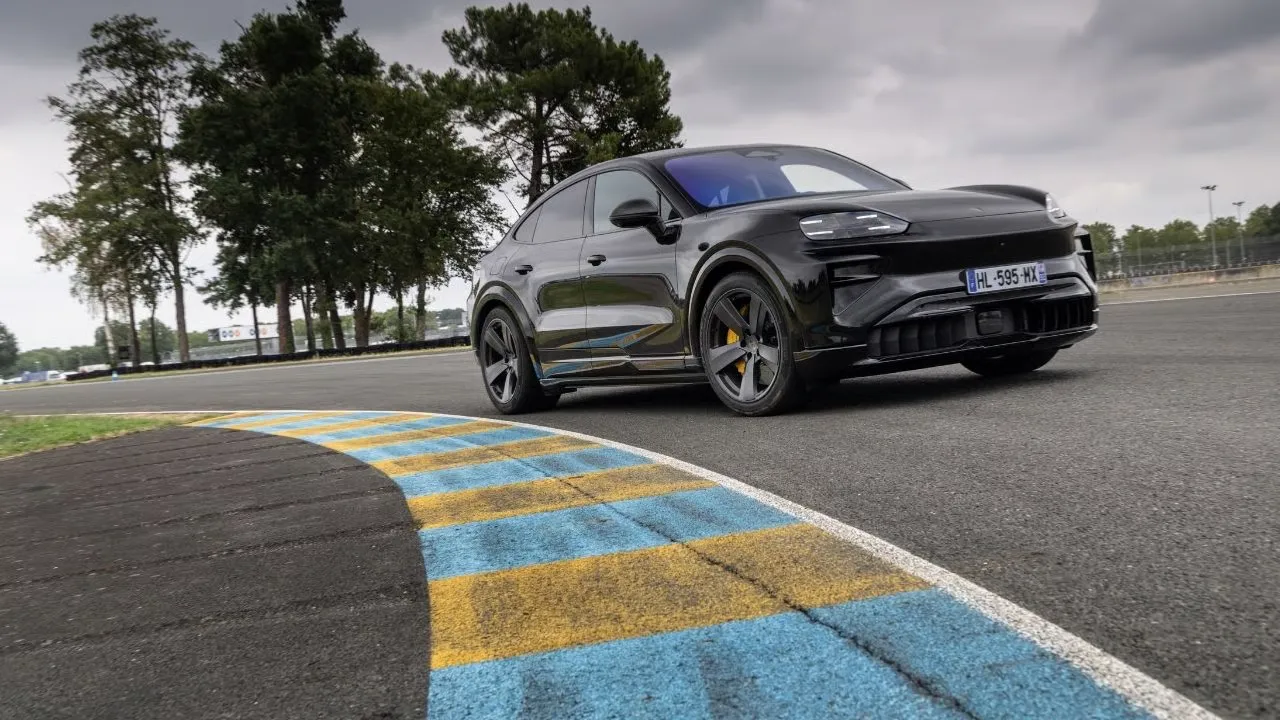
Until now, the traditional Porsche Cayenne Coupé has sold better than its SUV counterpart in the French market, but that might change in the coming months with this new electric generation. And it’s not just because I urge you in the headline not to buy this newly released Cayenne Turbo Coupé, despite its impressive features.
As I write these lines, I can already imagine the phone ringing on the editor-in-chief’s desk right after publication.
Hello, good day, this is Porsche. But what’s with that headline?? Are you out of your mind?
Well, I trust Pierre to explain to our Porsche friends that I’m naturally playful and that all of this is just a spectacular ‘hook’ to draw attention to this review among so many others... but that doesn’t change the fact that I stand by my stance: no, don’t buy this Cayenne Turbo Coupé, even if for you the concept of sportiness necessarily requires a ‘coupé’ designation!
Let me explain.
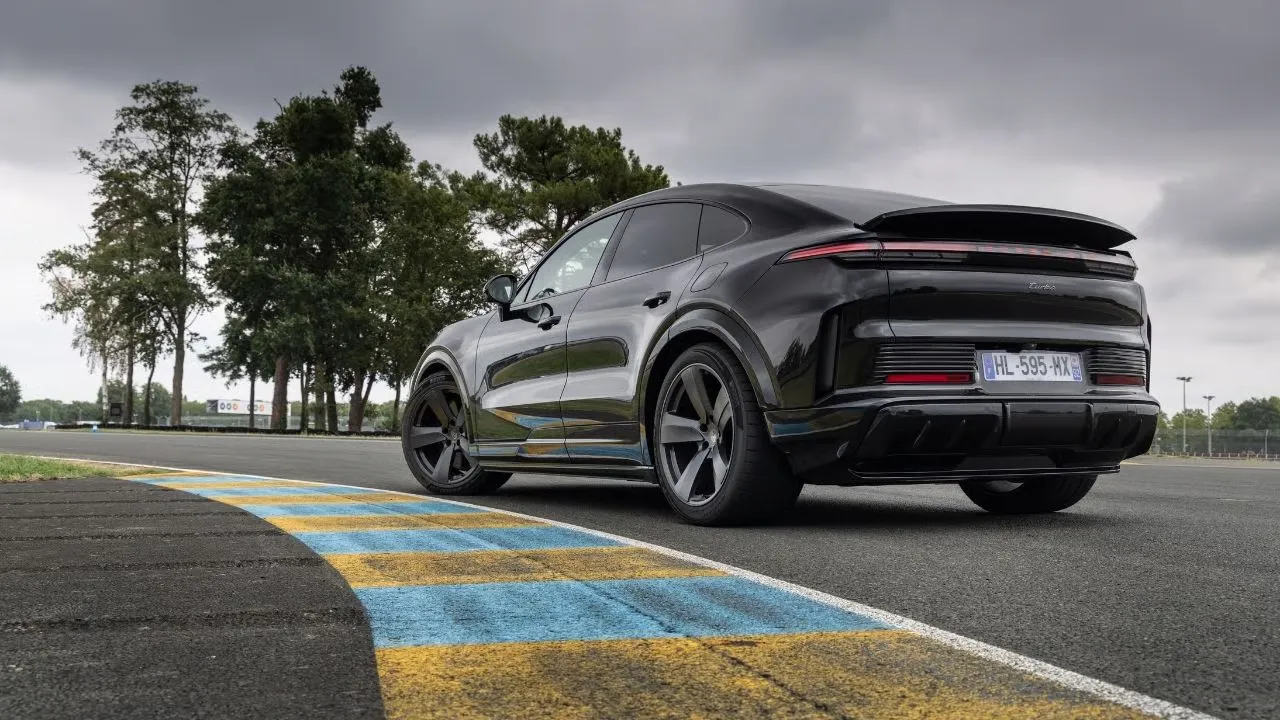
On one hand, if you really love coupés, you’ll have noticed that this beautiful vehicle, with the same length as the SUV (4.985 meters), has 5 doors, which automatically excludes it from the category of ‘real’ coupés, despite marketing efforts. In short, don’t choose this Coupé if you want to drive like a coupé — you might end up facing ridicule from those who know better...
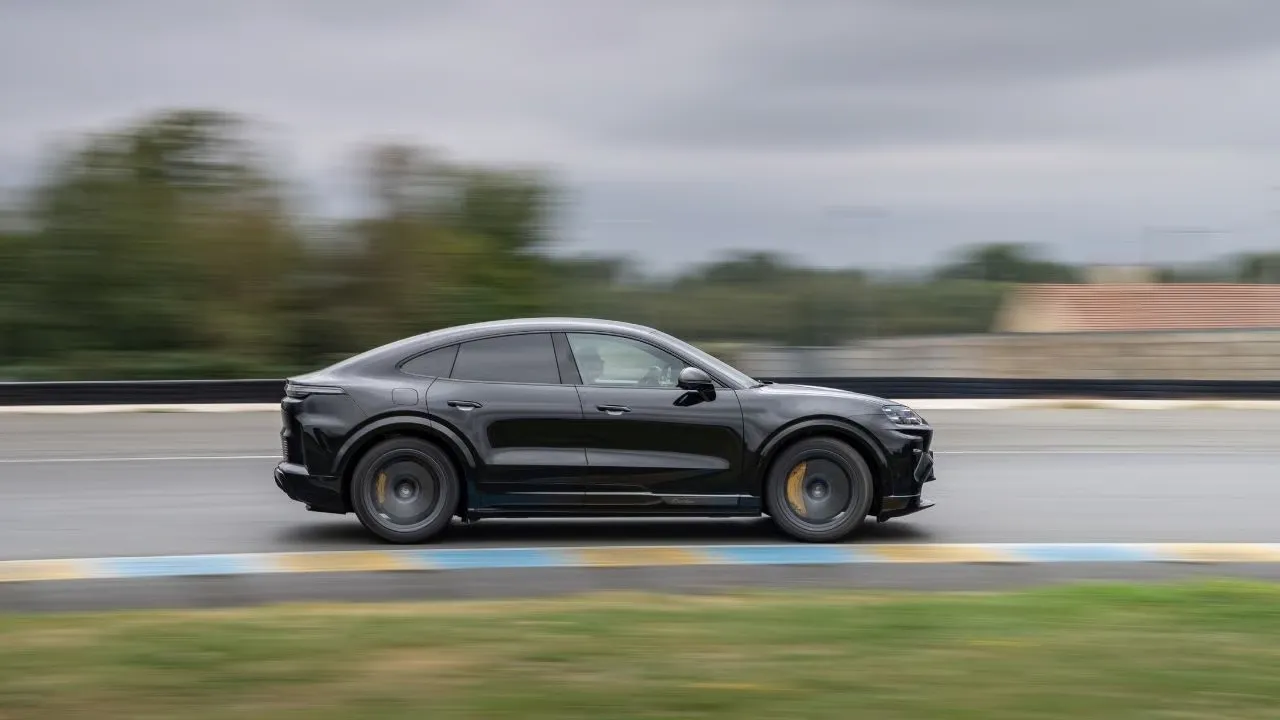
On the other hand, although being 2.4 cm shorter makes it slightly more aerodynamic (0.23 vs. 0.25), allowing its massive 113 kWh battery pack (108 net) to give it a range of 11 km more than the SUV (628 km vs. 617 km WLTP), I doubt you’d choose a Cayenne Turbo for constant eco-driving. And since fuel consumption soars logically when you unleash the 1,156 hp in Launch Control mode or use its push-to-pass feature, which adds 176 hp to the 857 hp available at all times (up to 35% of battery charge), the extra 11 km of WLTP range offered by the Coupe won’t make much of a difference (no, your right foot will play a bigger role here). It should also be noted that the acceleration of this Coupe isn’t better than that of the SUV, with both versions achieving similar speeds.
0 to 100 km/h in 2.5 seconds, which is as fast as a Lamborghini Revuelto (or even a 911 Turbo S).The final drawback is that since the Cayenne Coupé has 240 liters less trunk space compared to the SUV (1,347 liters versus 1,588 liters), choosing the Coupé also means risking arguments with the rest of the family because there’s no room for an extra suitcase on vacation trips. And if that weren’t enough, note that this Coupé is surprisingly 5 kg heavier than the SUV (2,650 kg versus 2,645 kg DIN).
My theory is therefore this: if you opt for the SUV version instead of this new Coupé model, you’ll save 3,100 euros (170,300 euros versus 167,200 euros) that you can immediately reinvest in an essential option: the Active Ride package at 8,394 euros.
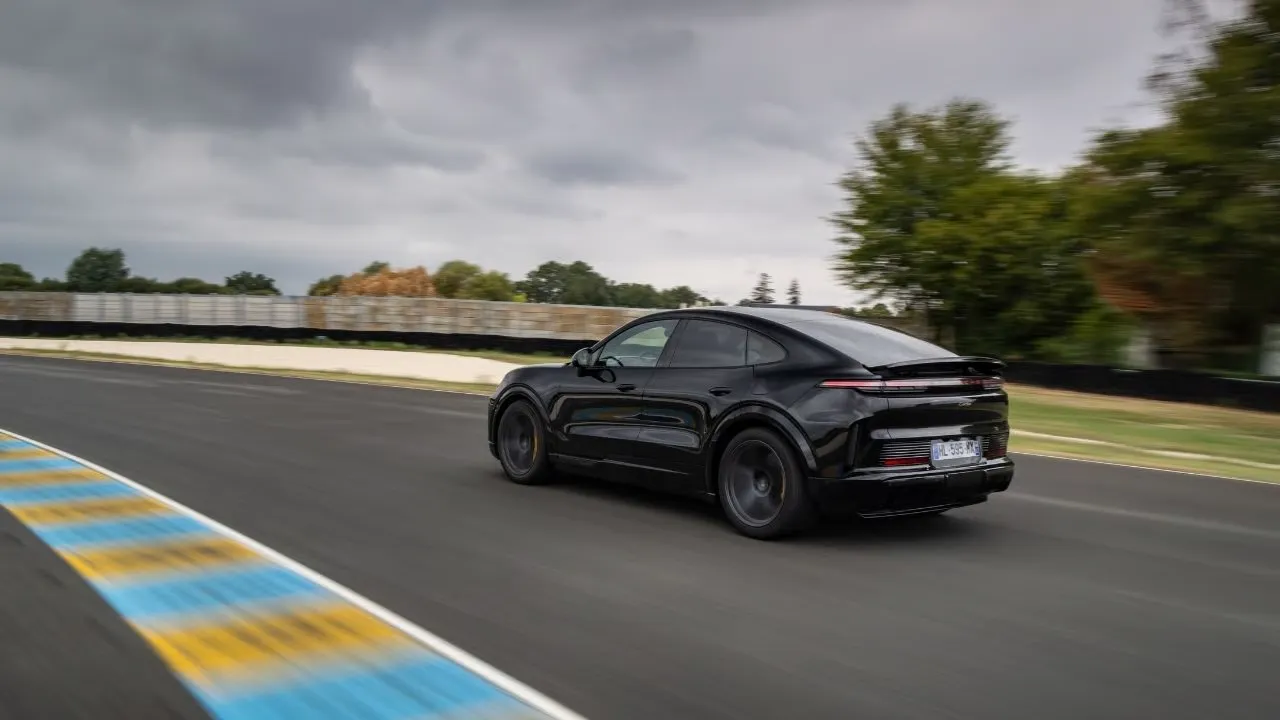
This is why the title is a bit provocative. Don’t buy the coupe; get the SUV instead. You’ll “save money” without sacrificing anything else. Subjectively, the ¾ rear view of the SUV version is much more appealing than that of the coupe, which wasn’t the case with previous Cayenne models (thanks to the side air flaps that give it a very sporty stance on the road, along with a range of 15 to 20 kilometers!).
That’s it.
Flying Magic Carpet
When driving a Cayenne without Active Ride, the anti-roll system becomes very noticeable on bumpy roads, significantly reducing comfort by tossing you from side to side. Active Ride eliminates this anti-roll function and relies on the dual-chamber pneumatic spring hydraulic suspension system, delivering an utterly surreal level of comfort. To put it clearly, in Normal mode, the car smooths out everything completely, and those who have had the chance to drive a Rolls-Royce might wonder if it’s not even better here. Especially when you activate all the electrical features and switch to Sport or Sport Plus mode, the system adapts and neutralizes the physical effects caused by the vehicle’s enormous weight. For the 0.0001% of customers who will go
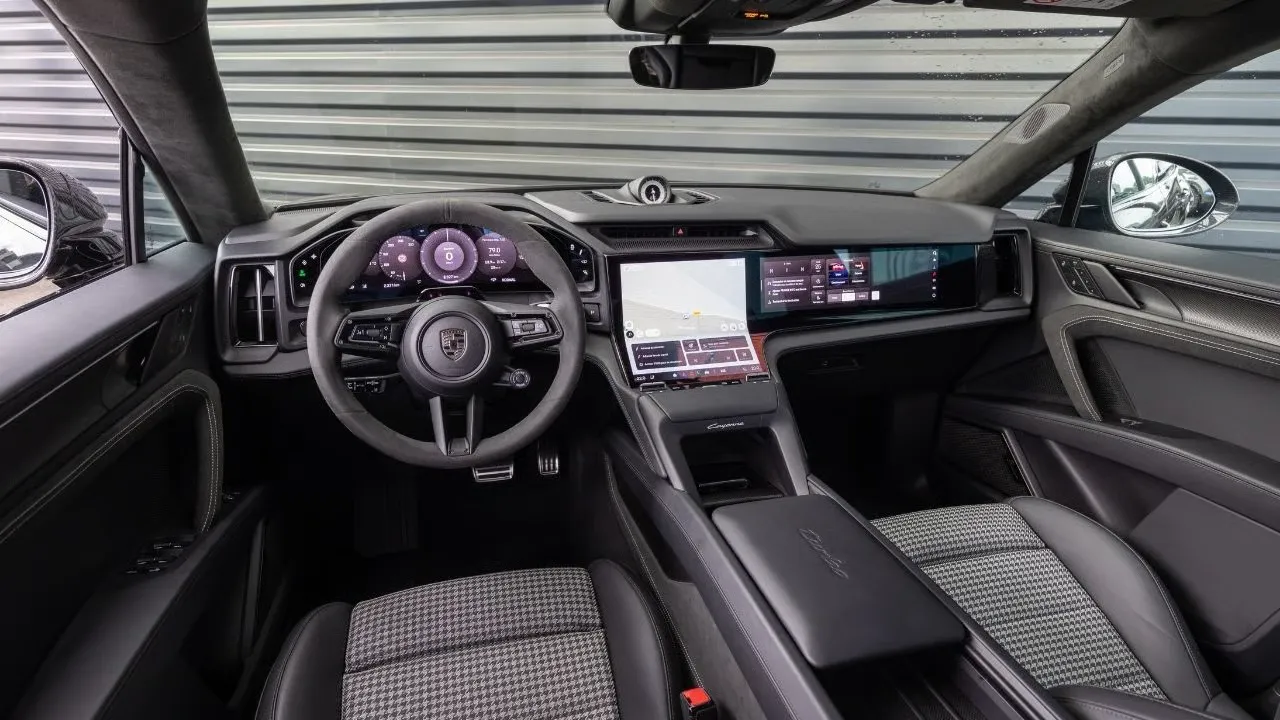
You can even drive this vehicle like a WRC car—cutting through damaged ropes and driving your inner wheels into freshly plowed potato fields without damaging the rims or frame. Incredible.In addition, its 18-way adjustable sport seats, generous screens, numerous driving aids, high-quality materials and finishes, along with the available features, elevate the in-cabin experience to an astonishing level of comfort. The passenger can have their own screen, and you can even warm your elbows (!) thanks to the new heating surfaces on the doors and center console, while the two rear seats offer particularly ample space. This genuinely bipolar Cayenne Turbo can be extremely comfortable after demonstrating dynamic capabilities worthy of a supercar just a few minutes earlier. Crazy.
Keep in mind that using it requires adapting to a complex user interface, given the many functions that need to be activated (and especially deactivated—thanks to those stupid ADAS systems) as well as a few bugs or strange displays (chassis anomaly alerts, loss of Hill Descent Control, electric driver’s door that refuses to open). But nothing that prevents the vehicle from driving.
Another advantage in terms of comfort are the steering rear wheels (1716 €) that can turn up to 5°, making it particularly easy to maneuver in urban areas. However, this applies equally well to both the Coupe and the SUV.
Technology and fuel consumption: identical
Regarding the technical aspects of this Turbo Coupé version, I can only refer you to the extremely thorough review of the SUV version by the excellent Soufyane, as the Coupé uses exactly the same technology and delivers virtually identical performance.
Also read
Porsche Cayenne Turbo Electric review: the best Cayenne in history!
In summary, our Cayenne Turbo Coupé Electric is equipped with two oil-cooled permanent magnet synchronous electric motors, including a dedicated 940 A silicon carbide inverter at the rear that ensures consistent performance without losses. The newly designed batteries, cooled and heated from both top and bottom, also play a key role in maintaining consistent performance. The entire system is based on an 800-volt architecture and can accept up to 400 kW during charging. Thus, under optimal conditions at a high-power charger (not all the time), it will take 16 minutes to charge from 10% to 80%.
It is also capable of regenerating up to 600 kW during braking, which means that 95 to 98% of normal braking is handled by the electric motor. In other words, those concerned about the lifespan of the brake discs and pads on this 2.6-ton vehicle can rest assured.
As for those wondering why the charging capacity is listed as 400 kW while braking regeneration reaches 600 kW, Porsche officials explain that this limitation helps better manage battery temperature, thereby optimizing the total charging time.
On our test drive route between Paris and Le Mans, which included city roads, national highways, and some sections of motorway, the average fuel consumption was 25 kWh/100 km. This rose to 54 kWh/100 km when including the circuit segment, which showed that its consumption could climb to 85-90 kWh/100 km during such tests (spectacular but not particularly unreasonable).
Note that this Cayenne Coupé can also be charged via 11 kW induction charging. If you opt for the pre-installation kit (228 €) and the charging system (2000 €), followed by purchasing Porsche’s wireless charging pad (5000 €), you can avoid the hassle of dealing with dirty cables when charging your car in your garage (or outdoors, as well).
Tests on Asphalt and Gravel at the Porsche Experience Center
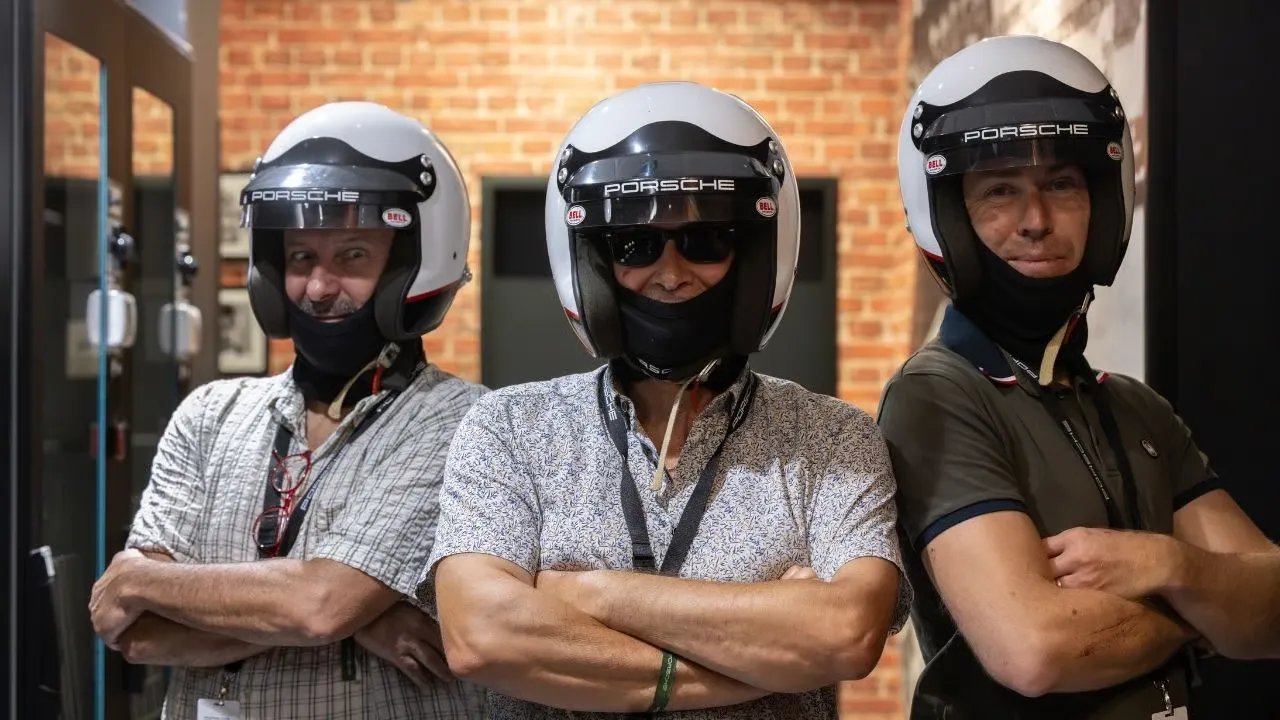
To properly test the stratospheric performance of this 1,156 hp Cayenne Turbo Coupé, we are at PEC, the Porsche Experience Center located on the Circuit de la Sarthe.
A brief philosophical aside: why on earth prohibit disabling the ESP inside a secure circuit facility? It’s actually safer to test this here than on the road. Moreover, since Porsche’s engineers are among the last in the world to refine the dynamic behavior of their ESP-off vehicles, it seems counterproductive not to allow journalists to assess the quality of their work. After all, this is precisely the aspect where Porsche typically stands out from the many Chinese manufacturers entering the market today. End of aside.
The brief section on the road version confirms the Cayenne Coupé’s capabilities in its dedicated off-road mode, which raises the ground clearance from 19 cm to 24.5 cm and increases the approach and departure angles. As both a coupe and an SUV, it can navigate streams up to 555 mm deep, while downhill assist systems and numerous cameras help overcome steep gradients with ease. Unless the system starts malfunctioning... but a reset usually fixes everything.
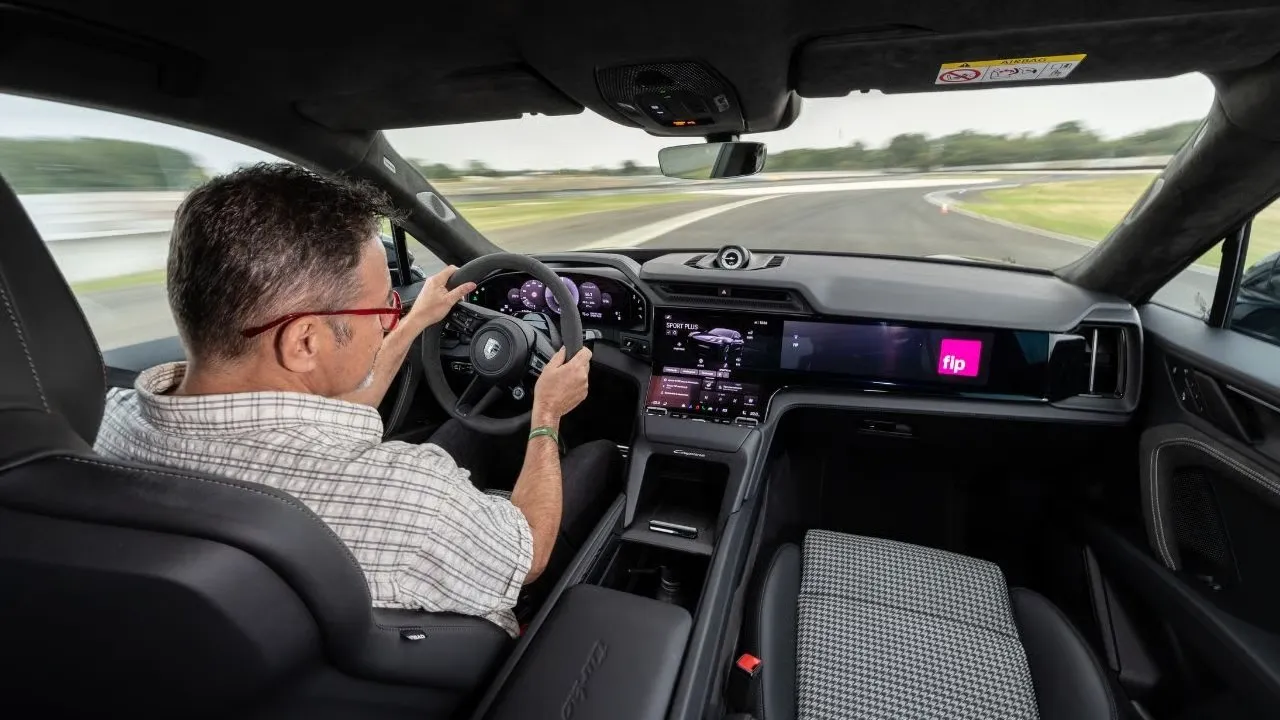
On the road, the Launch Control acts like an incredible catapult (0 to 200 km/h in 7.4 seconds and a quarter mile in 9.9 seconds), crushing your insides and forcing you to squint just like an hypercar driving 8 cm off the ground.
Indeed, only a small amount (2.6 tons nonetheless) is needed to cause understeer at high speeds or on moderately fast curves, even with the rear steering wheels and specialized Pirelli P Zero R tires in our model. Yet, pressing the accelerator often instantly and violently shifts the vehicle back to oversteer mode. To attempt this, one needs a certain level of confidence—or recklessness—and a wide enough road. Most importantly, one must be extremely quick at the wheel or with the accelerator (assuming you didn’t listen to the PEC guy who prohibited disabling ESP). Even if the aggressive tuning prevents anything tragic from happening, you can’t stop a cold sweat from running down your forehead and across your body. “Violent” is the appropriate term to describe the experience in the Cayenne Turbo Coupé. The balance
On the road, it’s aggressive and bold, but it remains quite decent on circuits, where its 2.6 tons take some time to truly show their impact. I won’t discuss the braking performance in this test, as the testing conditions were excessively conservative, and a slow zone in the straightaways prevented drivers from applying full force during the circuit’s only major braking point. It’s clear this wasn’t done without reason; you’re welcome to draw the most likely conclusions. One thing is certain, however: given that braking combines regenerative braking (electric motor) with mechanical braking (disks and pads), the feel of the brake pedal is genuinely excellent.To expand on this analysis, it can be said that the Cayenne S equipped with the same options will offer greater consistency, reliability, and thus more driving enjoyment. In other words, it feels more human-driven…
In Sport and Sport Plus modes, Porsche accompanies acceleration with a deep and carefully crafted sound. It certainly won’t replace the tone of a V8, but it provides auditory cues and enhances the in-car atmosphere when the driver demands more power from the engine. Additionally, I think it helps reduce the nausea that these electric cars often cause. Still, both the Coupe and SUV offer identical performance features.
The Porsche Cayenne Coupé lineup
Keep in mind that Porsche still sells the gasoline and hybrid versions of the Cayenne Coupé alongside the three new electric models. The base electric version, with 442 hp (408 hp continuously) and 835 Nm of torque, starts at 111,600 €. The Cayenne S Coupé, featuring 666 hp (544 hp continuously plus 122 hp via push-to-pass) and 1,080 Nm of torque, costs 133,300 €. The Turbo version, with 1,156 hp (857 hp continuously) and 1,500 Nm of torque, tops the range at 170,300 €.
Yes, but don’t forget the options
While the price of the Cayenne Turbo Coupé starts at 170,300 €, it’s far from reflecting the cost of our test vehicle. Porsche charges extra for many of the features that enable this SUV to unleash its full potential.
Thus, in addition to the Porsche Active Ride suspension at 8,394 €, the rear steering wheels at 1,716 €, and the carbon-ceramic brakes at 9,372 €, there’s also a 9,060 € cost for the lightweight Sport design package (SportDesign bumpers, 22-inch wheels, carbon roof, black leather interior with Pepita pattern, Race-Tex Sport GT steering wheel, carbon package), 601 € for the 22-inch Pirelli P Zero R tires, 468 € for arm warmers, 2,412 € for the head-up display with augmented reality, 3,467 € for the panoramic roof, or 1,968 € for the passenger screen, 4,626 € for the Burmeister audio system, and the list goes on. Even the 22 kW charger (1,680 €) and some comfort features are charged extra (a 230 V outlet in the trunk costs 237 €).
Also read
Porsche Macan GTS review: a facade
The result: our test unit of the Cayenne Turbo Coupé, in Chrome Black (color at no extra cost), costs over 225,000 euros, with more than 55,000 euros in options. This adds up to a price that significantly exceeds the listed catalog price—typical of Porsche.
Competitors
With the Porsche Cayenne Turbo Coupé Electric on the market, competition remains limited but is starting to become more serious. The Denza Z9 GT electric vehicle, which also delivers 1,156 horsepower, is likely the most impressive rival on paper: it’s priced at 115,000 euros in France, 55,000 euros less than the Cayenne, while offering a 122 kWh battery and particularly generous standard equipment. The Lotus Eletre 900, with 918 horsepower, achieves 0 to 100 km/h in 3.0 seconds and weighs 2,715 kg, with a listed price of 153,090 euros. The Tesla Model X Plaid, featuring 1,020 horsepower, has been removed from the catalog, while the BMW iX M70 xDrive, with 659 horsepower, takes a more comfort-oriented approach suitable for long-distance travel, just like the Mercedes-AMG EQE SUV 53 4Matic+ with 625 horsepower.
Conclusion
Objectively, a Cayenne Turbo, whether in Coupe or SUV form, offers far too much performance for our cramped and restrictive world. Yet Porsche’s achievement is truly impressive across every aspect. Despite a few flaws, the comfort, acceleration, range, and overall performance are at least as spectacular as the price tag. The more consistent yet still sporty Cayenne S seems to be the best compromise for those who still want to experience the thrill of dynamic driving—a thrill that the base model, with just 408 horsepower (and 2650 kg in weight), can never deliver. And since this S version offers better range than the base model (668 km versus 661 km)…
But since we’re discussing the Turbo version specifically here, it’s important to note one key point: this model is significantly cheaper than its 739 hp thermal hybrid counterpart, which costs €26,000 more and also comes with a substantial weight penalty of around €20,000. Moreover, it offers much better performance (0-100 km/h in 2.5 seconds compared to 3.7 seconds), and since a thermal engine no longer makes much noise, it will become very difficult to justify choosing a thermal version these days! In short, if you really insist on it, you can still purchase the Porsche Cayenne Turbo Coupé — you won’t be disappointed.
Porsche Cayenne Turbo Coupé Electric Technical Specs
Model tested: €225,707
Starting price: €170,300
Manufacturer’s/tested fuel consumption: 20-22 / 25 kWh/100 km
Manufacturer’s range: up to 628 km
Charging: 10 to 80% in 16 minutes with continuous current (>400 kW)
CO₂ / bonus: 0 / 0
Fiscal power rating: 13
Country of manufacture: Bratislava (Slovakia)
Models: Coupé, S Coupé, and Turbo Coupé, priced from 111,600 to 170,300 €
Engines: two permanent magnet synchronous electric motors, one at the front and one at the rear
Battery: 113 kWh
Transmission: all-wheel drive, 1 gear ratio
Maximum power: 1,156 hp with Launch Control
Continuous power: 857 hp + 176 hp Push to Pass
Torque: 1,500 Nm
DIN weight: 2,650 kg
Dimensions: 4.98 x 1.98 x 1.65 m
Wheelbase: 3.02 m
Turning radius: 11.6 m
Maximum speed: 260 km/h
0-100 km/h: 2.5 s
0-200 km/h: 7.4 s
Standard tires: 235/40 R20
Test tires: Pirelli P Zero R, 285/40 R22 at the front and 325/35 R22 at the rear
Towing capacity: 3,500 kg
Trunk volume: 534 / 1,347 liters, +90 liters in the frunk (volume reduced by 34 L with the BOSE® surround sound system and by 42 L with the Burmester® High-End surround sound system due to the subwoofer)
Battery warranty: 8 years / 160,000 km