
Test Drive of the Peugeot e-208 GTI: Can Electric Cars Truly Revive the GTI Spirit?
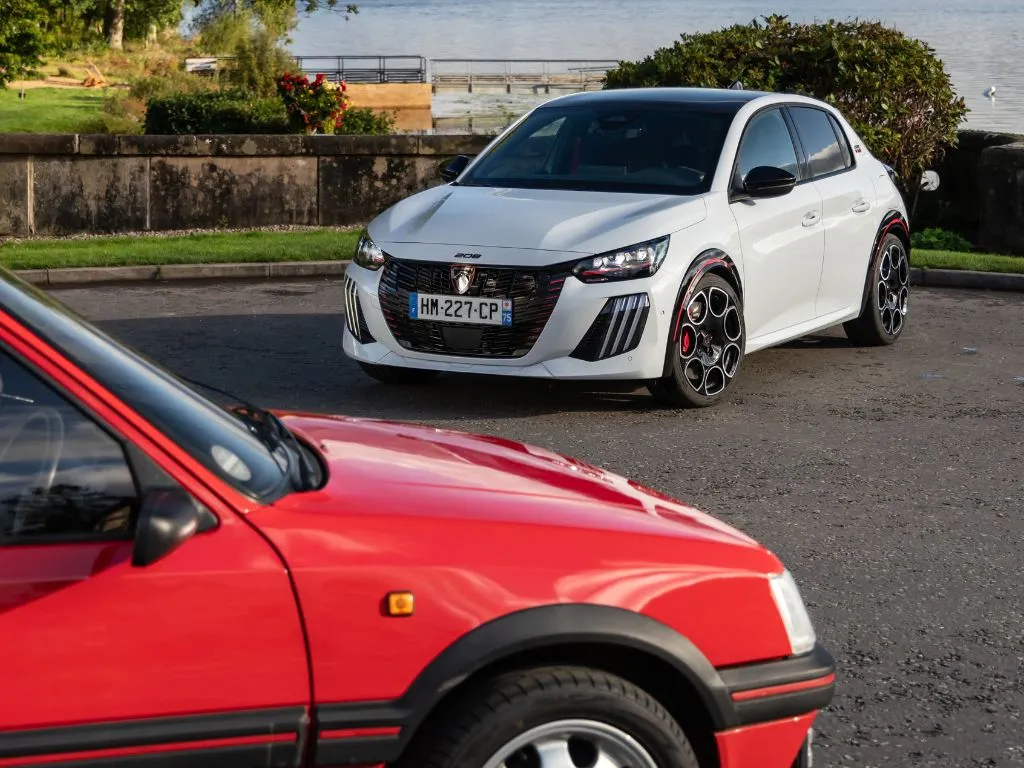
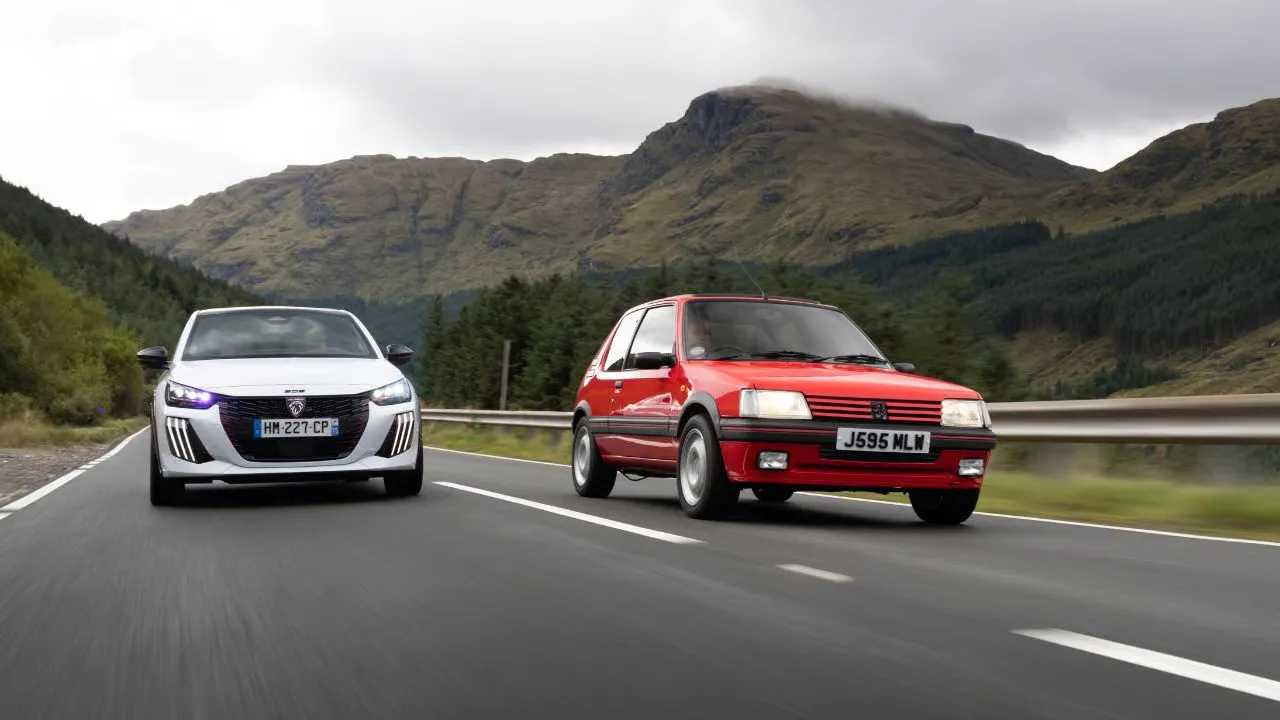
GTI. Three letters that hold a special place in Peugeot’s history. Following models like the 205, 309, and 306, the manufacturer is now bringing back this iconic name to a 208 model… that’s 100% electric. Is this sacrilege or a true successor? We got behind the wheel of the Peugeot e-208 GTI on Scotland’s small roads to find out.
There are names that simply denote a finish, and then there are those that tell a story. At Peugeot, GTI undoubtedly belongs to the latter category. These three letters immediately evoke images of lightweight, playful cars that are performant enough to turn a small road into a playground. Their return on a Peugeot electric vehicle was bound to upset some people. No more internal combustion engine, no more manual transmission, and certainly no more exhaust sound: can we still talk about GTI?
Instead of judging this new e-208 GTI based on what it lacks, we wanted to see if Peugeot Sport had retained the essential elements: a well-tuned chassis, character, and above all, that ability to make you want to grab the keys without any particular reason.
281 hp and a thoroughly revised chassis
This e-208 GTI isn’t just equipped with a few red badges and a more powerful engine. Peugeot Sport has thoroughly modified this city car to give it genuine sports credentials. The electric motor delivers 281 horsepower and 345 Nm of torque, all transmitted to the front wheels. The 0-100 km/h acceleration time is claimed to be 5.5 seconds, with a top speed of 180 km/h.
But it’s especially under the chassis where the modifications become interesting. The car has a lowered profile, wider tracks, and the rear end features a specialized anti-roll bar. Peugeot has also installed a limited-slip differential and hydraulic shock absorbers. This shows that the manufacturer didn’t simply pull out the GTI badge from a drawer.
Also read
Review: Abarth 600e, is this small sports electric SUV a heresy or a success?
With such specifications, this French vehicle naturally enters competition with the Alpine A290 and other small electric sports cars. In this category, chassis performance is just as important as raw power.
A 208 GTI look without falling into caricature
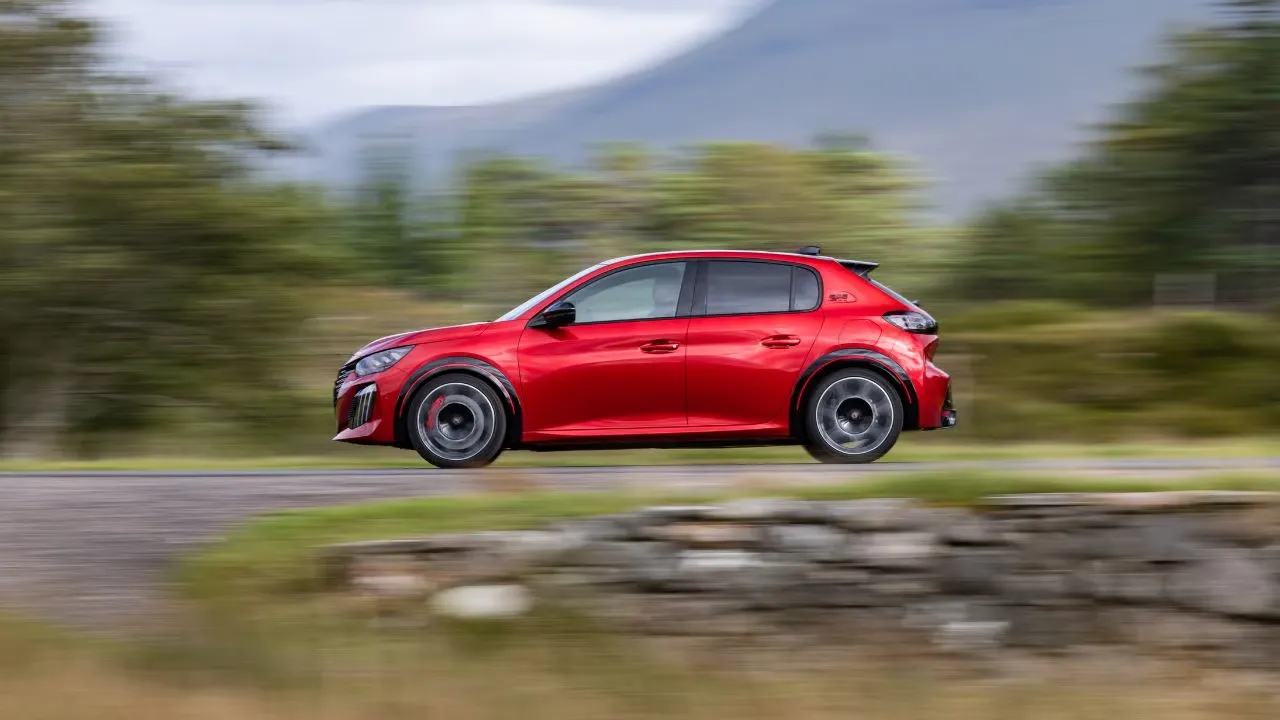
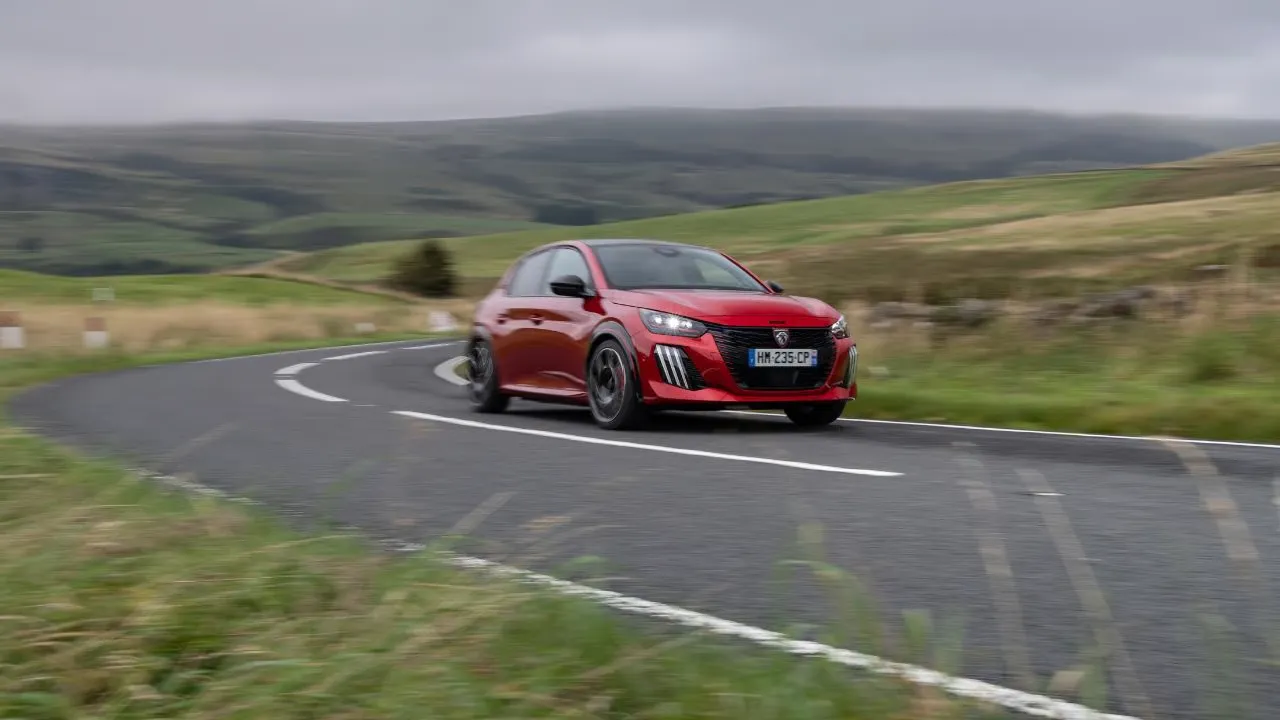
Esthetically, Peugeot has chosen to include numerous references without turning its city car into a race car. At the front, the lion emblem is surrounded by red, a color also used around the grille and on several body panels. A specific strip enhances the visual impact. In profile, the widened wheel arches by 56 mm accommodate 18-inch wheels, behind which red four-piston calipers are visible.
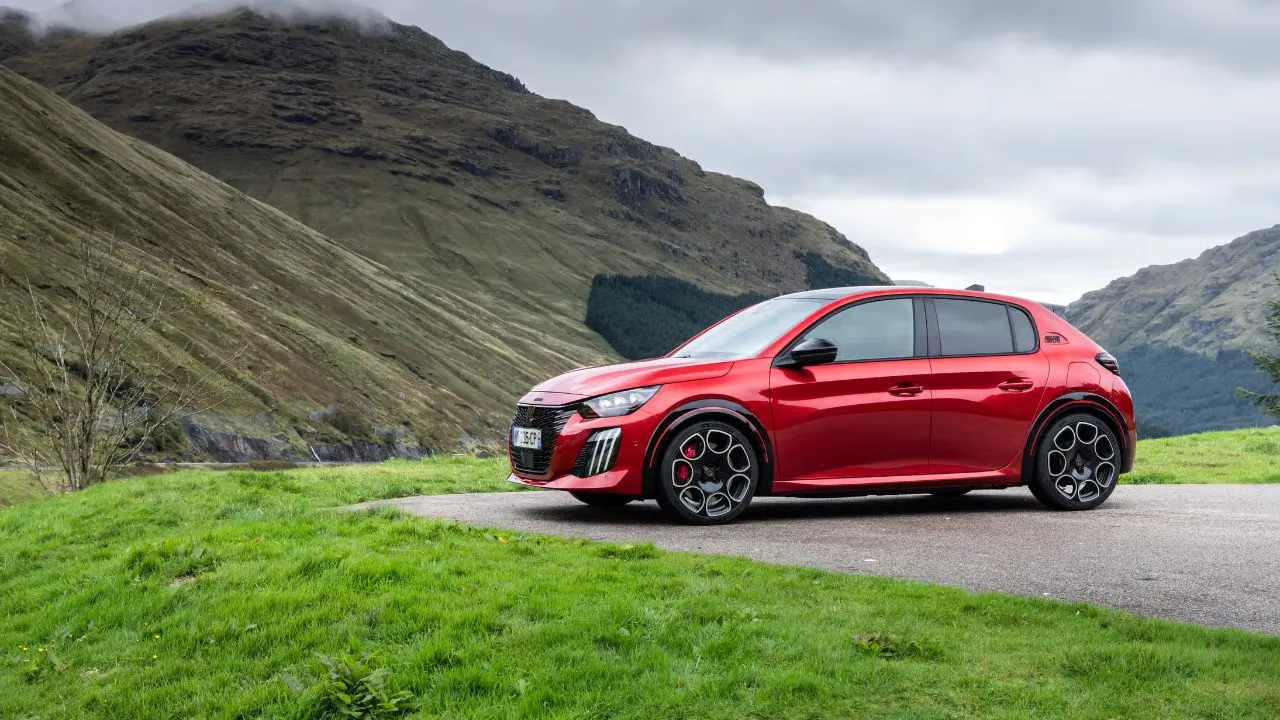
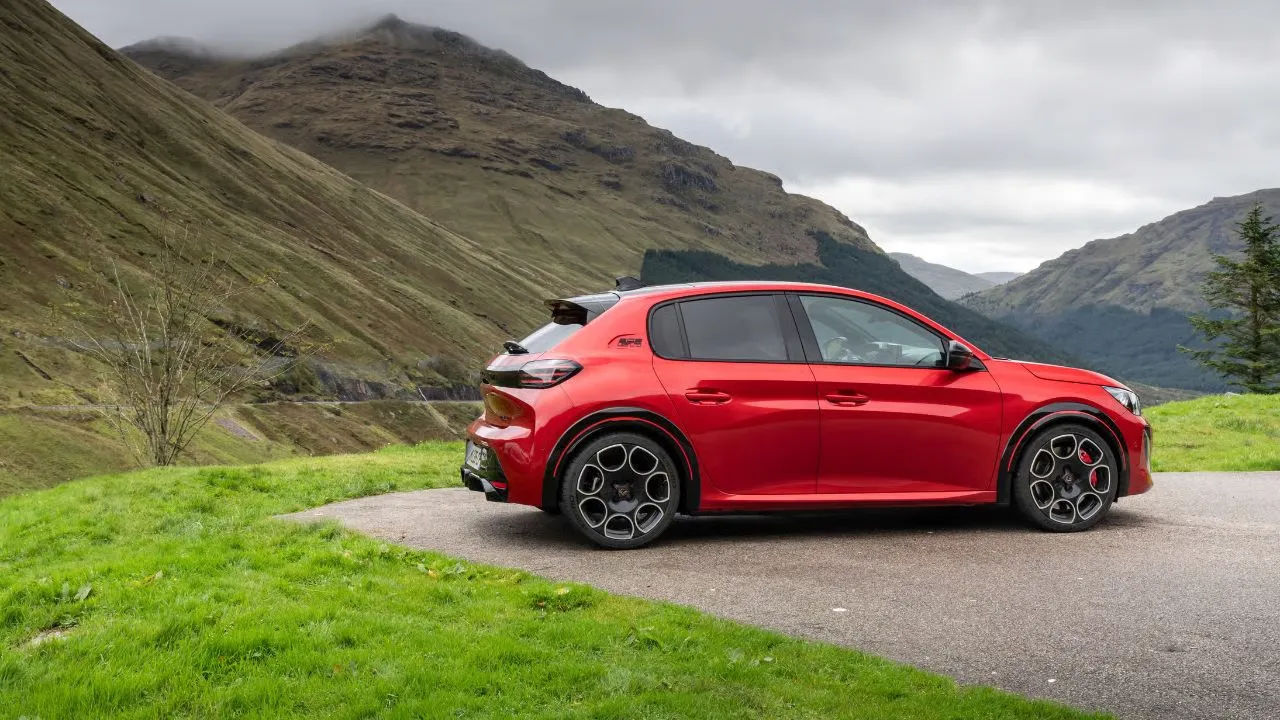
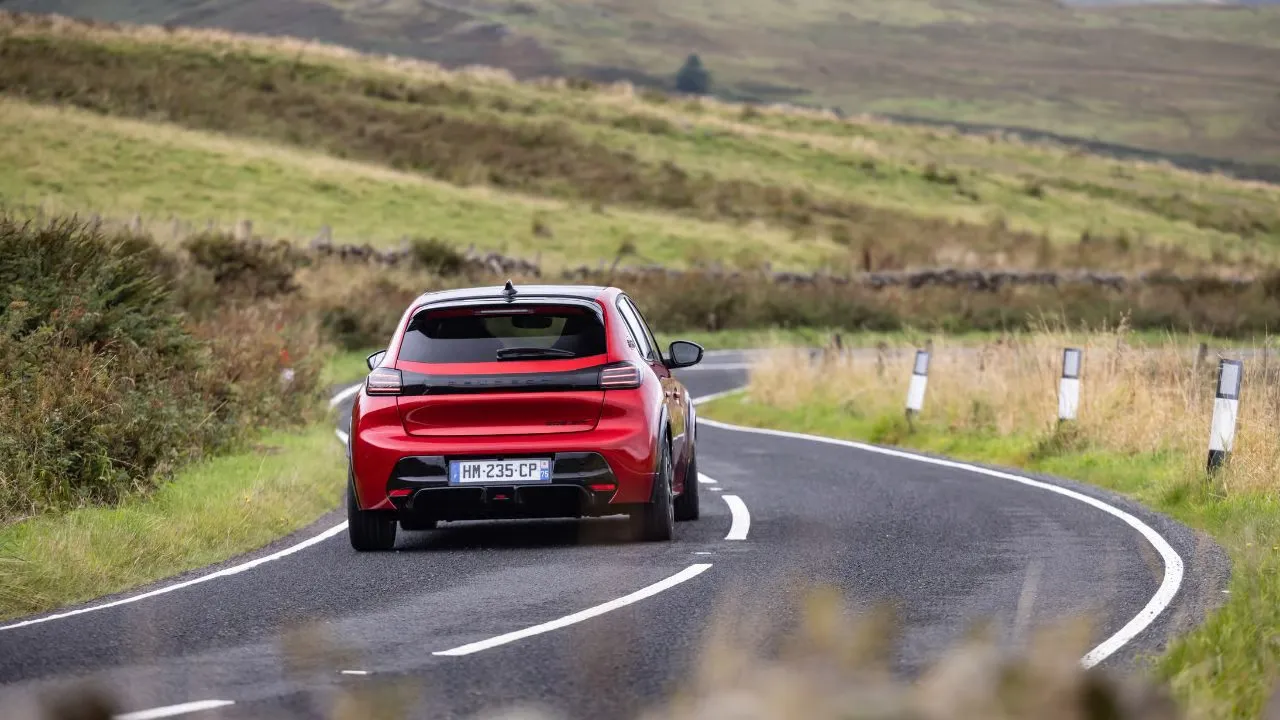
At the back, the changes are more subtle. The trunk lid also gets its own touch of red, while a diffuser completes the sporty look. The result remains fairly true to the philosophy of older GTIs: distinct enough to be recognized by enthusiasts, without going overboard with overt displays.
Of course, there’s the red carpet
Peugeot went all out inside. And certain details will immediately resonate with nostalgia enthusiasts. The most obvious is the red carpeting, a direct reference to the 205 GTI. The bucket seats are distinctive, featuring GTI inscriptions and red trim. Their design also blends the past with the present, combining patterns reminiscent of older GTIs with more contemporary materials.
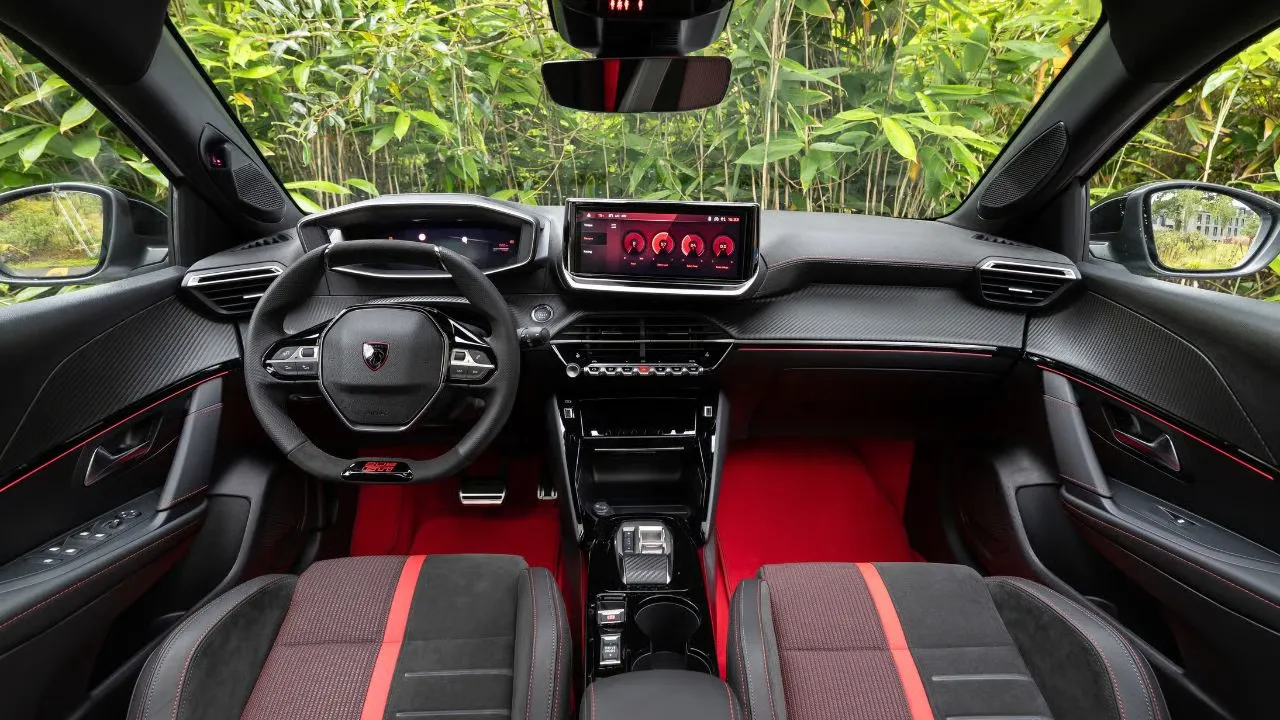
The steering wheel combines leather and Alcantara and comes with a GTI identifier. Otherwise, it retains the architecture of a standard e-208, with its strengths as well as its quirks. Depending on the vehicle’s shape and driving position, the small steering wheel can even cover part of the dashboard.
The interface still gains a few specific functions. A Performance menu allows monitoring of power, torque, as well as battery temperature and voltage. A display meant for the driver even includes a stopwatch and an indicator for lateral accelerations.
And since the silence of an electric vehicle might confuse GTI enthusiasts, Peugeot has also included an artificial sound effect. It plays along with acceleration through the speakers. A gadget to some, a small boost to immersion for others: fortunately, it can be disabled.
On the road, Peugeot Sport hasn’t forgotten its roots
It is obviously behind the wheel that this e-208 truly earns its three-star rating. The wet, winding small roads of Scotland provide particularly revealing testing grounds. The first observation: despite 281 horsepower delivered solely to the front wheels, the front end never seems overwhelmed. The driving dynamics are impressive, and the steering is precise. Even when accelerating hard out of corners, the car maintains its trajectory and quickly builds confidence. Power arrives forcefully but gradually. There is no catapult-like effect sometimes seen in some highly powerful electric vehicles. Here, acceleration contributes more to the car’s overall balance than to a time-record-breaking performance.
And it is precisely here that this Peugeot begins to impress. Weighing around 1.6 tons, it is of course much heavier than a GTI from the 1980s or 1990s. But on the road, this weight does not dominate the driving experience. The grip is excellent, body roll is minimal, and the car can easily shift its balance. The chassis especially encourages taking on consecutive turns.
Firm, but still usable for daily driving
Peugeot Sport hasn’t turned the 208 into a track car. The suspension is naturally firm, and rough roads quickly remind you that you’re driving a sports vehicle, but the balance remains reasonably civilized enough for daily use. The seats provide good lateral support, and the driving position contributes to the sense of being one with the car.
However, everything isn’t perfect. Braking is the main criticism of this test. The four-piston calipers are capable of strong decelerations, but the brake pedal requires firm pressure and lacks urgency in the early stages of braking.
In sporty driving modes, the system prioritizes mechanical braking. Pressing the brake pedal harder does not increase energy recovery, a choice made to provide a more consistent response similar to that of a traditional gasoline-powered sports car. On wet roads, however, the traction is particularly impressive. The Michelin all-weather tire on our unit certainly contributes to this, but the overall chassis, front suspension, and differential design allow power to be delivered without making the car feel intimidating.
A true electric GTI?
This is ultimately the question that has lingered since the beginning of this review. If we take the “I” in injection literally, the answer is obviously no. But reducing the GTI label to its fuel supply would mean ignoring what made Peugeot’s older sports models famous. In this regard, the e-208 has strong advantages: precise handling, responsive chassis, effective front suspension, and compact dimensions — all of which create a desire to take the next turn just for the pleasure of driving.
This is also what our test of the Alpine A290 revealed: a small electric sports car can no longer replicate all the mechanical sensations of an old classic, but it can find its character elsewhere, particularly in its chassis and handling.
Also read
Test: Alpine A290, a worthy electric successor to the Renault 5 Alpine Turbo?
Peugeot takes this concept quite far. After a few kilometers, the discussion about the lack of an internal combustion engine quickly fades into the background. What stands out most is a car that’s playful, reassuring, and expressive enough to bring a smile to its driver. This was precisely the goal outlined in the video.
The e-208 still limited by its charging
It remains to be seen if this GTI is also a good electric car. The battery retains a net capacity of 51 kWh, but Peugeot has optimized its cooling system to maintain performance under heavy use. Depending on the tire setup, the advertised range is 354 to 375 km.
Unsurprisingly, truly sporty driving quickly increases consumption. During this particularly dynamic test, the dashboard indicated a consumption of nearly 28 kWh/100 km, meaning less than 200 km of range under such conditions. For everyday use, Charles estimates a range of 250 to 350 km depending on conditions and driving style.
The charging speed is not as fast as that of the regular e-208. It offers 11 kW for alternating current and 100 kW for direct current, with Peugeot stating it takes 27 minutes to go from 20% to 80% charge. This is not a dealbreaker for a sports city car designed primarily for daily use and short trips on country roads. However, for long highway journeys, the combination of a small battery and limited charging power will require frequent stops. This is clearly not where this GTI will perform at its best.
Peugeot e-208 GTI Test: The Verdict
Bringing back the GTI badge on an electric car was a risky move. Peugeot could have easily settled for a more powerful e-208, with some red accents and a historically significant logo. Fortunately, that’s not what they did.
The work done on the chassis, widened tracks, differential, suspensions, and power management truly transforms the city car’s behavior. On the small Scottish roads used in our test, the e-208 GTI proved precise, highly efficient, and above all, enjoyable to drive. Its steering and front end provide enough confidence to utilize its 281 horsepower without constantly feeling like one is fighting against the power.
It obviously doesn’t replicate the mechanical sensations of a 205 GTI, and it likely wouldn’t have been convincing by trying to imitate them. This new generation offers something different: the instant performance of an electric vehicle combined with thorough chassis tuning.
Some reservations remain, notably a braking system that lacks intensity and a rapid 100 kW charging speed that limits its versatility for long trips. But on the factor that is probably most important for a GTI—the desire to grab the keys and hit the road—the car delivers. And this might ultimately be the best justification for bringing back these three letters.
The price remains an issue. The Peugeot e-208 GTI is listed at 42,900 €, excluding the EU subsidy and any possible discounts. It’s a high price for a 208 model, but ultimately quite reasonable compared to other small electric sports cars. The Alpine A290 GT, with its 220 hp, costs 42,200 €. Even closer to the Peugeot in price is the Opel Corsa GSE, which shares much of its technical foundation—offering 281 hp, 345 Nm of torque, and a claimed 0 to 100 km/h time of 5.5 seconds—but starts at 39,900 €.