
Omoda 7 PHEV Review: An Overequipped Rechargeable Hybrid SUV at Unbeatable Price
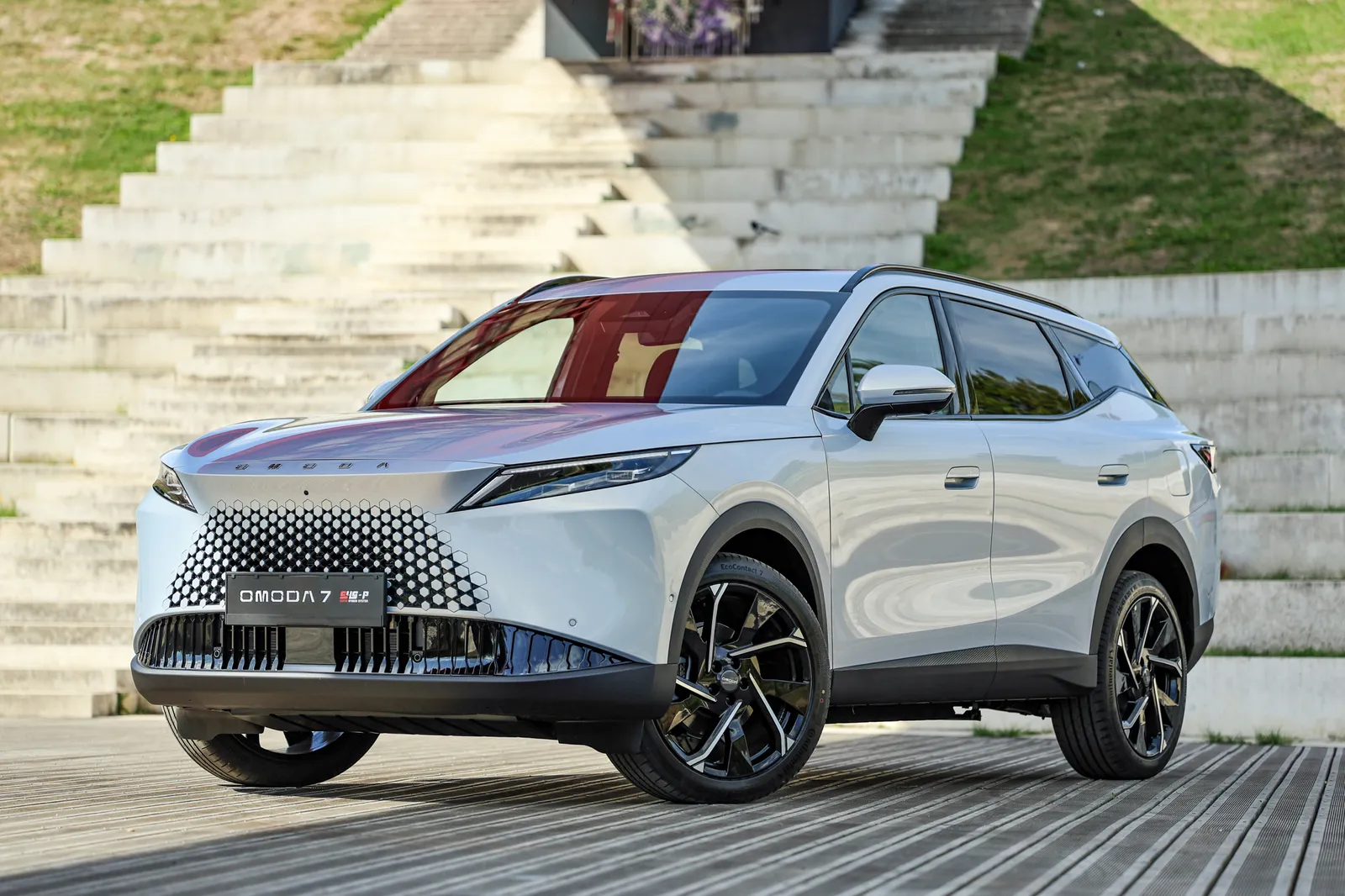
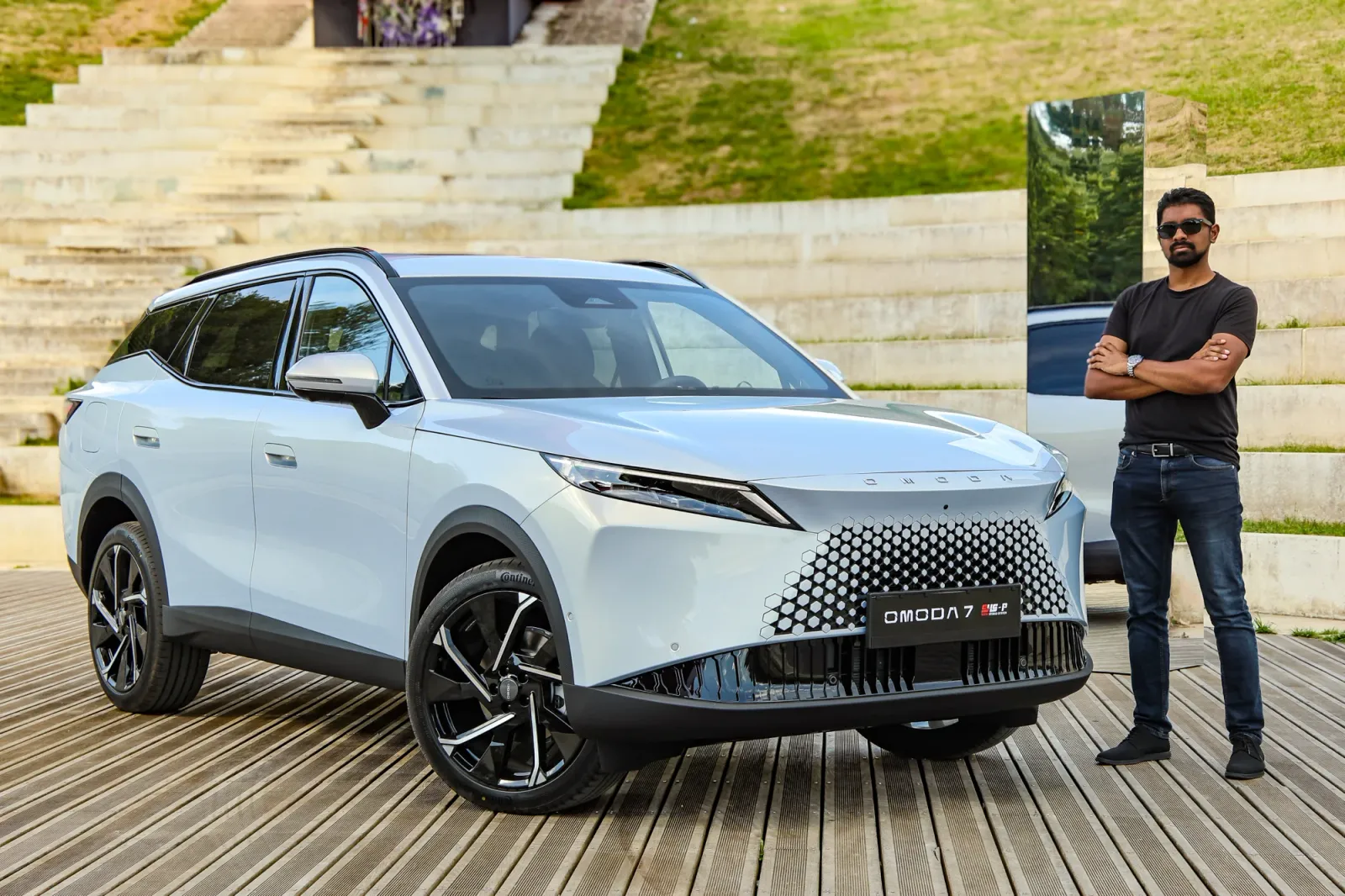
Omoda invites us to drive its rechargeable hybrid “urban crossover.” What awaits is a more stylish and appealing design, comprehensive equipment, and an efficient yet well-developed powertrain. Here is our full review of the Omoda 7 PHEV.
We’re getting to know the Chery family better at Automobile Propre. After the off-road-oriented Jaecoo 5 and 7, we move on to the “urban chic” version with the Omoda. For context, the Chinese company Chery has been the world’s top automobile exporter for 23 consecutive years. Founded in 1997, Chery has sold over 18 million vehicles in 120 markets, including more than 5.8 million units exported. The Omoda is designed exclusively for export and is not sold in China. France, on the other hand, represents a major and demanding strategic market, making it a crucial operational hub for the group in Europe. The model we’re focusing on today is the Omoda 7 PHEV, a rechargeable hybrid SUV with an excellent quality/price/performance ratio, just like the rest of its lineup. So, what’s it like on the road?
The Omoda 7 PHEV in terms of style: less rugged, more stylish
Remember, we first saw the Omoda Jaecoo models at the beginning of the year. But as with any vehicle shown in a studio, nothing compares to seeing it in the real world. Unlike the Jaecoo models, Omoda aims for a more refined and sleek appearance, with a sporty-chic vibe. Being a more elegant version of the Jaecoo 7, the Omoda 7 PHEV reminds us somewhat of a Lexus RZ. With its rounded front end that tapers slightly, trapezoidal grille, and thin LED accents, it works well.
Also read
After Omoda and Jaecoo, Chery continues its expansion in France with a new more affordable brand
The profile is clean yet dynamic, with details such as the “pointed” shoulder leading toward the rear fender. Exposed handles and wheel arches enhance its style, not to mention the headlights that appear quite early. Personally, I find the crossover a bit too tall off the ground: 2 cm lower and it would be perfect. What do you think?
At the back, the design is unambitious: a fairly square trunk lid and a slightly raised rear end. There’s a small touch of creativity, however, with the zigzag-shaped lighting signature. It’s a rather divisive detail that doesn’t appeal to me any more than before, but it does please several passersby. Taste is subjective! With its stylish appearance and perceived quality already visible from the outside, the Omoda 7 PHEV is slightly larger than the Jaecoo 7 SHS-P, which shares its underpinnings.
Its dimensions are 4.66 meters in length, 1.88 meters in width, and 1.67 meters in height. The generous wheelbase of 2.72 meters confirms its habitability, as we will see. Our test model is fitted with attractive 20-inch wheels, and the trunk offers a volume of 537 to 1,294 liters. This provides a very comfortable carrying capacity that isn’t at the top of its class, but it’s still better than that of a C5 Aircross.
Inside: pleasing and well-equipped, from front to back
After our first encounter in the studio, our impressions were confirmed while on board the Omoda 7 PHEV. As is common with Chinese automakers, the layout features a floating central console, a compact instrument cluster (8.88 inches), and a large central display (15.6 inches). It also includes a two-spoke steering wheel, a ventilated wireless charger, and physical controls. Our Premium trim especially boasts an integrated sliding screen within the dashboard.
A simple three-finger swipe moves it toward the passenger, who can then use the multimedia display without distracting the driver. The concept resembles the passenger-specific screens offered by Mercedes and others, but with a much more innovative approach. This adds some excitement to a dashboard whose design is becoming increasingly familiar. Only the sci-fi spaceship-like operating sound is excessive, feeling more like a gimmick than a premium automotive feature.
The materials, finishes, and ambient lighting further enhance the sense of sophistication. Most importantly, the test confirms our initial impressions. The relatively sporty front seats do not compromise comfort thanks to soft padding and good lateral support. In the second row, the manufacturer pays equal attention to design. Passengers in the side seats enjoy a seat that is deep enough and comfortable backrests.
The central seat is obviously less comfortable, with a shorter seat depth and a backrest that becomes stiffer due to the armrests. However, the perfectly flat floor helps maintain a certain level of appeal. The seating space is quite generous for both the legs and shoulders and head, especially thanks to the long wheelbase. Lastly, while the interior appears a bit dark in the studio footage, the panoramic roof makes up for it significantly and highlights the care put into the rear area. This detail greatly changes the overall impression.
Driving and performance: significant improvement
Under the hood, the Omoda 7 PHEV combines a 1.5-liter turbocharged 4-cylinder gasoline engine with Miller cycle producing 143 hp / 215 Nm and an electric motor delivering 204 hp / 310 Nm. The total power output reaches 279 hp / 365 Nm, with a single transmission ratio. It accelerates from 0 to 100 km/h in 8.5 seconds, but it is the smoothness of the system that interests us most. Similar to BYD’s DM-i, the Omoda prioritizes electric power as much as possible. The internal combustion engine then steps in gradually, either to drive the wheels or to power the electric motor.
Even with the battery significantly depleted, a charge reserve remains available to maintain electric assistance and energy recovery. To start the vehicle, there’s no need to press a button: simply get in and shift into D mode, similar to the ID.3 Neo, as long as you’ve fastened your seat belt. In urban driving, electric starts are smooth, quiet, and strong enough to move the vehicle effortlessly.
The transition to thermal driving remains smooth, with acceleration being firm without being harsh. This allows it to overtake and integrate easily on the road when needed. The overall handling also improves compared to the group’s earlier models, offering a still slightly light but more informative steering response. The Omoda 7 PHEV proves to be precise and reassuring, despite some body movement when speed increases. Part of the comfort is also attributed to the Continental EcoContact 7 tires, whose performance naturally surpasses that of the Kumho tires in the Jaecoo 7 SHS-P.
Despite having 20 inches of tire size, the Omoda handles imperfections well and is significantly more comfortable over long distances. Minor deformations can still be transmitted from damaged roads, but the rear suspension’s reactions are much better controlled. The result is a more convincing balance between comfort and handling, as it’s more refined. However, braking lacks intensity, and we would have preferred a more pronounced regenerative braking effect.
Consumption and range: up to 1,200 km?
In terms of range, the brand always emphasizes the 1,200 km range for its plug-in hybrid model. The Omoda 7 PHEV benefits from a large 60-liter fuel tank and a comfortable 18.4 kWh LFP battery. This fuel tank capacity is equivalent to that of the BYD Seal U DM-i and far exceeds that of the Ford Kuga PHEV (45 liters), allowing it to travel about 90 km purely on electricity. In practice, we observed suburban fuel consumption levels similar to those of the Jaecoo 7 SHS-P, at 5.3 liters per 100 km during our tests in the Vexin region (compared to 5.1 liters per 100 km). On more urban routes, fuel consumption even dropped to 4.6 liters per 100 km when driving in a very economical manner. When focusing on city and surrounding areas, the promised 1,200 km range is perfectly realistic. But we will verify this soon through long-term testing.
Finally, there are no changes regarding charging. The Omoda 7 PHEV supports up to 6.6 kW for AC charging and 40 kW for DC charging. Charging from 0 to 100% takes approximately 4 hours and 30 minutes, while charging from 30% to 80% takes about 20 minutes. This is lower than that of the Audi A3 TFSI e, but it also helps keep costs down. The two-way charging function works as expected. Let’s also mention the three battery modes:
Initial: Allows the battery level to drop to 15% during daily driving, prioritizing electric power use.
Smart: Lets the battery level drop to 25% to ensure sufficient electric range upon arrival.
Forced: Forces charging to reach 30% to 80%, naturally being the most fuel-intensive mode.
Also read
Supertest of the Jaecoo 7 SHS-H: 29,990 € for this Chinese hybrid SUV — but is it truly cost-effective?
Omoda 7 PHEV: 38,990 €, fully equipped
Following the already impressive Jaeco 7 SHS-P, Chery delivers another strong performance with its Omoda 7 PHEV. This SUV-crossover has an attractive design, improves on previous models, and comes equipped with a full range of features. There is only one trim level to simplify the lineup: the Omoda 7 Rechargeable Hybrid Premium, priced at 38,990 €. The only additional option is paint, costing 600 or 900 €. Otherwise, everything is standard, from 20-inch wheels to comprehensive ADAS systems, along with various interior features and technology. At the same trim level, it is 1,000 € more expensive than the Jaecoo 7 PHEV, offering a very different approach. In contrast, the Peugeot 3008 PHEV starts at 45,760 € in the GT trim. The MG EHS PHEV is cheaper at 33,990 € in the Luxury trim, but it has less cargo space and fewer features. What are your thoughts?