
Test drive of the new Lexus ES: (very) large, beautiful, comfortable, electric, but is that enough?
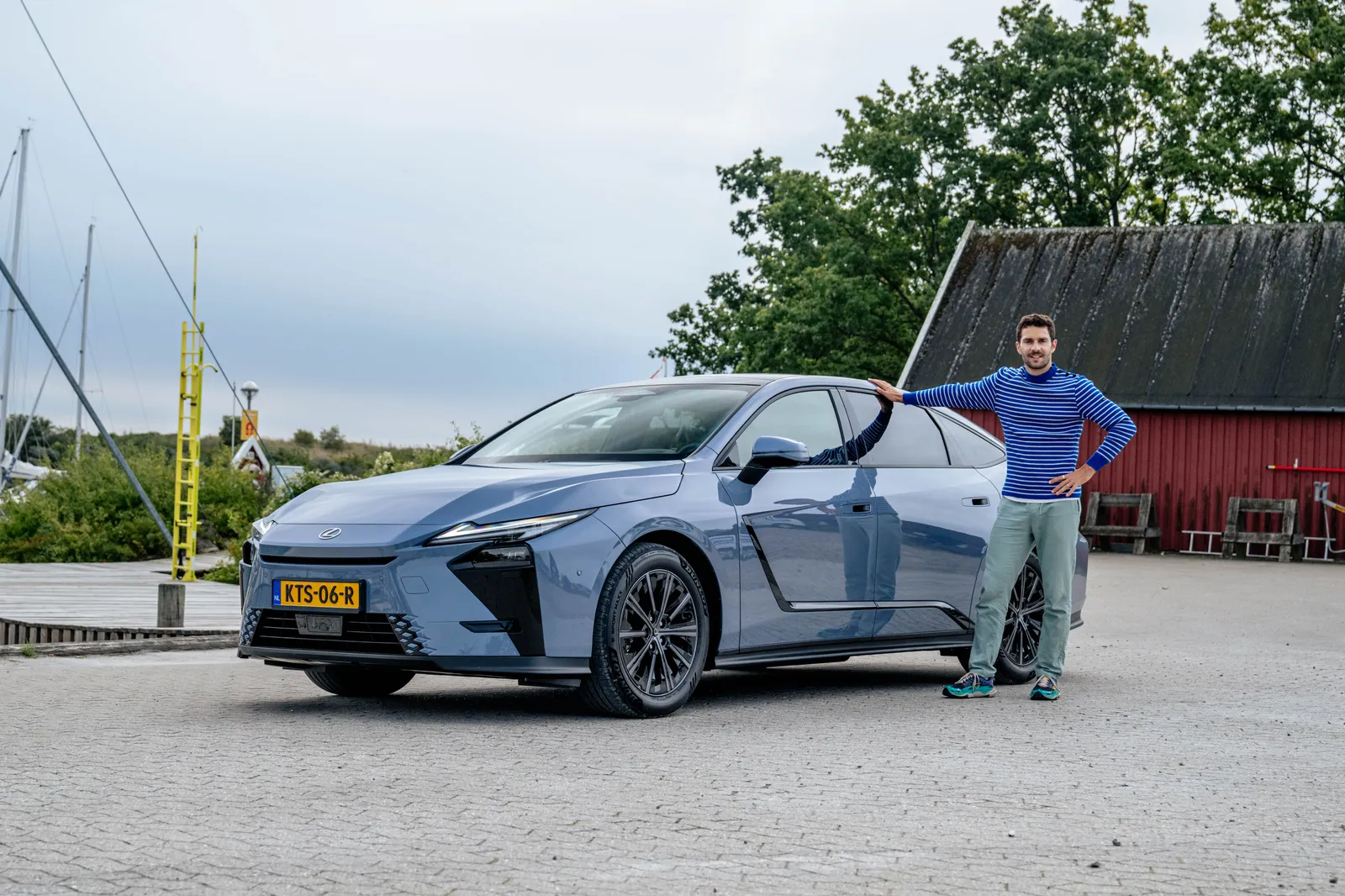
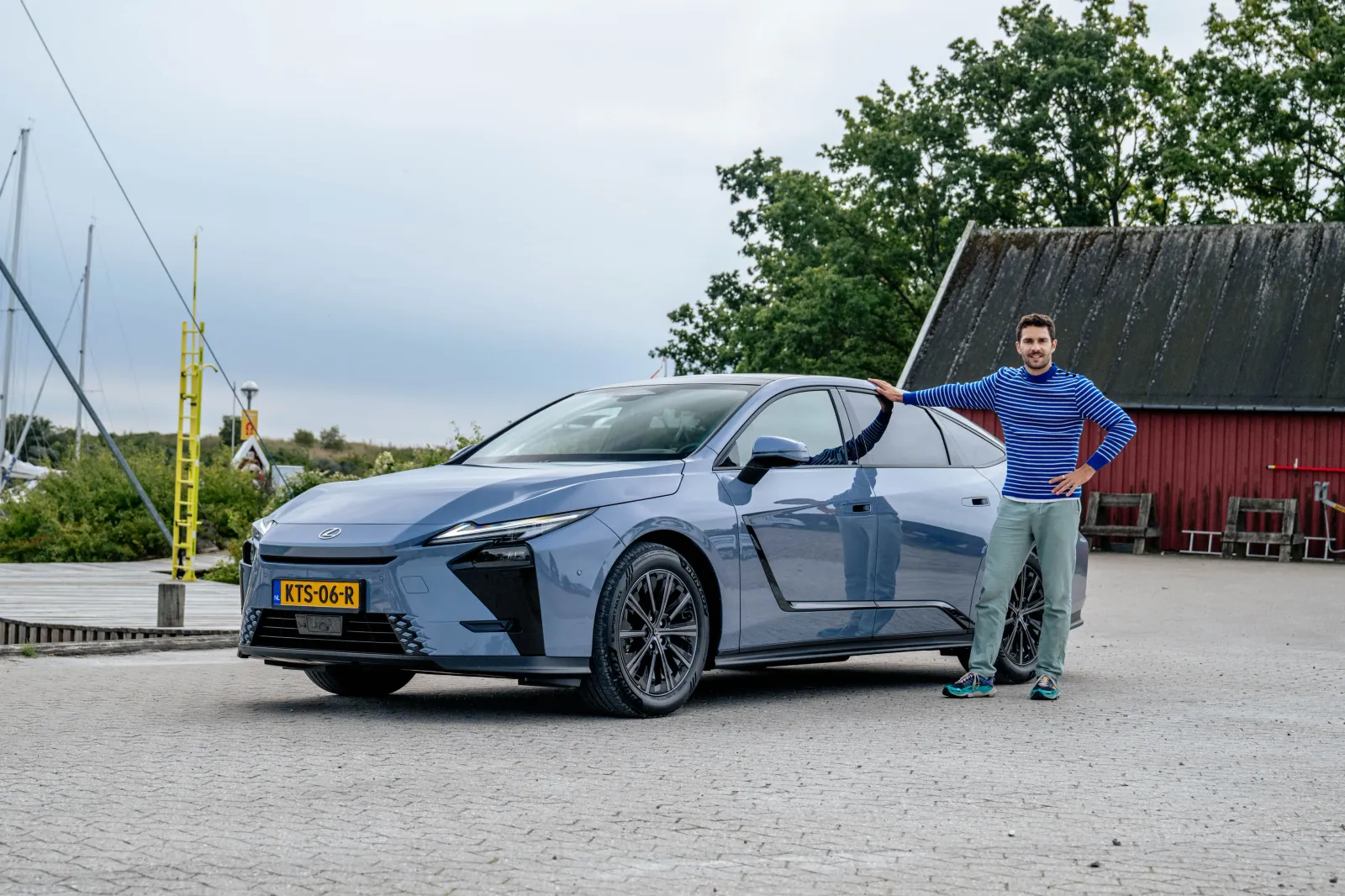
The Lexus ES undergoes a significant size upgrade with this eighth generation. Bigger, more technologically advanced, and now available as a 100% electric model, this Japanese sedan aims to retain what has made it successful among transportation professionals: comfort. We took the wheel of the new ES 350e on the roads of Copenhagen to see if it has what it takes to compete with Germany’s top electric sedans.
5.14 meters long — that’s big
First and foremost, let’s agree on one thing: this new Lexus ES is large. Very large. With a length of 5.14 meters, it’s 16.5 cm longer than its predecessor and now symbolically exceeds the five-meter mark. The BMW i5 and Audi A6 e-tron appear almost reasonable in comparison. Its width reaches 1.92 meters and its wheelbase is 2.95 meters. Lexus embraces the upgrade in size of its flagship sedan without hesitation.
Also read
Lexus unveils its future electric sedan… while keeping its innovations
This change in size comes alongside another small revolution. For the first time, the ES is available in a 100% electric version. In France, the lineup is intentionally kept simple: an ES 300h hybrid and an ES 350e electric, both with all-wheel drive, priced at 67,200 € (or 899 €/month with no down payment) in their Luxury trim. It’s worth noting this is quite rare in the market. It’s a clever way to prevent price from deciding for the customer between the electric and hybrid options.
Length: 5,140 mm
Width: 1,920 mm
Height: 1,560 mm
Wheelbase: 2,950 mm
Weight: 2,150 to 2,270 kg
A Lexus ES that has changed scale
This eighth generation abandons some of the highly elaborate stylistic elements to which Lexus had accustomed us. The manufacturer refers to it as “Clean Tech x Elegance.” Behind this marketing slogan lies a desire to simplify the design lines. The famous trapezoidal grille almost completely disappears on the electric version, replaced by a more closed and vertical front end. The signature lighting elements remain recognizable, but the overall design is less ostentatious than in the past.
The results work quite well in reality. The ES retains a classic sedan silhouette, with a long hood and a clearly defined trunk, while many electric competitors these days prefer body styles closer to fastbacks. A drag coefficient of 0.25 shows that aerodynamic considerations weren’t overlooked. It’s not an absolute record, but it’s consistent for a vehicle of this size.
However, its size quickly becomes apparent during the first few kilometers in Copenhagen. Amidst bike lanes, narrow streets, and tight parking spaces, the ES sometimes gives the impression of driving a real ocean liner. It’s clearly not the car one would choose for mainly city driving.
Inside, the best seats are at the back
The interior is perhaps the best place to understand the philosophy of this car. Lexus has placed particular emphasis on the comfort of rear passengers, and this is not by chance. According to the brand, 60% of ES models are purchased by professional chauffeurs. Businesses account for another 30% of sales, while private individuals make up only 10%. In other words, the person who buys a Lexus ES is not necessarily the one who will spend the most time behind the wheel.
And it shows in the experience... In the back, passengers truly benefit from the 2.95-meter wheelbase. There’s ample legroom, comfortable seats, and the overall atmosphere is perfect for use with a driver. In the front, the situation is a bit more nuanced. The driving position isn’t particularly problematic, but I found the seat cushions too short to properly support the thighs. On a long journey, this could eventually become an issue. It’s a rather surprising flaw in a car that emphasizes comfort so much.
The interior design is modern without being overly extravagant. Lexus introduces its new LexusConnect multimedia system with the ES and adds numerous connected services. Some touch controls remain hidden in the dashboard when not in use, appearing only when the vehicle is started.
On the road: comfort comes first
In the all-electric version, our test took place over a 77 km route around Copenhagen, covering a wide range of conditions: urban traffic, secondary roads, and faster sections. With 224 horsepower delivered solely to the front wheels, this ES 350e is nothing like a sports car. It accelerates from 0 to 100 km/h in 8 seconds, with a top speed limited to 160 km/h. But that’s clearly not what it’s meant for.
The ES’s strongest feature is its suspension system. It effectively smooths out uneven surfaces without turning the car into an uncontrollable boat. Despite weighing over 2.1 tons, the vehicle remains well-balanced when driving a bit faster. The specifications indicate a curb weight of 2,150 to 2,270 kg depending on the configuration.
The steering doesn’t provide a great deal of feedback, but it is sufficiently precise. The same holds true for the driving aids: the assisted driving systems perform their functions properly without being overly intrusive.
Also read
Lexus TZ: This massive 6-seater electric SUV will be available in France by 2027
The most notable feature is the silence. The sound insulation is excellent, and aerodynamic noises remain very subtle. At a stable speed, the ES offers that cocoon-like feel that partly explains its popularity among professional drivers. The downside is that it doesn’t provide many driving sensations. You can drive the ES comfortably, but rarely with the desire to take the most winding routes.
No single-pedal driving option, what a shame!
Another minor frustration: Lexus does not offer true “one pedal” driving. It is possible to adjust the level of energy recovery during braking, but it is impossible to completely lift the foot off the accelerator to stop the car. This is quite surprising for an electric vehicle launched in 2026, especially since one pedal driving has become standard among many electric vehicle users.
In the streets of Copenhagen, where there are numerous slowdowns and intersections, we would have appreciated being able to rely less on the brake pedal. This does not prevent the energy recovery system from working effectively. However, Lexus maintains a driving philosophy that is quite similar to that of its hybrid models.
Consumption: +1
This is probably one of the pleasant surprises of this test. At the end of our 77 km journey, the dashboard showed an average fuel consumption of 13.4 kWh/100 km. This is a reasonable figure considering the car’s size and especially its weight. Lexus officially reports 14.6 kWh/100 km in the WLTP mixed cycle. Of course, our route wasn’t part of any scientific protocol, and the Danish conditions were quite favorable. We’ll need to wait for a longer test on the highway to truly assess the efficiency of this ES. But this initial result is encouraging.
With a battery capacity of 77 kWh gross, of which 72 kWh is actually usable, Lexus claims up to 581 km of range in mixed conditions (with 19-inch wheels) and even 735 km in urban driving. On paper, this is more than sufficient to cover most usage scenarios. The real issue arises when the battery is depleted.
The charging power is capped at 150 kW...
The Lexus ES still relies on a 400-volt electric architecture. Its maximum fast-charging power is limited to 150 kW. Lexus claims it takes 28 minutes to charge from 10% to 80%. In contrast, AC charging reaches 22 kW, which is a advantage for users who frequently use public AC chargers. On their own, these figures are not bad. However, they become significantly less impressive when compared to what some competitors offer.
The BMW i5 eDrive40 can now achieve 627 km WLTP range and accept up to 205 kW of continuous power, with a 10 to 80% charge time claimed at 30 minutes. The Audi A6 e-tron sets a much higher standard: up to 769 km WLTP range and around 21 minutes to reach 10 to 80% charge, thanks in part to its newer electric platform. There’s also the Xpeng P7+ available in France, which can compete with its 530 km WLTP range in the long-range version and a 10 to 80% charge time of just 12 minutes.
In this context, the ES’s 581 km range and 150 kW charging capacity give it an appearance of being technologically behind. This isn’t necessarily a dealbreaker for its target audience, but it’s hard to overlook on a model priced at 67,200 €.
Power: 224 hp and 269 Nm
Battery capacity: 77 kWh gross, 72 kWh usable
Range: 581 km WLTP
Charging power: 150 kW
10-80% load: 28 minutes
Consumption: 14.6 kWh/100 km WLTP
Acceleration: 0 to 100 km/h in 8 seconds
100% electric at hybrid price
This is perhaps where Lexus has its strongest advantage. In France, there’s no need to use a calculator to decide between the ES 300h and ES 350e: both start at 67,200 € in the Luxury trim. The same applies to leasing, with offers of 899 €/month without a down payment for both models at the time of our test. This simplicity stands out from the sometimes (often) complicated lineup in the premium segment.
The ES 300h clearly retains its appeal for heavy users who don’t want to rely on charging. It combines a 2.5-liter gasoline engine with an electric motor for a combined power of 196 horsepower. Its WLTP fuel consumption is listed at 4.8 liters per 100 kilometers. The ES 350e allows switching to electric mode without any additional cost at purchase. For businesses and professional chauffeurs, the economics can therefore become particularly attractive depending on usage.
So, is it up to par?
After trying this vehicle on the rough roads around Copenhagen, it’s easy to understand why the ES has built a loyal customer base among professional passenger transport drivers. It’s quiet, extremely comfortable, spacious in the back, and surprisingly compact given its size. Those who spend their days transporting passengers will likely find exactly what they expect from an ES.
On the other hand, this first electric version isn’t aimed at setting records. A range of 581 km, a 72 kWh usable battery, and 150 kW of fast charging capacity—these offer decent performance, but they already seem somewhat modest and lag behind the best European or Chinese electric SUVs on the road.
If we take the P7+ as an example, it’s a large electric sedan with slightly lower range, a significantly higher charging power (350 kW), and especially a starting price of 49,990 euros for the RWD version with long range. The Audi A6 e-tron starts at 66,450 euros, while the BMW i5 eDrive40 costs 78,300 euros.