
Test of the MG IM6: 751 horsepower and 396 kW charging power to challenge the Tesla Model Y
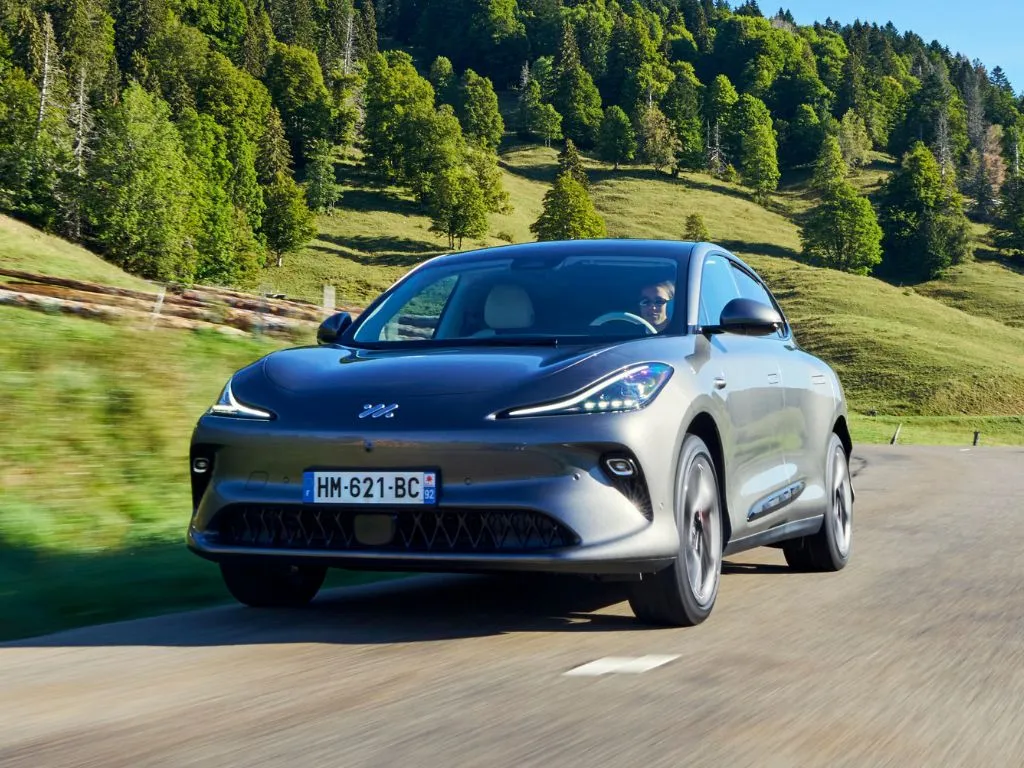
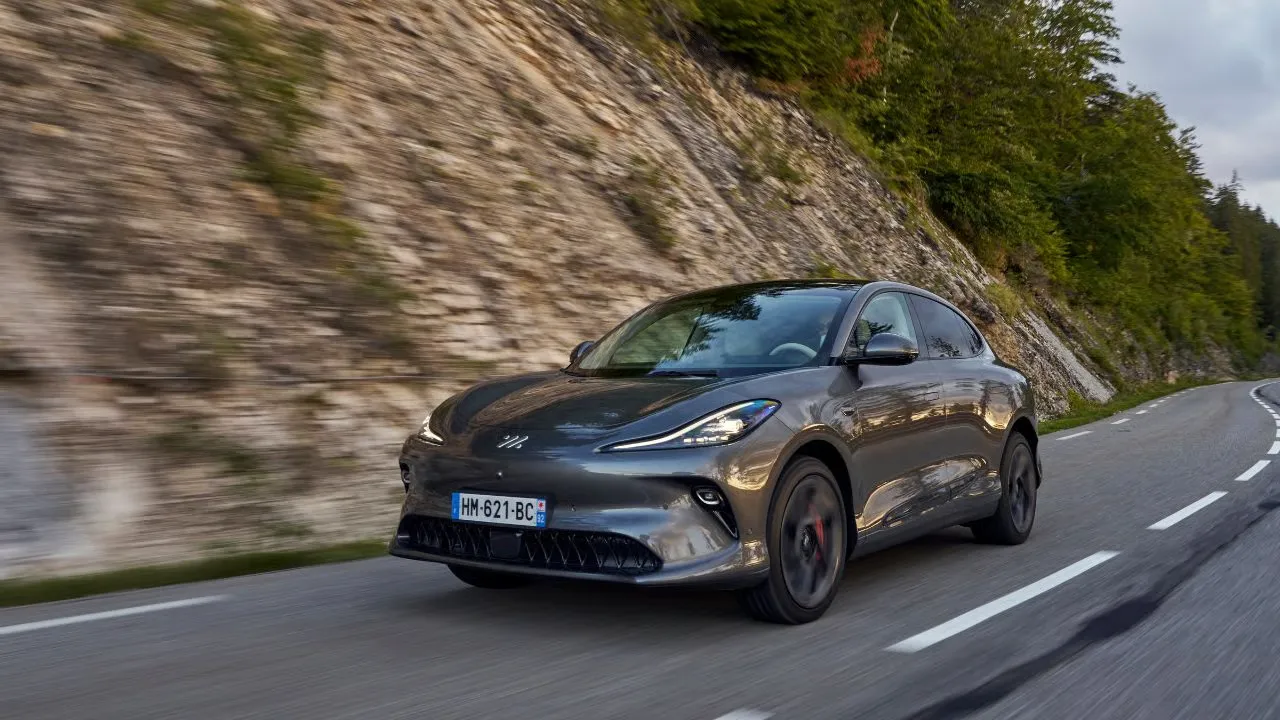
With 751 horsepower, two engines, all-wheel drive, a 100 kWh battery, and an 800 V architecture that allows up to 396 kW of charging power, the MG IM6 boasts a specification sheet full of compelling features. This large Chinese electric SUV is clearly aimed at the Tesla Model Y, but it prioritizes comfort and technology over pure performance. And behind its MG badge—though it doesn’t really display one—lies a slightly more complex history.
Is the IM6 really new?
The first issue to address is the true novelty of the IM6. For the French market, this SUV that arrives at dealerships is indeed new. For the rest of the world, it’s much less so. Behind this name lies the IM LS6, which was introduced in China as early as summer 2023 and went on sale in the fall of the same year. In its home market, the brand sold 46,000 units of it in 2025. Visitors to the former Geneva Motor Show also had the chance to see it in early 2024. The IM Motors brand — meaning “Intelligence in Motion” — was created by the SAIC group together with Alibaba and Zhangjiang Hi-Tech. In China, IM operates independently of MG, but in Europe, SAIC preferred to integrate it into its best-known brand portfolio. Finally, the UK, Norway, and Switzerland have seen the IM5 sedan — about which you’ll soon read a review on Automobile Propre — as well as the SUV.
The IM6 will arrive in the summer of 2025.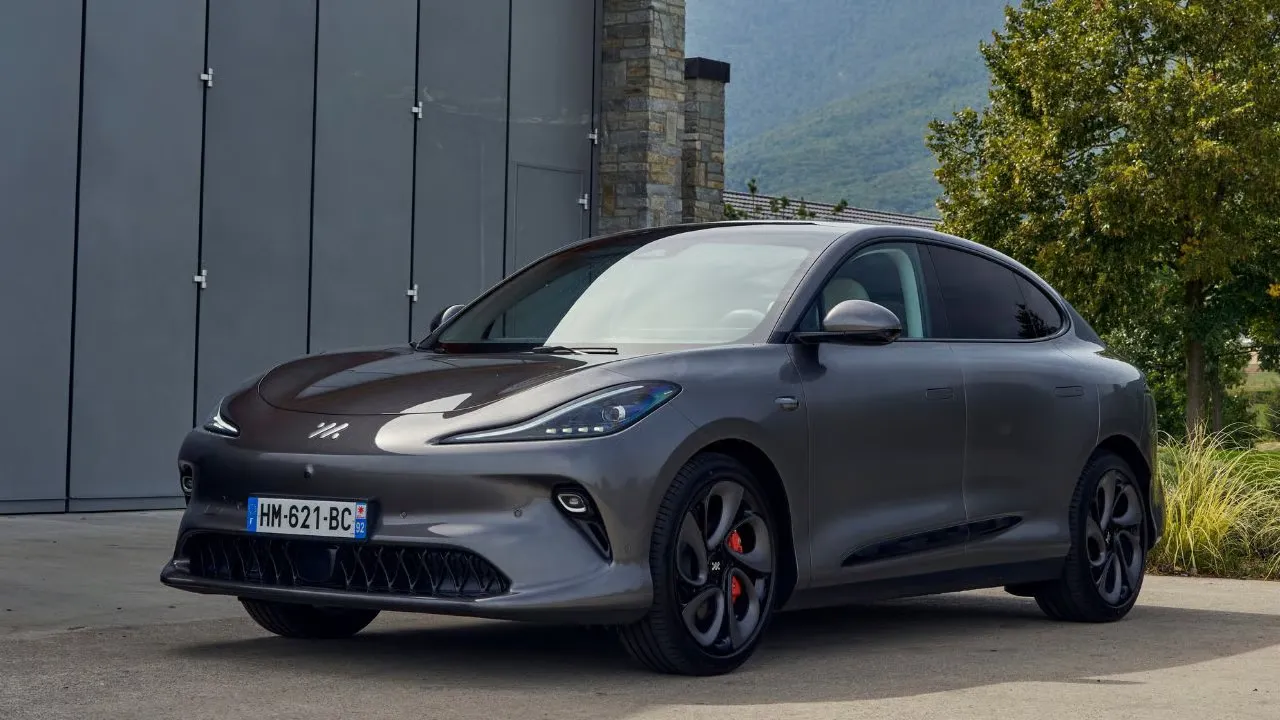
This lineage also explains the car’s unusual positioning. With the IM6, MG is no longer focusing solely on price-to-performance ratios but is also targeting the premium segment of large electric SUVs. In France, the base model with two-wheel drive starts at 56,990 €, while our four-wheel-drive version with two engines, delivering 751 horsepower and 802 Nm of torque, is priced at 62,990 €, with the options list limited to paint color selection.
Style and dimensions: X, IM, Y
At 4,904 meters long, 1,988 meters wide, and 1,669 meters high, the IM6 isn’t built to be modest. It is 13 cm shorter in length than the Tesla Model X, which was recently removed from the lineup, but it exceeds the Model Y by 11 cm in terms of length among the American brand’s models. It also benefits from a generous wheelbase of 2,95 meters. According to European homologation standards, the 4WD version weighs 2,410 kg empty and 2,485 kg when fully loaded.
Also read
Green light for MG’s Spanish factory, despite concerns
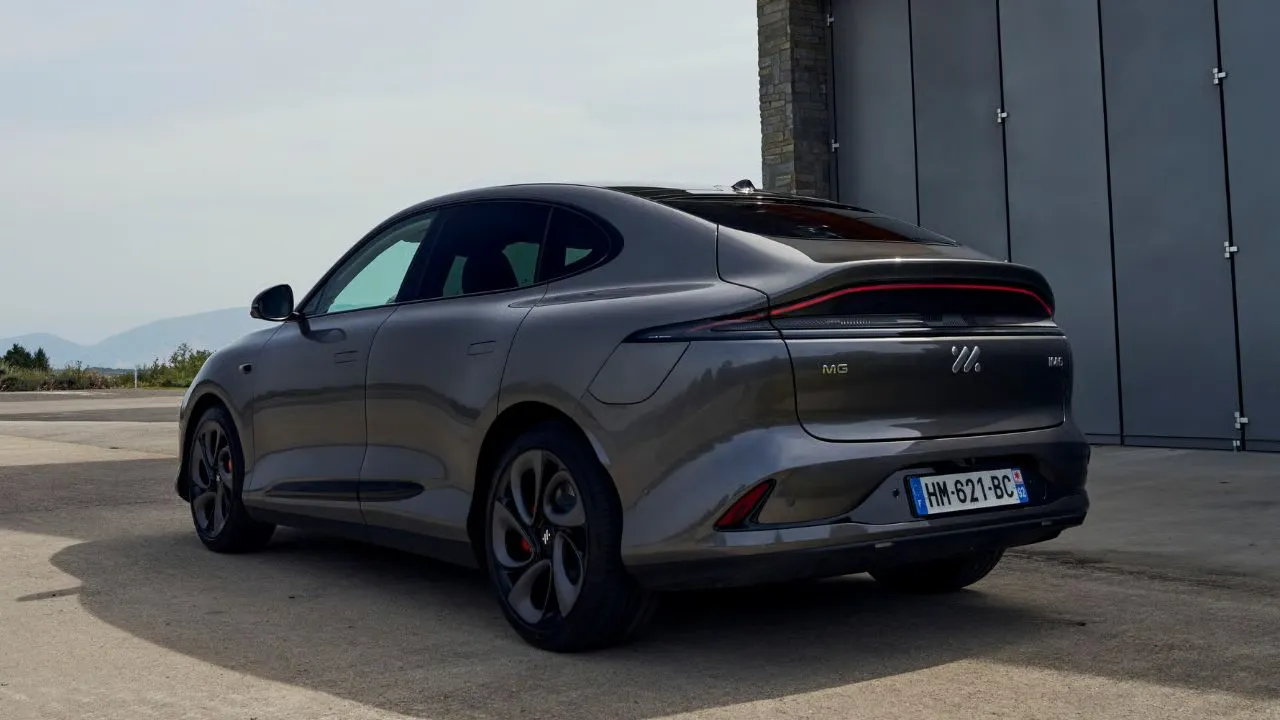
Visually, its personality is more difficult to discern. The sharply profiled SUV-coupe silhouette, the sloping hood, and the exposed handles clearly belong to the common design language of many Chinese electric vehicles. However, viewed from the front, some features recall the old Tesla Model Y, while the rear end vaguely evokes the Aston Martin DBX. It’s not particularly unattractive, nor is it especially clumsy, but at first glance it simply doesn’t convey a strong connection to the MG brand. This is all the more striking given that the IM6 doesn’t feature the traditional MG octagon but rather simple lettering on the trunk, while the prominent IM logo reminds us that the car has a different identity in its home market.
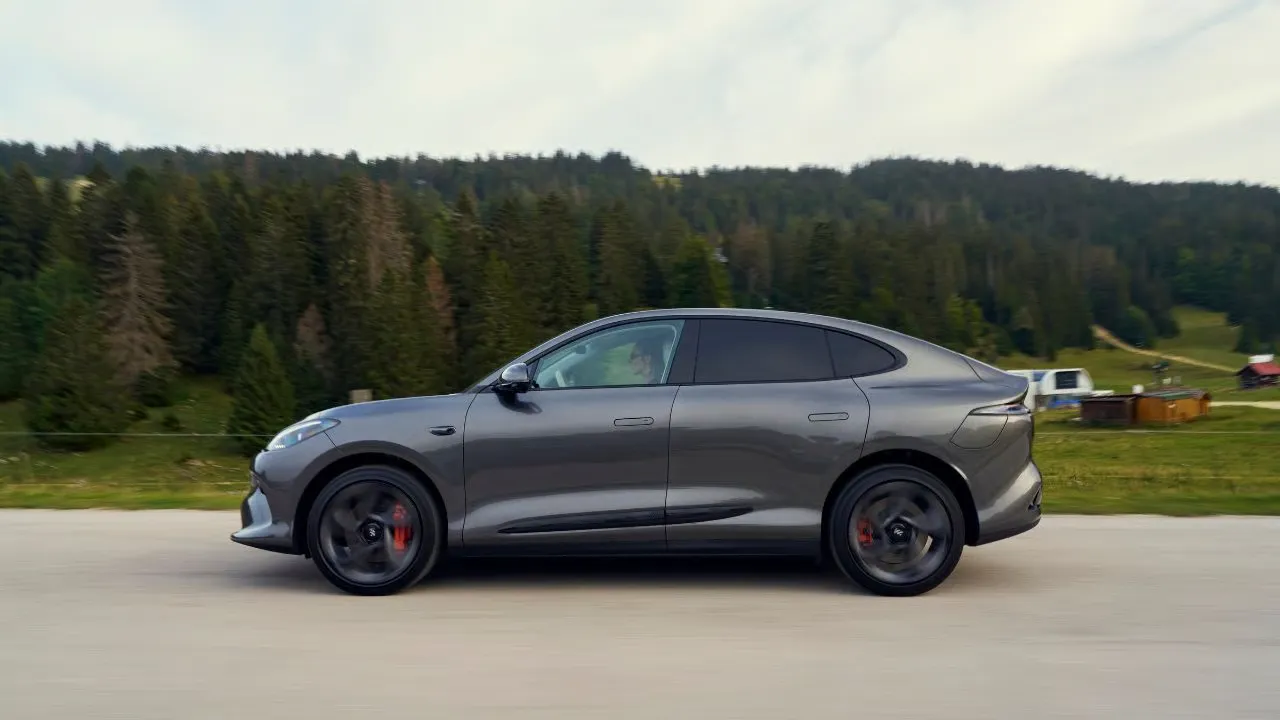
Our 4WD version features 21-inch wheels fitted with 235/45 tires at the front and 265/40 tires at the rear, which comfortably fill the wheel arches. Frameless doors, slim headlights, a rear light strip, and a huge glass roof complete its modern appearance.
Aerodynamic efficiency was clearly a priority in its design. Although not record-breaking, its reported Cx of 0.242 places the IM6 among the best in its class. The style emphasizes a certain discretion, while the technical specifications list superlatives one after another.
Interior, trunk, and daily driving experience of the MG IM6
Inside, the upgrade offered by the IM6 over the MG is much more noticeable. Although some adjustments could be improved, the assemblies appear solid, and the padded, stitched, and/or covered surfaces in synthetic leather are both abundant and high-quality. The heavily cushioned front seats contribute significantly to this impression. They are heated and ventilated, with the driver having multiple electric adjustments, memory functions, and even a massage feature—unfortunately absent on the passenger seat, which also has fewer adjustment options and is slightly less comfortable, especially in terms of knee support.
The overall design may not possess the stylistic refinement of a premium German car from the pre-electric era, but its perceived quality is far superior to what one would instinctively associate with the more affordable MG models.
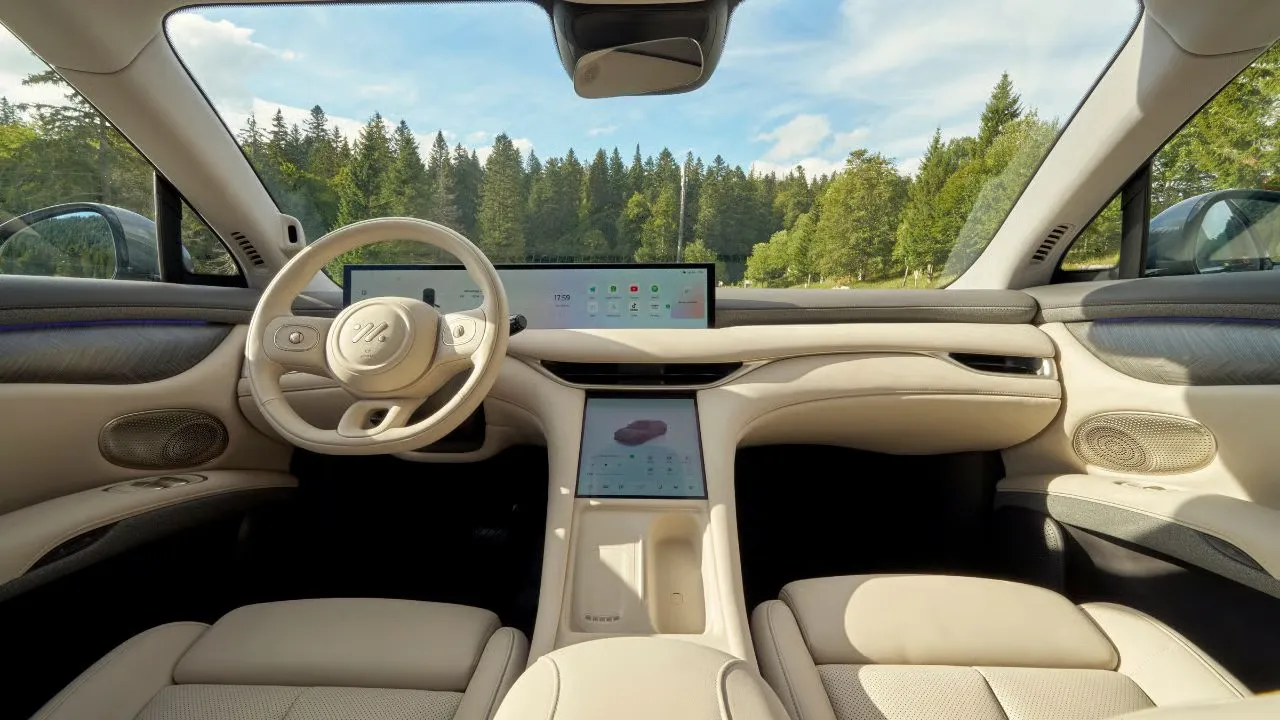
The atmosphere is distinctly digital. In front of the driver lies a 26.3-inch 2K screen, along with a 10.5-inch touchscreen located in the lower part of the center console. It’s almost surprising to find no head-up display. The visuals are clear and fast, Apple CarPlay and Android Auto work wirelessly, and the audio system compatible with Dolby Atmos features 20 speakers. Technologically speaking, it’s hard to fault the IM6 for lacking resources, aside from the oddly scarce number of USB-C ports—only two are available: one in the front armrest and one at the bottom of the rear console tunnel. However, a 50-watt wireless charging unit is built into the center console.
It is rather the use of these controls that raises some concerns. Aside from the switches and two knobs on the steering wheel, IM — I mean MG — has eliminated all physical controls, forcing drivers to rely on the screen to adjust many functions that would be better accessible with a simple gesture. This was actually a characteristic that defined these cars in the past. In 2023 (yes, an eternity in today’s automotive world), China’s auto industry tended to remove all buttons, but by 2026 it reversed course after realizing that having them is actually simpler and safer. Features like climate control, multimedia, driving modes, mirrors, or energy recovery levels require drivers to take their eyes off the road. Even though one eventually learns most of the interface, there is no alternative. And if you...
Your presbyopia can really make it difficult to “read” the correct function on the lower central screen...The abundance of electronic alerts can also be annoying, but MG offers a fairly quick shortcut to dismiss most of them with just two or three clicks.
Lastly, the rear visibility is compromised by the very small rear window and tiny interior mirror. Panoramic cameras partially address this issue, showing blind spots and allowing the driver to view the rear on the screen. Interestingly, while generally unnecessary on many models, a camera mirror would have been somewhat useful here during certain maneuvers.
Also read
MG 4 Urban: Is its air conditioning as effective and energy-efficient in extreme heat?
On the other hand, there’s no shortage of space to criticize in the IM6. With a wheelbase of 2.95 meters and a flat floor, it offers ample room for the rear passengers’ legs, while headroom remains good despite its sleek design. The large panoramic roof (without a sunshade and non-removable) further enhances the sense of space.
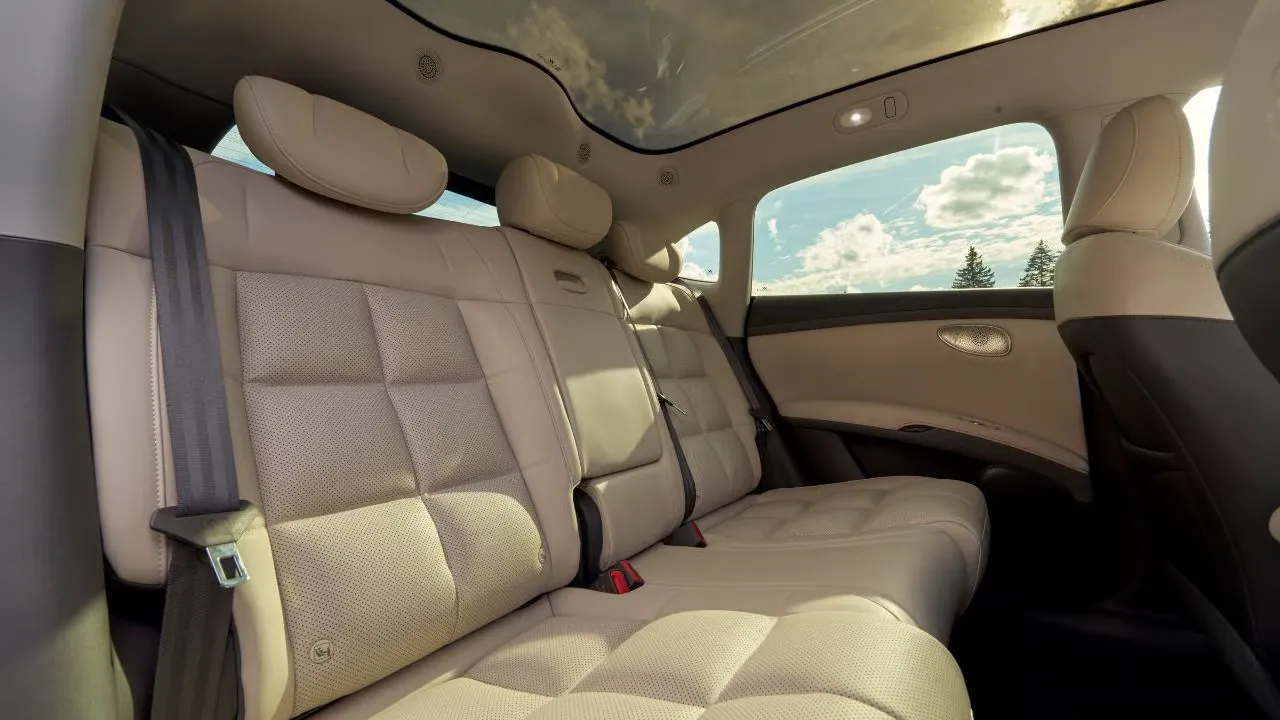
As for the trunk space, MG claims 665 liters in normal configuration and 1,640 liters when the rear seats are folded down, plus a modest 32-liter frunk area useful for storing cables. The shape of the trunk under the hood limits very tall items more than its theoretical capacity would suggest, but its family-friendly performance remains convincing. The towing capacity reaches 1,500 kg when the vehicle is braked.
Driving the MG IM6: Cognitive Dissonance
A family SUV weighing almost 2.5 tons with 751 horsepower — one would assume it requires some level of control to drive. Two electric motors combined deliver 553 kW and 802 Nm of power to all four wheels. As a result, it accelerates from 0 to 100 km/h in just 3.5 seconds, with a top speed limited to 239 km/h. Objectively, its acceleration rates are on par with sports cars. In reality, however, the IM6 doesn’t really aim to behave like one.
With very gradual pedal response, the power can be delivered quickly if desired, yet smoothly without excessive harshness if the foot stays light on the pedal. At normal speeds, the IM6 drives with surprising gentleness. Its advanced noise insulation, featuring acoustic glass and active noise reduction, effectively blocks road noise at all speeds and on any type of surface. This contributes to making this SUV an excellent traveler. The standard pneumatic suspension and adaptive damping also prioritize comfort, although the 21-inch wheels may be noticeable on the driest roads. It’s worth noting that there are real differences in the car’s behavior depending on the driving mode selected. Our preference—or rather, that of our one-day passenger—was actually for the...
The “sport” settings apply to all components, except for the suspension setting, which allows it to better handle road irregularities in “comfort” mode.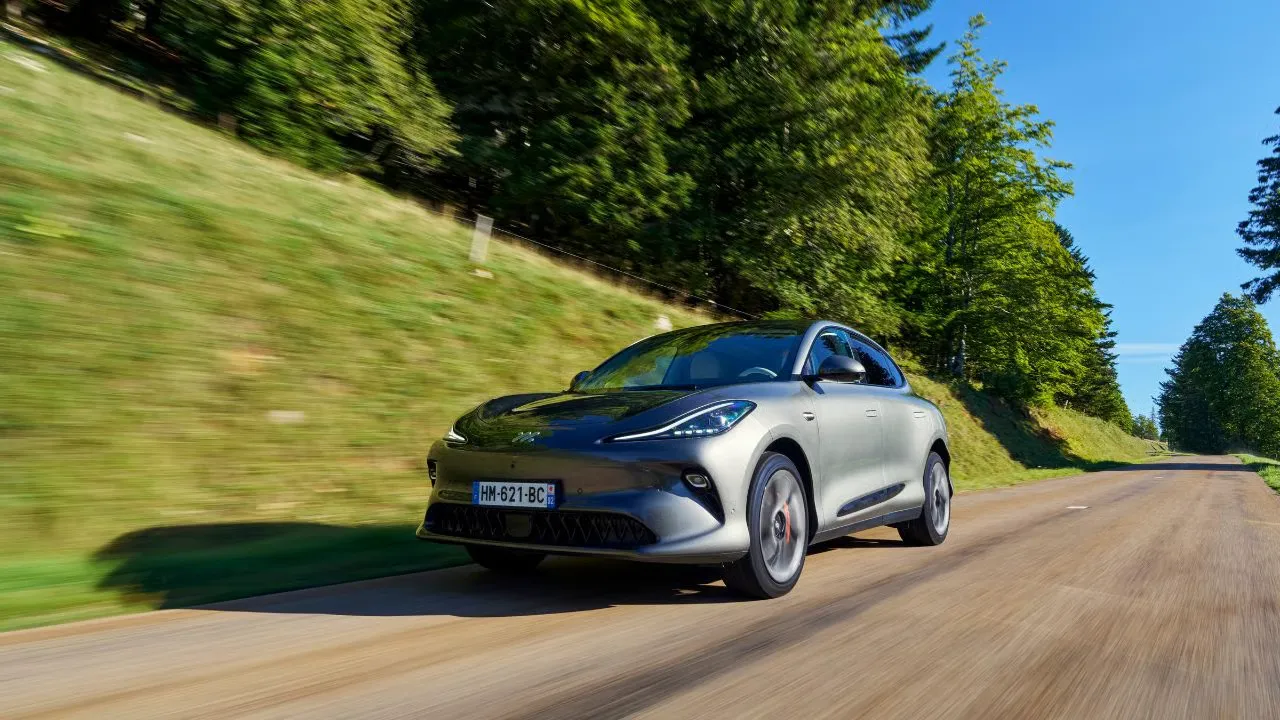
The four steering wheels represent another distinctive feature of the chassis. With a turning diameter of only 10.18 meters, this behemoth handles like a city car and appears significantly shorter in urban areas than it actually is. The famous “crab” mode, which slightly turns the rear wheels in the same direction as the front wheels, functions more as a technological showcase than an essential tool. On the other hand, the automatic parking system works quickly and effectively in selecting the sequence of maneuvers needed to position the car at the center of any parking space.
On the road, when the surface becomes uneven, its limits become apparent. There’s no lack of grip and the handling is solid, but neither the completely silent steering nor the movements of such a heavy vehicle truly encourage pushing its boundaries. Yet, the car remains quite agile and handles its weight and traction well during sequences of quick turns.
Finally, a word on braking: it’s too abrupt at low speeds, where the sudden bite upon application can be surprising; it becomes easier to control as speed increases. The “comfort braking” mode is appreciated, as it manages a complete stop while avoiding the last movement of the chassis — a technique that professional drivers learn during training to prevent interference with reading newspapers. However, it’s a shame that the regenerative braking system only has two levels — not very powerful — and can only be adjusted via the screen.
Objectively, one must learn to accept the cognitive dissonance that arises from balancing a mechanism capable of spectacular acceleration with a chassis that prioritizes comfort over driving pleasure. The 751 horsepower that can firmly hold an entire family in their seats is thus more impressive during overtaking or on a racing track than when measured on a mountain road, such as those used in our test.
Range and Charging of the MG IM6
It is perhaps here, more than in its power, that the IM6 reveals its most interesting features. The 4WD version uses a 100 kWh gross (96.4 kWh net) NMC battery paired with an electrical architecture that reaches a maximum voltage of 875 V. MG claims a charging rate of up to 396 kW in DC, allowing it to go from 10% to 80% charge in 17 minutes using a sufficiently powerful charger. The onboard AC charger, on the other hand, has a maximum capacity of 11 kW.
These figures place the IM6 among the fastest-charging electric cars on the market. The trade-off lies in energy consumption. In this twin-motor configuration, MG reports 23.4 kWh/100 km and a WLTP range of 505 km. During our tests, we recorded figures between 25 and 26 kWh/100 km, noting that most of the driving was done in the Jura mountains. This suggests a real-world range of just under 400 km.
We need to view this large battery differently: the IM6 isn’t particularly efficient, but its fast charging capability will compensate for this shortcoming on long trips. A stop of less than twenty minutes may be enough to restore a sufficient level of battery charge, especially if one finds a charging station capable of delivering over 300 kW. For those who prioritize pure range, the 407 hp propulsion version would be more practical. With these 20-inch tires, MG claims a range of up to 625 km.
Test Summary
The MG IM6 4WD is a car full of contrasts. It arrives in France as a novelty today, while its Chinese counterpart, the LS6, has been on the market for nearly three years already. One might even wonder why such a long delay was necessary, risking the release of a vehicle that becomes outdated in an industry evolving so rapidly.
Also Read
Testimonial – A MG ZS EV as Mathieu’s first electric car: “I’m not going back”
That said, its design might lack distinctiveness and its ergonomics rely too heavily on a full-screen interface, but its technical and technological features remain impressive: 751 horsepower, two engines, four-wheel drive, and pneumatic suspension all integrated into a “digital chassis” that communicates through advanced electronics, along with a 100 kWh battery and fast charging at nearly 400 kW, priced at 62,990 €. Few competitors offer this many features and technologies at this price point.
Yet power doesn’t seem to be its strongest selling point. Despite its supercar-like acceleration, the IM6 isn’t a true sports car: its weight, delayed steering response, and heavily damped chassis quickly remind one of its intended purpose. It’s more convincing as a large family electric vehicle—quiet, spacious, and particularly comfortable, capable of long distances and especially able to resume high speeds quickly after charging.
The IM6 thus represents a significant shift in MG’s approach in Europe, moving it away from its usual offerings to directly compete with the Tesla Model Y, Xpeng G6, BYD Sealion 7, or Kia EV6.
MG IM6 4WD Technical Specs
Dimensions (L/w/h: 4.90/1.99/1.67 m)
Weight: 2,485 kg
Powertrain: 2 synchronous electric motors
Power: 554 kW (751 hp)
Max torque: 802 Nm
Battery capacity: 100 kWh gross, 96.4 kWh net (875 volts)
Drive type: all-wheel drive
0 to 100 km/h: 3.5 seconds
Top speed: 239 km/h
WLTP range: 505 km
Measured fuel consumption: 25.5 kWh/100 km
AC charger: 11 kW
DC charger: 396 kW
Trunk space: 665 l/32 l
Starting price of the series: 56,990 €
Price of the model tested: 62,776 €