
Review – Mazda CX-6e: Mazda’s new electric SUV is appealing, but is it too late?
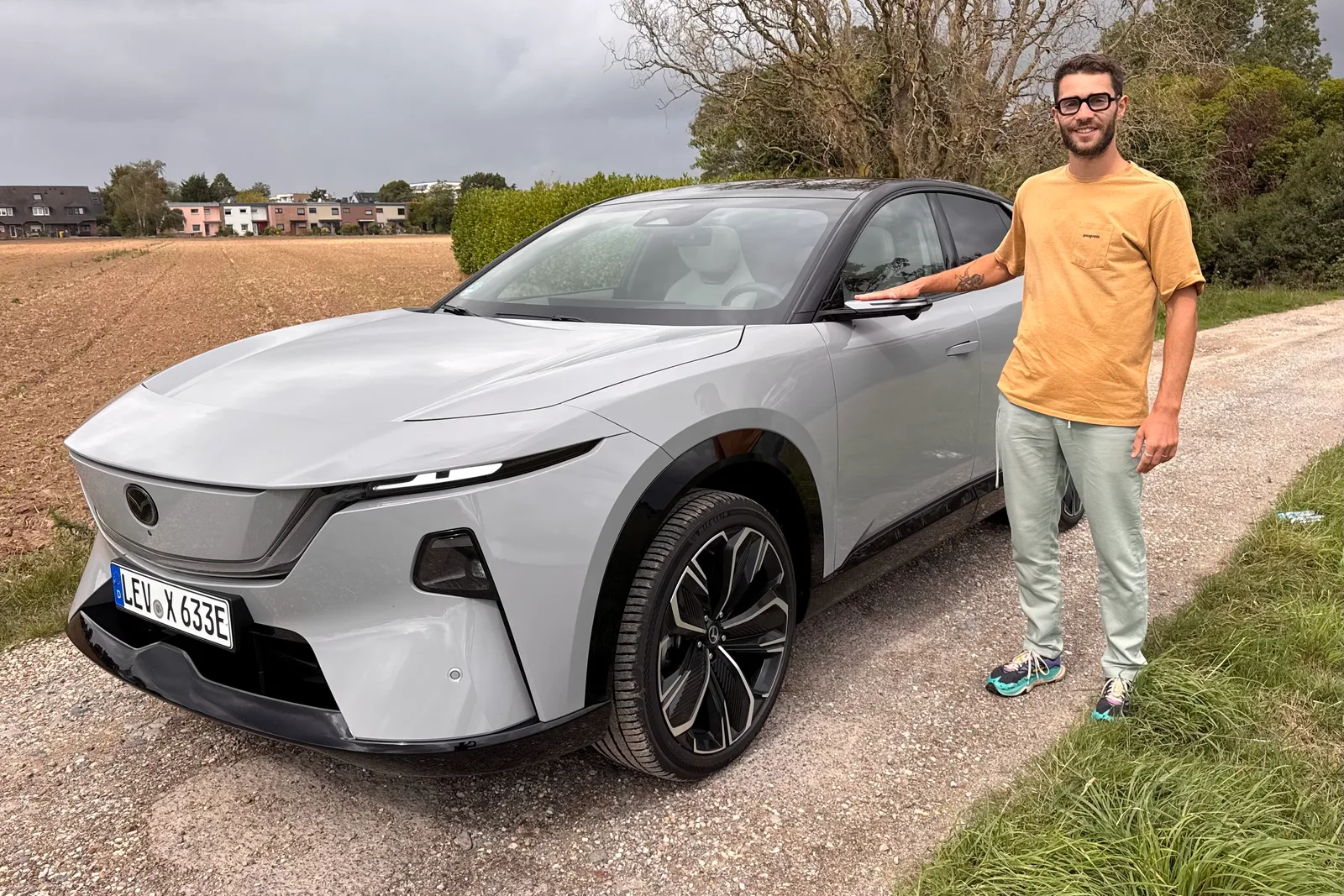
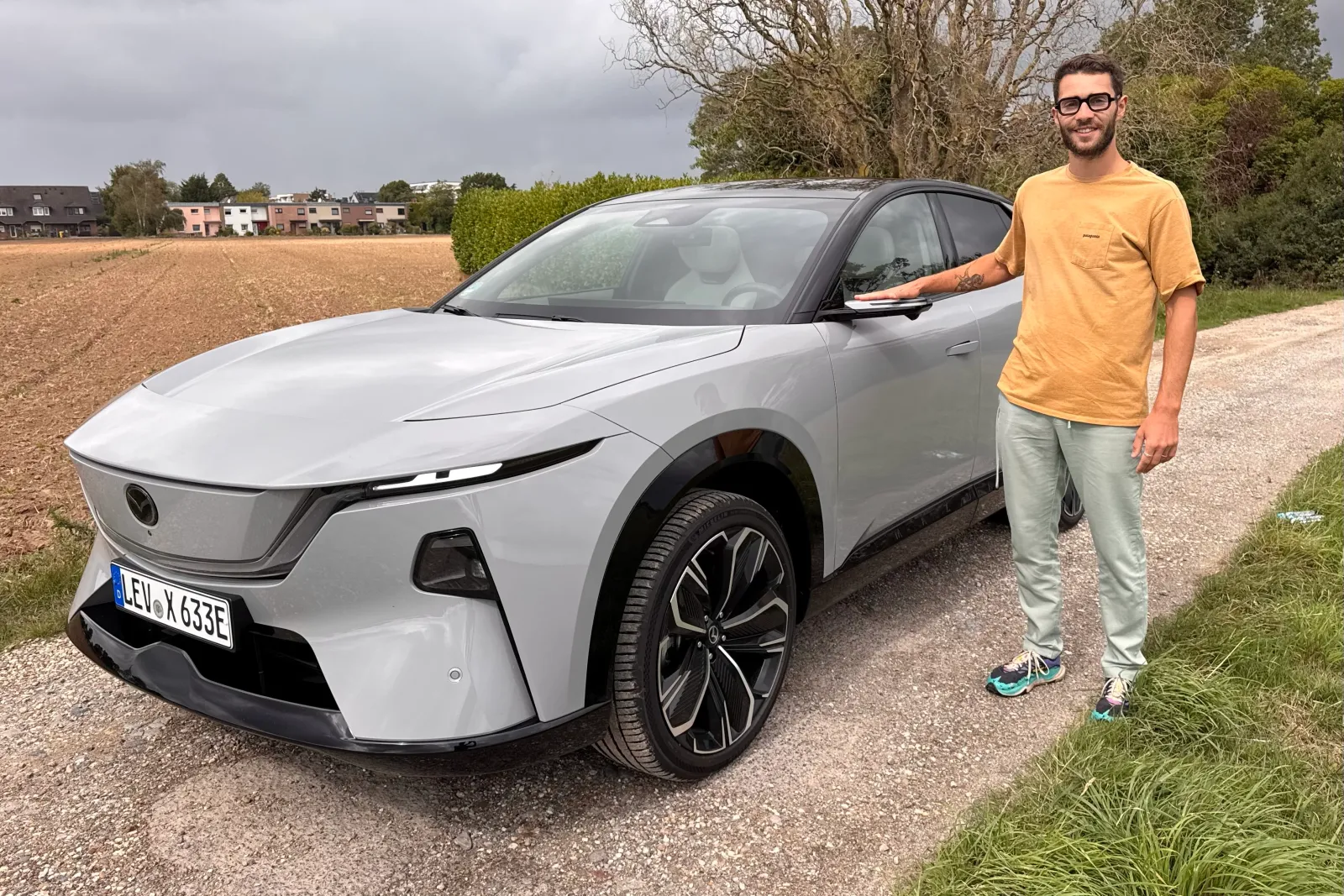
Mazda finally enters the highly competitive electric SUV segment with the CX-6e. Well-equipped, comfortable, and easy to drive, this new model still shows efficiency and charging performance that appear lagging behind even the latest competitors. So, did the Japanese manufacturer wait too long?
Mazda didn’t choose the easiest segment to launch its second electric vehicle. With the CX-6e, the Japanese company is directly competing in one of the most fiercely contested categories in the European market. Tesla Model Y, Xpeng G6, BYD Sealion 7, Peugeot e-5008, Skoda Enyaq… There are already (many) alternatives available.
Also read
Test: The restyled Audi Q4 e-tron at the same price as the Renault Scénic electric! Yes, but…
To try to make a name for itself, Mazda has chosen a fairly simple approach. One engine, one battery, and two trims. Simple, basic! All based on the EPA1 platform developed by the Chinese company Changan.
A well-designed large electric SUV
At 4.85 meters long, 1.94 meters wide, and 1.62 meters high, the CX-6e is a striking vehicle. Its wheelbase measures 2.90 meters, giving it dimensions that place it slightly longer than a Tesla Model Y and far longer than a Renault Scénic E-Tech, Peugeot e-3008, or Volkswagen ID.4. Nevertheless, its proportions help to mitigate (to some extent) the bulky appearance of certain large SUVs. The roof line is relatively low, the overhangs are modest, and the sides feature intricate styling. Mazda has also paid close attention to its front end, with a prominent lighting signature surrounding the closed grille. It’s a successful design.
Length: 4,850 mm
Width: 1,940 mm
Height: 1,620 mm
Wheelbase: 2,900 mm
Weight: 2,130 to 2,205 kg
A successful design
We also notice several small appendages and asperities on the shield, details typically found on more sporty vehicles. However, it’s impossible to determine exactly what function they serve in terms of aerodynamics. And that’s because Mazda failed to provide us with the drag coefficient (Cx) of the CX-6e (with such a name too...), even when we asked directly. This is an oddly missing piece of information for an electric vehicle, where aerodynamics play a significant role in fuel consumption. Well, let’s move on!
An interior that breaks away from Mazda’s usual style
The most striking change in philosophy is likely found inside the cabin. Forget Mazda models with small screens controlled by a central knob: the CX-6e features a 26.45-inch 32:9 panoramic display with 5K resolution. It’s impressive. This screen occupies almost the entire width of the dashboard and integrates all vehicle functions. Climate control, vehicle settings, navigation, fuel consumption, and driving aids—all are managed through this screen. In fact, just like in Tesla models, there are no more instruments behind the steering wheel.
But unfortunately, the Japanese company didn’t hire Apple’s engineers… The screen is far from intuitive. It takes time to get used to the menus. This might improve with regular use, but after just a few hours of testing, it was extremely complicated. Another downside: the screen heats up very quickly. After only a few minutes of use, the back of the display became scorching hot. And no, it wasn’t because of extreme heat.
But most importantly, what to think of this 360° shift toward full digitalization? Mazda is going against the trend we’ve seen over the past few months. Brands are starting to reintroduce physical controls after going too far with digitalization.
The Takumi Plus trim takes this concept even further with digital exterior mirrors. Small cameras replace the mirrors and transmit their images to OLED screens built into the side doors. Mazda claims this provides a 30% wider field of view. The CX-6e partially compensates with its head-up display and fairly well-integrated voice control. The system also accepts various hand gestures to operate certain functions. It’s a technological showcase that certainly won’t appeal to everyone.
A lot of space and a real frunk
The 2.90 m wheelbase naturally benefits the rear passengers. There’s ample legroom, and the nearly flat floor makes seating three people easy. Mazda specifies 990 mm of legroom in the back. The trunk holds up to 468 liters when fully loaded, and 1,434 liters once the second row is folded down.
It’s not enormous considering its overall size, but the CX-6e makes up for it with a feature that’s still too rare: a genuine 80-liter front trunk. This allows easy storage of charging cables without cluttering the main trunk.
The standard large panoramic roof also contributes to the sense of space inside. Moreover, unlike some competitors that rely on basic glass treatments, Mazda includes an electric sunroof, which is a valuable addition.
A 78 kWh battery and 258 hp
The technical specifications are intentionally kept simple. The European CX-6e is available only with a 78 kWh LFP battery. This battery powers an engine mounted on the rear axle, producing 190 kW, or 258 hp, along with 290 Nm of torque. The 0 to 100 km/h acceleration time is listed at 7.9 seconds, with a top speed of 185 km/h. These figures are not meant to impress in an industry where some SUVs exceed 400 hp. However, this modest output seems consistent with the vehicle’s intended purpose. There are no issues with overtaking, and while the responsiveness is fairly basic, it is sufficient for its role.
Mazda has devoted considerable time to tailoring the model for European use. The suspension, shock absorbers, steering, accelerator response, braking, and energy recovery systems have all been revised by the teams at its R&D center in Oberursel, Germany.
Suspension, noise insulation: excellent work
And it shows quickly. The shock absorption is one of the standout strengths of this first test drive. The suspension is finely tuned and manages to maintain a high level of comfort without giving the impression of driving an overly soft vehicle. With over 2.1 tons empty weight, the CX-6e is clearly a heavy vehicle. Yet, body movements are well controlled, and the whole vehicle retains a certain consistency when accelerating. It’s very pleasant.
A plus point as well is the sound insulation. The CX-6e effectively filters out air drafts, even at high speeds. This enhances the sense of comfort inside the vehicle. Mazda states that it worked specifically on noise and vibration issues to adapt the car to European road surfaces, which are often more varied than those in China. Throughout our test drive, the results were convincing, with the cabin remaining perfectly quiet on highways as well as on less trafficked roads.
Our route around Düsseldorf was unfortunately not the ideal setting to truly push the chassis to its limits. The rather dull route consisted mainly of urban traffic, unimpressive secondary roads, and a few faster sections. It’s therefore difficult to draw definitive conclusions about its performance on more winding roads. But this initial experience already shows that Mazda has done good work. The European tuning is evident, especially in the handling of the suspension.
A power-hungry electric SUV
Mazda reports a WLTP fuel consumption range of 18.9 to 19.4 kWh/100 km depending on the version. With 19-inch wheels, the rated range is 484 km. It drops to 468 km with 21-inch wheels. On our test route, the dashboard displayed 20.1 kWh/100 km over 115 km at an average speed of 53 km/h. Another 40-km segment driven at an average speed of 58 km/h resulted in 22.9 kWh/100 km.
The conditions of our test obviously do not allow us to determine a final consumption figure. Nevertheless, these values are quite high given the average speeds observed. For reference, a consumption of 20.1 kWh/100 km, based on a 78 kWh battery, would theoretically result in just under 390 km before accounting for reserves and losses. At 22.9 kWh/100 km, the range would be closer to 340 km. These are merely mathematical projections, but they suggest that a longer test is needed before concluding anything about the model’s actual efficiency.
200 kW at the charger: acceptable, but…
In terms of charging, the CX-6e can accept up to 200 kW of DC power and claims 24 minutes to go from 10% to 80% charge under optimal conditions. Just a few years ago, such figures would have placed this model among the top performers. By 2026, they are merely “acceptable.” Among its competitors, the Xpeng G6 now offers much higher charging speeds at 450 kW, achieving 10% to 80% charge in just 12 minutes. Other manufacturers have also adopted architectures capable of handling very high power levels. As a result, the CX-6e falls behind the competition.
Key specifications at a glance:
Power: 258 hp and 290 Nm
Battery capacity: 78 kWh
Range: 468 to 484 km
Charging power: 200 kW
10-80% charge time: 24 minutes
Fuel consumption: 18.9 to 19.4 kWh/100 km
Acceleration: 0 to 100 km/h in 7.9 seconds
Also read
3,000 km on a Chinese electric city car for vacation: duration, cost, issues — here’s the full breakdown
An interesting price/performance ratio?
In short, Mazda seems to have achieved a key part of its goal: giving a European-style character to an SUV whose technical foundation was developed by a Chinese brand. Overall, the CX-6e appears to be a serious contender, but it enters a market segment where simply being “good” is no longer enough. Facing a well-positioned and efficient Tesla Model Y or an Xpeng G6 that excels in range and charging speed, Mazda will need to prove that its new electric SUV can compete.
Regarding pricing, the CX-6e starts at 46,800 € in the Takumi trim with 19-inch wheels. This version already comes well equipped, featuring a large 26.45-inch panoramic screen, head-up display, panoramic roof, standard driving aids, and seats made of Maztex available in black or beige. The price rises to 48,000 € for 21-inch wheels while retaining the Takumi trim. However, note that this choice slightly reduces the range from 484 km to 468 km.
Finally, the Takumi Plus trim, priced at 49,800 €, comes standard with these 21-inch wheels, as well as digital exterior mirrors and a digital interior mirror. It also features a two-tone Maztex upholstery in amethyst and white, along with heated and ventilated seats in both the front and rear. Pre-orders open on September 12, 2026. Let us know in the comments what you think.
Mazda CX-6e Takumi
Mazda CX-6e Takumi Plus
19-inch wheels
46,800 €
21-inch wheels
48,000 €
49,800 €
Same price as the Renault Scénic E-Tech
In its entry-level version, the Mazda CX-6e starts at the same price as the Renault Scénic E-Tech (46,990 €). While the French model certainly offers less interior space, it’s still worth considering its performance. The electric Scénic boasts a range of 642 km (compared to 484 km for the CX-6e), but it charges at only 150 kW (200 kW for the Mazda). However, the Japanese electric SUV truly stands out with its design, features, and comfort levels on board.
It should be noted that Mazda is a relatively niche brand in the French market. The manufacturer plans only 7,500 vehicle registrations in France by 2026, with a target of 1,400 electric cars, including 800 Mazda 6e models and 600 CX-6e models. Therefore, this new electric SUV does not need to compete in volume with a Tesla Model Y or a Renault Scénic to be considered a success. Its main role is to expand the brand’s lineup and rapidly increase the proportion of electric vehicles.