
Review – Leapmotor B03x: What’s the real value of this new Chinese electric urban SUV that’s 10,000 euros cheaper than its competitors?
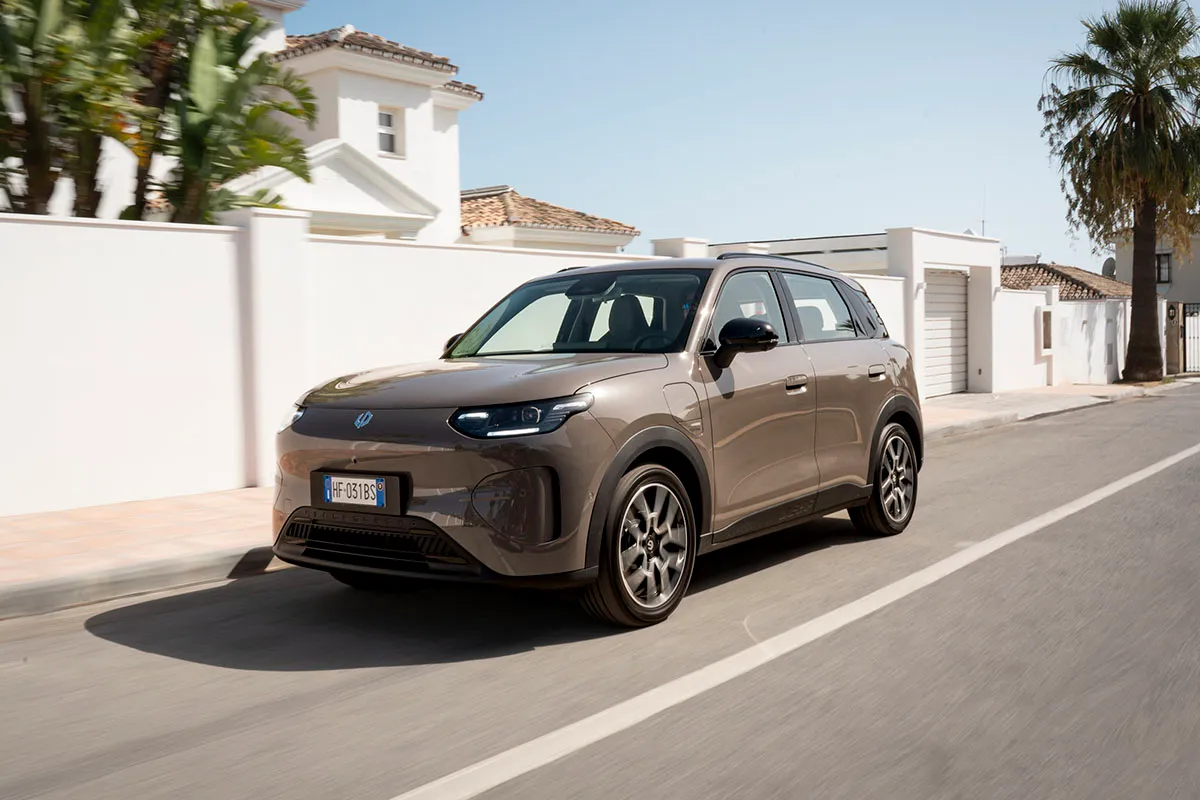
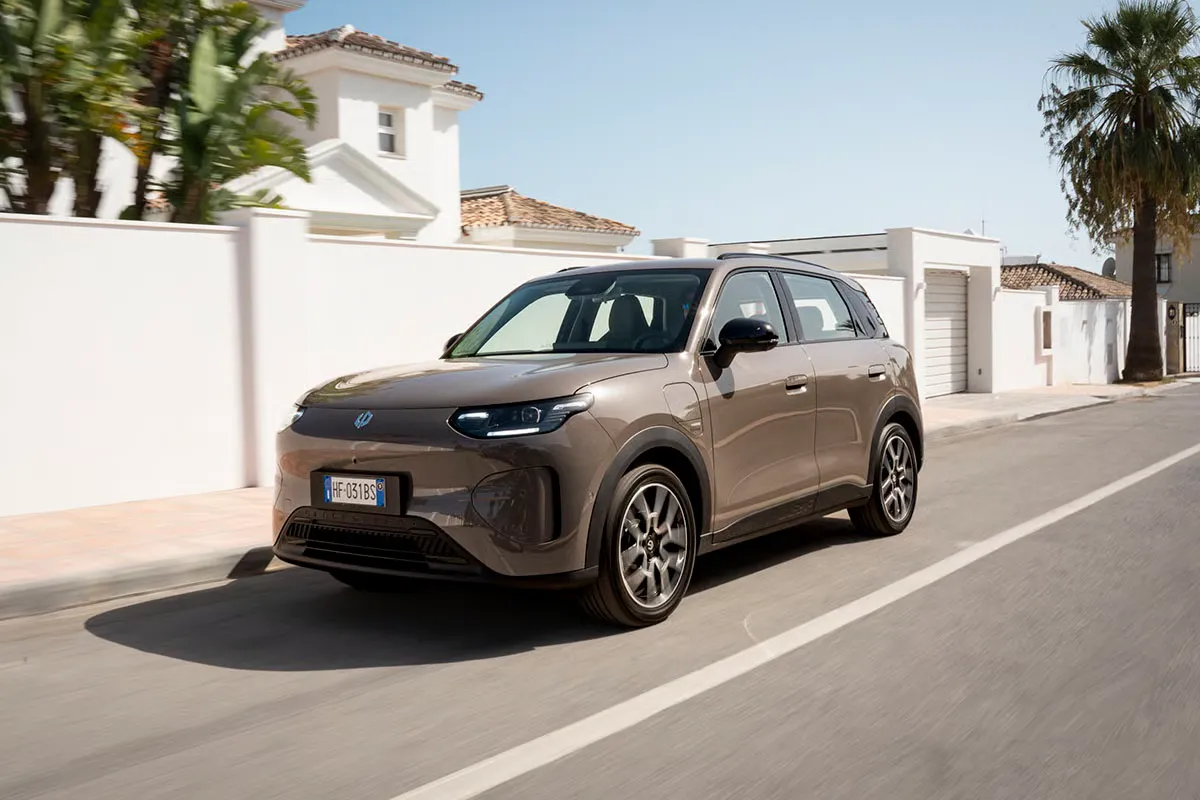
Leapmotor continues to expand its product lineup with the introduction of the B03x, an electric urban SUV. However, the price still can’t compensate for everything.
After a quiet start in our market, Leapmotor became part of the sprawling Stellantis group. Leveraging the strength of a large conglomerate and a more robust distribution network, this Chinese brand has been able to bring several of its models to the market. Its range includes various models, from the small T03 to the larger compact B05. Now, Leapmotor is closing this gap with the B03, a new 100% electric urban SUV.
Also read
Leapmotor B05 review: Can this Chinese electric compact outshine the MG 4 and Renault Mégane?
Royal Living Space
At 4.27 meters in length, 1.81 meters wide, and 1.64 meters high, the Leapmotor B03x falls into the category of urban SUVs alongside models like the BYD Atto 2, Kia EV3, and Peugeot e-2008. These are fairly spacious dimensions that its style lacking true distinction doesn’t suggest. Its distinctive silhouette, which resembles more that of a BYD Atto 2, doesn’t contribute to improved aerodynamic performance, although the manufacturer claims a Cx value of 0.26 (with an SCx of nearly 0.70 m² per our estimates).
Nevertheless, the height of the roof combined with a wheelbase of 2.61 meters enhances interior comfort, offering adequate headroom and decent knee space in the back—features typical of higher-end models from Leapmotor. The seat could use to be slightly less reclined to improve comfort further, especially since there is vertical space available.
Unlike its competitors and other models in the series, the B03x also boasts many practical features. This is especially true of its seat bench, whose backrests can be folded in the classic 40/60 ratio, but whose seat cushion can also be raised. Inspired heavily by (or perhaps copied from?) Honda’s famous Magic Seat, this design allows for the storage of tall or wide items. The thick seat cushion prevents the seats from being raised completely upright, but it remains a practical solution for everyday use.
The trunk has a capacity of 510 liters. Of course, this isn’t immediately apparent with the floor in the raised position. But it’s adjustable, and it also hides a huge bin that can be cleaned using its drain plug, with a capacity of 105 liters. This reminds us of the solution Ford used in the Puma Gen-E. The only downside regarding the trunk is a shelf that relies solely on supports (it doesn’t move with the opening of the trunk) and doesn’t stay in place. Annoying!
A too-simplified cockpit
At the front, its design differs slightly from the Leapmotor B10 and B05, but the minimalist aesthetic remains the same. The quality of materials and construction are beyond criticism at this price point, and the interior makes an effort with aluminum-style inserts and uniquely designed handles. Yet overall, it still clearly lacks creativity, and the various details that might amuse children don’t change that.
Otherwise, the B03x is a Leapmotor, and thus a Chinese car. In other words, its layout is identical to that of most cars from the Middle Kingdom, featuring a steering wheel that reduces the number of buttons, instruments behind the wheel, and a large central touchscreen that handles all vehicle functions. Add the logo of your favorite Chinese brand, and it will look just the same. Fortunately, the central screen is easy to read and highly responsive. The menu organization isn’t intuitive at first, but it becomes simple for those who have used a Leapmotor or another Chinese car’s touchscreen before. Shortcuts can, however, be placed on the home screen.
Driving aids that need improvement
It is through this panel that the suite of driving assistance features is also activated, which are particularly annoying as well. All kinds of beeps, resistances, or steering wheel inputs... Driving on the highway with electronic stabilizers is no easy task, and it’s necessary to disable everything before starting. The overall experience isn’t as unusable as with the B10, but its general performance is still far from the best in this category.
Also read
Supertest: BYD Atto 2, fuel consumption and range results from our test
It’s a shame, as this urban SUV turns out to be quite comfortable on the highway. There are somewhat intrusive wind noises, but a BYD Atto 2 with an equally steep windshield doesn’t fare any better. Only the particularly sluggish steering is surprising and doesn’t always help maintain course, especially when overtaking trucks due to air currents. It’s not dangerous, but it can be surprising.
Why deliver such high power?
On the road, however, one should not be overwhelmed by the SUV’s impressive power. Or rather, by its torque distribution, which could use some refinement. While 145 kW (197 hp) and 200 Nm of torque aren’t truly unreasonable, especially considering the 1,550 kg weight of this 53 kWh version, the rapid acceleration strains the drivetrain and can cause the steering to lock up if electronic systems fail to regulate torque delivery. Proof of this is its exceptional acceleration, reaching 80–120 km/h in just 4.7 seconds. And since we’re talking about power, let’s also note the 11 CV of auxiliary power in this version—twice that of a BYD Atto 2 with 204 hp. This is the essence of the net power rating in electric vehicles.
This poorly controlled power is compounded by a suspension that lacks proper guidance as well, being too soft and potentially causing unwanted reactions on bumpy roads or during evasive maneuvers. The issue is less concerning than with the B10 equipped with Linglong tires, but the B03x could benefit from being more rigid. Yet, this SUV is fitted with Yokohama BluEarth GT tires. Caution is needed in rainy conditions. On the other hand, this softness enhances comfort in urban areas, where the car performs well thanks to its light-weight, feedback-free steering and excellent peripheral visibility. The brake pedal is adequate, but the driver must operate the screen to select one of the various regenerative braking modes.
A very fast charge
In this 53 kWh version, the Leapmotor B03x is rated to have a range of 383 km with an energy consumption, including charging losses, of 15.5 kWh/100 km. In reality, we recorded an average consumption of around 13.0 kWh/100 km on purely urban routes. On the highway, with measurements taken in both directions (A/R) at 25 °C, we recorded an average consumption of 21.7 kWh/100 km, with 23.1 kWh/100 km at a constant speed of 130 km/h. The B03x proves to be more fuel-efficient than a BYD Atto 2 64 kWh, a Kia EV3, or a Renault 4 e-Tech.
In terms of range, Leapmotor claims a capacity of 53 kWh, noting that like the B10, the gross and net capacities are identical. However, according to our calculations, the usable charge across the entire range would be around 51 kWh. Based on our calculations and the energy loss from the dashboard, this would correspond to a theoretical total range of nearly 235 km on highways. This places it between the Renault 4 e-Tech (220 km) and the BYD Atto 2 64 kWh (260 km) according to our tests. Thus, the range on mixed routes can be estimated at between 300 and 320 km.
In terms of charging, the SUV is equipped with an 11 kW AC charger, allowing it to reach 30-80% charge in 3 hours and 15 minutes. Still using this Chinese comparison standard, Leapmotor claims a fast charging time of 16 minutes, or 10-80% charge in 21 minutes with a maximum power of 133 kW. In reality, it took two more minutes, reaching 10-80% charge in 23 minutes (30-80% in 18 minutes), with a maximum power of 144 kW. This results in an average charging power of 107 kW at the charger. This is on par with the BYD Atto 2 64 kWh and far ahead of competitors, whose average charging power is around 70-80 kW. Finally, according to the dashboard, it takes an additional 35 minutes to fully charge the battery.
Aggressive pricing for the Leapmotor B03x
It’s not very exciting to watch despite its attempt to make us smile with its tail lights, nor is it particularly engaging to drive—on the contrary, the Leapmotor B03x aims primarily at being practical and comfortable, while offering better interior space than its competitors. Its various practical features that are useful in daily life also deserve mention. It’s a shame, however, that the space under the hood wasn’t utilized to accommodate an additional storage compartment. Most notably, the Leapmotor B03x surprises in the area where few would expect it to, namely in terms of electromechanical performance. Its fuel consumption is particularly impressive, even on the highway. And while its 53 kWh battery limits the range, refueling isn’t a major issue due to charging times that are faster than those of average 400 V electric vehicles.
It still has issues in two areas that are by no means minor: road handling and the calibration of driving aids. These two shortcomings remain hard to overlook despite the SUV’s very competitive price. True, it does have what it takes to outperform its competitors. The entry-level model (40 kWh – 392 km WLTP) starts at 23,900 €. The 53 kWh version with the Life trim costs 25,900 €, while the top-of-the-line Design trim in this review reaches up to 26,900 €. Its closest rival, the BYD Atto 2 Comfort (64 kWh – 430 km WLTP), costs 35,900 €, whereas a Kia EV3 (58 kWh – 436 km) starts at 36,490 €.