
Test Drive Geely E2: How Does This Chinese Rival Compare to the Renault 5 E-Tech?
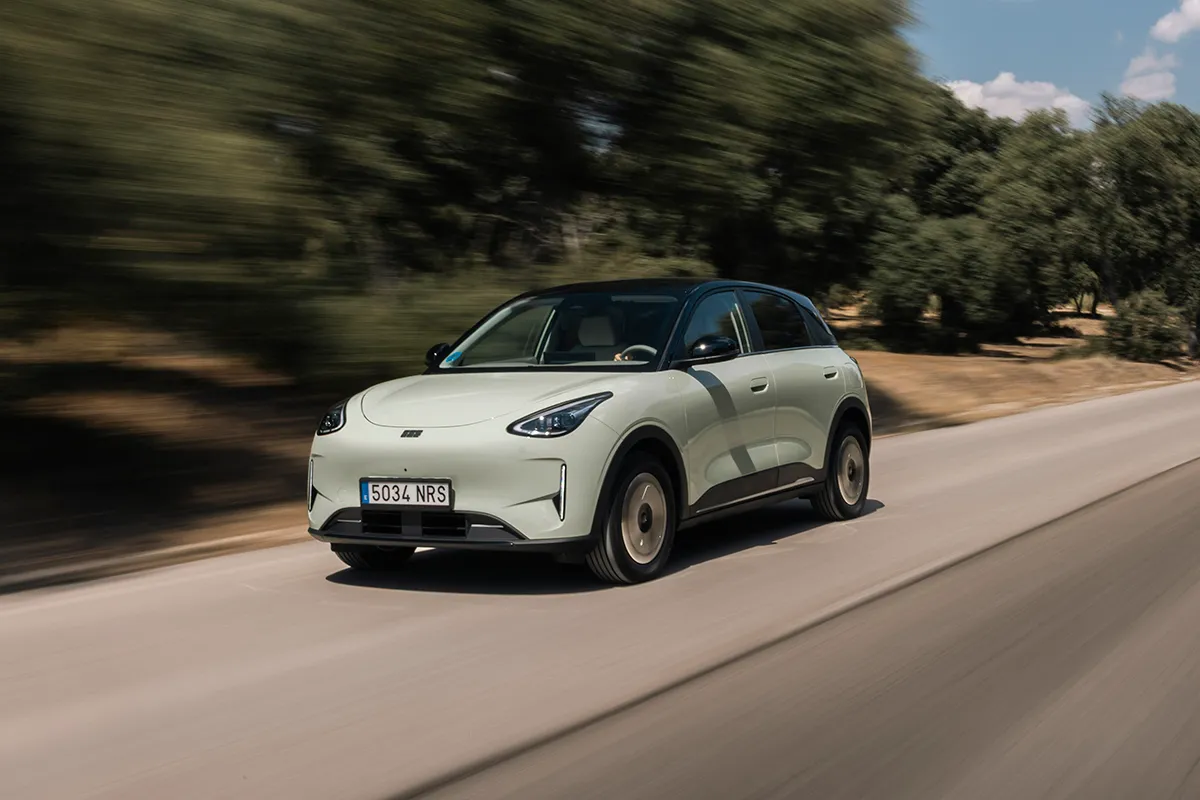
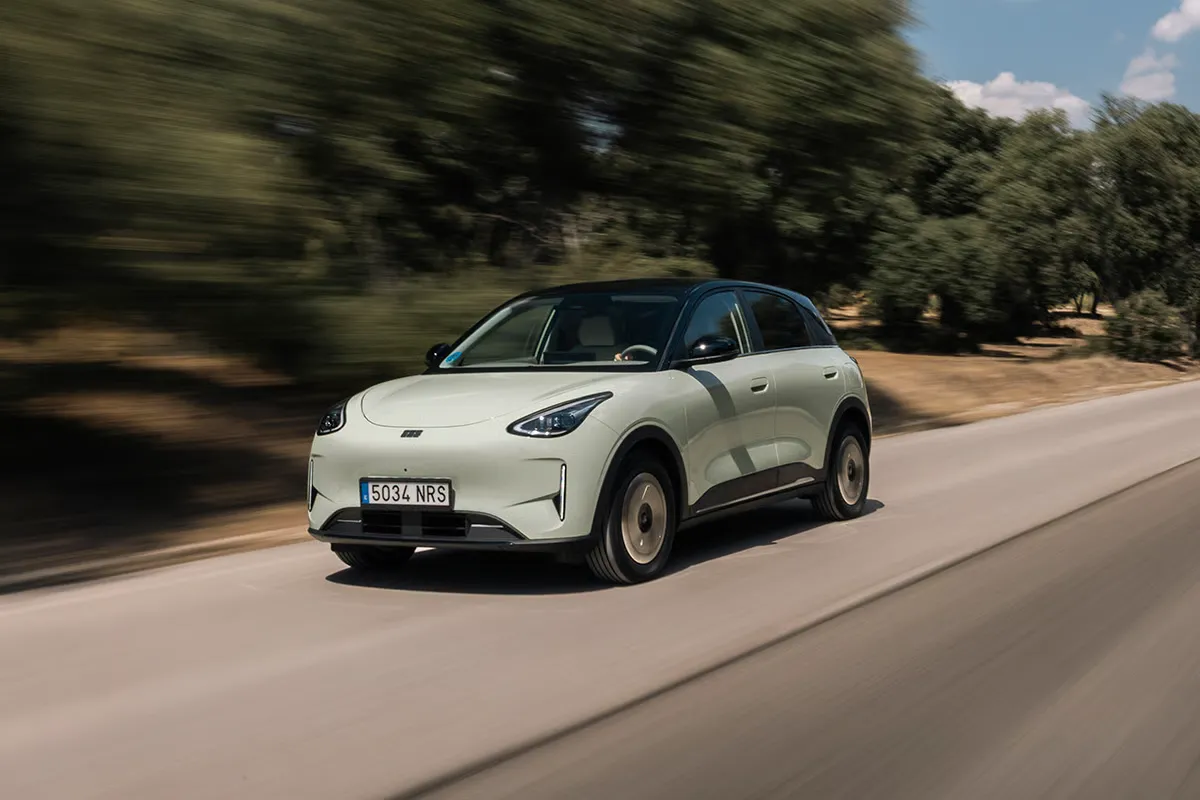
Following its first two SUVs, Geely is now entering the electric city car market with the E2, offering features that are rare in this category!
Geely is one of many Chinese automakers aiming to capture a share of the market in Europe and France. When it first entered this market, the brand, like others, launched two SUVs: the fully electric E5 and the hybrid Starray EM-i. But now, Geely is focusing on the lower segment with the E2, which has many advantages to compete in this market.
Also read
Test – 600 km with the Volkswagen ID Polo: an electric city car to outperform them all?
Compact-sized interior space
With a length of 4.13 meters and a height of 1.58 meters, the Geely E2 is more similar to urban SUVs like the Renault 4 E-Tech or the Jeep Avenger than to true city cars such as the Renault 5 E-Tech or the Peugeot e-208. Its dimensions are already somewhat larger, accompanied by a wheelbase of 2.65 meters, equivalent to that of a compact car.
Like most Chinese models, the Geely E2 focuses on interior space as its strength, offering a cabin volume befitting a higher category. Thanks to the seat placed far back in the cabin, rear passengers enjoy exceptionally generous space for a car of this size: more than comfortable knee room, space under the front seats to place feet, ample headroom, and a flat floor. This is simply unprecedented in the category of so-called versatile city cars!
Despite the rear seat, the trunk volume isn’t compromised, reaching 375 liters according to VDA standards. This is the same as the latest XPeng L03, which has a trunk length of 4.65 meters. However, this trunk is merely a large box. The modularity is quite basic: the seat splits 60/40, and there’s no adjustable floor, let alone a hidden lower storage area or other compartments. Items must be stacked on top of each other.
But the Geely E2 makes up for this with its frunk space, which holds 70 liters. It can comfortably store cables, safety equipment, backpacks, and even a small carry-on suitcase. Again, no other city car offers such a feature!
Also read
Test – Peugeot e-208 GT: Fuel consumption and range from our thorough test
The Geely E2 boasts a well-designed exterior
On the positive side, this vehicle has plenty of storage space and stands out from others with larger compartments. This is especially true for the area under the center console, which is very easily accessible—something that isn’t always the case. The pockets in the doors and under the armrests are equally spacious, while the glove box here takes the form of a wide drawer.
The design is consistent with what we see in modern Chinese cars. The materials aren’t as premium as they claim, but the quality is satisfactory. The faux leathers are pleasant to touch, the aluminum-style trim looks great, and the hard plastic upper parts effectively mimic the texture of leather. Fortunately, the black (Black Piano) sections are not on the contact areas, so they will age well. We should also note the attention to detail given to the physical window control buttons, which are rare in this class of vehicles.
Because, like most modern cars regardless of their origin, the Geely E2 eliminates as many buttons as possible from the cabin. There are controls on the console for adjusting the climate or on the steering wheel for operating certain functions, but most of the controls are located on the central touchscreen. Fortunately, it is easy to use and quite responsive. The menu layout seems similar to that of many other Chinese cars, but it becomes easy to navigate quickly, especially for muting or even disabling driving aids.
A flawless chassis!
Not as annoying as those of other cars from the Middle Kingdom, the Geely E2 constantly reminds the careless driver with incessant alerts. On the contrary, the adaptive cruise control performs well, showing no significant flaws during our brief test. Although it’s unavailable above 130 km/h on the speedometer and overly cautious with the car ahead even when set to the shortest distance, it makes it easy to drive for miles on the highway. While this may not be its strongest suit, the city car handles itself quite well there as long as you don’t push it too hard. The wind noise is fairly intrusive, the top speed is limited to 139 km/h on the gauge, and its performance shuts down any risky overtaking attempts—we timed a 80-120 km/h acceleration at 9.0 seconds!
Also worth reading
Essay: Renault 5 Electric: All the fuel consumption and range figures from our comprehensive test!
The issue lies in a linear power delivery followed by a rapid drop in performance. Yet on paper, the 116 horsepower seemed sufficient to propel the car’s 1,440 kg weight. In short, it delivers performance similar to the Renault Twingo E-Tech despite a more favorable weight-to-power ratio. Of course, we wouldn’t expect a city car of this type to behave like a sports car. Still, its chassis is surprisingly effective. The Geely E2 may not match the agility of the Renault 5 E-Tech, but it more than makes up for it with responsive handling and effective suspension.
We regret, however, that this handling approach forces passengers to endure a rather harsh ride on the potholed streets of cities. Additionally, the steering system is inconsistent—on one hand, it’s very precise and direct with no ambiguity; on the other hand, it adheres to Chinese standards, resulting in a severe lack of feedback and sensation. It’s unfortunate because the front wheels serve only one steering function here: the Geely E2 is a front-wheel-drive vehicle with its mechanics in the rear. Moreover, the gear ratio is excessively high—we counted just over three turns from one end stop to the other. Still, the lightweight and heavily assisted steering is pleasant in urban driving, though one must be careful when turning sharply to park, for example.
Average range
In the city, the Geely E2 feels perfectly at home. Its compact size and excellent peripheral vision help it navigate through the urban jungle effectively. It’s a shame that one must use the central screen to adjust the regenerative braking system, which is still pleasant though not the most powerful even in the strongest mode, and it lacks a one-pedal function.
This doesn’t stop the Chinese city car from showing quite impressive efficiency levels. But before we proceed, let’s note that caution is needed when calculating the theoretical total ranges, as we’ve identified some inconsistencies, including a gauge that becomes non-linear at full charge. This sometimes distorts the readings: for example, the car showed a fuel consumption of 18.8 kWh/100 km at a constant speed of 130 km/h, which is equivalent to that of a Mercedes CLA…
In short, after adjusting our readings, the car actually uses just under 44 kWh across the entire range, compared to a total capacity of 47.1 kWh. Even after correcting these figures, its efficiency remains impressive. An average of around 12 kWh/100 km in urban conditions is feasible, which is similar to other models in this category such as the Peugeot e-208 156 ch or the Hyundai Ioniq 49 kWh. On highways or mixed routes, the car does not exceed 14 kWh/100 km. Finally, expect around 20-21 kWh/100 km for long highway trips.
The Geely E2 is expected to offer 310 km of combined range and just over 210 km on the highway. Its net capacity deficit prevents it from matching the range of the Renault 5 E-Tech or Peugeot e-208, but its performance is impressive given its fuel consumption levels. Additionally, the actual results are very close to the WLTP figures, which is typical of Chinese manufacturers.
A slow charge… too slow
In terms of charging, the car also delivers mixed results. For fast charging, it promises a peak power output of 80 kW. This promise is fulfilled throughout the process, with an impressive plateau where maximum power is maintained at nearly 75%. As a result, it takes just under 26 minutes to reach 10–80% charge, with an average charging power of 79 kW at the charger. Thus, the E2 falls between the 82 kW of the Peugeot e-208 and the 75 kW of the Renault 5 E-Tech.
On the other hand, this city car comes equipped with only one onboard charger of 6.6 kW for AC charging. While this power may be sufficient for most home charges, the Geely E2 lacks versatility outdoors, where a 11 kW charger—now standard in this segment—is much more useful. For now, it takes a little over 7 hours to charge from 10% to 100%.
Bold pricing for the Geely E2
Despite its unremarkable design suggesting otherwise, the Geely E2 turns out to be a pleasant surprise in the segment of electric city cars. Though it has a compact size, it offers interior space and features typical of higher-end models. There are some shortcomings here and there (modularity, ergonomics, etc.), but its performance is sufficient for its intended use and is especially rare in this segment. Added to this is a well-equipped interior, as is common with Chinese products. Still, it would have been nice to see efforts made to include essential items like an 11 kW AC charger as an option or standard feature.
This Geely also has nothing to be ashamed of, offering solid performance and a range that, while certainly limited overall, falls right within the average for its class. What stands out most is its fuel efficiency, which is very close to industry leaders — something that’s quite unusual for a Chinese car!
But the Geely E2 will struggle in comparison to the new entrants in the electric vehicle segment. Whether it’s in terms of efficiency against the highly economical Volkswagen ID.Polo, or in terms of pricing. The entry-level Pro version (35.4 kWh / 252 km WLTP) is priced at 20,990 €. The Pro+ version (47.1 kWh / 345 km WLTP) costs 24,990 €. Finally, the fully equipped Max+ version in this test costs 26,990 €. These are bold prices, especially when compared to competitors offering substantial discounts or official incentives, as well as those with a more extensive distribution network.