
Test – 800 km with the Renault 4 electric: versatile enough to be the family’s main car?
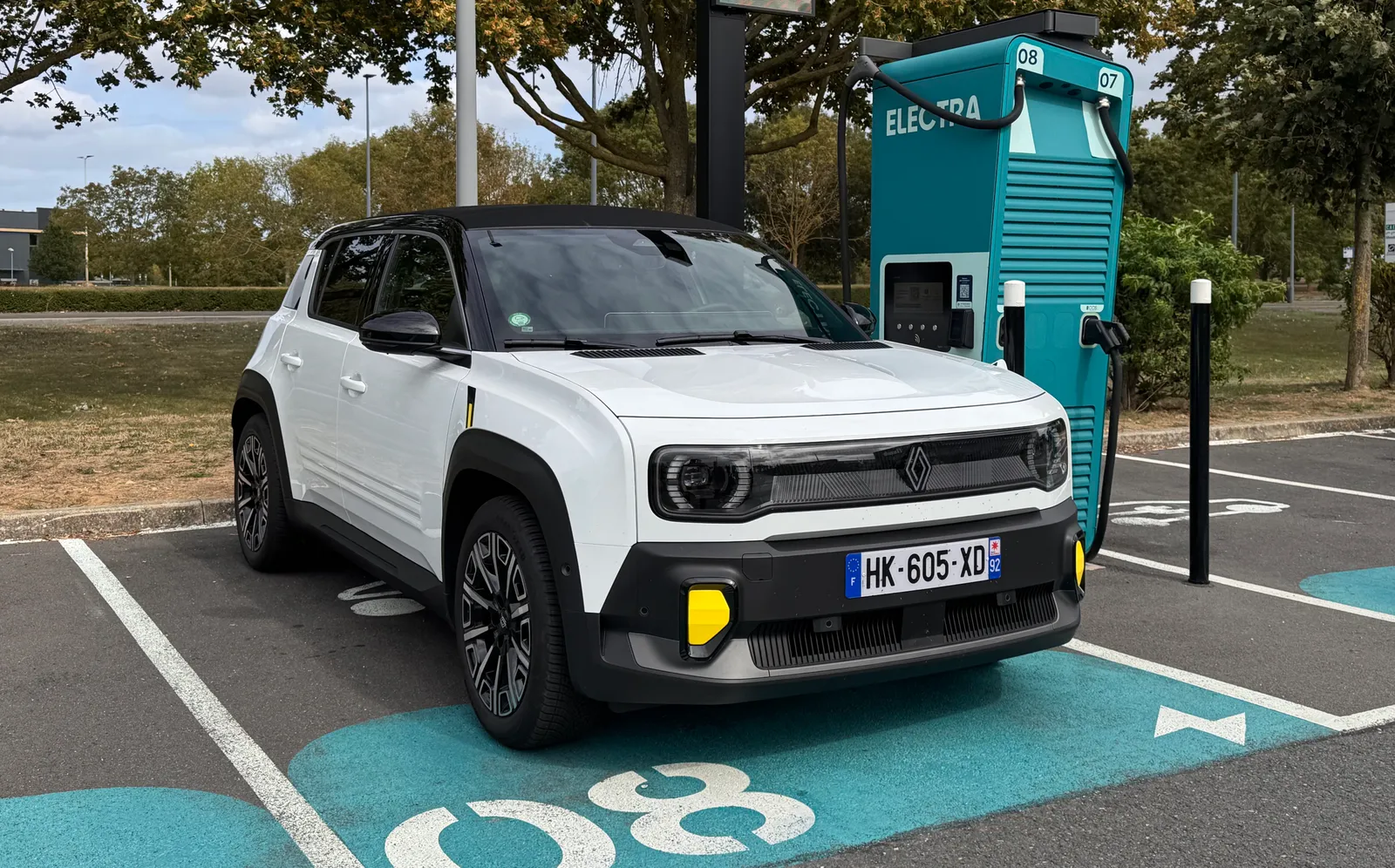
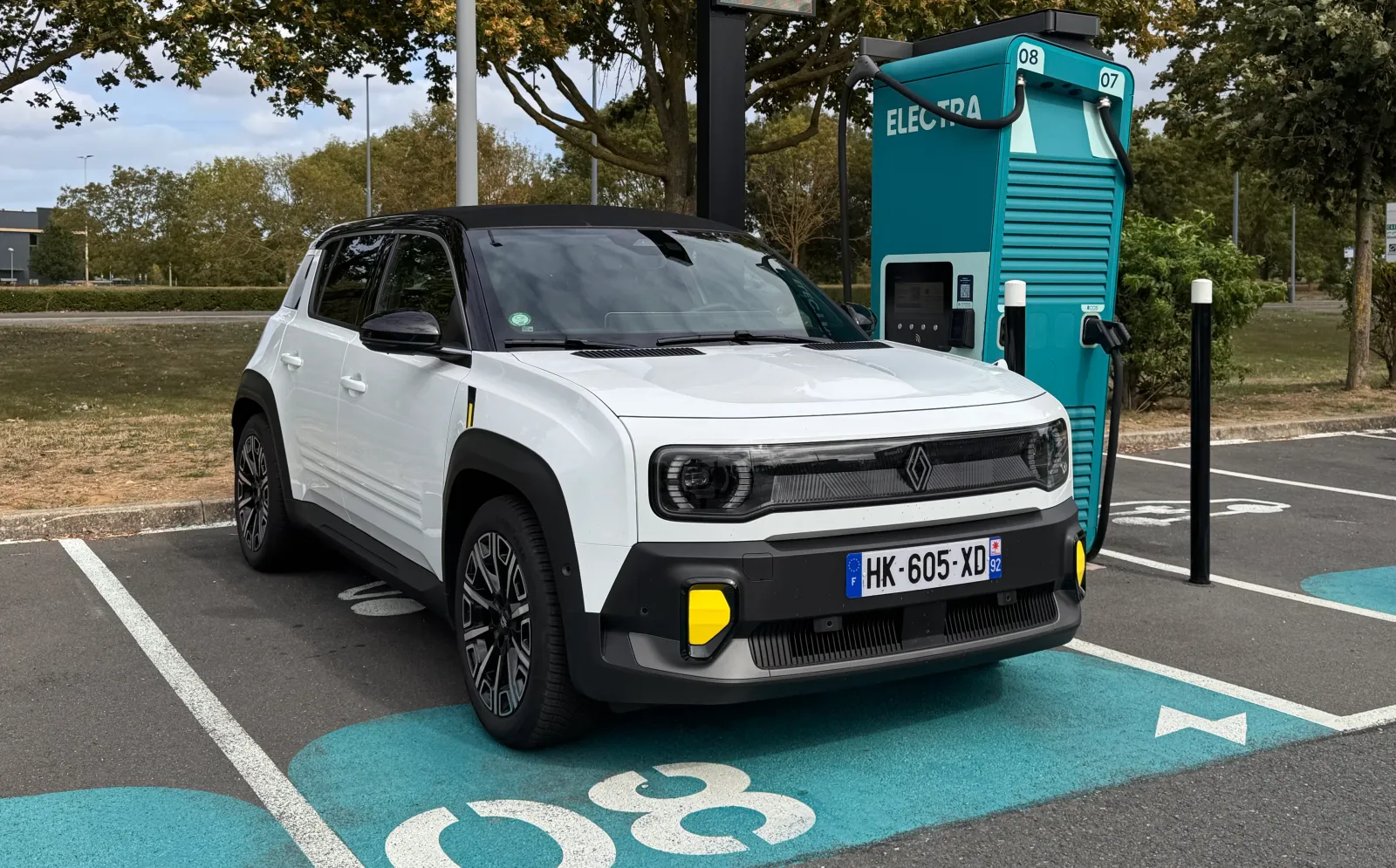
Whether it adopts the look of a large city car or a compact SUV, up to you to decide — does the Renault 4 electric have enough strengths to become the family’s primary vehicle? To find out, we drove nearly 800 kilometers in urban areas, on secondary roads, and for a significant portion on the highway (including a straight shot from Paris to Caen). Comfort, usability, fuel consumption, charging, range: we put it to the test in all everyday scenarios. Here’s our verdict!
Do we really need a large SUV to take the kids to school, go to work, do grocery shopping, and drive on the highway a few times a year? We still hear (too) often that a primary car must be big enough to cover 800 kilometers on the highway without the driver needing to stop.
It was with this question in mind that we got behind the wheel of an electric Renault 4 equipped with a 52 kWh battery and a 150 hp engine. This setup is said to offer around 400 kilometers of WLTP range and can handle up to 100 kW of continuous power. On paper, it’s neither a highway champion nor just a city car meant for short trips around the neighborhood. So what about in reality?
In the city, the electric Renault 4 is easy
It is likely in the city or suburban areas that the R4 truly shines. The handling is very agile, the controls are simple, and the car handles easily. Its size is reasonable, and its good turning radius is a significant advantage when maneuvering or fitting through narrow streets. The 150 horsepower certainly doesn’t turn the R4 into a sports electric car, but that’s not what it’s meant to be. The available power is more than sufficient for daily driving and allows for easy merging or overtaking without hassle.
Also read
Do electric cars last longer than gasoline cars? This major study provides an answer
Not everything is perfect, though. The gear selection knob seemed to lack sensitivity. Switching from D to R or selecting the desired mode sometimes requires a firmer press than expected. It’s not a major issue, certainly, but it’s precisely the kind of detail you notice when using a car for several days. The same is true with the “one pedal” driving mode. At low speeds, braking can be a bit too aggressive and requires some time to adjust to maintain perfectly smooth driving. Conversely, when driving faster, we would have liked more restraint. The calibration seems out of sync.
A cockpit that’s fairly easy to get used to
Fortunately, the R4 avoids the race to XXL screens. The two displays find a quite convincing compromise. They are large enough to show information clearly without giving the impression of having a television installed in the middle of the dashboard. However, getting used to their layout requires a few kilometers of driving. With physical controls and the volume control located above the central screen, it can be a bit confusing at first. After a few trips, the habits form and it becomes no longer a real issue.
It’s impossible not to mention the rear camera. Its image is completely blurry. On a car released in 2026, this is problematic, especially since this feature is precisely used in situations where good clarity is essential. It’s certainly not a dealbreaker when choosing a car, but the display quality seems out of step with the rest of its specifications. In the front, the speedometer reads fairly easily. The R4 doesn’t offer the comfort or sound insulation of a large sedan, but it also doesn’t give the impression of being a small car unsuited for long trips.
On the highway, our model equipped with an electric folding sunroof made of Plein Sud fabric naturally allows more noise in compared to a traditional roof. But it remains perfectly acceptable, even after several hours behind the wheel.
Some compromises for a family?
The issue of rear seating is more delicate. Two children can fit there easily, but the available space is obviously nothing like that of an SUV. Adults seated in the back will find long trips less comfortable. But it’s important to put things in perspective: the Renault 4 is 4.14 meters long.
Asking for the space of a Scénic from a vehicle of this size would be unfair. For a couple with one or two young children, the overall setup makes sense, as long as comfort in the rear seats isn’t the top priority when making a purchase decision. The trunk is more convincing; its low loading threshold truly simplifies daily life. Groceries, bags, or suitcases fit easily, and it’s also convenient when needing to load a dog. This accessibility greatly contributes to the overall impression of versatility. The R4 isn’t enormous, but it makes good use of its size.
Paris-Caen: 226 km of highway driving without recharging
So how does it perform on the highway? This is perhaps the concern that worries people the most when considering buying an electric car as the only (or primary) vehicle in the household.
Our trip between Paris and Caen served as a good test: 226 km almost entirely on the A13, at a steady speed of around 128 km/h when conditions allowed. We started with a battery at 100% charge and arrived with 10% left. The dashboard showed an average consumption of 19.4 kWh per 100 km. For an electric car of this size, the result seems quite acceptable to us.
It also shows quite clearly what one can expect from the R4 under these conditions. One can expect around 230/240 km on the highway with a full load, obviously more if driving slowly and less when temperatures drop or conditions are poor. Is that sufficient? For a Paris-Caen trip, yes, as it’s a non-stop journey. The same applies roughly to crossing France. For example, at least 5 stops would be needed for a Caen-Marseille trip (about 1,000 km). Well, it’s not a journey one takes every day anyway.
16.1 kWh/100 km over 800 km: not bad at all!
Throughout our test drive, the fuel consumption was quite acceptable. After covering nearly 800 km, the computer showed 16.1 kWh per 100 km. We didn’t specifically try to set a record for eco-driving. Of those 800 km, about 450 were traveled on the highway. Secondary roads and urban driving helped lower the average, but the result is impressive given the nature of the route.
Also read
Test drive of the Renault R4 E-Tech: Nostalgia comes at no price!
With 52 kWh of usable energy, it allows for approximately 300 km of real-world driving on varied routes without needing to use up the entire battery. In everyday use, it’s possible to reach or come close to 400 km under good conditions, especially in urban areas or suburban regions. This helps to downplay concerns about range. For the vast majority of days, we’ve never felt short of driving distance. The issue arises mainly when trying to cover 500, 600, or 800 km in a row.
The problem is the charging speed…
For charging, the R4 can accept up to 100 kW of DC power, with Renault officially claiming 30 minutes to go from 15% to 80%. To be honest, that’s not terrible. But in 2026, it’s hardly acceptable for a family’s primary vehicle. It took us 22 minutes to go from 10% to 60%. At that point, the dashboard still indicated 14 minutes left to reach 80%. That’s roughly 36 minutes in total for a 10-80% charge if the estimate had held true. During another charge, we stayed at the charger for 59 minutes to go from 10% to 100%. That’s quite long...
For a family traveling across France in the summer, this seems reasonable. With only 250 km of range on the highway and a charging time that easily exceeds half an hour when trying to regain significant energy, the stops end up affecting the total travel time. And this is ultimately where we find the main limitation of the R4. We could quite easily be satisfied with its range: after two or two and a half hours on the highway, taking a break isn’t unreasonable at all. We just wish that this break would allow us to get going again more quickly.
On the other hand, it poses no problem for everyday use. For those who can charge at home, the R4 electric makes a good choice. It’s during long trips that things become more complicated.
So, can it be the only car in the household?
After 800 km, our answer is pretty much yes. And not just for a couple who never leaves the city. In our opinion, the R4 has the right size to handle the essentials: easy to use in daily driving, comfortable enough for highway use, a practical trunk, four real seats, and reasonable fuel consumption. Its 150 hp engine is more than sufficient, and its handling never gives the impression of driving a car designed solely for urban trips.
You will simply need to accept two compromises. The first relates to the space in the back seats, which is fine for children but less suitable if four adults travel regularly. The second, more important one, concerns the DC charging speed. For a few long trips per year, this is perfectly manageable. For a family that frequently covers very long distances, frequent and relatively long stops can become cumbersome. It’s up to you to decide!
And what about the price?
Our Techno Plein Sud version with 52 kWh and 150 hp currently starts at 37,290 € before the electric vehicle subsidy (3,620 €) is applied. This results in a final price of 33,670 €. It’s not a small amount, but it’s possible to opt for the base R4 model without a folding canvas roof (with a small 40 kWh battery, offering 308 km of WLTP range and 120 hp) for 29,990 €, or 26,370 € after the subsidy is deducted.
In the end, one can say that this model represents a fairly smooth transition to electric vehicles: not overly technical, immediately understandable, pleasant to drive, and featuring a design with enough personality to stand out. The nods to the historic R4 are present without turning the car into a retro item. Thus, we wouldn’t have any problem imagining this R4 as the family car—provided one is aware of its limitations. Now, you know them.