
Test – 600 km in the Volkswagen ID Polo: An electric city car to dominate them all?
All eyes on the new Volkswagen ID Polo! Just tested at Automobile Propre, this electric city car seems to have everything it takes to impress. But how does it perform on everyday roads? Here’s our 600-km test drive of the compact electric Polo.
Some people are lucky sometimes. While our dear Andy was testing the Volkswagen ID Polo in Austria, I had the privilege of a longer test drive. Today’s agenda included over 600 kilometers driven in this electric city car during everyday use, covering both urban and suburban areas, plus some highway driving to assess its versatility in real conditions. Comfort, performance, energy consumption, range... how does the Volkswagen ID Polo 52 kWh perform in daily use?
Also read
Volkswagen ID.Polo test drive: a versatile city car... really?
The Volkswagen ID Polo in terms of design: a compact city car
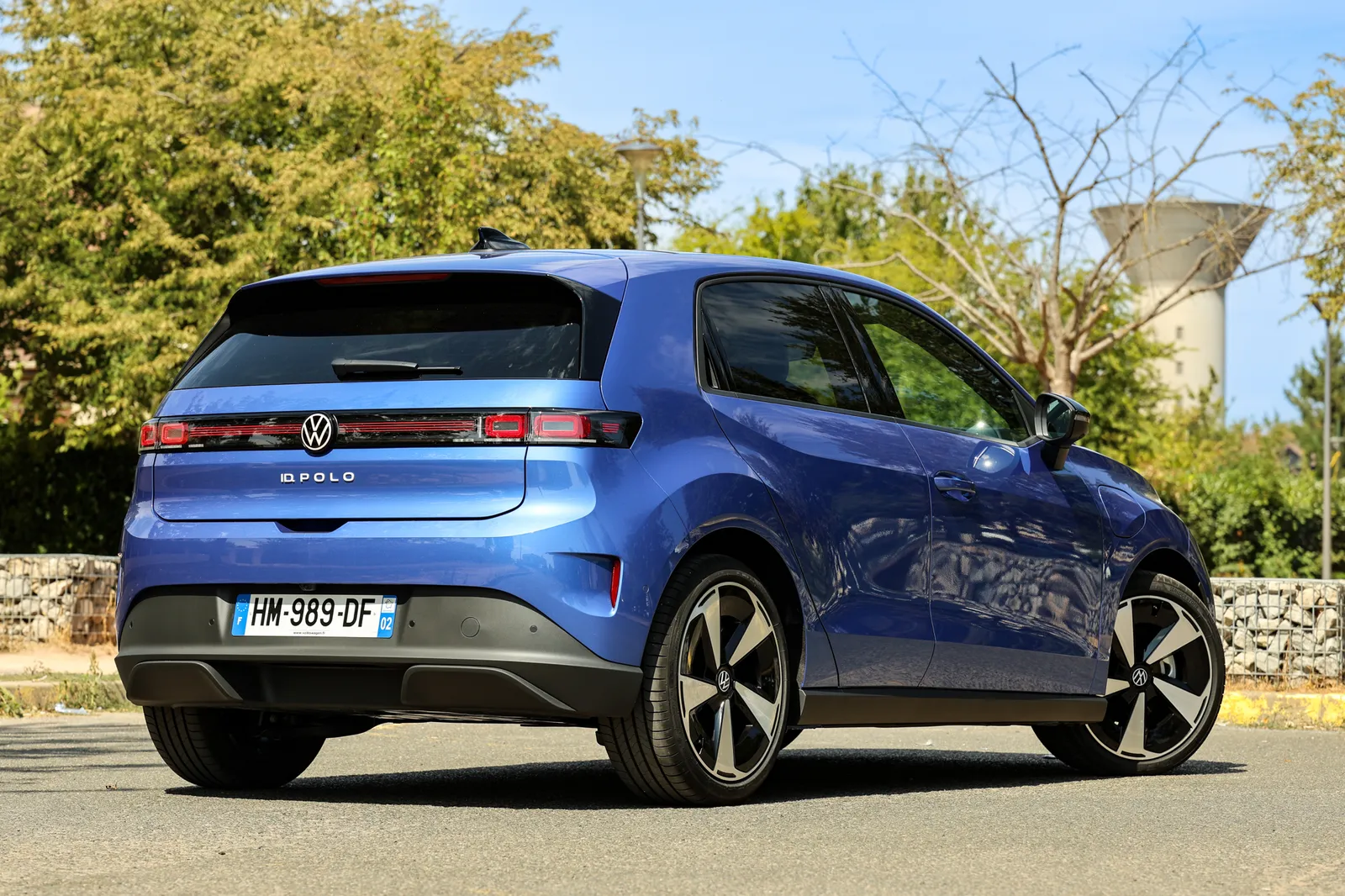
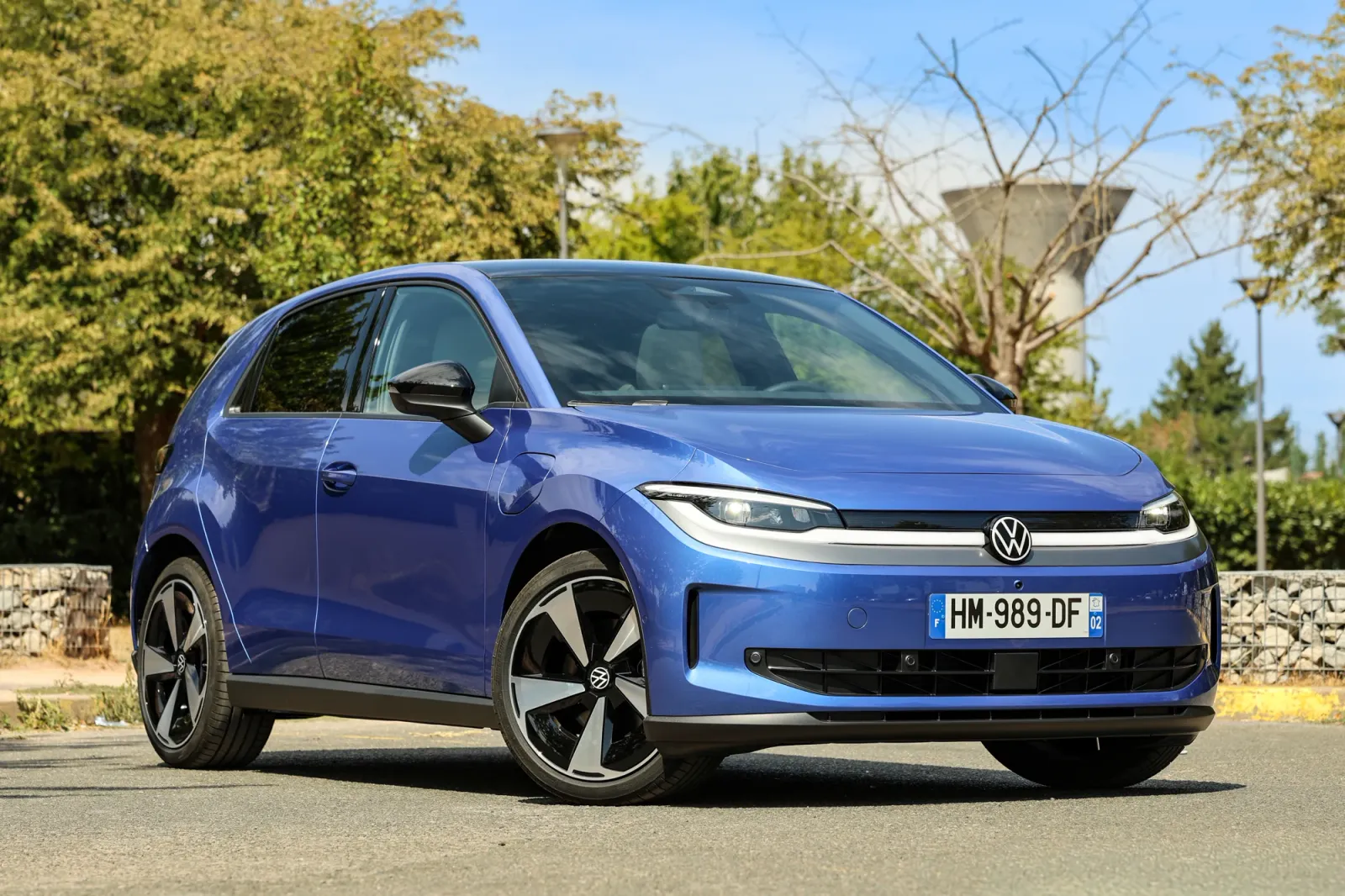
Let’s take a look again at the style of this Volkswagen ID Polo, which you’re now getting quite familiar with. Its sleek silhouette and “Pure Positive” aesthetic language immediately earn it a certain level of appeal. The front end is fairly light and minimalist, with a subtle accent from the lighting strip borrowed from the ID.2all. The side profile is clean, featuring short overhangs and large 19-inch wheels. The rear offers a very successful neo-retro look, complete with a trendy strip and a 3D-effect lighting signature. Don’t forget the characteristic C-pillar from the Golf, along with a handle in the trunk for a minimalist finish. Overall, the ID Polo becomes more rounded and softer, appearing almost more like a Renault Zoe than a sharp traditional Polo. This seventh-generation Polo certainly stands out, especially in our high-end Style Exclusive finish with its Azure Blue color scheme.
Far from being a mere electric version of the traditional hatchback, the ID Polo is almost impressive. No longer seen only in the studio, we observe it outdoors on a daily basis. Even better, it’s surrounded by a Golf 7 and a traditional Polo on the same street. This highlights its ideal size that balances external footprint with interior space. Its dimensions are 4.05 meters long, 1.81 meters wide, and 1.53 meters high. The traditional Polo listed in the catalog measures 4.07 meters long, 1.75 meters wide, and 1.45 meters high. The wheelbase increases from 2.55 meters to 2.60 meters on this Volkswagen ID Polo. Another comparison showing this optimization is the trunk volume, which rises from 351–1,125 liters to 435–1,243 liters in the electric version. Special mention goes to the huge compartment under the trunk floor—perfect for strollers, boxes, groceries, etc. In terms of carrying capacity, this German model far outshines the R5, which still retains a limited space.
There is a loading indicator below, however.Aboard: Back to the Basics
Like the ID 3 Neo, the Volkswagen ID Polo also returns to simplicity inside. Less “futuristic” than its ID-branded predecessors, this city car focuses on an ergonomic design that gets straight to the point and understated interior trim. The furnishings are simple, with modest textile covers for the doors, dashboard, and center console—simple and effective. The dynamic ambient lighting is enough to remind us that we’re in a cutting-edge model. Four window lift buttons, a multimedia knob, direct access controls for the climate system, and physical buttons on the steering wheel? I’m pleased. We should also praise the perceived quality inside, with solid construction and careful finishing. Technologically, a 10-inch display and a 13-inch central screen handle all the visual outputs. While some functions (multimedia, climate) are easily accessible
Others, such as energy data, require searching through the menus.The same applies to disabling certain sounds and alerts. We would have liked a steering wheel shortcut similar to that in the KIA EV2, for example. Comfort and interior space remain excellent over several hundred kilometers. The front seats, in particular, provide very good lateral support, though less extreme than those in its sibling model, the Cupra Raval. For shorter adults, the second row is perfectly acceptable for three people, or at least two adults can travel comfortably. However, the seat bench is slightly too steep, causing our knees to bump up. You don’t need to be very tall—this issue becomes apparent even at 1.70 meters! Our passengers were unanimous: “It looks smaller from the outside. There’s actually plenty of headroom and side space inside!” And what about real-world cargo capacity? The large space under the trunk floor is ideal for storing luggage bags.
Driving and Performance: The Ultimate Urban Vehicle
Beneath the hood of our Volkswagen ID Polo Style lies the APP290 engine (Axial Parallel Position, 290 Nm), delivering 155 kW / 211 hp to the front wheels, all powered by the MEB+ platform. This setup is particularly efficient for daily city driving, offering a smooth and pleasant driving experience. The urban car operates in perfect silence, both in terms of its operation and the noises inside the cabin. The Eco/Normal driving modes along with a very gradual response from the right pedal are highly appreciated. However, we would have liked it to turn a bit better than 10.9 meters. The Skoda Epiq, which is longer and shares the same platform, requires only 10.68 meters. But this is a minor detail, as the cameras and displays inside make daily maneuvering easier. Of course, it is on the road where one truly enjoys the power and dynamic qualities of this German vehicle.
Of course, with 211 horsepower at its disposal, there’s plenty to do. The 1,576 kg weight of the Volkswagen ID Polo isn’t a problem—in fact, this weight might even have some advantages. The city car is very stable and firmly planted on all four wheels at highway speeds. It’s easy to maneuver, overtake, and change direction safely. It should be noted that it accelerates from 0 to 100 km/h in 7.1 seconds, while the Alpine A290 with 220 horsepower requires 6.4 seconds with launch control. Additionally, the electric Polo delivers excellent handling when pushed to speed. The suspension is slightly firm in a German style but perfectly calibrated for consistent comfort. Body movement is highly controlled, with no rear-end oscillation at high speeds—making it tempting to drive aggressively. Maybe not as much as the Opel Corsa GSE, but still.
Fuel consumption and range: nearly 900 km
And let’s not forget the disc brakes at the rear, which complete the “One Box” package. Whether it’s precise braking combined with energy recovery or forceful braking, the Volkswagen ID Polo remains unfazed. The braking is smooth and reassuring, matching the rest of the vehicle’s performance. Equipped with a large 52 kWh NMC battery, our test model claims up to 455 km of WLTP range. Theoretically, that’s around 11.5 kWh/100 km on a constant pace. And let me tell you, Volkswagen holds its promises quite well. Our average “long-term” consumption after over 500 km? 13.2 kWh/100 km on mixed routes. Of course, we didn’t overuse the highway, which isn’t this city car’s strongest terrain. We still managed around 15 kWh/100 km with mixed driving including sections at 130 km/h… but it’s more like 19 kWh/100 km when driving at a constant 130 km/h. Here are some figures from our tests:
Distance
Speed
Consumption
71 km
50-90 km/h
12.5 kWh/100 km
35 km
50-70 km/h
12.2 kWh/100 km
71 km
50-70 km/h
10.6 kWh/100 km
85 km
50-110 km/h
13.6 kWh/100 km
40 km
50-130 km/h
15.7 kWh/100 km
39 km
70-80 km/h
12.3 kWh/100 km
12 km
50 km/h
9.9 kWh/100 km
9 km
50 km/h
9.7 kWh/100 km
As you can see, we are thoroughly impressed by the efficient fuel consumption of this Volkswagen ID Polo. In purely urban driving conditions, it stays below 10 kWh/100 km. It offers a range of over 450 km. The fast charging capability at 105 kW means it can reach 80% charge in just 24 minutes. During our charging session, it reached 61% charge in 21 minutes, absorbing 25.57 kWh of energy. This was done using a 150 kW charger that was shared with another vehicle for part of the charging time.
Volkswagen ID Polo 52 kWh: starting at 35,820 €
In summary, the Volkswagen ID Polo is an electric city car just as we like them: relatively compact in size, with excellent space optimization inside, and a well-balanced combination of performance and electric efficiency. Of course, its range on the highway is more limited, around 270 km. But given the ambitions of an electric Polo, is this really a crucial factor? Another slightly more concerning weakness is the AC charging capacity limited to 11 kW (for now?). The ID Polo offers a consistent and pleasant driving experience, so it lacks few major features. That said, it isn’t cheap.
Also read
Here’s how Volkswagen managed to cut the ID.Polo’s consumption almost in half
It starts at 24,995 € in the entry-level Trend 37 kWh trim and rises to 35,820 € for the Life 52 kWh version. For our test model, the Style Exclusive trim, the configuration price begins at 39,990 €! Adding 880 € for wheels pushes the price to 40,870 €. The color is included, thank goodness. In contrast, the R5 E-Tech 52 kWh in its top trim starts at 35,490 € but has a 150 hp engine. Within the same family of vehicles, the Cupra Raval is available from 36,555 €. So, what are your thoughts?