
Spain is changing (and significantly) the landscape of electric cars: traveling long distances is starting to stop being a major problem.
10/09/2026 15:30
Updated to
10/09/2026 15:30
Spain continues to expand its infrastructure for electric vehicles, with data showing particularly significant improvements for those who need to make long trips. According to ANFAC’s latest Electromobility Barometer, the country ended the second quarter of 2026 with 56,682 public charging points in operation, after adding another 1,605 between April and June.
The growth isn’t limited to urban or low-power chargers. Charging points capable of delivering 250 kW or more now total 2,806 units, 337 more than three months earlier, accounting for about 5% of all available public infrastructure. ANFAC considers such installations especially important for facilitating long-distance travel and the electrification of heavy transport.
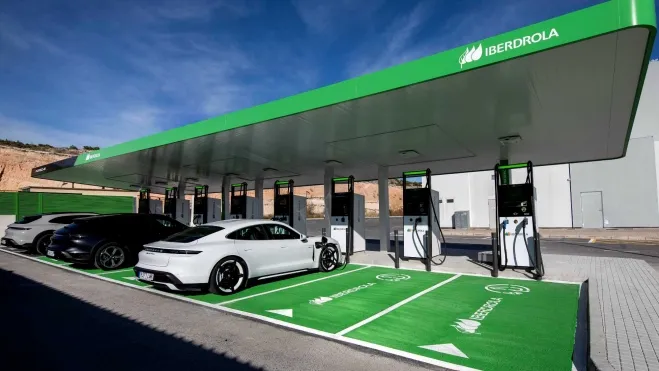
Ultra-fast charging gains ground on Spanish roads
The majority of Spain’s charging network still consists of chargers with up to 22 kW, which account for nearly 70% of all operational sites. However, the deployment of very high-power installations is growing rapidly: in just the first half of 2026, 90% of all 250 kW or higher charging stations installed in 2025 were added.
Different private operators contribute to this infrastructure. Iberdrola surpassed 11,000 operational public charging points in Spain by early 2026, after adding more than 2,500 during the previous year. Endesa, on the other hand, has around 7,200 installed charging points, while Repsol currently has more than 4,600 points in its own network.
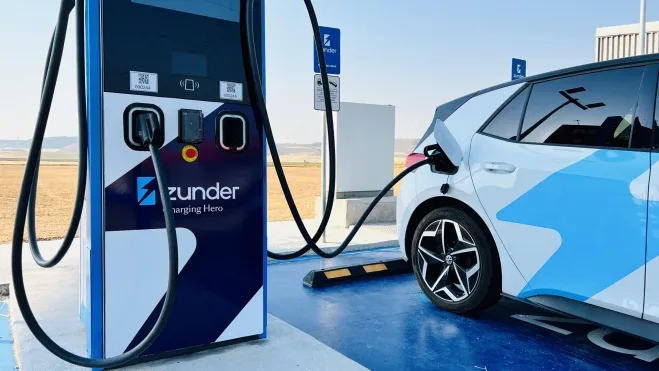
The deployment by specialized companies is also continuing to progress. Zunder, which focuses particularly on fast and ultra-fast charging, has over 1,300 charging points across Spain, France, and Portugal, while the Iberdrola - BP Pulse partnership surpassed 2,000 operational public charging points in the Iberian Peninsula by early this year.
The major problem remains all the charging points that have been installed but do not function.
The development of the grid still has an important issue unresolved. ANFAC reports 17,821 charging stations that have been installed but are not yet operational, mainly due to difficulties related to approvals and access to the distribution network. If all of them were functioning, Spain would have 74,503 public charging points.
This means that currently 23.9% of all installed infrastructure remains offline. The problem also exists in the networks of some operators: Endesa acknowledges that more than 1,300 of its approximately 7,200 installed stations are still waiting for the necessary approvals to connect to the power grid.
Spain is improving, but still far from the European average
The increase in chargers does not mean that Spain has yet reached the infrastructure levels of more advanced European markets. The charging index compiled by ANFAC stands at 15.4 points out of 100, while the European average is 31.1 points. Additionally, Spain has so far achieved 67% of the installed capacity target set for 2026.
The data thus show a network that is much better prepared than a few years ago to handle long-distance travel by electric car, especially thanks to the growth in high-power charging stations. However, it also indicates that deployment is still incomplete: thousands of chargers are yet to be put into use, and Spain remains behind Europe in terms of infrastructure. There is clear improvement, though ANFAC’s figures do not yet allow us to say the problem has been completely resolved.