
Spain is expanding solar and wind power, and now needs batteries to cover hours without sunlight.
For years, when discussions about batteries arose, they almost always centered on electric cars. Range, charging times, degradation, and cost were the main topics of focus. However, while cars have helped popularize this technology, a much quieter movement is taking place in the electrical sector that could be even more significant for the future of the grid.
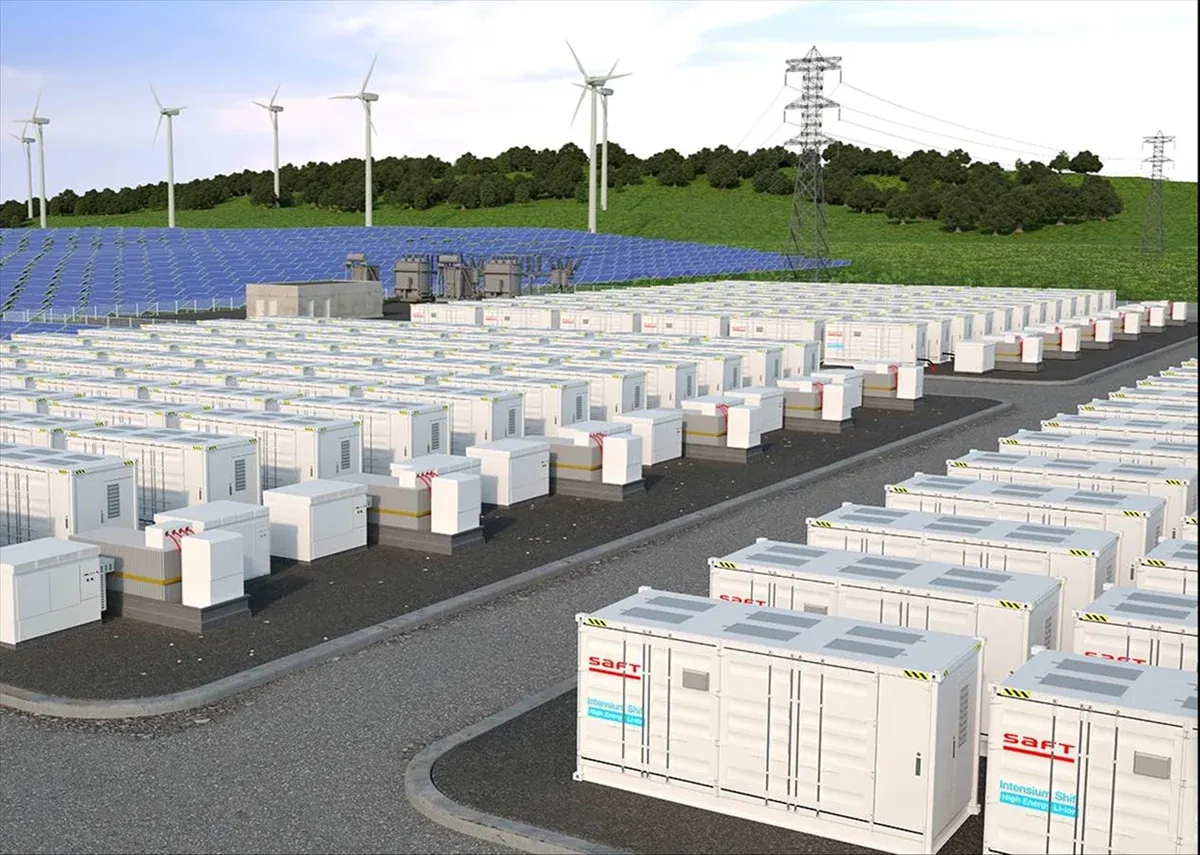
Large battery installations are growing at a pace that would have seemed unimaginable just a few years ago. The reason is simple: we are generating more electricity from solar and wind sources, but producing large amounts of energy doesn’t necessarily mean it’s available when needed. And that’s where batteries begin to play a crucial role.
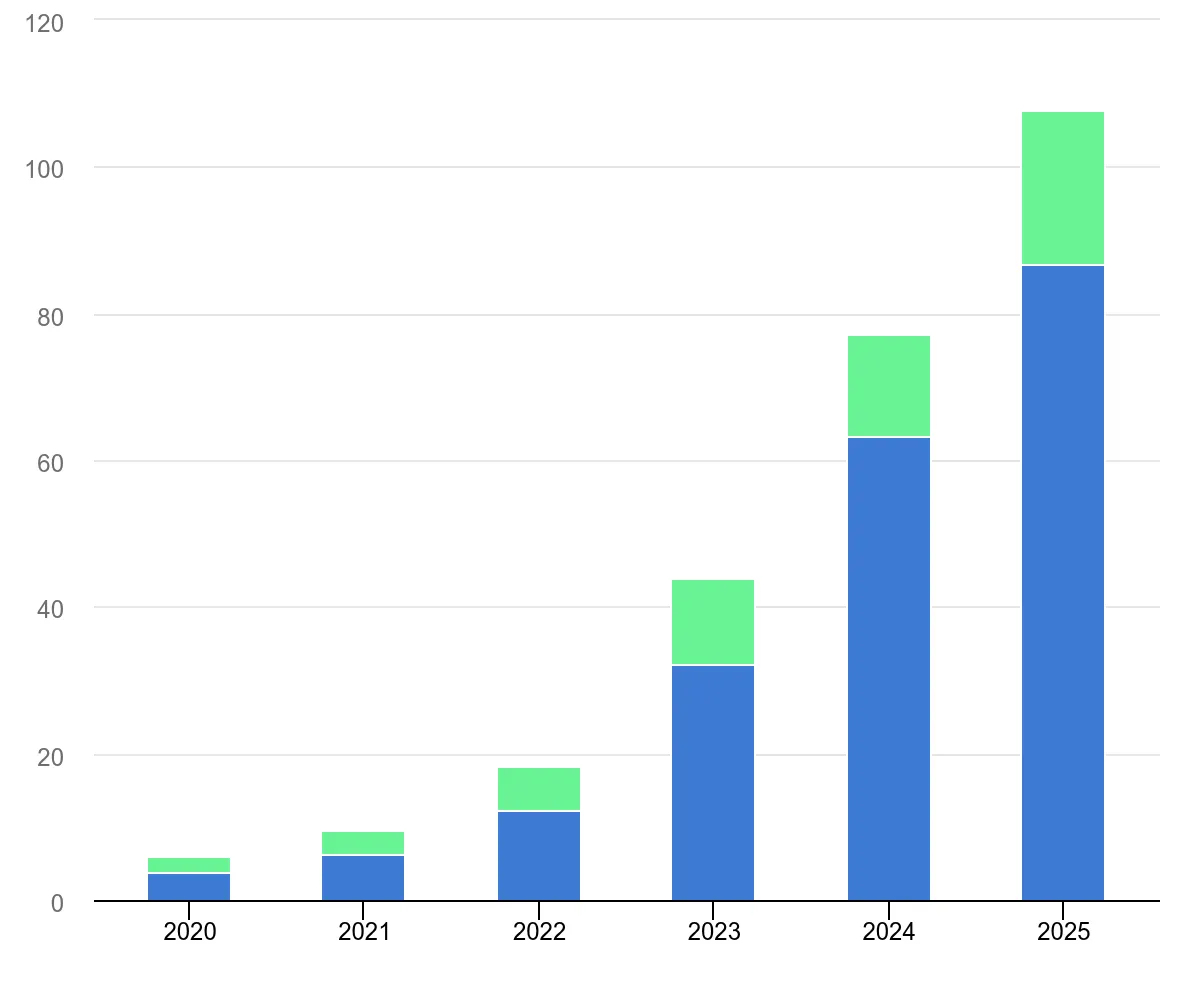
The International Energy Agency considers battery storage to be the fastest-growing electricity technology in the world today. In 2025, 108 GW of new capacity and 250 GWh of storage were installed, representing a 40% increase from the previous year, and the global cumulative capacity is now 11 times higher than it was in 2021. Additionally, about 80% of the new batteries installed last year were part of large facilities connected to the power grid.
It’s no coincidence. Batteries enable us to do something that was much more complicated until recently: storing electricity when there’s an excess so it can be used a few hours later, when renewable generation drops or demand rises. In a grid with increasing amounts of solar and wind power, this ability to shift electricity over time becomes extremely valuable.
Spain has more and more sunlight and wind, but it needs to store that electricity.
Spain is precisely one of the countries where this change can have the greatest impact. In 2025, nearly 10 GW of additional solar photovoltaic and wind power capacity was installed, a figure that rises to 11.6 GW when self-consumption is included. By the end of the year, solar photovoltaic capacity had approached 50 GW, while wind power accounted for another 22.1% of the system’s total capacity.
The result is that renewables are playing an increasingly important role in our electrical system. In 2025, they generated 55.5% of all electricity in Spain, a percentage that rises to 56.6% when the estimated output from self-consumption is included. Wind power contributed 21.6% of the generation, while solar photovoltaic power accounted for 18.4%.
But there is an obvious problem. The sun does not produce electricity when we want it, but only when it can. During the peak hours of the day, there can be a huge amount of photovoltaic generation, while just a few hours later the situation changes completely. As evening approaches, solar production starts to decline precisely when millions of households increase their consumption.
That is when batteries can become a key component of the system. Instead of wasting part of the electricity generated during hours of maximum radiation, a facility can store it and release it back into the grid when it is most needed.
The difference can even be seen in electricity prices. On specific days in 2026, very low wholesale prices were recorded during the middle hours of the day, with sharp increases starting at 18:00, reaching over 200 euros/MWh between 19:00 and 22:00 on certain days. This doesn’t mean it happens every day or that this is the final price consumers pay, but it clearly illustrates the problem posed by highly concentrated solar production over just a few hours.
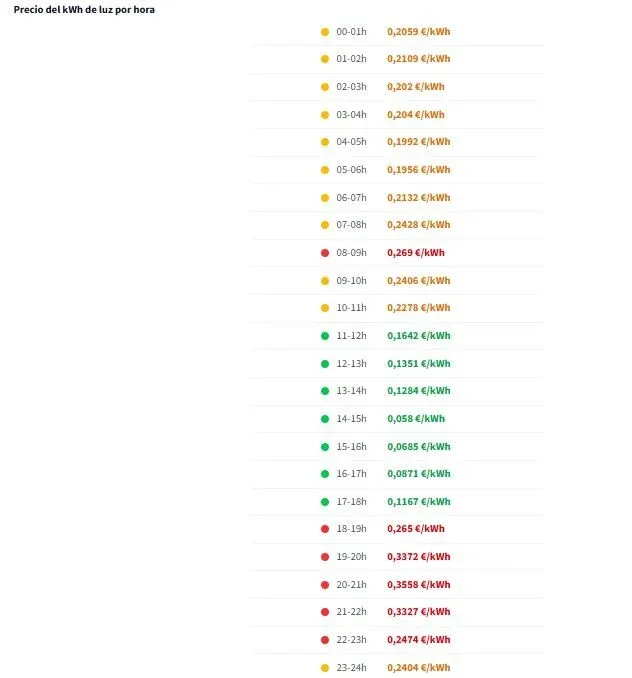
There is another particularly interesting time period: the early hours of the morning. Before solar production reaches high levels, demand is already increasing as work, industrial, and household activities begin. A battery charged overnight or using excess renewable energy can help meet part of this demand without the need to immediately rely on dispatchable generation.
In the afternoon, the situation reverses. Between around 6:00 PM and 10:00 PM, photovoltaic generation weakens while demand rises. At this point, a battery can start feeding electricity stored hours earlier back into the grid.
This does not mean that batteries can replace all power generation technologies on their own. Their function is different. They are a tool for moving electricity over time, balancing the system, and reducing the need to use certain power plants when there is a mismatch between generation and consumption.
In fact, Red Eléctrica already highlights the role that energy storage is playing in Spain. During 2025, storage systems, including pumped hydro and batteries, helped integrate 9,213 GWh of electricity, which is 6.2% more than in 2024, allowing for greater utilization of renewable energy generation. By the end of the year, the installed storage capacity reached 3,427 GW.
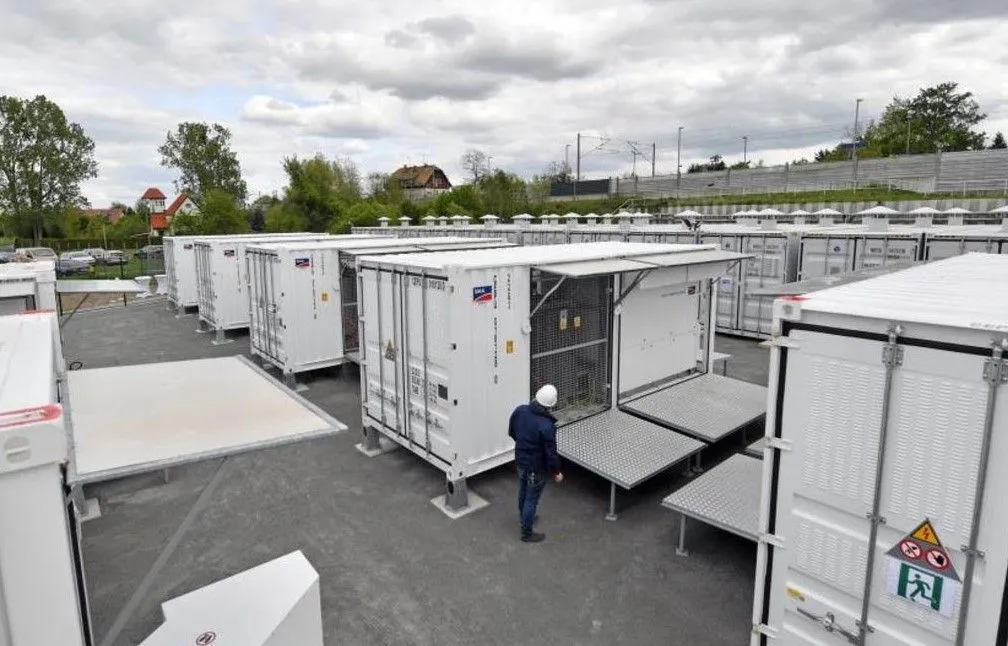
The international trend is moving in the same direction. The IEA explains that batteries are being used to integrate more solar and wind power, provide flexibility to the system, and deliver renewable electricity during peak demand periods. Additionally, while many projects still have a storage duration of about two hours, installations capable of storing electricity for four hours or more are becoming increasingly common.
And here lies one of the most significant changes: stationary batteries do not necessarily have to be identical to those used in electric cars. In grid storage, lithium-iron-phosphate (LFP) batteries have become the dominant chemistry because they offer competitive costs and are particularly well suited for applications with many charge and discharge cycles. According to the IEA, they already account for around 90% of new storage installations.
The decreasing cost of this technology is accelerating the process even further. The IEA notes that the cost of battery storage projects dropped by about 40% in 2024, reaching around $150 per kWh, while the average prices of battery packs fell another 8% during 2025. Between 2023 and 2025, the IEA estimates a reduction of nearly 30% in battery pack prices as well.
All of this changes the landscape of the electrical system. The more solar and wind power we install, the more important it becomes to have tools capable of managing its production. Spain already has a huge amount of renewable energy capacity, and we continue to add new projects, but the next step isn’t just about installing more solar panels and wind turbines.
We also need to ensure that electricity generated in excess can be used when it is needed.
Batteries are one solution to this problem. They can be charged during peak solar production hours, stored, and then start supplying electricity when the sun goes down and demand increases. They can also take advantage of high wind production, which is particularly useful at night when there is no solar power but the wind can still generate electricity.
Spain also starts from a particularly favorable position due to its abundance of renewable resources. The challenge is to turn this advantage into an electrical system that can utilize renewable electricity for more hours throughout the day and rely less on technologies that may be necessary precisely when the sun disappears.
The expansion of storage does not immediately eliminate the role of other technologies nor solve all network problems. It is also necessary to strengthen transmission lines, improve interconnections, enhance demand management capabilities, and accelerate projects that enable connecting new generation sources with storage.
But the direction seems clear. The energy transition involves not only producing more renewable electricity but also learning to store it and use it when it is truly needed. In a country like Spain, which is rapidly expanding its solar and wind capacity, batteries can shift from being a technology primarily associated with cars to becoming one of the key components of the electrical system.
