
"It's stupid to ban non-electric cars": Renault Group CEO criticizes UK's ban on internal combustion engines

18/10/2026 19:00
Updated to
18/10/2026 19:00
François Provost, CEO of Renault Group, has strongly questioned the deadlines set to require that all new cars be electric. When asked about the UK’s plan to end sales of new gasoline and diesel vehicles, the executive rejected the idea of legally setting a specific deadline to ban other technologies.
“What is a good date to achieve 100% electrification? There isn’t a good date because it’s stupid to ban cars that aren’t electric. It’s foolish,” said Provost, in one of the clearest recent statements by a top European executive on the future regulatory landscape for automobiles.

Provost opposes setting a legal deadline for 100% electric vehicles
The context of his remarks is the UK’s approved timeline, which plans to ban the sale of new gasoline and diesel cars by 2030 and allow certain hybrids until 2035. Provost believes such strict targets could complicate the industry’s transition, especially at a time when manufacturers are investing heavily in electrification while trying to maintain competitive prices and protect their manufacturing capacity.
That doesn’t mean Renault is backing away from its commitment to electric vehicles. Provost himself argued that the industry should be “realistic about electrification, but still move forward with it,” making clear that his criticism is directed more at outright bans than at the development of electric cars.
This stance is particularly relevant for a company that has accelerated its shift toward electrification in recent years. Renault currently offers models such as the Renault 5, Renault 4, Mégane E-Tech Electric, and Scénic E-Tech Electric, and has made this technology a core part of its European strategy.
We need to freeze regulations now.
The CEO of Renault Group also directly linked regulations to the price of new cars. “We need to freeze regulations now to reduce the prices customers pay,” he said during the same interview. His approach aligns with requests made over the past few months by numerous European manufacturers, who are calling for greater flexibility to meet emission targets without relying solely on a single technology.
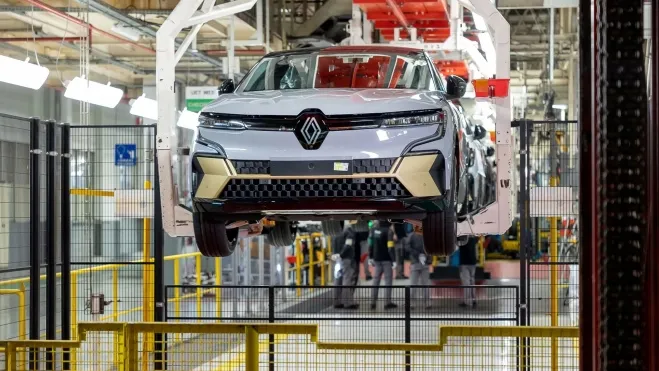
France and Germany reached an agreement this week to support a 90% reduction in CO₂ emissions from new cars by 2035 compared to 2021, rather than maintaining a 100% reduction in practice. The proposal still needs to go through the European institutional process before becoming a final regulation.
Renault has backed this shift in approach along with other industry groups. For Provost, the challenge lies in continuing to reduce emissions without causing the cost of technological adaptation to be fully passed on to consumers.
United Kingdom and Europe, within the same ecosystem
Provost also used the interview to advocate for greater coordination between the UK and the European Union in industrial matters. In his view, despite Britain’s departure from the EU, both markets remain part of the same automotive ecosystem. “Obviously, the UK needs to be alongside the EU. We’ve been in the same automotive ecosystem for decades. From a business and industrial perspective, it’s simply common sense,” he said.
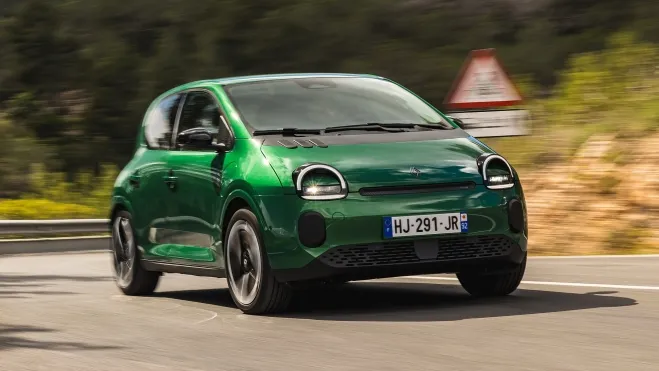
The issue has gained importance due to the debate over Europe’s future industrial framework “Made in Europe,” through which Brussels aims to strengthen local production and reduce dependence on third countries. France and Germany have suggested that the United Kingdom could be considered a trusted partner within this system.
Provost has also argued that London should align its stance more closely with Europe’s on tariffs applied to Chinese cars if it wants to fully benefit from that industrial framework. The remarks by the Renault Group CEO come at a time when Europe is reviewing part of the strategy aimed at accelerating the transition to electric vehicles. Provost does not question the need for this transition, but he does dispute the idea that regulations should set a single deadline after which any vehicle that is not fully electric would automatically be excluded from the market.