
First test drive with the AMG GT 4-door and SUV: The perfect illusion
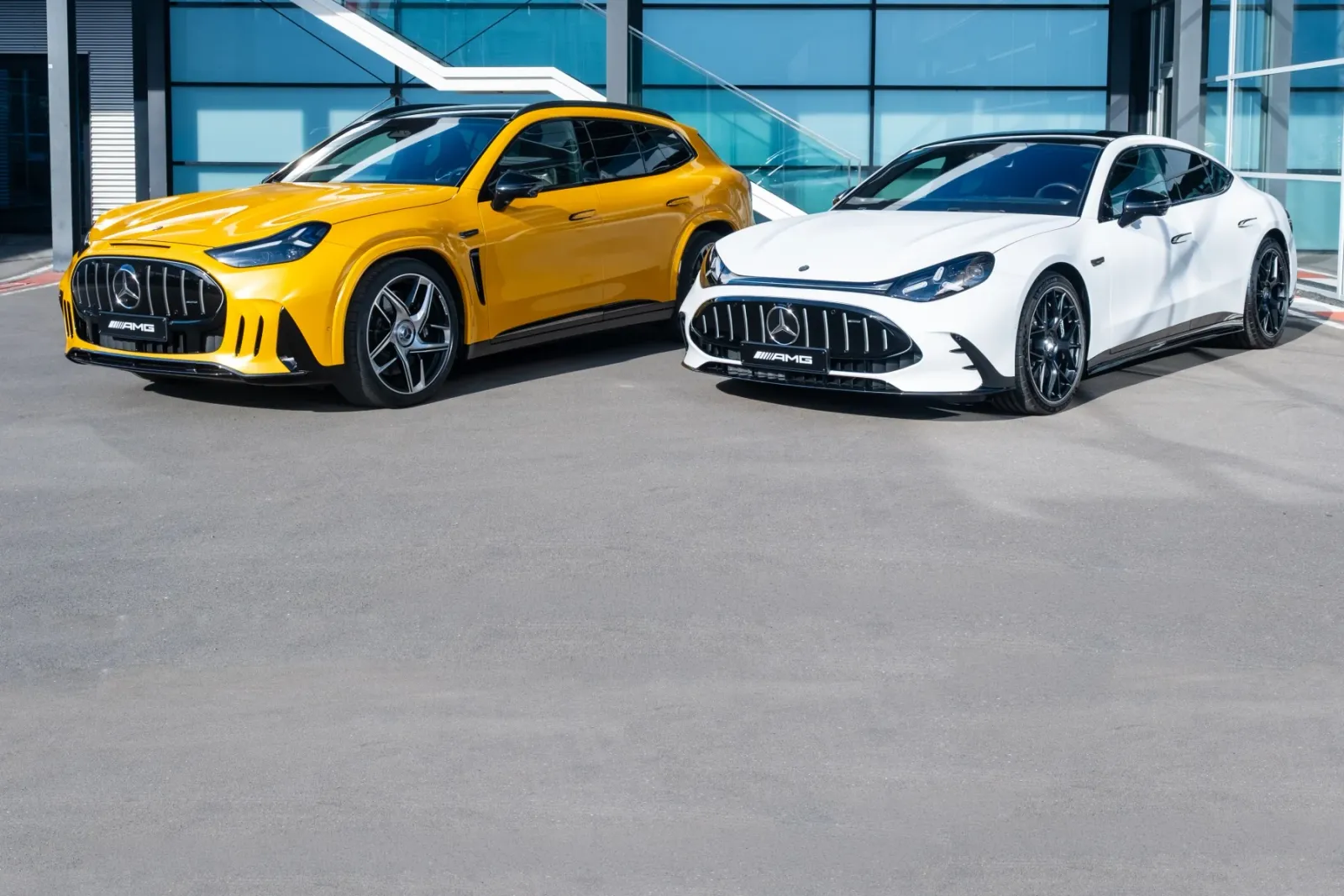
For years, they took their time in Affalterbach. While Porsche, Lucid, and of course the performance divisions of Chinese brands were already fully committed to electric vehicles, AMG observed electromobility from a safe distance, merely refining the battery-powered models of its parent company a bit. But now that they’ve finally stepped in and are launching their new 4-door GT for around 115,430 euros at the turn of the year, they’re doing so with Launch Control!
The 4-door GT delivers a powerful eight-cylinder sound during test drives
One foot on the brake, the other on the accelerator, then lift it to the left — and the electric debutant accelerates to 100 km/h in just 2.4 seconds at best, leaving even the AMG One behind. The back hits the seat back, the head against the cushion, an eight-cylinder engine roars from the speakers, and the seat shakes as if a crankshaft were actually rotating at the front, transmitting its power via a carbon driveshaft to the rear. Only there’s no V8 — just up to three electric motors. Welcome to Affalterbach’s electric future. It arrives late, but it’s absolutely massive.
"This is the electric car for everyone who hates electric cars," says series manager Oliver Wiech about the first electric vehicle AMG has built on its own platform (AMG.EA). The message is both confident and contradictory: An electric car is supposed to convert those who love internal combustion engines for their sound, mechanics, and perceived irreverence. And since the Germans clearly don’t fully trust their own idea, the GT comes in a pair. The four-door model leads the way, with the SUV following in spring 2027. Two body styles, one powertrain concept — and a question that weighs heavier in Affalterbach than any torque: How much artificial emotion can an AMG handle?
The skepticism is justified. Electric vehicles struggle in the luxury segment. Electric hypercars like the Rimac Nevera sell just as slowly as luxury models such as the Rolls-Royce Spectre. Bentley manages to do both, Ferrari receives overwhelming praise for the Luce, and Lamborghini added a plug-in hybrid powertrain to its electric Lanzador just before completion.
Those who can afford cars priced over 100,000 euros don’t just want to be faster than others. They seek sound, character, and excitement — and often a vehicle that will eventually be worth more than on the day it was delivered. In contrast, electric cars typically lose value faster than the ink dries on the purchase contract. Moreover, by abandoning the V8 engine, AMG is also becoming more politically correct. While this makes the brand acceptable to some, it might even be a deal-breaker for certain loyal customers.
Technically a different league
Whether it’s long overdue or unnecessary, technically the GT is a masterpiece. Its axial-flux motors come from AMG’s subsidiary Yasa, are lighter and more compact than conventional electric motors, yet still deliver tremendous power. The 800-volt battery uses slim round cells that are cooled individually. This setup is designed not only to enable record-breaking sprints but also to maintain high performance continuously—over 500 kW of power is said to be available at all times, whereas other electric vehicles reduce power output early on to protect their batteries. In Affalterbach, they call this “Autobahn-proofed”—a promise to those who buy an AMG not just for city driving but for long-distance racing on the fast lane.
Even when charging, the GT aims to be in a different league. Up to 600 kW is available at the corresponding charging station, while the SUV and its XXL battery can achieve 710 kW. In the best case, this allows 462 kilometers of range in just ten minutes. Project leader Wiech is thrilled that now it’s not the driver who has to wait for the car, but that AMG has finally reversed this situation. Additionally, it boasts a recovery capacity of up to 400 kW, which not only boosts range but also turns one-pedal driving into a true experience.
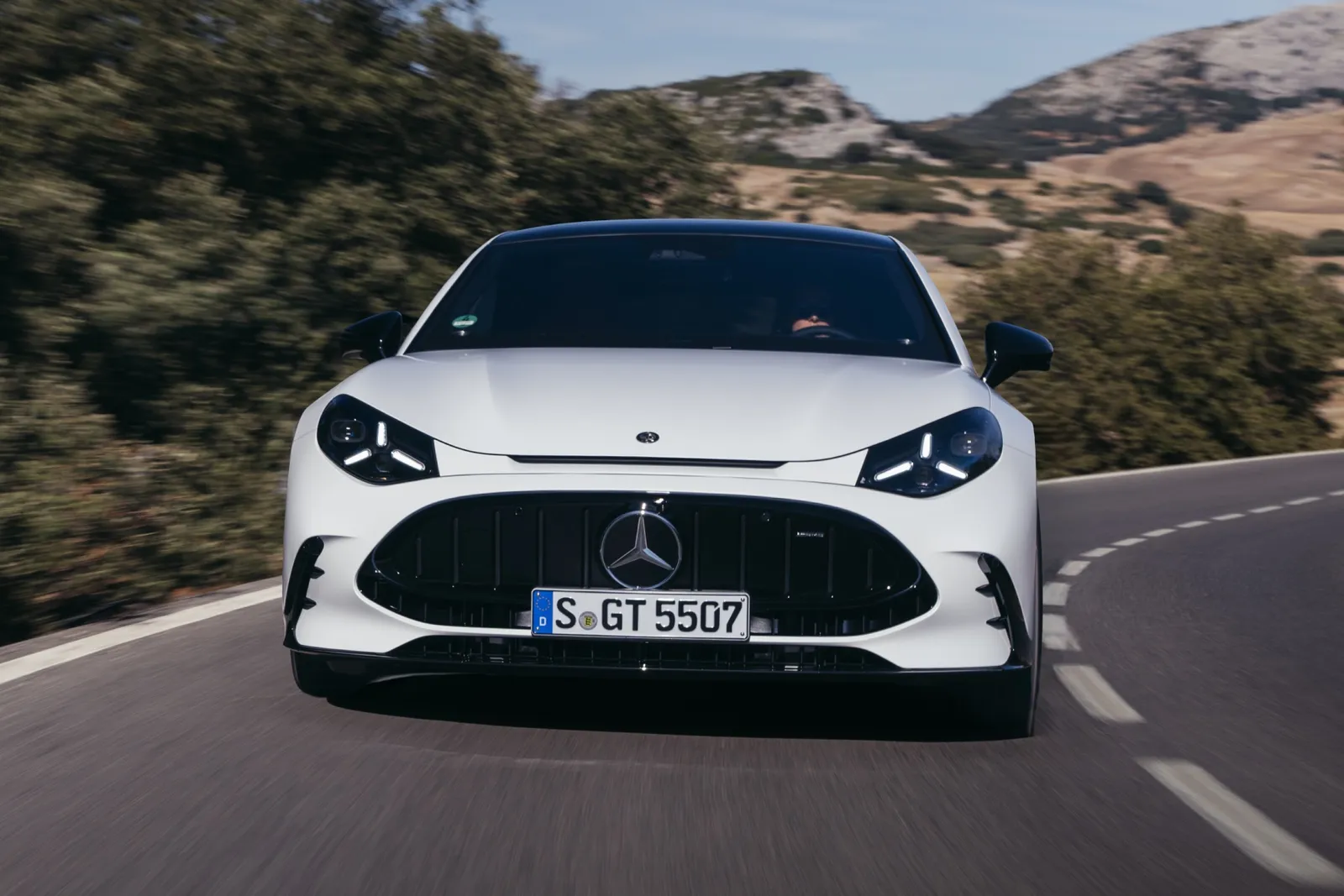
Image: Mercedes-Benz
- 1/4
- 2/4
- 3/4
- 4/4
Even avid petrol heads are smiling at this.
And then there’s the matter of the sounds. The developers recorded the sound for the last GT Black Series model, and the virtual gearshift along with the rev limiter are already familiar from other sports electric cars. What’s new are the shakers in the seats, which make the V8 sound experience not only audible but also tangible. Additionally, there are digital displays in an analog style and a wide range of customization options. The driver is meant to not only drive fast but also experience as much as possible during the ride.
And it works. Even passionate petrol heads find themselves smiling on the highway as they shift through the fictional gears, feeling the vibrations in the seat tickle their backs and sending shivers down their spines. Of course, the critical little brain immediately alerts them with a “Fake!” warning. Because no matter how perfect the simulation may be, a real eight-cylinder engine lives not only through its sound but also through its mechanics, its vibrations, and its unique character. All of this cannot be simply recreated with software.
A car that needs no tricks
At least with the AMG, the overall package works well together. Compared to some high-performance electric cars from China, it doesn’t just seem fast—it feels like a cohesive unit. The suspension, steering, and brakes harmonize with the powertrain. In Comfort mode, the GT drives quietly and smoothly, almost like an S-Class. Switching to Sport mode transforms it into a performance spectacle so well executed that one almost forgets it’s staged. Almost.
The flirtation with the PlayStation generation seems all the more unnecessary. On the center console, there are three knobs for adjusting the throttle response, power distribution, and traction control. Those who fiddle with them have the electronics helping them drift—much to the delight of tire dealers. This might be fun on a closed test track and become a trend on TikTok, but in everyday use, it’s just gimmicky nonsense that reduces a serious sports car to a toy vehicle. A car that drives this well actually doesn’t need such tricks.
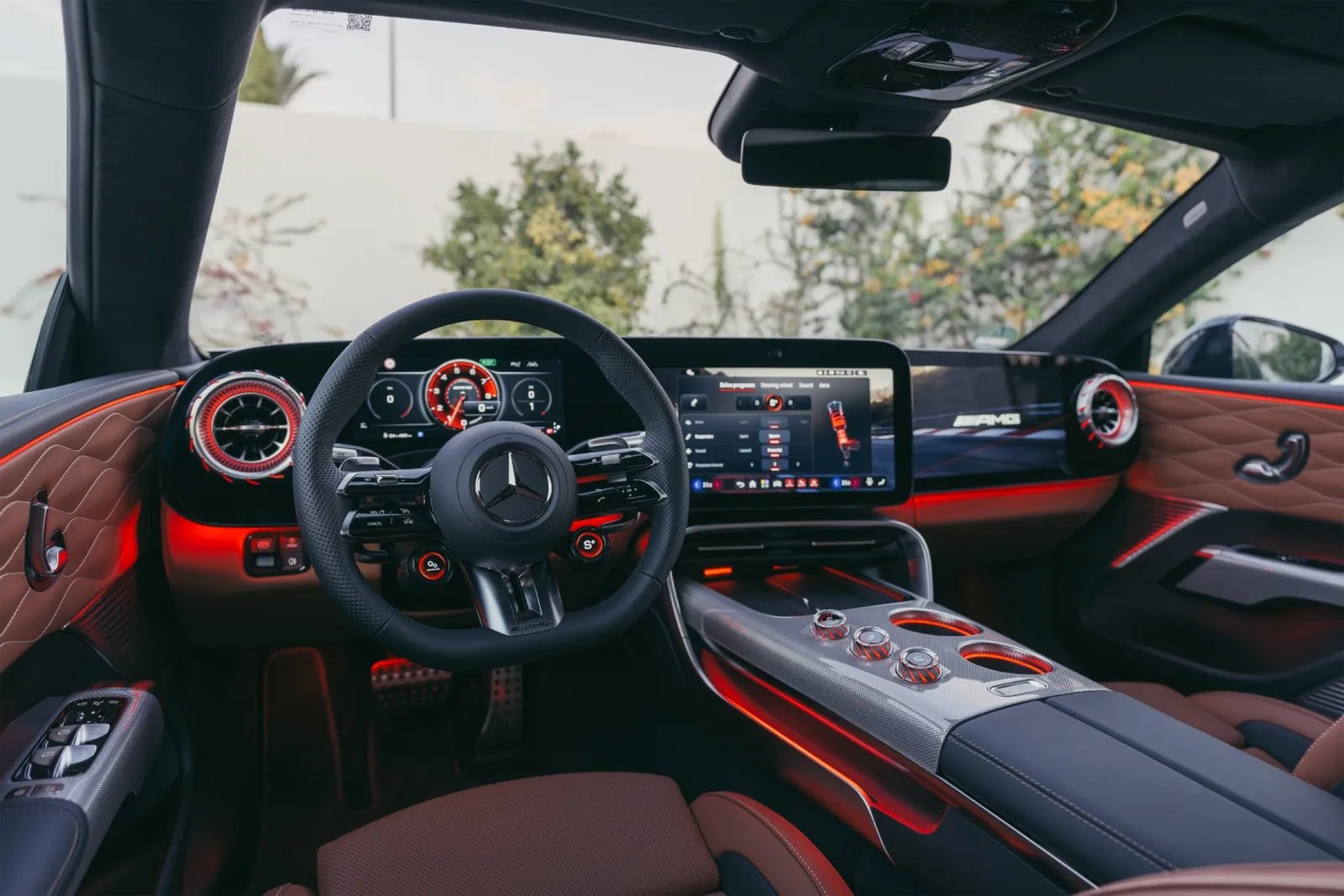
Image: Mercedes-Benz
- 1/3
- 2/3
- 3/3
The four-door model is available in three variants, all equipped with all-wheel drive and a 106-kWh battery. The GT 53 starts at 115,430 euros, delivers 400 kW of power, and has a WLTP range of up to 794 kilometers. Above it is the GT 55, with 600 kW of power and a standard range of up to 700 kilometers, priced at 154,700 euros. At the top is the GT 63, costing 196,350 euros: it boasts 860 kW of power, up to 2,000 Nm of torque, and a 0-100 km/h time of 2.4 seconds, which is better than any other road-legal AMG model. Impressive! However, its top speed is limited to 300 km/h. While that is impressive, it seems rather modest compared to its acceleration performance and the legacy of AMG models.
The 4-door model thus becomes the flagship of the new AMG world: a technological marvel, a statement against the perceived dullness of electric cars, and a challenge to the Porsche Taycan Turbo GT and Lucid Air Sapphire. Yet it must compete with that very past it has technically left behind. The more AMG strives to imitate the V8, the more apparent becomes its absence.
Test drive of the AMG GT SUV
The AMG GT SUV has it easier. Even its proportions appear more balanced. It has a higher stance, a more robust front end, and sits confidently on the road. With a length of around 5.09 meters and a wheelbase of 3.04 meters, the GT SUV isn’t a discreet family car, but it’s also not one that pretends to be a classic sports car. And that’s exactly why it doesn’t need to constantly prove that its electric drive is emotionally engaging enough. Though of course it does utilize the same range of emotional responses.
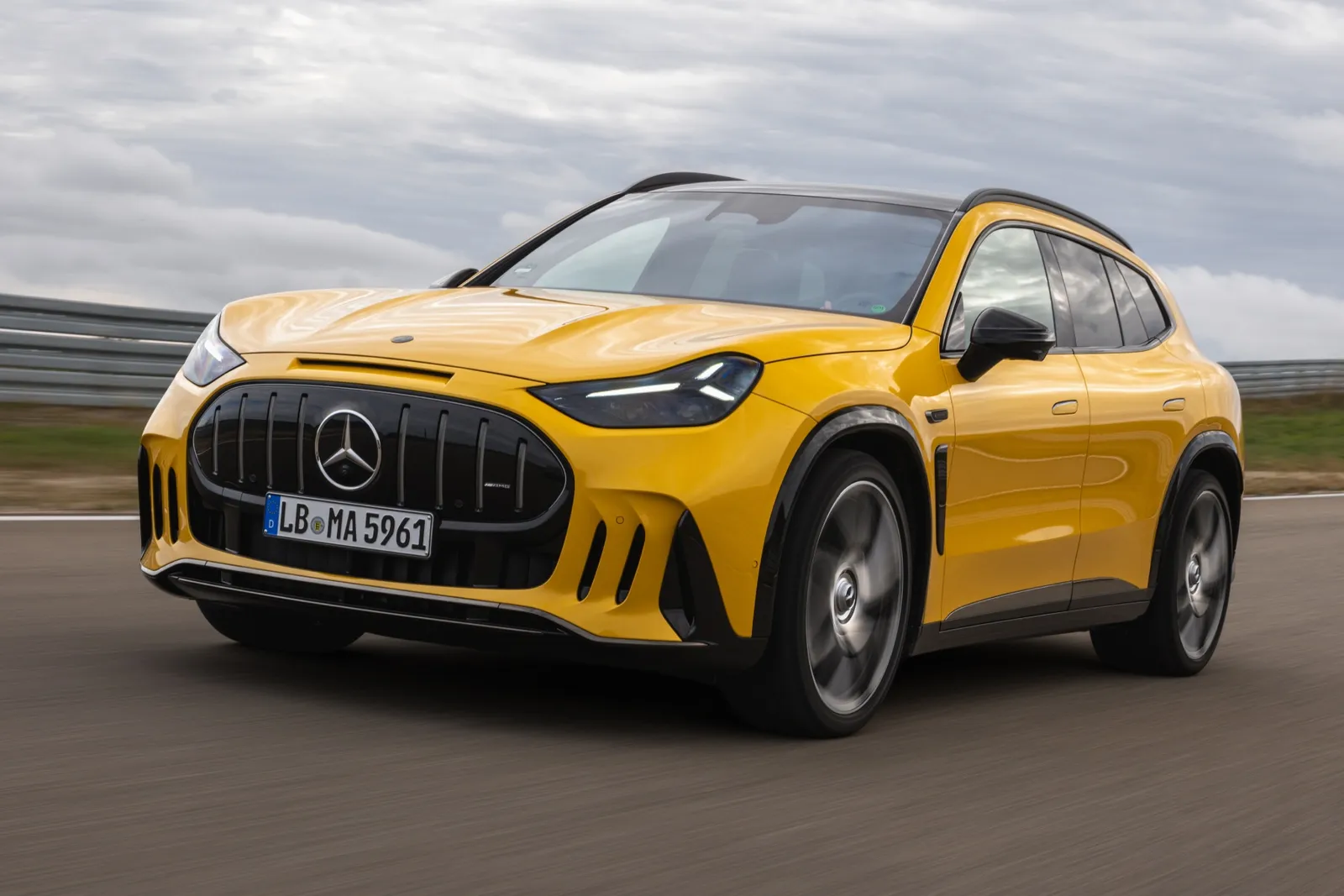
Image: Mercedes-Benz
- 1/6
- 2/6
- 3/6
- 4/6
- 5/6
- 6/6
The seating position is unusually low for an SUV, yet the suspension remains firm and responsive, while the air suspension still provides comfort. The rear-wheel steering makes the large vehicle manageable when parking, agile in tight curves, and stable on the highway. When the sport mode is activated and Boost is engaged, the same sudden surge in performance is felt. The artificial V8 roars, the shakers vibrate, and the digital tachometer needle jumps through the simulated gears. It’s the same perfect imitation — only it’s less objectionable in an SUV because the expectations are different.
Those who buy an electric sports car crave an experience that can compete with that of a gasoline-powered vehicle. In contrast, for SUVs, space, comfort, prestige, and a commanding presence are at least just as important. No one here needs to defend an eight-cylinder engine as part of a brand’s identity. The sound is a nice bonus, not a matter of belief. While the 4-door car aims to convert petrol enthusiasts, the SUV is meant primarily to convince those who simply seek a powerful luxury car with more space and don’t always want to justify their choices to others.
Real-world utility
In everyday use as well, the SUV is the more compelling choice. The rear seat is suitable not only for children but also comfortably for two adults, and possibly three if needed, though there is limited knee space. The trunk holds 607 to 1,740 liters, plus 78 liters under the hood. The coupe version has 415 liters of cargo space and 41 liters in the front trunk. Thus, the SUV offers not only more space above the battery but also practical utility that can be actually utilized. Moreover, with a starting price of 113,050 euros, it is also 2,380 euros cheaper.
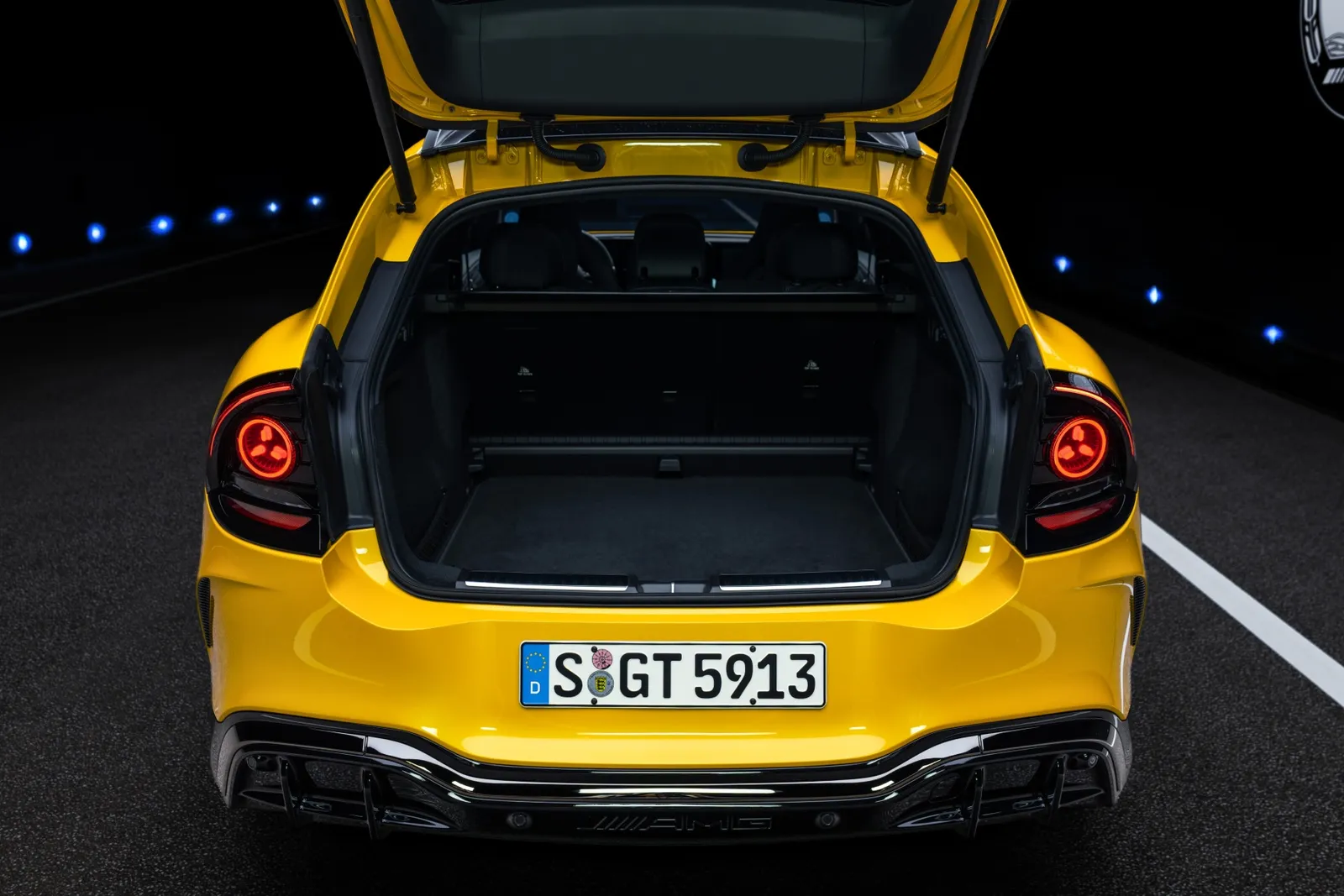
Image: Mercedes-Benz
- 1/2
- 2/2
The key specifications are almost identical: Up to 860 kW and a robust 2,000 Nm of torque make the roughly 2.6-ton GT 63 SUV a powerful launch vehicle. It accelerates to 100 km/h in 2.5 seconds, with a top speed of 270 km/h. For a car of this size, this is absurdly fast—and more than sufficient for most roads. For those who prefer a more balanced approach, the GT 53 offers two engines and 400 kW, while the GT 55 provides three engines and 600 kW. There is also flexibility regarding the battery. The standard version comes with 106 kWh of capacity, which can be upgraded to 128 kWh on the more powerful variants optionally. This increases the maximum charging power to up to 710 kW. With a standard range of up to 700 kilometers and the ability to recharge approximately 454 kilometers of range in ten minutes, this SUV is equally outstanding.
Naturally, the SUV must compete with the Porsche Cayenne, Lucid Gravity, and other luxury SUVs. Yet that very factor presents its opportunity: the market is larger, the customer base broader, and its practical benefits easier to explain. The SUV doesn’t need to deliver that single powerful emotion on which everything else depends. It just needs to be quite good at many things—and most importantly, combine them better than its competitors.
Conclusion
In the end, the electric AMG GT remains a technical masterpiece aimed at solving a problem that cannot be addressed solely through technology. This 4-door vehicle must prove that an electric car can replace the soul of a V8. It might struggle greatly to achieve this. The SUV, on the other hand, doesn’t need to. It can be fast, luxurious, practical for everyday use, and a bit wild. A fake V8 isn’t a matter of belief here but rather a fun gimmick. And perhaps that is the more honest path toward AMG’s electric future.