
First drive in the Xpeng L03: Finally a Chinese car that doesn’t beep
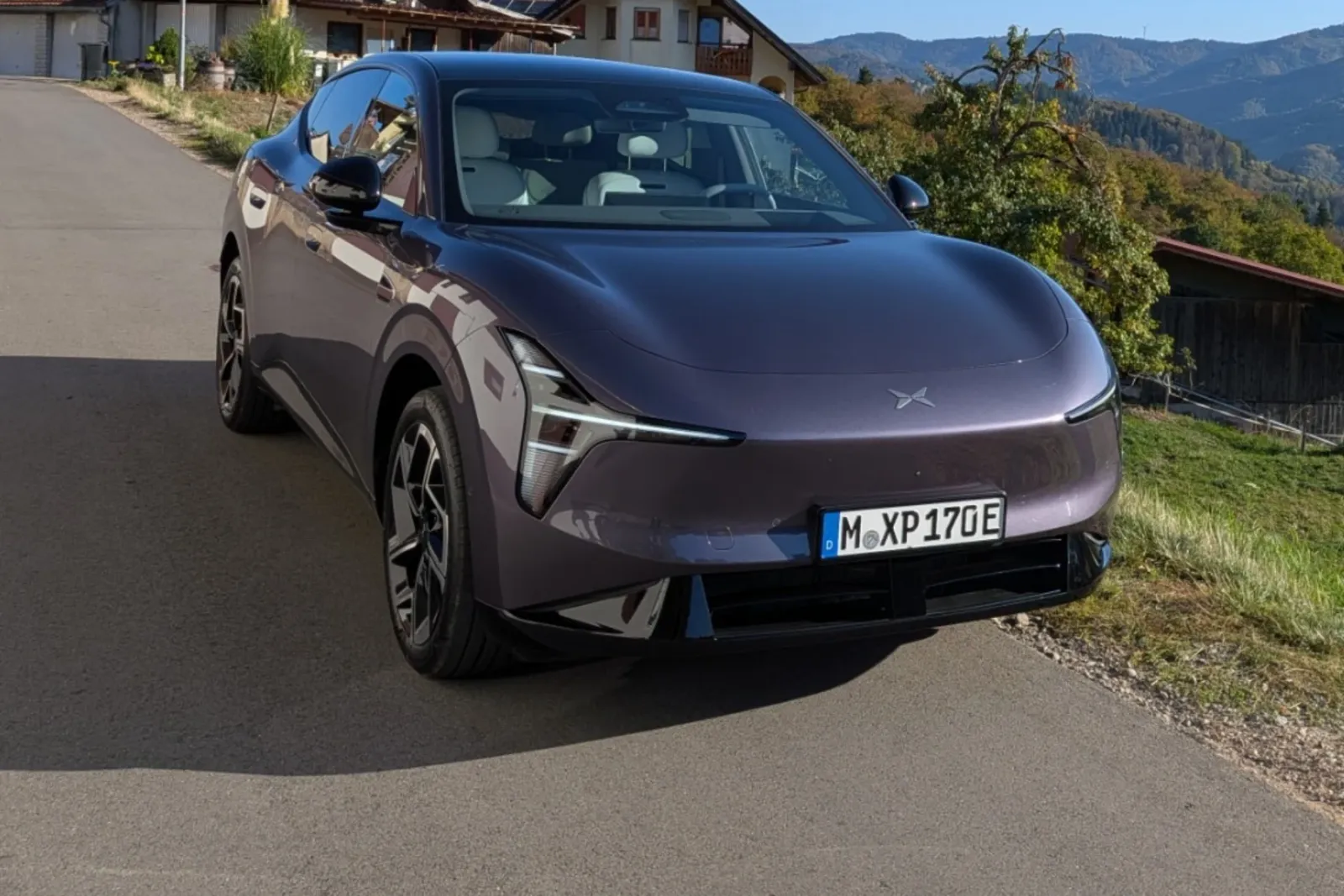
The days when everyone wondered how to pronounce “Xpeng” are over. In the mid- and upper-class segments, this newcomer from Guangzhou has already made its mark, offering a solid lineup that ranges from sleek sedans to spacious family buses with models like the P7, G9/G6, and X9. With the L03, Xpeng now completes its range at the lower end. We got to test the vehicle for two days in the tri-border area around Basel before its first deliveries to customers.
Design Suitable for Mass Market
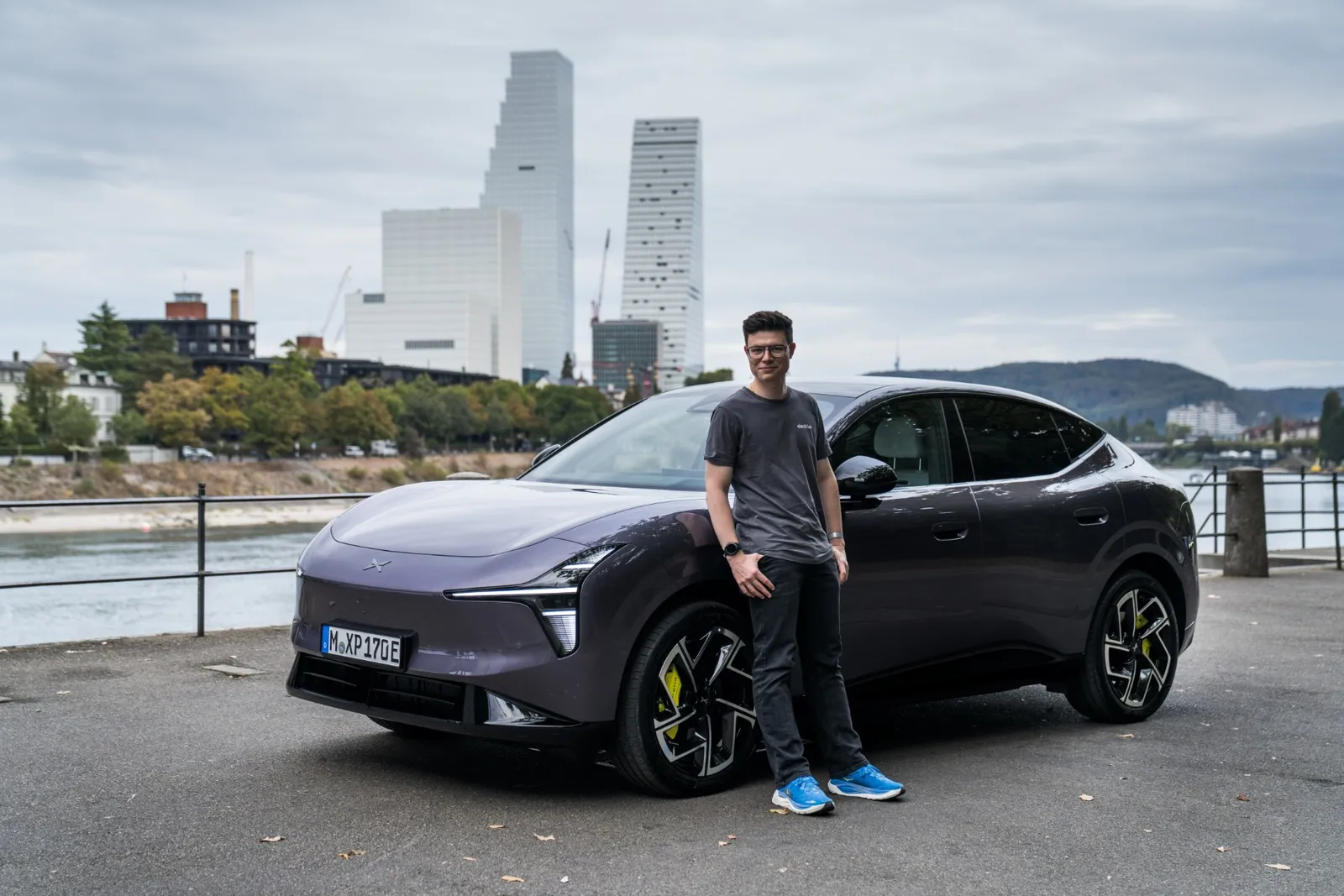
Visually, the 4.65-meter-long vehicle has a futuristic yet appealing appearance. It looks modern without being harsh on the eyes. The rear section with a continuous light strip, along with the rest of the bodywork, reflects contemporary design trends. The bold purple color of our test unit (“Phantom Purple”) stands out from the other white and gray shades, with no brighter colors available. Yellow brake calipers add a sporty touch, while the removable air intakes enhance the front end. The L03 does a better job than others of balancing a distinctly electric look without appearing like a spaceship.
Interior: A benchmark for competitors
We settle in and once again notice: the Chinese don’t skimp on materials. In most European models in this price range (and even above it), you find much more hard plastic or shodder construction. Xpeng avoids any mistakes here, bringing a luxury feel to the mid-range segment. Nine or 18 speakers (the latter only in the Ultra version) ensure high-quality sound. It’s even possible to play navigation announcements and phone calls through the speakers in the driver’s seat. Every single premium feature (more on these below), along with the high-quality interior, isn’t groundbreaking by itself—but at a starting price of 35,600 euros, it’s quite impressive.
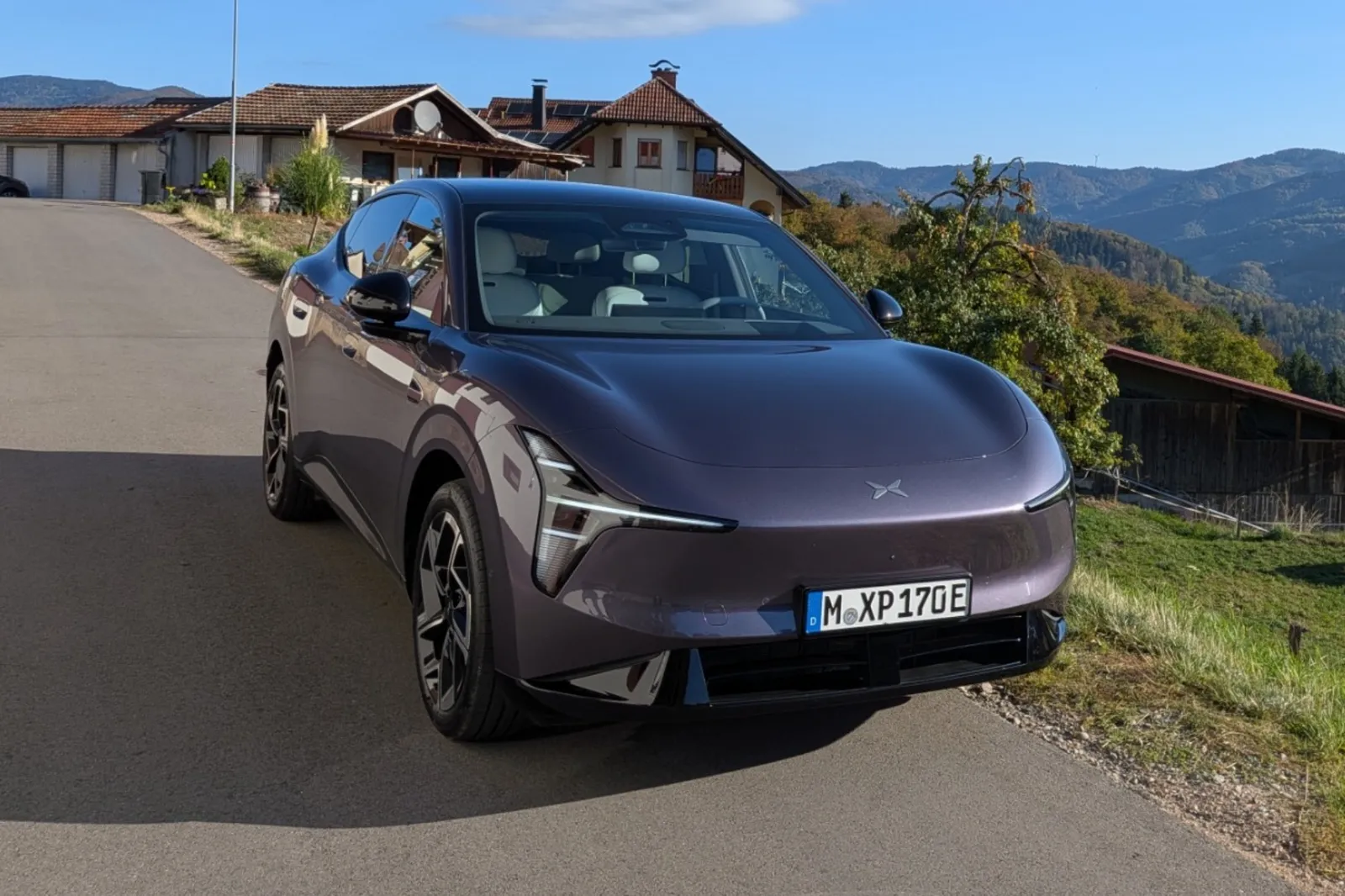
Image: Xpeng
- 1/3
A lot of space for passengers, less for luggage
The front seats strike the right balance between side support and comfort. Quite unique in the under 40,000 euro class are the massage seats. Here, not only does the lumbar support move up and down as a mere formality, but it actually delivers strong massage action. The driver and passenger are thoroughly massaged from the shoulders to the buttocks, yet the noise level remains acceptable. Seat ventilation and heating are included, but only in the front. Rear passengers must do without such features, though they still enjoy great comfort. The backrests are relatively steep, which ensures surprisingly good headroom even for tall people despite the sloping roofline. This excellent passenger space comes at the cost of a modest trunk capacity of only 367 liters. As a compensation, there is a three-section foldable rear seat and p
Practical hook pockets to keep groceries from flying around. The storage space is enhanced by a trunk that holds 89 liters in rear-wheel-drive models and 44 liters in all-wheel-drive versions.Rigid Chassis
In autumn conditions, we drove through the Black Forest and Alsace. From German autobahns to French country roads and Swiss city traffic, we experienced everything. We found that it handles all of these conditions very well. On the autobahn, it accelerates swiftly to its electronically limited top speed of 193 km/h, reaching 100 km/h in just 4.5 seconds. At high speeds, the car could be tuned a bit tighter, but it never feels unsafe. Although the noise level is higher than that of competing German models, it’s still not uncomfortably loud.
On winding country roads, it’s noticeable that the bodywork lags slightly behind the movements of the suspension; the roll is quite significant, and the steering remains fairly soft even at its steepest setting. The pedal response also needs some refinement, with the transition to regen mode being uneven in certain areas.
But these are all minor issues—overall, the L03 drives very competently, especially for a vehicle in this price range.
Maximizing performance from 400 volts
At the charging station, Xpeng demonstrates what’s possible with 400 volts: a peak power of 236 kW (193 kW for the smaller battery) — a level that just a few years ago was typical for luxury sedans like the i7 and EQS. The 58.2 kWh or 71.1 kWh LFP batteries can reach 10–80% charge in less than 20 minutes. Additionally, a 11-kW AC charger and V2L are standard features. Xpeng lists V2L output at 6 kW — likely the maximum allowed in China, as other vehicles typically offer up to 3.6 kW for standard European plugs.
Aid systems: excellent on highways, poor at parking
On the highway, the level-2 system reliably maintains lane and distance control, with automatic lane changes triggered by turning on the blinker happening swiftly and smoothly. At speeds up to 150 km/h, driving becomes quite stress-free, especially since the hand recognition uses capacitive sensing so there’s no need to constantly adjust the steering wheel. As impressive as these assist systems are on the highway, their performance is more inconsistent elsewhere. They’re not really suitable for country roads, as they strive hard but quickly reach their limits. The same is true for automatic parking: on an empty parking lot with ample spaces, it works neatly and efficiently. However, this efficiency makes it unsuitable for parking by the roadside—the car moves too slowly into the space, and whenever another vehicle passes even in the opposite lane, the parking process is disrupted.
is paused.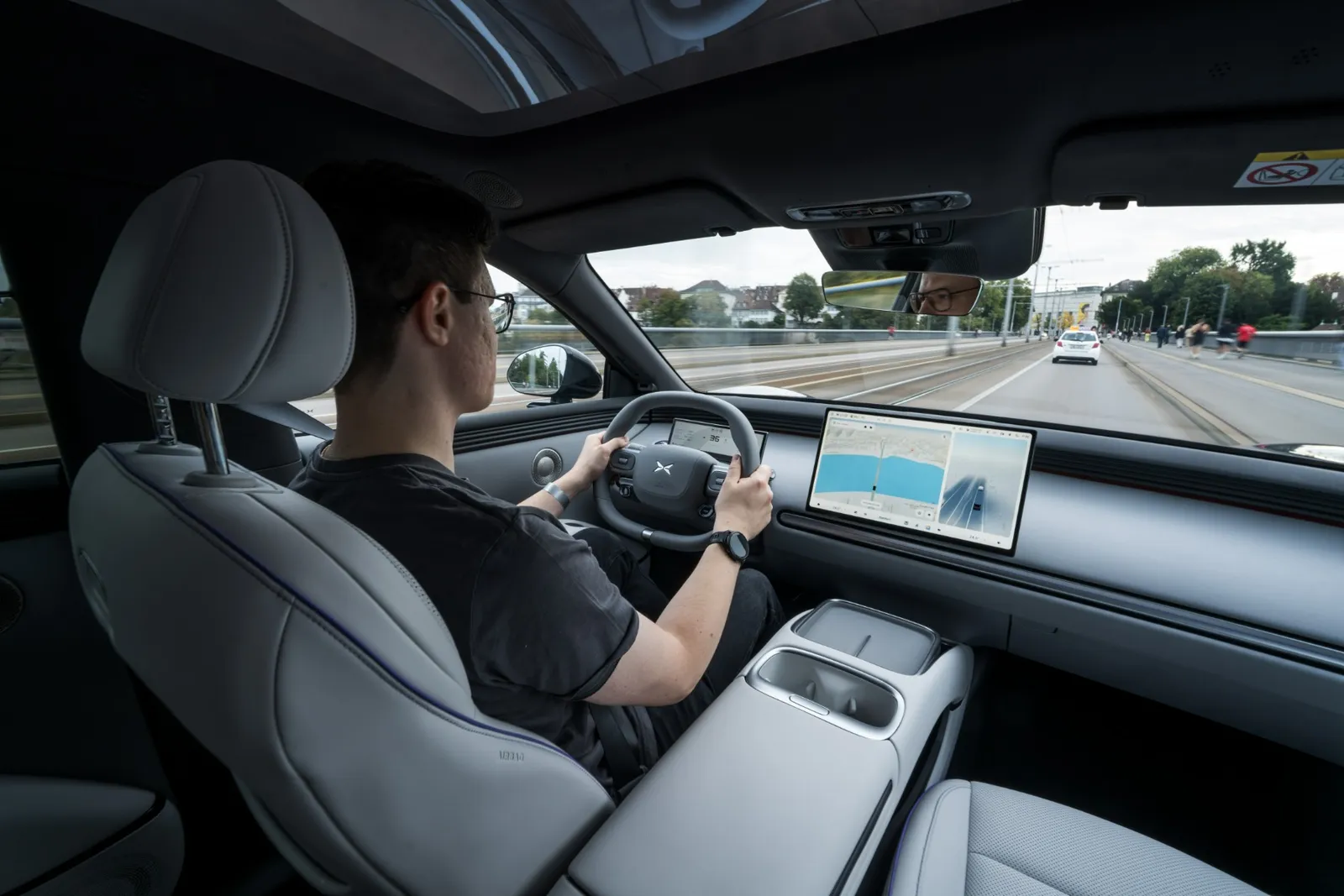
Image: Xpeng
- 1/4
- 2/4
- 3/4
- 4/4
Smooth and seamless: Software can make Xpeng
It is often claimed, to varying degrees of accuracy, that Chinese automakers excel in software as their core strength. This is indeed the case with Xpeng. The software works smoothly without any issues. Particularly pleasing is the navigation map displayed on the head-up display—a feature previously seen mainly in German premium vehicles. Of course, Google Maps is natively integrated, and various apps can be used for music streaming. For those who need more, wireless Apple CarPlay and Android Auto are also available. To prevent the smartphone from overheating, the charging dock is actively cooled. The reverse camera, which is also projected onto the head-up display, is especially cleverly designed. It requires some creative thinking, as it allows drivers to look both forward and backward simultaneously while parking. It sounds crazy, but it works surprisingly well.
| | **L03 Standard Range | L03 Long**Range | L03 Performance | L03 Performance Ultra |
| --- | --- | --- | --- | --- |
| Drive type | RWD | RWD | AWD | AWD |
| Power | 180 kW | 180 kW | 285 kW | 285 kW |
| Torque | 264 Nm | 264 Nm | 431 Nm | 431 Nm |
| Acceleration | 7.5 s | 6.6 s | 4.5 s | 4.5 s |
| Top speed | 180 km/h | 180 km/h | 180 km/h | 180 km/h |
| WLTP range | 445 km | 520 km | 440 km | 440 km |
| Battery capacity | 58.3 kWh | 71.2 kWh | 71.2 kWh | 71.2 kWh |
| DC charging power | 193 kW | 236 kW | 236 kW | 236 kW |
| DC charging time 10-80% | 20 min | 20 min | 20 min | 20 min |
| AC charging power | 11 kW | 11 kW | 11 kW | 11 kW |
| AC charging time 5-100% | 6.8 h | 8.3 h | 8.3 h | 8.3 h |
| Price | 35,600 Euros | 38,600 Euros | 41,600 Euros | 46,600 Euros |
The prices are a challenge to competitors.
As mentioned earlier in this review, what excites us most is the combination of features and price. The base rear-wheel-drive model with a smaller battery starts at 35,600 euros. For an additional 3,000 euros, Xpeng installs a larger battery, and another 3,000 euros adds all-wheel drive. Even the Performance Ultra version we tested, at 46,600 euros, is not cheap, but it remains highly attractive compared to competitors’ prices. The list of additional costs is also pleasantly short: 990 euros gets you a manual trailer hitch, 950 euros for a color other than standard white, and 1,200 euros for the Black Edition. That’s it. Various premium features require the Ultra version, but even the lower models come equipped quite well.
Conclusion
Xpeng brings its usual strengths to a new size and price category with the L03. Especially in the Ultra version, the equipment level is sometimes significantly higher than that of competitors. A few flaws can be overlooked given the attractive price. Looking at the European market, and particularly the German market, it becomes clear once again that Xpeng understands western markets better than many other brands from China. The L03 is expected to reach customers in Europe this year — with current fuel prices, this cost-performance powerhouse will likely be interesting even to those new to electric vehicles.