
Enel remains a key player in the transition to electricity.
Enel remains a key player in the transition to electric mobility, as Italy sees more charging stations and more battery-powered vehicles.
Enel stays at the forefront: 28,000 charging points
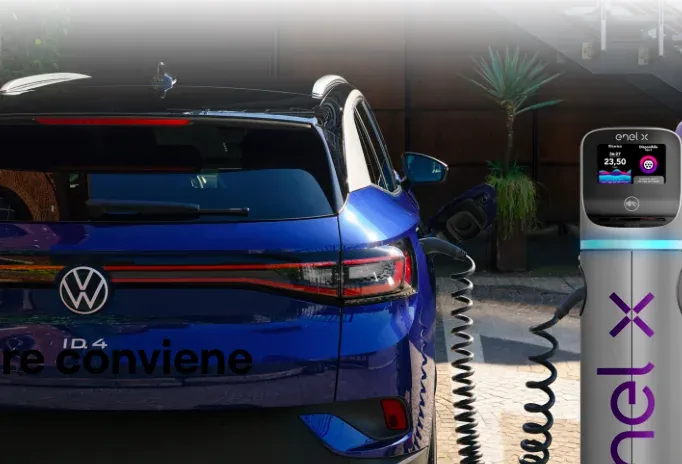
From September 16 to 22, the European Mobility Week was celebrated. In Italy, the number of public charging points has now exceeded 850,000, with the fleet of electric vehicles continuing to grow. The group led by Flavio Cattaneo, with around 28,000 charging points and an integrated ecosystem of services, aims to make electric mobility increasingly simple, widespread, and accessible. Electric mobility is thus becoming more integral to daily life and represents one of the key steps in the energy transition. The European Mobility Week, the EU Commission’s main awareness campaign focused on urban mobility under the theme “Mobility for Everyone,” emphasized the need to create more accessible, inclusive, and sustainable transportation systems.
Almost 450,000 EVs are in use in Italy
In Italy, infrastructure development is progressing at a steady pace. According to Motus-E, as of June 30, 2026, there were exactly 84,564 public charging points. With 6,311 new installations in the second quarter alone and over 17,000 in the past 12 months. The highway network is also accelerating: the number of charging points reached 1,516, up from 1,159 in June 2025. And 59% of the infrastructure offers power levels above 150 kW. More than half of highway service areas now have charging systems. Meanwhile, the battery vehicle market is growing as well. By the end of August, Italy’s fleet of fully electric vehicles reached 444,863 units. In the first eight months of the year, 90,381 BEVs were registered, a 68.2% increase compared to the same period in 2025, with the market share rising to around 8%.
Fuel Refills in Piacenza and Noceto for Heavy Vehicles
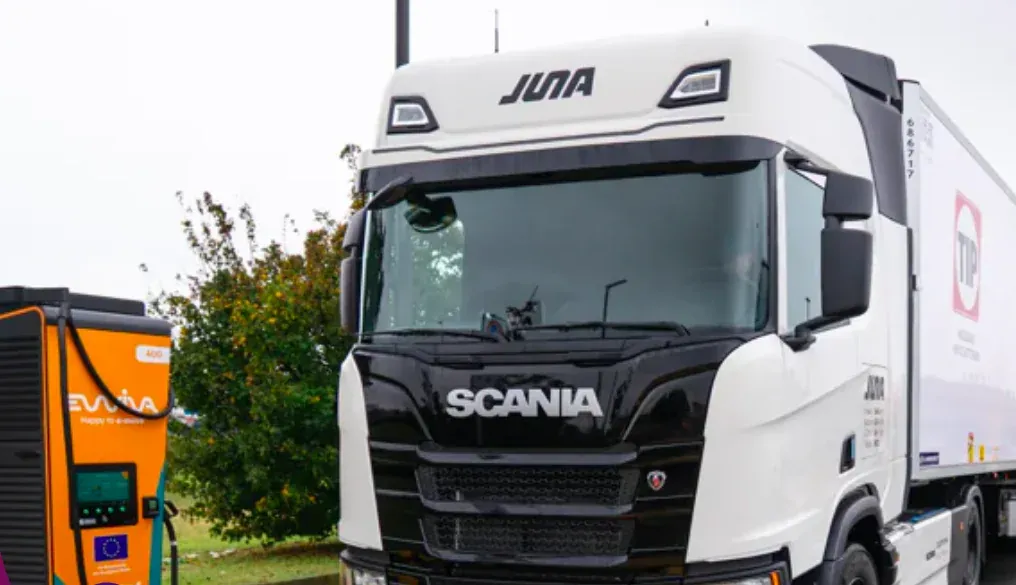
In this scenario, Enel is one of the key players. The group led by Flavio Cattaneo operates a network spread across the country, from urban centers to major rural routes. Of these, 5,000 have been installed as part of the PNRR initiatives: over 1,200 new fast charging stations completed last June were added to the 3,730 finished by the end of 2025. The company is strengthening its presence in 9 regions, from Lombardy to Sicily, with particular focus on the South and major metropolitan areas. Complementing this infrastructure is the high-power network, featuring over 1,800 HPC charging points with capacities ranging from 100 to 400 kW at more than 500 stations. The company’s efforts also extend to heavy transportation, with two dedicated sites for e-trucks in Piacenza and Noceto. Ewiva, a subsidiary of Enel Group, has also won three bids under Autostrade per l’Italia’s program for new charging stations.
Charging stations to be installed by 2027 along some of the main highway routes.Simplicity in payments as well
The new stations also include storage systems, photovoltaic canopies, smart lighting, and solutions designed to facilitate access for people with limited mobility. However, Enel’s strategy focuses not only on the number of charging stations. The goal is to create an ecosystem that makes the charging experience simple and integrated. With Enel On Your Way, the group’s app dedicated to electric mobility, users can locate available charging points, check their status in real time, start and stop charging, make payments, and plan routes. Thanks to interoperable roaming, the app allows access to over 55,000 charging points in Italy and more than 60,000 nationwide. The Plug&Charge technology enables charging by directly connecting the vehicle to a compatible station, without manual authentication. Meanwhile
And the integrated POS systems allow payment directly with a card.Enel remains the leader, even for top-ups at home.
For homes, Waybox allows users to schedule charging and manage energy consumption intelligently. Complementing this is Enel Drive, a solution that integrates electric vehicles, a dedicated electricity tariff, and Waybox with included installation. The current challenge is to support the growth of infrastructure through faster authorization processes and network connections, especially in areas not yet served. The direction is clear: a more extensive, interoperable, and faster network can reduce the barriers faced by drivers and make electric mobility an increasingly viable option for citizens, businesses, and public authorities. This was also the purpose of the European Mobility Week: to transform the energy transition into a new way of moving, turning electrification not just into a technology, but into a simpler and more accessible service.
and in everyday life. A goal that Enel pursues with tangible results, confirming its central role in the country’s energy transition.Skoda Epiq: Complete VIDEO TEST (with real range)
Previous Article
Velettrica launches Drive‑Pod‑16 for a zero-emission sail
Next Article
Excluding charger subsidies, the Ministry replied to us