
A new energy market is emerging in Latin America: battery storage systems are set to increase by 13 times over the next 10 years
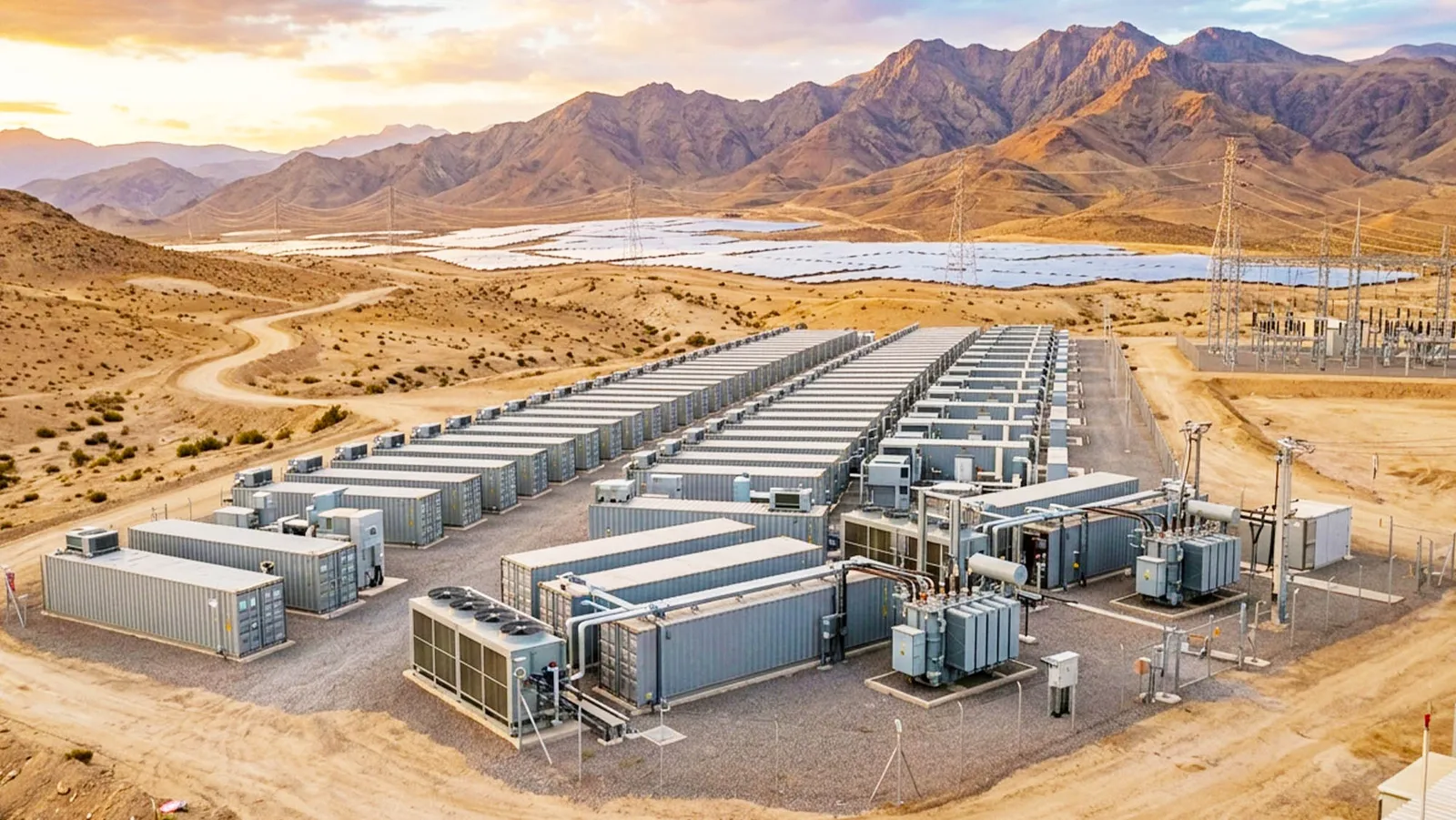
Latin America is entering a new phase for energy storage. The cumulative capacity of battery-based energy storage systems (BESS) will rise from around 2.5 GW in 2025 to 34 GW by 2035, representing a 13.6-fold increase in just one decade. This growth corresponds to a compound annual growth rate of nearly 30%. The large-scale deployment of batteries is shifting from being a supplementary technology to becoming an essential component for integrating more solar and wind energy.
The increase in renewable electricity generation, grid congestion, and transmission infrastructure that requires modernization are driving up demand for storage. However, this growth will not be uniform. Chile, Mexico, Brazil, Argentina, and the Dominican Republic are developing markets with very different characteristics and will be key players in this expansion.
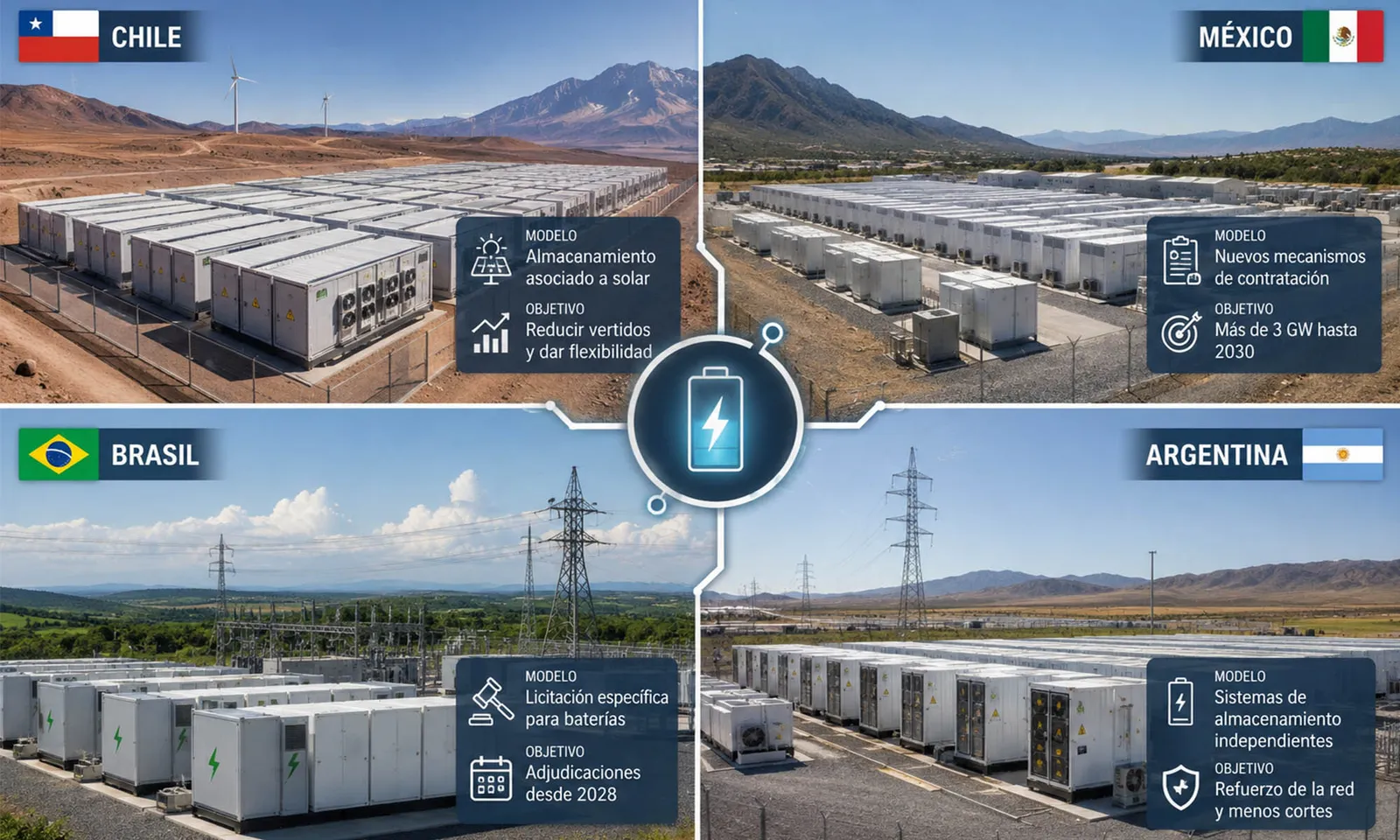
Chile leads Latin America’s battery market
Chile is currently at the forefront of energy storage in Latin America, housing some of the region’s largest operational BESS projects.
The rapid expansion of solar energy in the northern part of the country is creating an increasingly obvious problem: during certain hours, there is more renewable electricity available than the grid can handle. Batteries allow this excess energy to be stored and fed back into the system when solar generation stops.
This need is also driving the development of longer-lasting storage systems. However, the market’s growth itself is starting to pose new challenges. An increase in batteries may gradually reduce earnings from energy arbitrage, a phenomenon known as price cannibalization.
Mexico can accelerate deployment before 2030
Mexico is at a regulatory turning point. New procurement and project development mechanisms that require storage could result in the deployment of over 3 GW of capacity by 2030.
The development of Mexico’s market will largely depend on batteries being able to generate predictable revenue from their role in the electricity system. Storage can supply energy during peak demand, provide balancing services, and offer other auxiliary functions, but investors need clear rules to turn these technical capabilities into stable income streams.
Brazil prepares for large-scale entry
Brazil has one of the largest electricity systems in Latin America and possesses enormous renewable potential, especially in solar and wind energy. However, the storage market still needs regulatory mechanisms to make batteries profitable.
The country plans a specific bidding process for battery storage systems by December 2026. Awarded projects could begin to result in new installations starting in 2028.
The main obstacle remains economic: without a defined system to compensate for services such as energy arbitrage or auxiliary services, it is more difficult to finance large-scale BESS projects.
Argentina focuses on standalone batteries
Argentina is developing a different model. The country has turned to bidding processes to advance independent storage systems, that is, facilities that do not necessarily need to be directly linked to a renewable power plant.
The most recent rounds have allocated approximately 1.3 GW of storage capacity together. These projects are scheduled to begin operating in 2027, and their role will primarily focus on strengthening the transmission grid and reducing the risk of power outages.
This model could prove particularly relevant in markets where electrical grid limitations represent one of the main challenges to increasing renewable energy generation.
Dominican Republic: Mandatory batteries alongside solar power
In the Caribbean, the Dominican Republic stands out for having one of the most structured regulatory frameworks for energy storage in the region.
The country requires storage capacity equivalent to 50% of solar power in certain developments. The government’s goal is to achieve 500 MW of storage by 2030.
This approach illustrates one of the strategies Latin American countries are using to accelerate battery deployment: directly linking storage growth to the installation of new photovoltaic systems.
The major challenge and opportunity: funding batteries and renewable energy growth
The projected growth does not guarantee that the 34 GW will actually be built. The main obstacle for energy storage in Latin America remains the lack of sufficiently predictable revenue mechanisms.
In many markets, it is still not clearly defined how much batteries can charge for ancillary services, capacity, frequency regulation, or energy arbitrage. Added to this are difficulties in securing financing, administrative delays, and a limited number of energy buyers willing to sign long-term contracts.
The challenge for the next decade will therefore be to move from announcing projects to actually building them and making them economically viable.
The jump from 2.5 GW to 34 GW would make Latin America one of the most important emerging markets for BESS systems in the next decade. The expansion of solar and wind energy is creating a need that batteries can meet: storing electricity when there is an excess and releasing it back into the grid when needed.
Chile has an advantage, while Mexico, Brazil, Argentina, and the Dominican Republic are creating conditions to accelerate their respective markets. The difference between them will lie less in technological potential and more in the ability to establish sufficient regulations, financing, and revenue streams to turn battery plans into operational installations.