
Hasn’t Volkswagen ever had such a small hit before?
The Polo has been gone since 2023, but when it returns now, it’s all-electric – and more practical than its bigger brother ID.3.
22.09.2026 19:09 | Updated 17:48
The Polo is finally back, both as an electric car and with the name we all know.
It does have a slight identity crisis in the form of an “ID.” before the name, but that’s mostly to distinguish it from the fossil-fuel-powered Polo sold alongside it in some markets outside Norway.
We take a closer look at:
What kind of car is this?
VW ID. Polo – summary
Pros
Cons
Sitting area – now also with massage function
Interior – user-friendly
Rear seat area – cramped
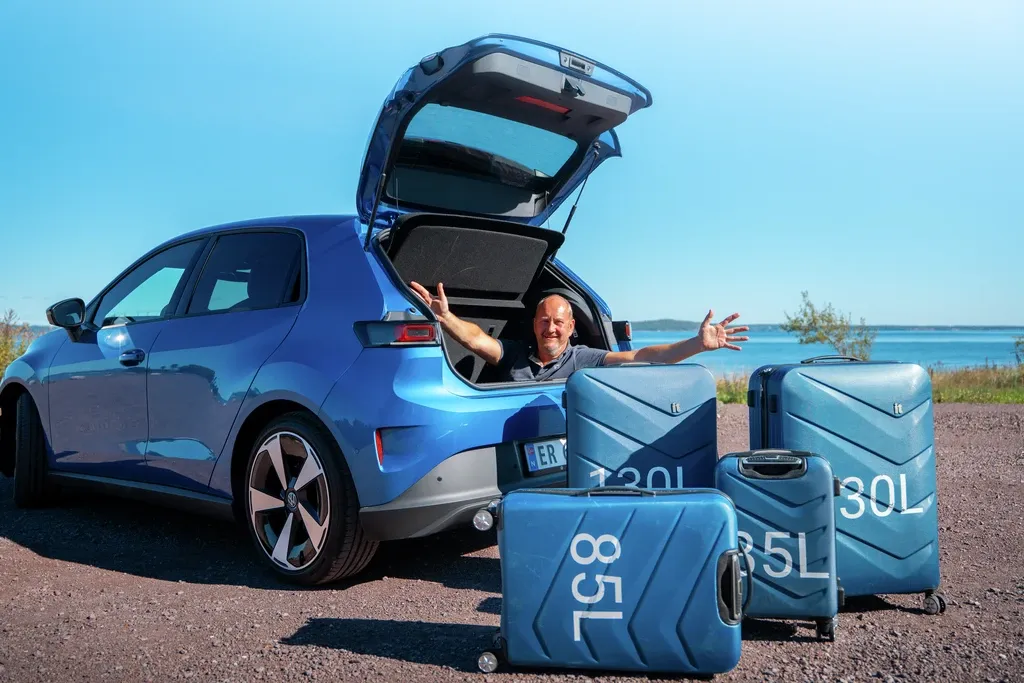
Trunk space – extremely large
Driving experience – quirky
Comfort – surprisingly high noise level
Cruise control – easy to use
Range and fuel consumption – good results
Charging – acceptable speed
Price and Competitors
Conclusion
In Norway, the Polo has been absent from the new car market since VW Norway decided to go fully electric.
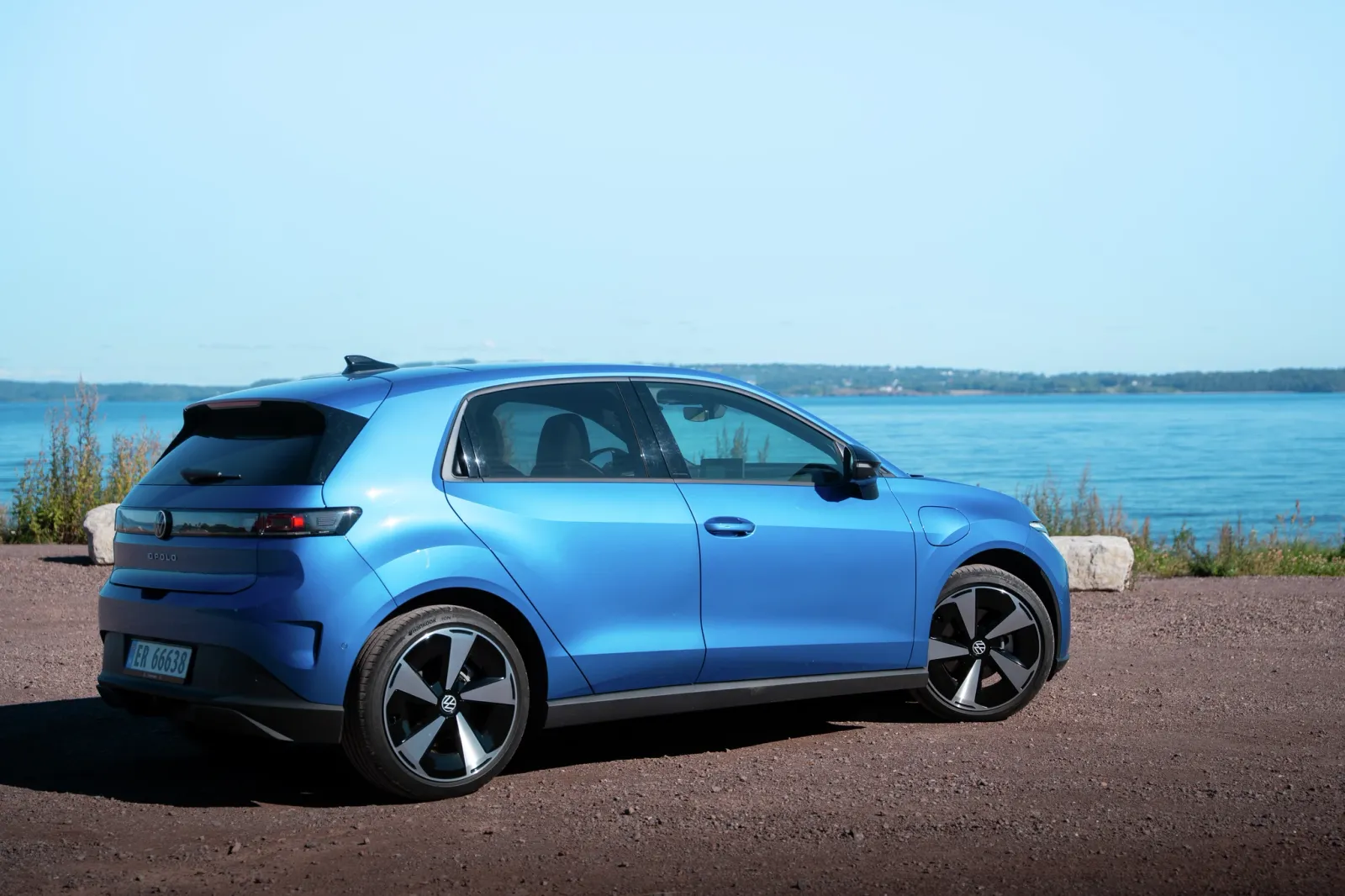
The electric newcomer is the first model based on the MEB platform.
It is front-wheel driven and intended for the smallest cars in the group, serving as a foundation for several upcoming models from Volkswagen, Skoda, and Cupra.
It is worth noting that the recently launched Audi A2 was considered too large for this platform. It is built on the MEB platform with rear-wheel drive.
What Kind of Car Is This?
The Volkswagen ID. Polo is a compact electric car in the small car class, but it aspires to be more than just a city car.
This is a car aimed at those who have previously owned a Polo, Golf, and perhaps an ID.3, and are looking for a modern electric vehicle that isn’t too large or too expensive.
VW ID. Polo – Summary
Pros
Trunk space
Towing capacity
Infotainment system
Cons
Gets expensive quickly
Slow charging speed
Limited rear seats
The design is typical of Volkswagen. There are no extreme shapes or exaggerated details. The Polo’s design is recognizable at first glance.
The ID. Polo is 4.05 meters long and falls into the compact car segment. Currently, it comes with two batteries: one at 37 kWt with 116 horsepower, offering a range of 350 kilometers, and another at 52 kWt with 211 horsepower and a range of 451 kilometers.
A GTI version will later be available with many more features and higher horsepower.
Sitting comfort – now also with massage
Manual seats with adjustments are standard, but we test the top-tier Style version.
It’s equipped with 12-way electrically adjustable seats for both the driver and passenger. And VW offers massage functions in the seats in what is currently the smallest electric car. Our vehicle has this feature.
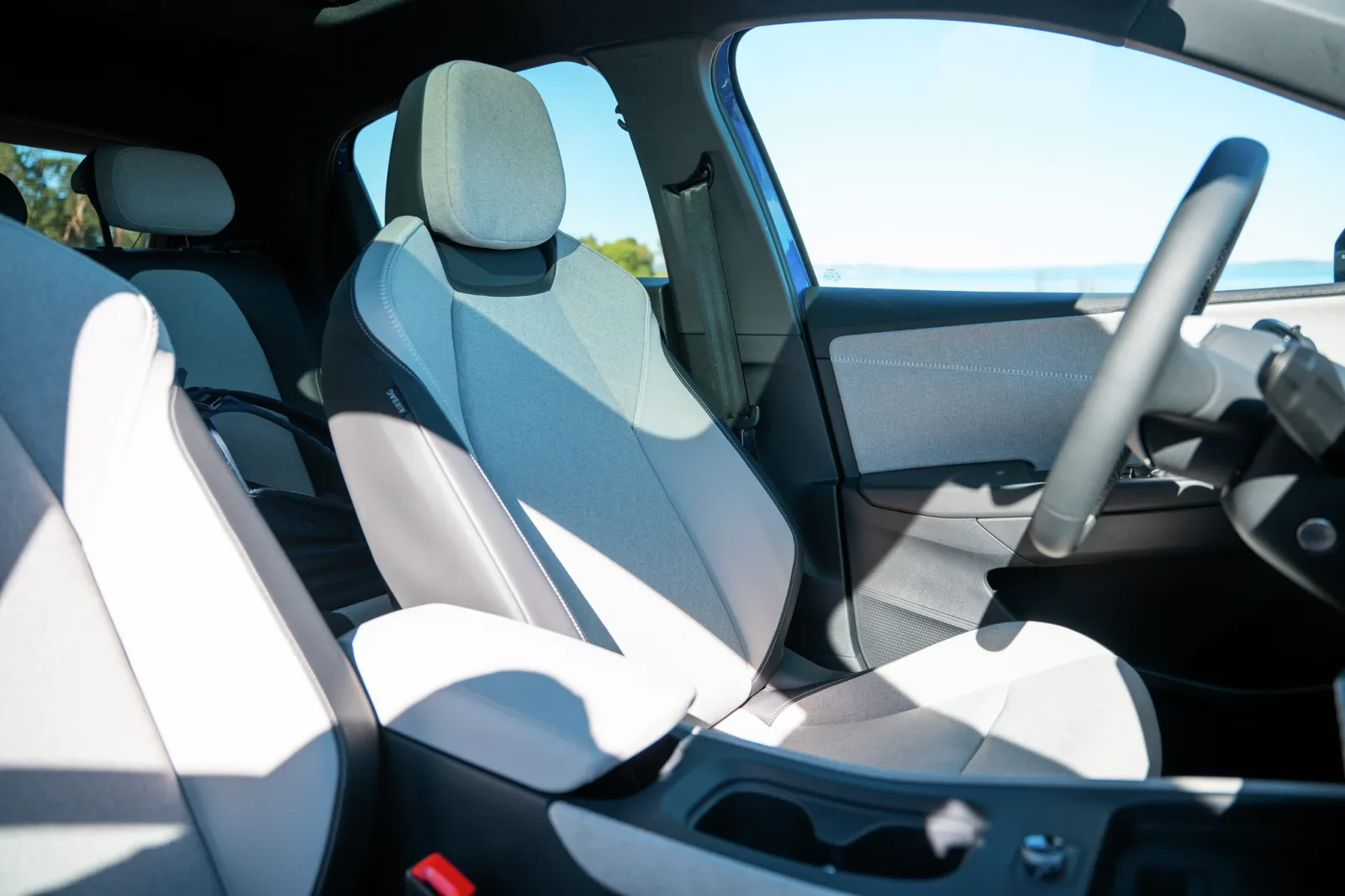
As usual when Volkswagen installs electric seats, I sit very comfortably. The steering wheel offers good adjustment options, and it’s easy to find a comfortable driving position.
Tall people will always want a bit more back support and might prefer longer seat depth, but overall there’s little to complain about here.
Interior – user-friendly
The interior represents a clear shift at Volkswagen. The Polo was the first car in which they eliminated the tactile switches, replacing them with proper buttons.
All windows have their own switches, the door locks, and the mirrors all come with physical controls.
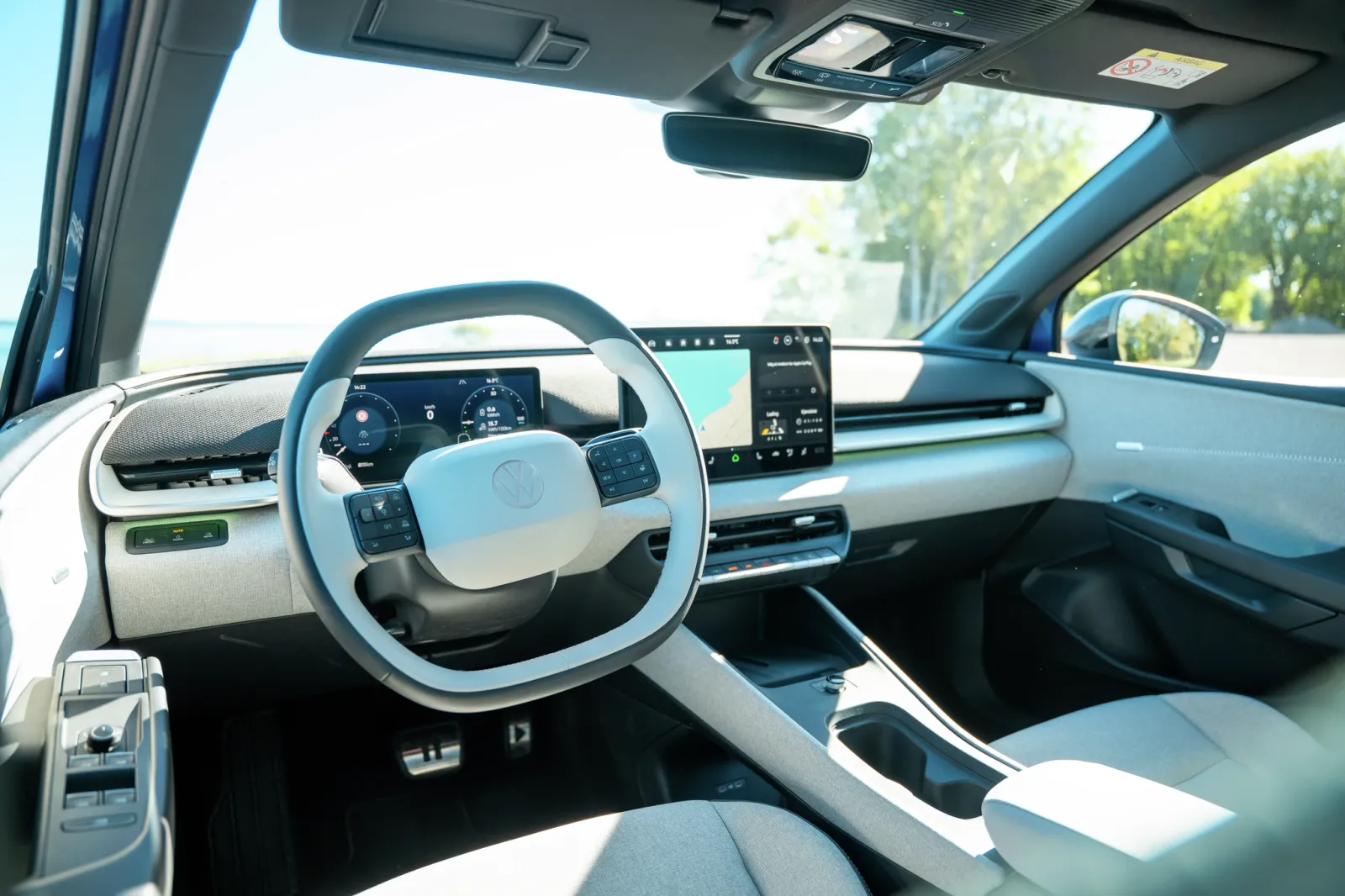
The wood trim also continues on the steering wheel and dashboard. Now, the climate can be adjusted using buttons, although the knob switches still resemble those on VW’s previous models.
The Trend and Life trim levels are only available with a black interior. The Style version is also offered in gray, which may sound dull but actually makes it much cooler.
It’s not exactly practical either, as there was already a stain on the dashboard when I picked up the test car.
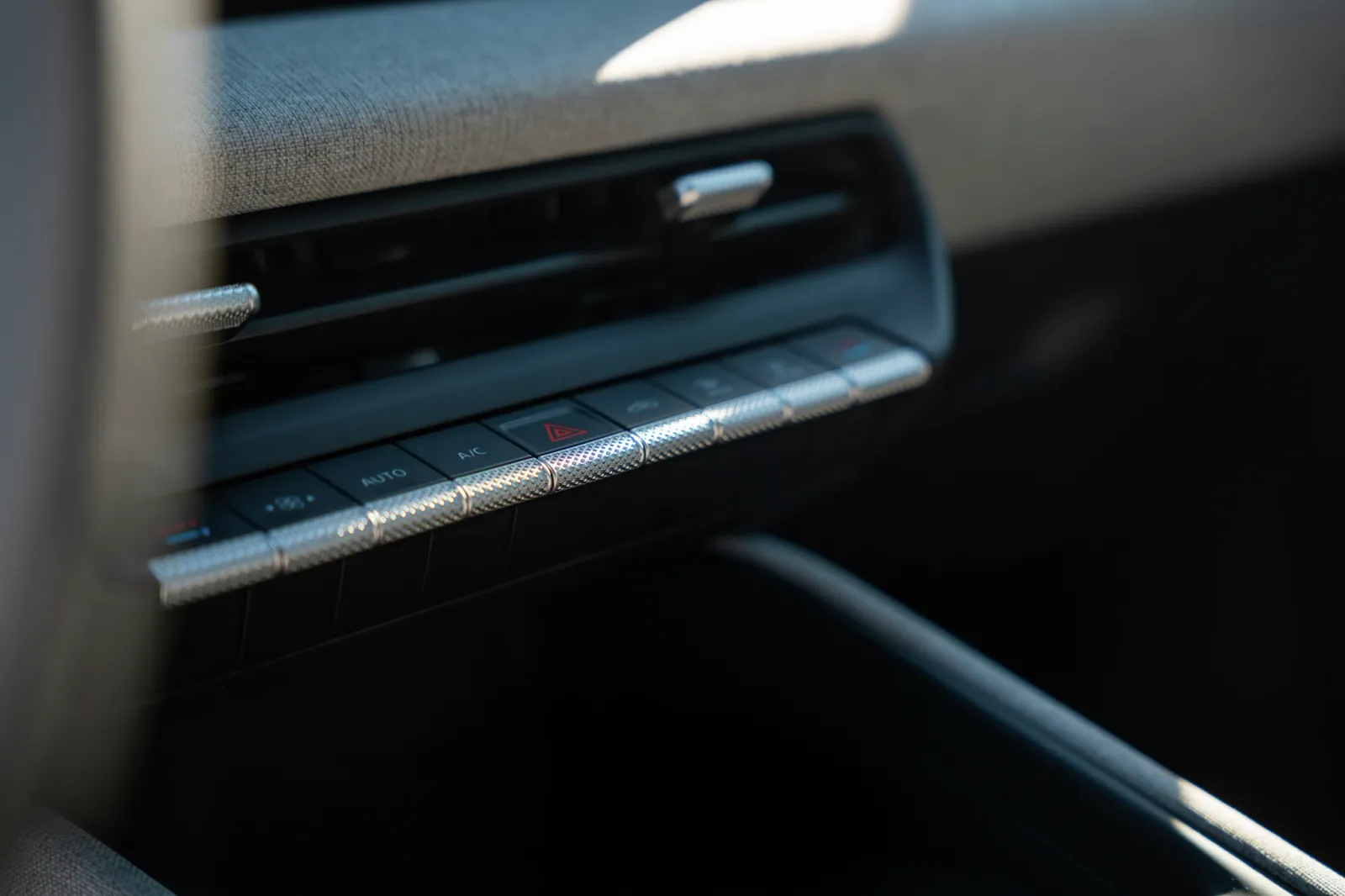
The interior is simple yet stylish, featuring a key ambient lighting setup that makes the cabin a comfortable place to be.
The instrument panel offers several display options, including a design inspired by Volkswagen’s cars from the 1970s and 1980s.
The infotainment system follows Volkswagen’s latest design language. The screen is intuitive and easy to use, while also incorporating subtle nods to the past.
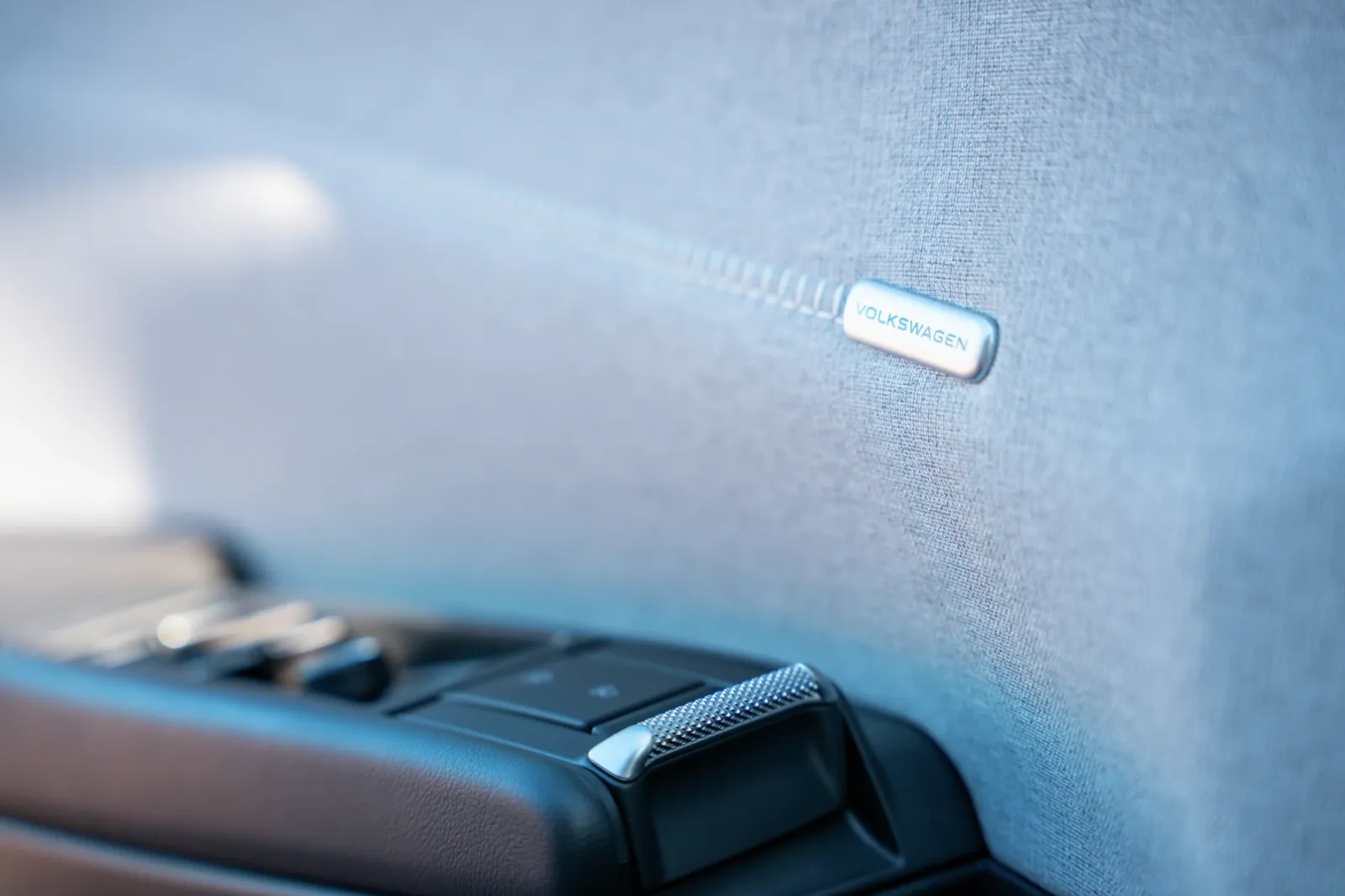
The best part is that you can design multiple menus yourself to minimize screen touches. VW has gone from being one of the most cluttered here to becoming an example to follow.
The center console has two phone holders, one of which offers wireless charging—if you’ve paid for it. Below that are two USB-C ports and additional storage space.
Rear Seat – Tight
It’s hardly a surprise that someone as tall as me at 1.89 meters doesn’t fit very well in the back seat of a four-meter car. But there are actually competitors out there that offer good rear seating as well, including the Dongfeng Box.
When the front seat is adjusted to my position, my knees rest right against the back of the seat. There’s still enough space under the front seat for my feet, and I have about three fingers’ worth of headroom. The seating position is relatively upright, but it works fine.
None of the rear passengers have handholds on the ceiling, which some might miss. There are no armrests or a personal climate control system in the back.
But the family with young children is taken care of. There are two Isofix anchors in the back and one in the front.
Trunk Space – Absolutely Huge
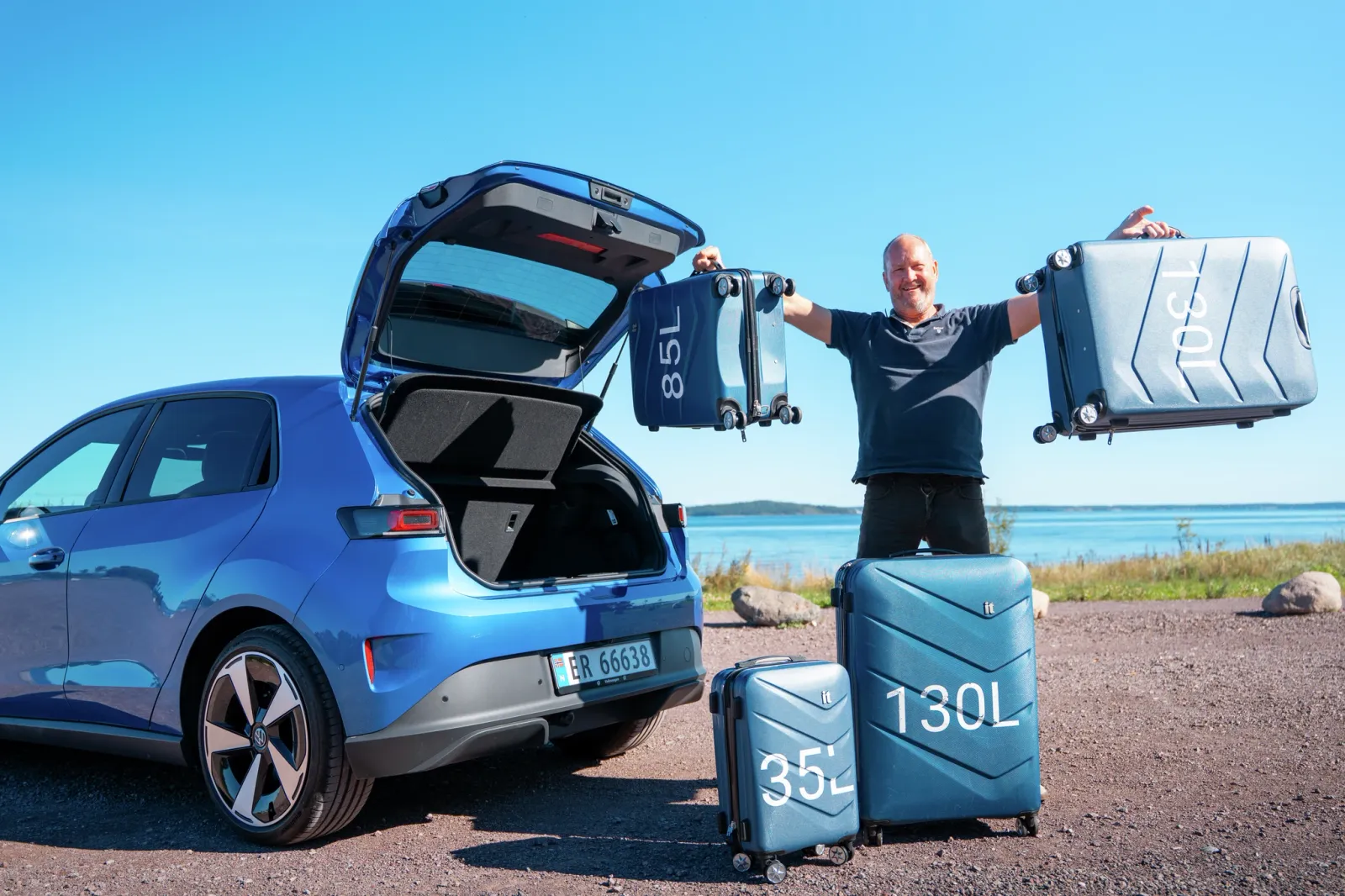
The trunk space is literally the biggest surprise.
At least that’s the case if you lower the floor to its lowest position. That way, it suddenly becomes twice as large.
The spacious compartment holds a full 441 liters, which is actually more than in a Tesla Model 3.
But the most impressive aspect is its design. It’s practically square all the way down to the asphalt. This makes the little Polo one of the cars that consumes the most space in our traditional trunk test.
The floor can be completely removed or set at two different heights. When the rear seats are lowered, the volume increases to 1240 liters.
The seat back ratio is 40/60, but the car lacks a partition.
And since VW has focused so much on extreme rear space, there’s no cargo area in the front. All the electronics, including the charging port, are located behind a panel on the right side of the screen.
The vehicle can be delivered with towing attachments, and that’s not all: if you choose the model with the largest battery, you get 1,200 kilograms of towing capacity. With the smallest battery, you can tow up to 500 kg. The payload capacity is 75 kg.
Overall, this is a very practical vehicle, unless you need to load it with four heavy people.
Driving Experience – Fun
This is the first vehicle I’ve driven on the new MEB +-platform, and the biggest difference from previous models is that this is a purely front-wheel-drive platform.
I don’t know if it will come with all-wheel drive later, but VW hasn’t had a tradition of offering all-wheel drive on such small vehicles.
I think Volkswagen has done a good job. During aggressive acceleration, there’s slight wheel spin and some liveliness in the vehicle, but since I haven’t tested it on a test track or smooth surface, the anti-spin system seems quicker than in the ID.3.
In terms of handling and dynamics, it feels a bit like driving an old-fashioned Polo, and that’s not a bad thing.
With its listed weight of 1501 kilograms, it’s also lightweight. The test car actually weighed 60 kilograms more, but that might be due to the test equipment. The weight is distributed somewhat higher on the front wheels, which is an advantage as winter approaches.
The test car has 211 horsepower and 290 Nm of torque. The listed 0-100 km/h time is 7.1 seconds, but we measured it at 6.5 and 6.65 seconds. The top speed is 160 km/h.
Comfort – surprisingly high noise level
The suspension setup works very well in my opinion.
The car is comfortable without becoming so soft that it loses precision. It never feels stiff or harsh.
But it produces relatively a lot of noise, especially on the highway compared to regular roads. We measured 66 dB at 80 km/h and a full 74.5 dB at 100 km/h.
Cruise control – easy to use
There are more advanced systems than this one. But cruise control is largely about interacting with the system and the driver.
Often, one feels like they’re sitting there fighting with a snake trying to slip out of their hands, while also dealing with constant warnings.

More like this?
Sign up for our newsletter
– get electric vehicle news straight to your inbox!
It doesn’t do this here. If you want it to, it follows speed limits, slows down before sharp curves, intersections, and roundabouts. Now it even stops at red lights.
On good roads, the car stays well within its lane. As road conditions worsen, it gradually starts drifting away from the lines so the driver clearly knows it’s time to take control.
The cruise control activates and deactivates seamlessly, giving a smooth and predictable driving experience. This allows for more relaxed driving.
Range and Consumption – Good Results
The test vehicle achieved a WLTP range of 451 kilometers, with an average fuel consumption of 1.34 kWt per mile.
In our fixed test route, we measured a fuel consumption of 1.25 kWt per mile. The test was conducted on dry asphalt with temperatures ranging from 11 to 17 degrees.
During our fixed highway test at a constant speed of 100 km/h, we recorded a fuel consumption of 1.48 kWt per mile.
The results are good for a vehicle of this size, meaning it performed better than the official figures would suggest. However, keep in mind: we do not account for charging losses, as is done with WLTP.
Charging – Approved Speed
The test vehicle has a battery with 52 kWt net and 56 kWt gross capacity. The maximum rated charging power is 105 kW.
Volkswagen offers both manual battery heating and heating via the navigation system. During testing, we drove up to the charging station with the battery at an optimal temperature.
We took 37 minutes to charge from 10% to 90%. That’s a long time. The 10% to 80% charge takes 22 minutes, which is 2% faster than what VW claims.
The maximum charging rate is achieved around 50% charge. At that point, we also got 15 kW more than what the manufacturer specifies. We saw over 100 kW in the 40% to 70% charge range.
Although it performs slightly better than the stated figures, the charging time isn’t anything to be overly excited about.
Price and Competitors
The entry-level Trend model with a 37 kW battery starts at 249,000 kroner and has an advertised range of 323 kilometers.
The model one tier higher, Life, costs from 280,000 kroner and comes with more features, but the same battery and range.
If you want a battery of 52 kWt, the price starts at 344,000 kroner.
The test car is a Style version. It features LED Matrix headlights, a panoramic sunroof, and driver assistance systems.
The price here starts at 377,100 kroner. Everything other than white costs an additional 8,000 kroner, and if you want wheels larger than 17 inches, it costs up to another 9,000 kroner.
Electric seats with massage function cost an additional 10,000 kroner. That brings the test car’s price to 420,000 kroner.
Among its main competitors are the Peugeot E-208, Opel Corsa Electric, and several new Chinese electric cars in the same price range. In its top versions, it also faces cars that offer all-wheel drive at similar prices.
Conclusion
There’s little to be annoyed about in the ID. Polo. It combines classic Volkswagen features with modern electric vehicle technology, and it appears to be practical, easy to drive, and well-thought out.
The front-wheel drive system seems promising, the trunk is impressively large, and the driving experience is far better than that of several previous cars on the market.
There are cars that charge faster and offer more space in the trunk, but I have no doubt that many Norwegians will want the new ID. Polo.
And I understand them well.
Also read
The post Never a smaller hit from Volkswagen? appeared first on Norsk elbilforening.