
2026 eMobility Excellence: The best charging services and apps
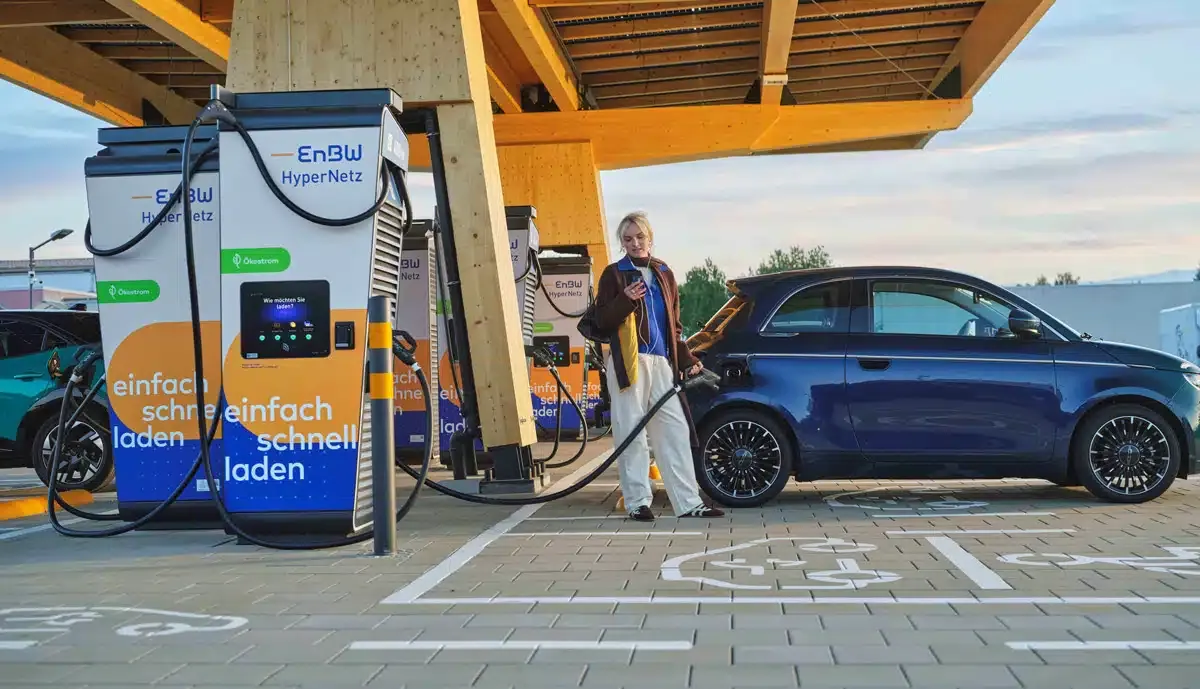
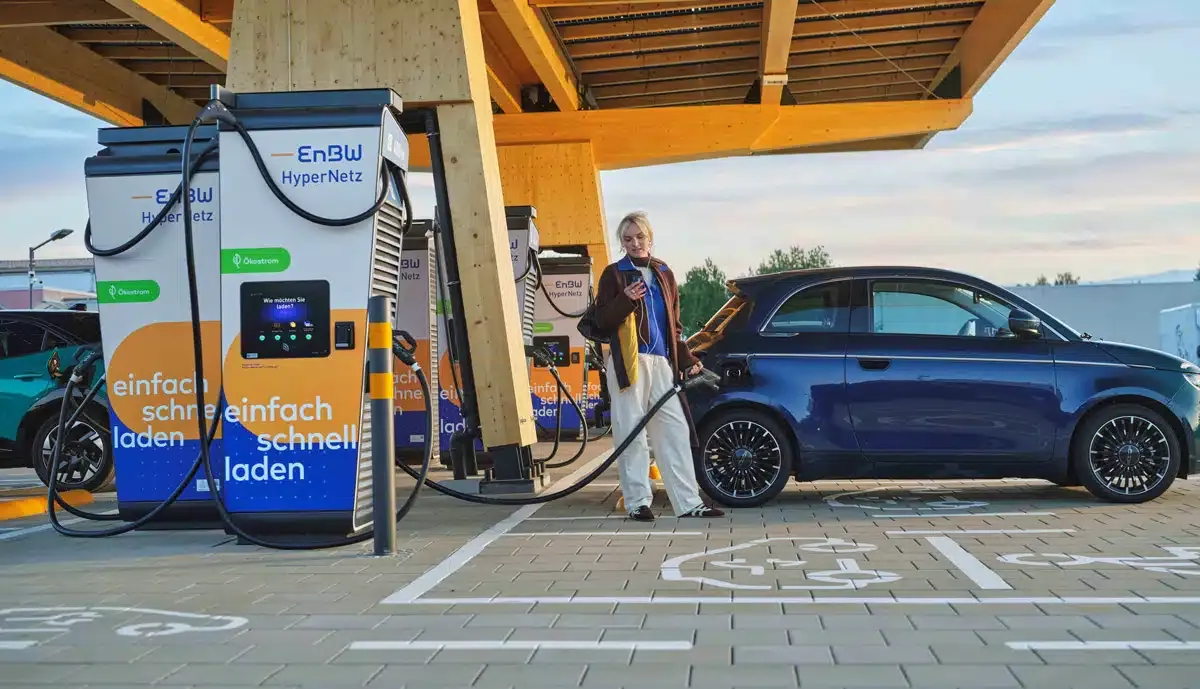
Image: EnBW
The 2026 eMobility Excellence Report examines 20 relevant charging services for using public charging infrastructure in Germany. These providers are categorized into independent MSPs (MSP = Mobility Service Provider), charging services from vehicle manufacturers, and CPO-MSPs (CPO = Charge Point Operator) with limited roaming. The overall evaluation is based on pricing and tariff models accounting for 35 percent, network coverage at 20 percent, and the functionality and user experience of charging apps at 22.5 percent each.
According to the report, the expansion of fast-charging infrastructure in Europe’s key markets has often progressed more rapidly than the growth of battery electric vehicles over the past few years. This development poses challenges for charging infrastructure operators in terms of utilization and profitability, while competition pressure increases simultaneously. In some charging services, prices have dropped by up to 10 percent within a year. At the same time, loyalty programs, user experience, and more flexible pricing models are gaining importance.
To select the participating charging apps and determine the weighting of the sub-benchmarks, a survey was conducted among 402 people, 84 percent of whom were pure electric vehicle drivers. On average, each person uses 3.09 charging apps, with 68 percent using 1 to 3 apps. Meanwhile, the importance of network coverage as a selection criterion is declining, while transparent pricing and tariff models along with requirements for charging apps are gaining significance.
Price transparency plays a central role here: 96 percent consider tariffs important, 74 percent want price information in station details, and 43 percent cite the lack of cost information as a problem. Incorrect availability information became the most frequently mentioned issue in 2026, accounting for 13 percentage points more than the previous year.
Winners in Tariffs, Features, and User Experience
In the free MSP category, EnBW mobility+ wins the overall ranking with 80 points thanks to its discounted tariff, followed by other EnBW tariffs and the Maingau-Autostrom customer price. Among manufacturer MSPs, Porsche Charging Service Plus takes first place with 87 points, followed by Porsche Charging Service Taycan and two BMW tariffs. In the CPO MSP category, Tesla leads with its tariff for Tesla drivers, while Ionity is identified as the most attractive option for drivers without a Tesla model with its Ionity Motion tariff.
The individual rankings also show which charging apps lead in their respective categories. In terms of functionality, among free MSPs, Maingau Autostrom tops the list with 67 points; among manufacturer MSPs, My BMW leads with 76 points; and among CPO MSPs, Tesla with a connected Tesla electric car scores 61 points. In the UX benchmark, Maingau Autostrom achieves 83 points among free MSPs, My Porsche gets 86 points among manufacturer MSPs, and Ionity scores 76 points among CPO MSPs. The app comparison also shows that it’s not just the number of features that matters, but how well they are implemented. Notable aspects include visible availability and performance data, complete price information, and adjustable charging stops in route planning.
In terms of network coverage, Charge Now leads among independent MSPs in the eMobility Excellence 2026 survey, while BMW and Mercedes-Benz share first place among manufacturer-backed MSPs. Tesla offers access to over 16,000 ultra-fast HPC charging stations in the markets analyzed, compared to around 12,000 each for Ionity and Fastned.
Also interesting
About the author
Thomas Langenbucher is an expert in electromobility with experience in the automotive and financial industries. Since 2011, he has been covering electric vehicles, sustainable technologies, and mobility solutions for ecomento.de. Learn more.
Reader interactions