
End-of-life electric vehicles. What happens?
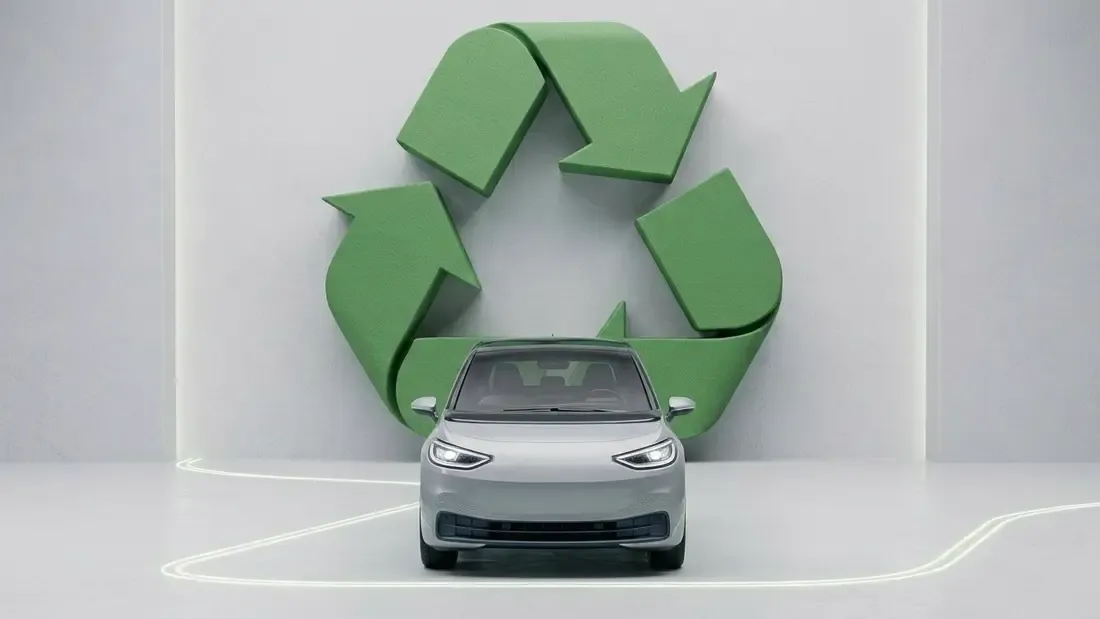
Electric mobility brings new challenges to vehicle dismantling, but also opportunities in battery reuse and recycling.
The automotive industry is undergoing a profound transformation with electric mobility, but the end of a vehicle’s life raises new questions: what happens when an electric car reaches the end of its useful life?
For Vítor Pereira, President of the National Association of Vehicle Dismantling Centers (ANCAV), the solution lies in preparing the industry for a circular economy.
In the latest episode of Auto Talks, a podcast by Razão Automóvel supported by Credibom and recorded at the Hybrid and Electric Vehicle Show (SAHE) in Porto, he emphasized that vehicle dismantling centers are now technological pillars.

“Electric vehicles are still around and are reaching the end of their useful life,” he began by noting. Currently, electric and hybrid vehicles account for only 0.4% of vehicles sent for dismantling in Portugal, most of which were involved in accidents. “They are clearly vehicles that have reached the end of their life due to accidents, not obsolescence,” he emphasized.
Dismantling is the first challenge
Bringing an electric vehicle to a dismantling center requires safety measures and handling procedures for high voltage. The process usually demands a relatively isolated area, along with careful assessment of the battery’s condition, according to the official.
These centers assess the battery’s health status using the State of Health (SOH) indicator to determine its fate. “Using this information, they decide whether to send it for direct reuse or to other processing scenarios.”
DO NOT MISS:
Study predicts a new giant industry for battery recycling
The three paths for a battery
There are three reuse scenarios. The first is direct reuse. If that’s not possible, “they are converted for stationary applications to support photovoltaic energy.”
In extreme cases, they are crushed. This process produces what is known as “black mass,” a fine dark powder composed of graphite and valuable metals. “These materials go to a refinery where rare elements are recovered again,” explained Vítor Pereira.
Iberian leadership in recycling?
Thanks to significant investment in this sector, Portugal could complete the recycling and reuse cycle for batteries within its own borders by 2028, reducing the need to send these materials to other European countries.
b.again, a company from the DST group based in Braga, has already processed 500 tons of batteries this year, with a capacity of 7,000 tons per year. The facility has signed a protocol with CALB, which plans to build a factory in Sines.
SEE ALSO:
How many football fields will the battery gigafactory in Sines cover
The parallel market poses a threat
The biggest challenge for the industry is the illegal dismantling market. “We still have vehicles being dismantled without any oversight, and these parts end up on the market unchecked.”
To combat fraud, ANCAV advocates reducing the VAT on used parts from the current 23% to the minimum rate. “These parts and components should be taxed at zero or at the minimum rate, which is 6% in Portugal,” it concluded.