
Battery-swapping electric vehicles have caught up with internal combustion engines, and the Zeekr 7GT is closing the gap with battery swapping thanks to ultra-fast charging [YouTube]
![Battery-swapping electric vehicles have caught up with internal combustion engines, and the Zeekr 7GT is closing the gap with battery swapping thanks to ultra-fast charging [YouTube]](https://api.ev-route.com/storage/news/2026-07/elektryki-z-wymian-baterii-dogoni-y-auta-spalinow-1.webp)
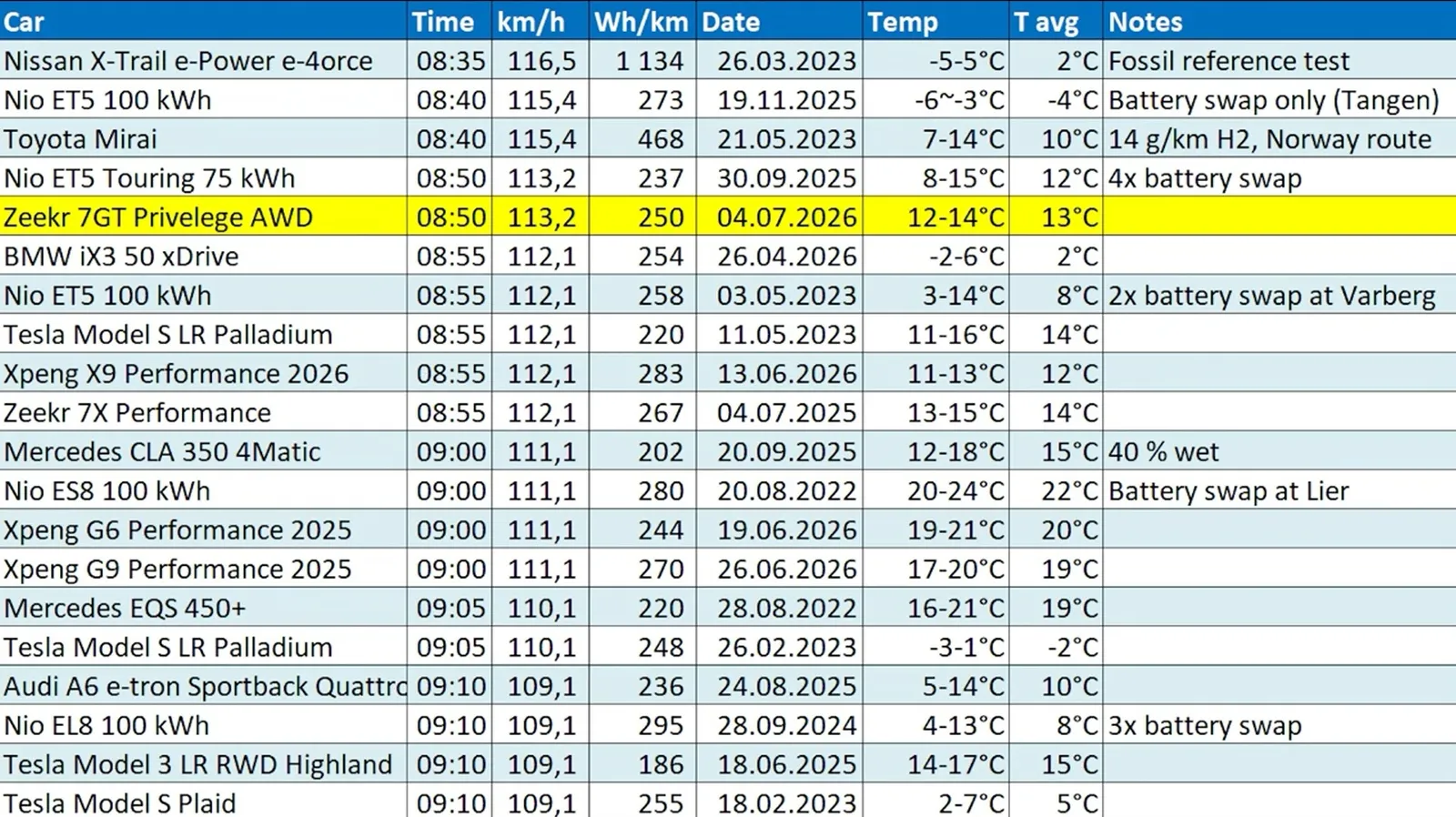
Bjorn Nyland drove the Zeekr 7GT on a 1,000-kilometer route. The electric vehicle, which does not support battery swapping but allows for ultra-fast charging, completed the distance in 8:50 hours. The Nio ET5 Touring with a removable 75 kWh battery took exactly the same amount of time. The hydrogen-powered Toyota Mirai and the Nio ET5 with a 100 kWh removable battery were 10 minutes faster (8:40 hours), while the reference gasoline vehicle, the Nissan X-Trail e-Power e-Force, finished in 8:35 hours.
TEST: Zeekr 7GT. An electric car that performs like a gasoline car on the road. Only 500-600 kW chargers are now needed.
Table of Contents
TEST: Zeekr 7GT. An electric car that performs like a gasoline car on the road. Only 500-600 kW chargers are now needed.
Zeekr 7GT, technical specifications
Charging at currents up to 600 A – the key to fast travel
A driving time of less than 9 hours falls within the range of the aforementioned gasoline vehicles. The 9-hour mark was reached by the new Xpeng G9 and G9 Performance, Mercedes CLA EQ Tech, and Nio ES8, with the latter achieving this by swapping batteries en route. Below 9 hours were the models listed in the introduction: Zeekr 7X Performance (8:55), Xpeng X9 Performance (8:55; minivan!), Tesla Model S LR Palladium (8:55), Nio ET5 100 kWh (8:55), and BMW iX3 50 xDrive (8:55). It should be noted that under the most challenging conditions, the gasoline-powered Nissan, BMW iX3 50 xDrive, and Nio ET5 100 kWh performed well, while the Zeekr 7GT tested had optimal conditions:
Zeekr 7GT, technical specifications
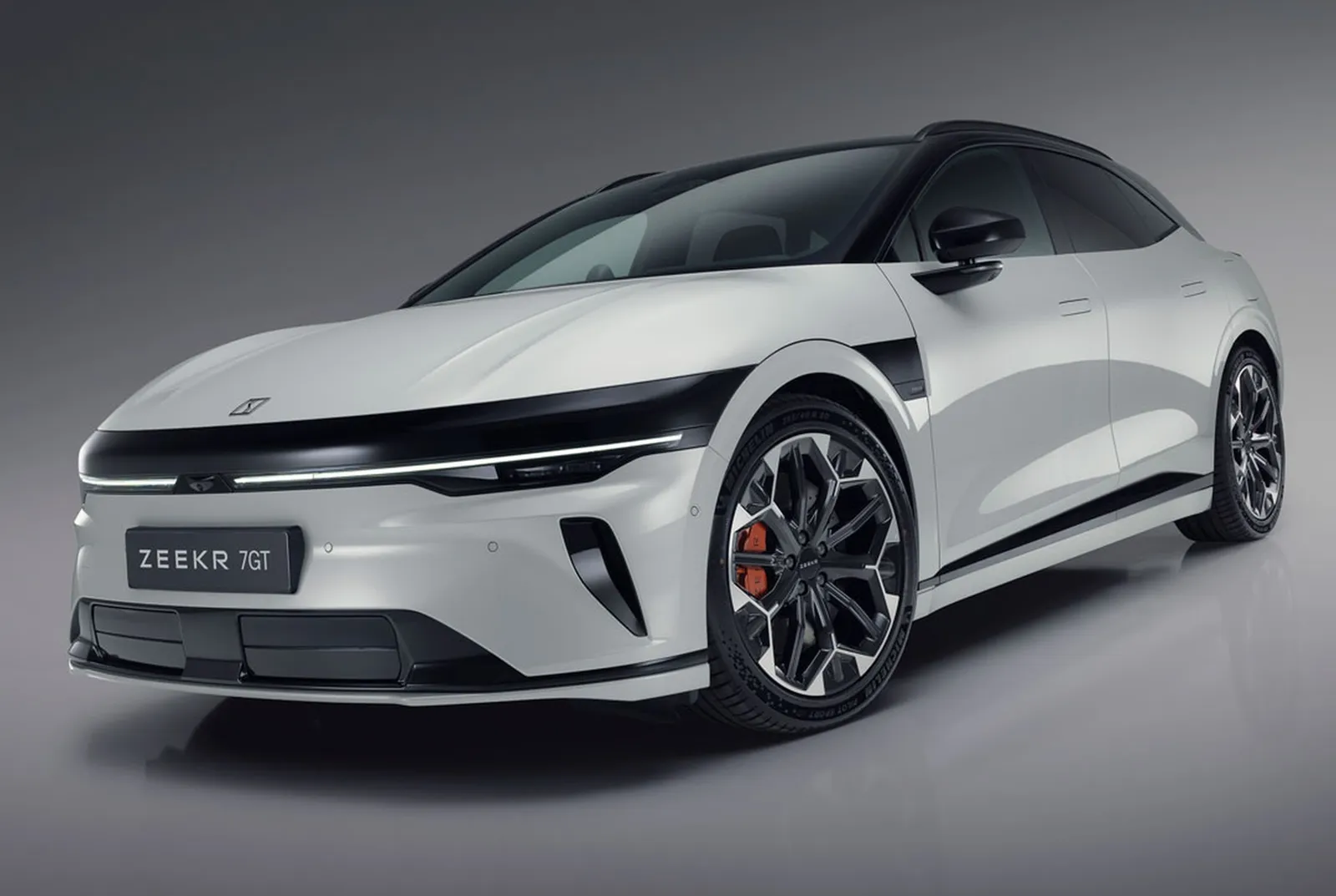
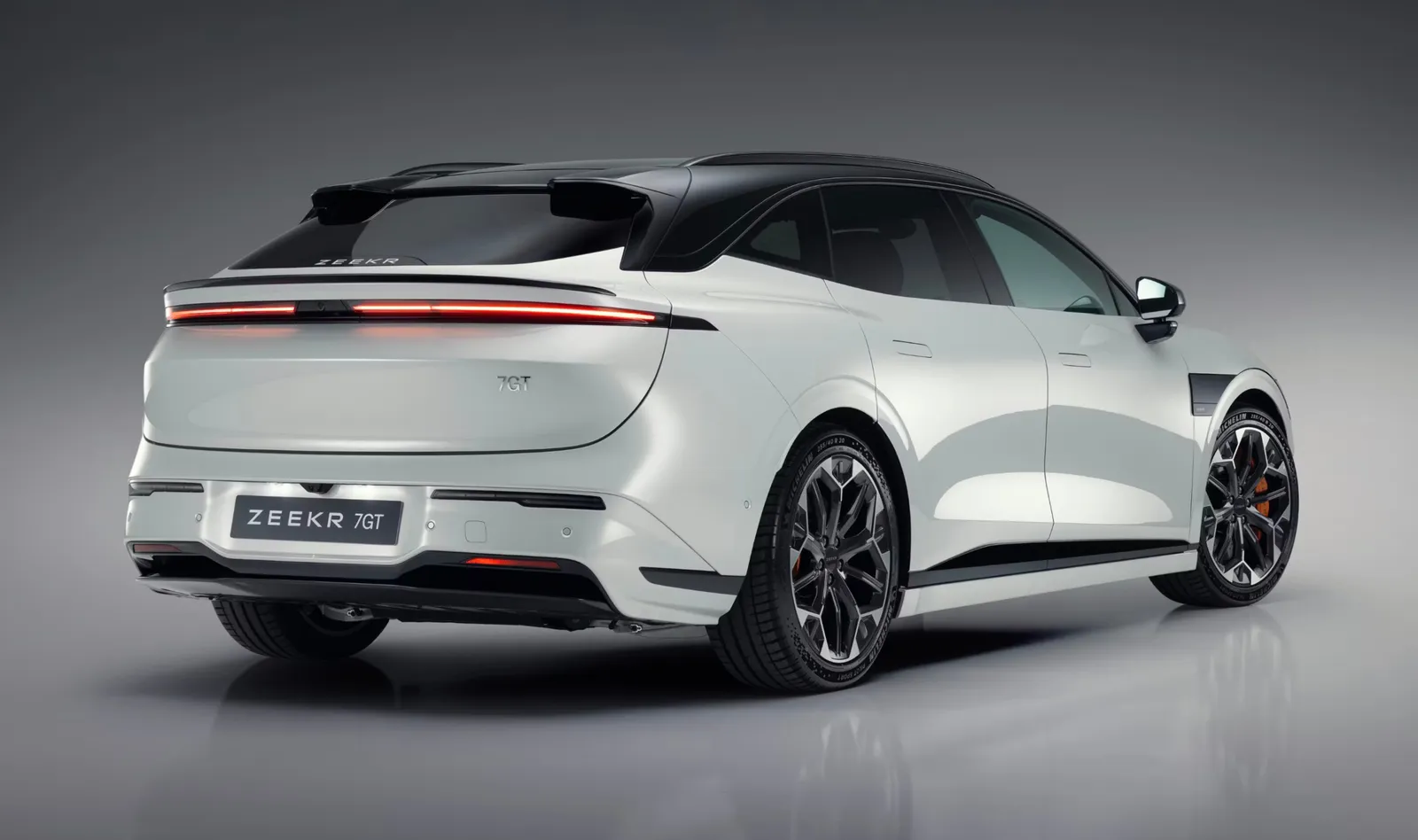
The Zeekr 7GT belongs to the D-segment shooting brake category (4,817 mm in length, 2.9 m wheelbase). The Privilege AWD version is equipped with a battery of 100 (~95) kWh capacity, promising a WLTP range of 558 miles. It is slightly cheaper than the Tesla Model Y Performance AWD, at least in those European markets where it is available.
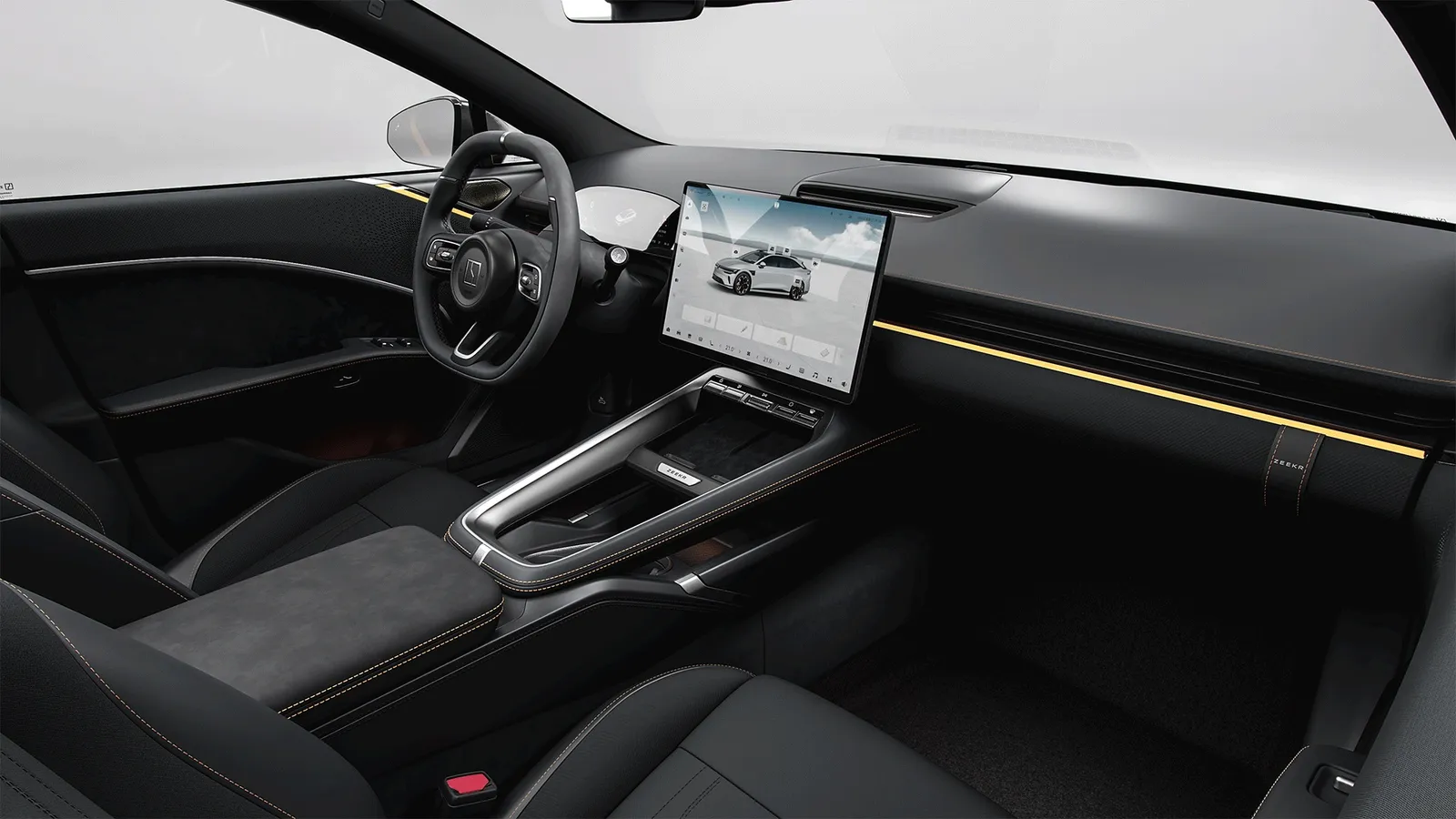
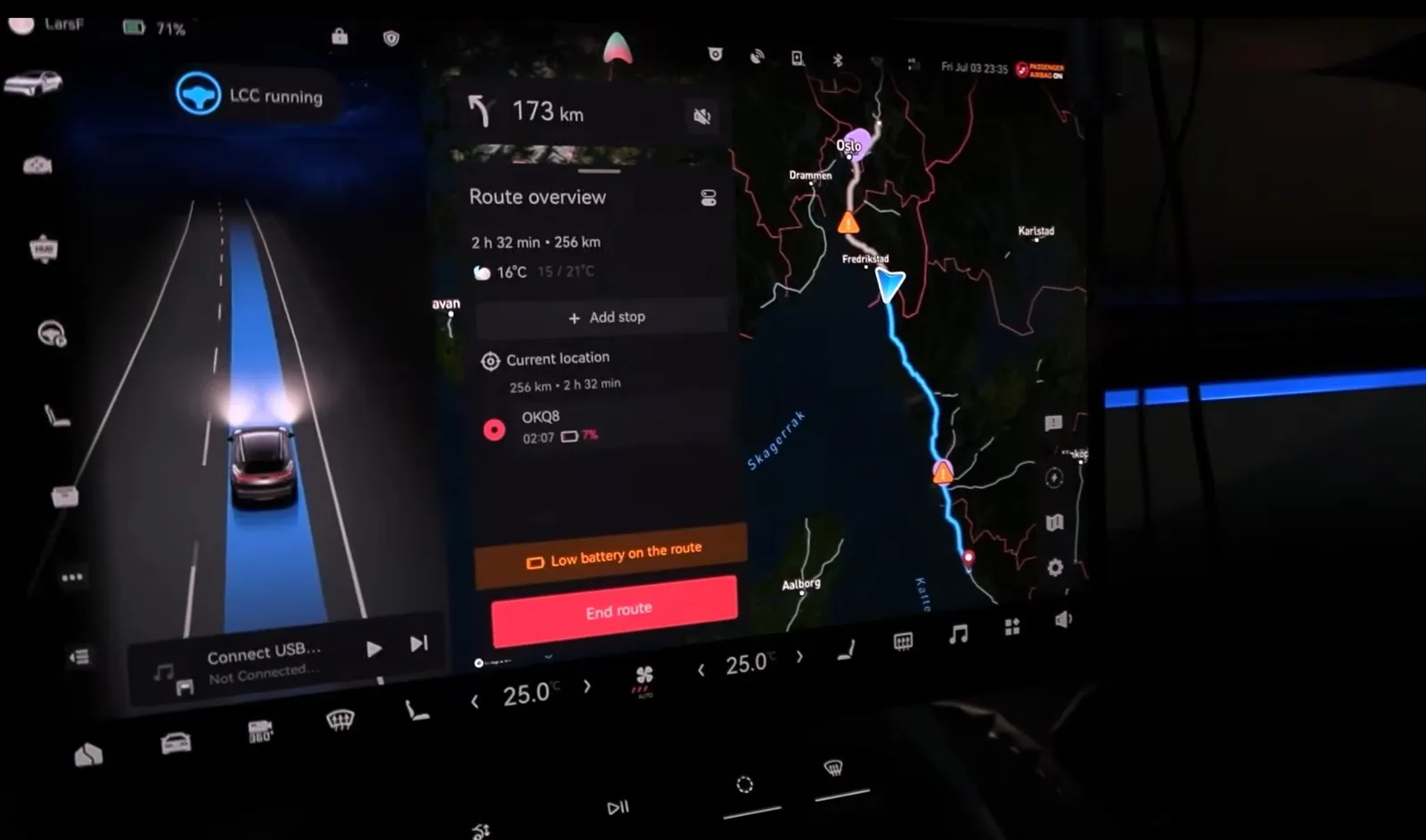
Shortly after starting, the Nyland began to suffer from what seems to be a problem with all Chinese cars: the desire to display as much information as possible on the screen, resulting in extremely small fonts that become unreadable with a dark background. We can also see another classic feature of this car type: for thermal comfort, the driver needs to set the temperature to 25 degrees Celsius. A brave soul who convinces his wife sitting next to him that she’s overreacting by saying it’s cold despite the temperature being set at 22 degrees will achieve an extra 800 meters of range

Charging at up to 600 A, the key to fast travel
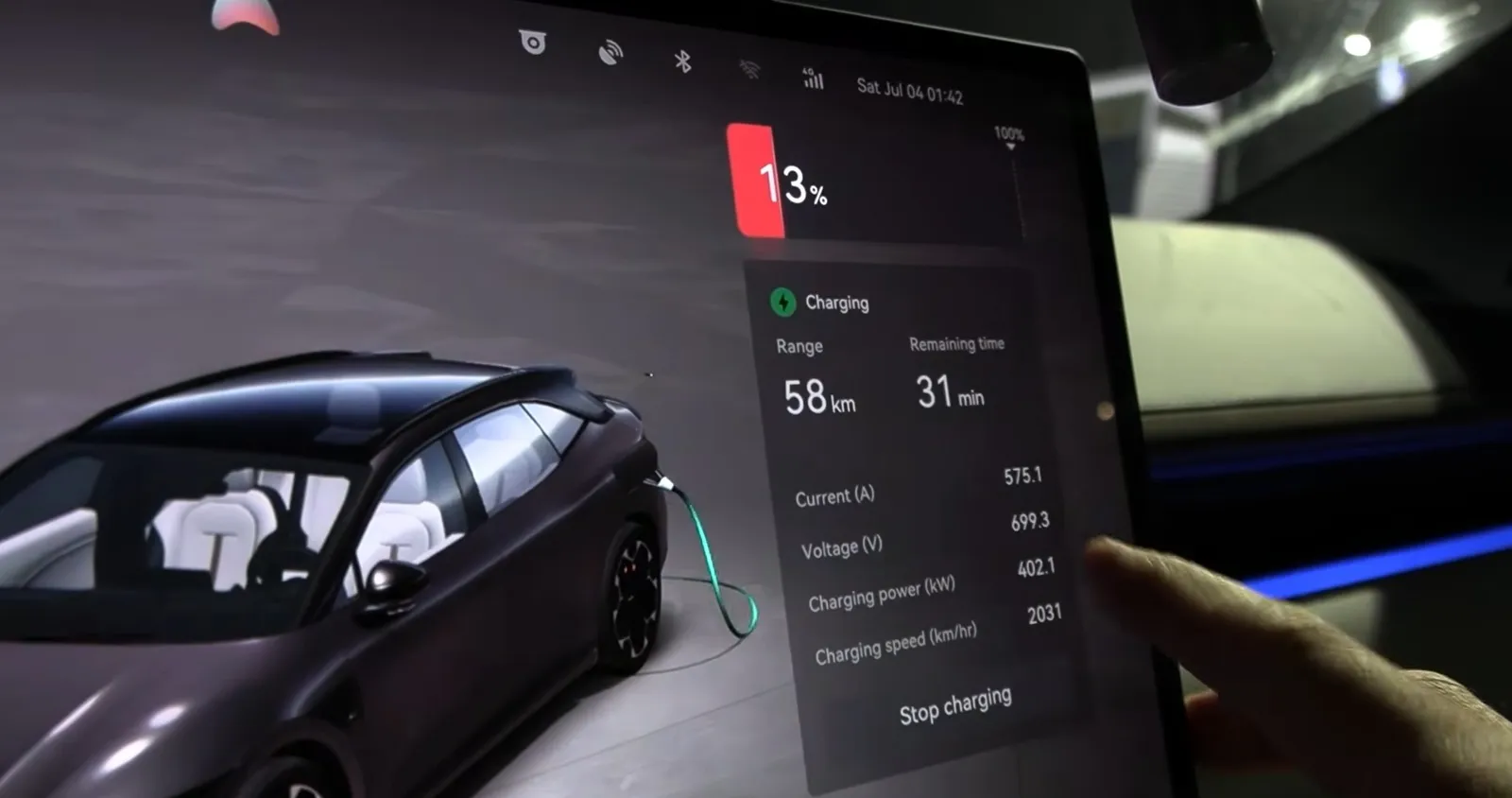
During the first charge, the car reached over 402 kW, drawing 575 amperes at a battery voltage of nearly 700 V. Nyland connected it to a truck charger capable of delivering 600 A, giving the Zeekr 7GT a significant advantage. It’s worth noting that with these specifications, the car estimated it would take 31 minutes to reach 100 percent charge. Many older models or cheaper vehicles take about 30 minutes to charge from 10 to 80 percent.
As the YouTuber recalls, the Zeekr 7GT would take slightly longer to charge to 80 percent compared to the Xpeng G6/G9, requiring 15-16 minutes instead of just under 12. Therefore, he decided to charge it to 65-70 percent. The car maintained an impressive 376 kW at 32 percent charge, and its average charging power was 345 kW at 62 percent (!). Just 10 minutes of parking was enough to draw over 57 kWh from the charger, which, with an estimated energy consumption of 25 kWh/100 km (20-inch wheels, all-wheel drive), provided a driving range of over 200 kilometers at speeds typical of Polish expressways:
The second time, the curve was slightly weaker; at 59 percent, the car reduced its charging power to 190 kW, so Nyland decided to disconnect earlier. This was especially true since he didn’t need such a large energy reserve—the CATL Qilin battery used in the car performed well charging from just a few percent. Not all Chinese cars can boast similar capabilities, and especially with LFP chemistry, it’s advisable to check the manufacturer’s recommended range.
During the third and final charging attempt—recall that the previous two took about 10 minutes—the Circle K charger would not start, so Nyland went to another one with Amphenol connectors. He mentioned that he tried to use Phoenix Contact connectors because they can handle 600 amps for nearly 25 minutes. Amphenol plugs are fast at first, but they heat up after a few minutes and slow down the charging process. As a result, the charger delivers less power than expected:
Really worth watching:
Editor’s note from Elektrowozu: It’s hard to say whether it’s due to Nyland’s mention or our conversation on Iksa about visiting an eye doctor. In any case, during this video we saw the advertisement for “AI glasses from Łódź” “developed by a German professor” “weighing 7 grams” with an “intelligent zoom” function and “frames made of flexible titanium” “that significantly reduce eye fatigue” while also guaranteeing “reduction in blindness.”
Article rating
Readers’ ratings
[Total: 7 votes Average: 5]
Don’t miss new content — CLICK and FOLLOW Elektrowoz.pl on Google News. You might also be interested in the following ads: