
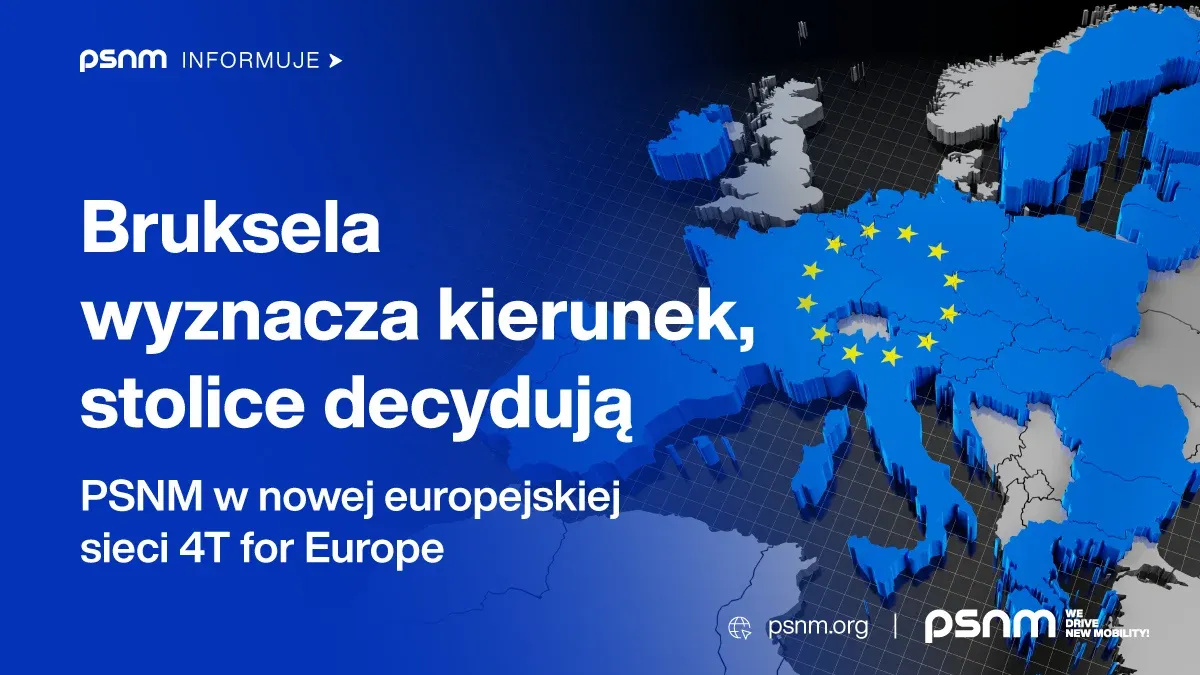
Electrifying transportation: PSNM is part of the new 4T for Europe network spanning 10 countries.
In the article:
4T for Europe was launched on November 5, 2026, and brings together think tanks and organizations from 10 European countries
PSNM is a founding member and the sole representative of Poland in the network
The goal is to support transportation in achieving climate neutrality by mid-century
Initially, the network will focus on road transport, with electrification as the main tool
Key point: The European Union sets the direction, but national governments determine the success of the transformation
4T for Europe – Electrifying Transportation
On November 5, 2026, the 4T for Europe network officially began operations, a coalition of independent non-profit organizations from ten European countries. The Polish Association for New Mobility (PSNM) is one of its founding members and the only organization from Poland. The network is intended to prepare recommendations for governments, with road transport electrification serving as its main focus as a key tool for decarbonization.
What is 4T for Europe and who are its members?
The full name of the coalition is Think Tanks for Transforming Transport for Europe (the variant “in Europe” appears in some materials). It consists of a network of independent, non-profit think tanks, namely analytical centers that prepare expert analyses and solution proposals for policymakers. The network includes organizations from the Czech Republic, Denmark, France, Spain, Germany, Norway, Poland, Slovakia, the United Kingdom, and Italy.
4T for Europe includes organizations such as Germany’s Agora Verkehrswende, France’s Institut Mobilités en Transition, Italy’s Ecco, Denmark’s Concito, Spain’s Alinnea, the UK’s New Automotive, Norway’s Norsk elbilforening, the Czech Republic’s Centrum pro dopravu a energetiku (CDE), and Slovakia’s Slovak Electric Vehicle Association (SEVA). The International Council on Clean Transportation (ICCT), an international research organization focused on transportation emissions and regulations, has also joined.
Poland is represented by PSNM. The association describes itself as the largest economic organization shaping the sustainable transportation market in Poland and the Central and Eastern Europe (CEE) region. PSNM has been part of the network since its inception.
The union sets the direction, decisions are made in the capitals
The starting point for 4T for Europe members is simple. The European Union has set the overall direction for change, but climate neutrality in transport will only be achievable when national governments adopt effective complementary policies. Climate neutrality refers to a state in which greenhouse gas emissions are reduced to a minimum, with any remaining emissions balanced by their absorption.
Many key decisions are made at the national and regional levels, even where responsibilities are shared with EU institutions. These include vehicle taxation, industrial policy, and the social aspects of the transition. As the network’s members emphasize, by the end of the decade, decision-makers at all levels will need to make crucial decisions in these areas based on solid data.
– Co‑creating 4T for Europe is a natural step for us. Electrifying transportation is not only a climate issue but primarily about lower mobility costs, energy security, and industrial competitiveness. The European Union has set the direction, but whether the transformation succeeds will largely depend on decisions made in individual countries — from vehicle taxation and industrial policy to solutions that ensure the benefits of electromobility are accessible to all social groups — said Aleksander Rajch, board member of PSNM.
How the 4T for Europe network will function
Member organizations are to exchange knowledge and contribute their national perspectives to the debate. The list of tasks is specific:
comparing national policies and seeking solutions that can be applied to other markets
conducting joint research and formulating joint recommendations
providing decision-makers with evidence on the effectiveness of specific tools
developing joint strategies and communication approaches
Each organization maintains full autonomy. The network focuses on implementing policies in European countries but is also meant to cooperate with partners outside the continent. Road transport is the priority at the outset because it accounts for the largest share of greenhouse gas emissions in this sector. However, members also plan to work toward a broader transformation toward sustainable transport.
Electrification of Transport and Poland’s Automotive Industry
According to members of the network, a well-executed transformation promotes social justice, economic prosperity, as well as Europe’s long-term strategic autonomy and resilience. Electrification can reduce mobility costs, enhance energy security, and support long-term development. There is one condition: a comprehensive and coherent set of policies that accelerates market development and supports industrial transformation.
From Poland’s perspective, this is particularly important. As PSNM recalls, last year car production in Poland hit its worst level in over 50 years, and this refers to a sector that accounts for around 8% of GDP. The response is the KOMPAS2035 strategy for transforming the automotive industry, which PSNM introduced in collaboration with the industry. The document aims to increase exports, protect jobs, and invest heavily in research and development (R&D) and innovation.
This is not the first time PSNM has spoken out on this issue. In October 2026, following the KNM 2026 conference, the association published 10 recommendations outlining how Poland can close the gap with Europe in terms of new mobility solutions.
Poland’s electric mobility market in numbers
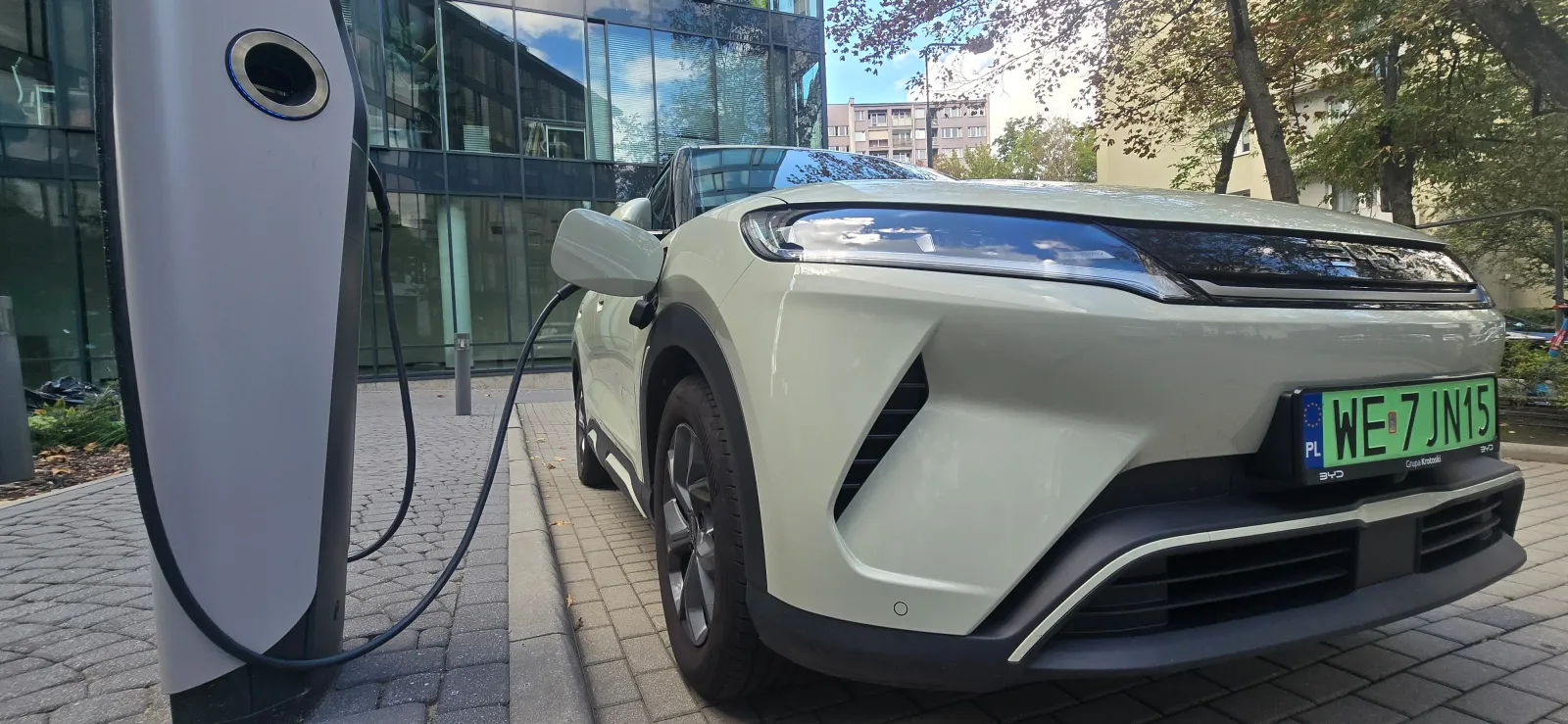
Poland is entering this market with clear acceleration, though it still lags behind the West. According to data cited by PZPM as of the end of July 2026, there were 158,365 fully electric vehicles registered in Poland.
Infrastructure is also expanding. According to PSNM, from January to September 2026, 514 new charging stations were installed along Poland’s sections of the TEN-T network, the trans-European network of main transport corridors. This represents more than a 90 percent increase compared to the first nine months of the previous year.
These figures clearly show why Poland needs to be part of such a network. European countries are at different stages of electrification and have varying experiences with subsidies, taxes, and regulations. Norway, represented by the Norsk elbilforening, has already gone through this process a long time ago, while Slovakia and the Czech Republic face similar challenges to Poland.
– The value of this network lies in its ability to compare which solutions actually work. European countries are at different stages of transport electrification and have varying experiences with support measures and regulations. We bring knowledge of the Polish market and the perspective of Central and Eastern Europe to the collaboration, and in return, we want Polish decisions to be based on proven solutions and reliable data. The coming years will be decisive – and it is then that decision-makers need solid evidence, not just declarations – added Aleksander Rajch.
What 4T for Europe network can change for Poland
4T for Europe does not have legislative power and will not draft regulations. Its strength lies in knowledge: comparisons, data, and recommendations that will be provided to governments and parliaments. For Poland, this means access to the experiences of countries that are further ahead in electromobility, as well as the opportunity to avoid their mistakes, such as in designing car taxes or subsidy programs.
Of course, it should be remembered that PSNM and its partners are organizations that openly support electromobility, so their recommendations will not be neutral. Nevertheless, the premise on which the network is based is difficult to challenge. The electrification of transport in Europe no longer depends solely on Brussels, but on what individual capitals, including Warsaw, decide to do. And there is little time left for these decisions, as key elections must take place before the end of the decade.
Cyprian Nowak