
Electrification of heavy transport in Poland – will zero-emission trucks determine the leader’s position in EU freight transportation?
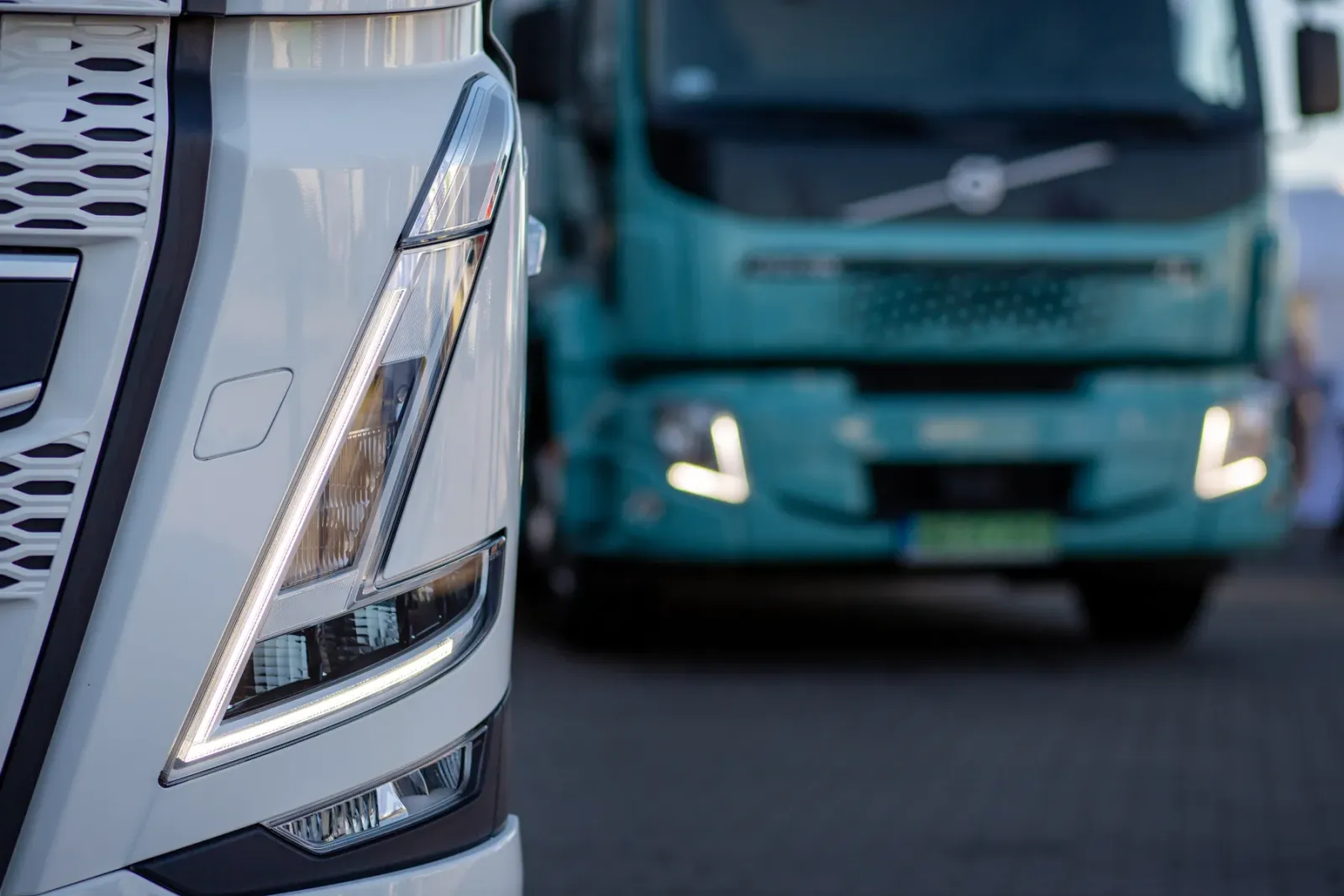
Poland is the largest market for road freight transport in the European Union. In 2025, vehicles registered along the Vistula River covered 381 billion ton-kilometers, accounting for 20.2% of the EU’s total freight transport volume – more than Germany (14.7%) and Spain (14.5%), which ranked second and third respectively (according to Eurostat data). Polish companies have built this success on operational efficiency, flexibility, and cost competitiveness. However, the competitive landscape is changing. More industrial, logistics, and trading companies are setting emission reduction targets across their entire supply chains, with transport being one of its key components. Therefore, the ability to offer customers low- or zero-emission transportation may soon carry equal weight to price, timeliness, or service quality. That is why electrifying heavy transport is not only a component of Poland’s climate policy but also an economic and survival issue.
The importance of the domestic transport sector in Europe.Sponsored Content –
Competitiveness – zero emissions as a new condition for contracts
Polish transport companies are competing in the European market. If infrastructure for electric heavy-duty vehicles (eHDV) develops more rapidly in Germany, the Netherlands, or France, Polish firms’ access to zero-emission services will depend not only on their investment decisions but also on the quality of infrastructure in their own country. The risk is real: some contracts may go to carriers capable of meeting customers’ emission requirements. It’s not about replacing entire fleets overnight, but about creating conditions for gradual entry into markets where it makes economic and operational sense already today. Therefore, transformation should not be seen as a burden on the industry, but as an investment in its competitiveness. Operators such as GreenWay are already gaining initial experience by operating dedicated eHDV sites in Poland for pilot projects and first regular services.
reasons.Support programs – three pillars for 6 billion zł
Bottlenecks – Energy Must Outpace the Market
Fleets, stations, and networks must be developed simultaneously but at different speeds. A truck can be ordered quickly, a station can be built in a few months, whereas powering a large hub with several to dozens of megawatts often requires a multi-year investment process.
Therefore, energy supply and site preparation must begin as early as possible. Synchronizing the schedules of station operators (CPOs) and OSDs remains crucial—without it, a station might end up without power or the network could lag behind the hub by years. This is an organizational challenge, not a technical one; the industry is working on a model for early exchange of information about locations, capacity, and schedules through collaboration between the Polish Association for New Mobility and PTPiREE. Another limitation is the availability of large plots along main routes, and the third is capital: operators who still fund unprofitable passenger infrastructure must embark on another capital-intensive investment cycle.
TCO – why subsidies alone are not enough
Launching a purchasing program is a positive step, but current interest shows that the subsidy alone does not drive fleet transformation. Carriers make decisions based on total cost of ownership (TCO), and electric trucks are still significantly more expensive than diesel ones; the subsidy reduces the gap but does not eliminate it.
In addition are the costs of financing and energy, the impact of range and charging time on productivity, as well as the uncertain residual value — the secondary market for eHDVs is still in its infancy. Poland’s transportation sector operates on a leasing model, while subsidies are often limited to a upfront fee, and the disbursement process requires bridging finance. The market therefore needs a package: efficient leasing, mechanisms to mitigate residual value risks (such as a manufacturer-backed buy-back), accessible infrastructure, faster charging connections, and competitive energy costs. Simply subsidizing the purchase won’t solve this issue.
Hubs, tariffs, and capital — what will determine the pace
A truck hub is not a larger passenger station but rather part of the logistics and energy infrastructure: a site layout that allows trucks to pass through without reversing, facilities for drivers, a combination of CCS and megawatt-level MCS charging options, as well as reserved spaces with physical access control. In the first phase, it makes sense to allow passenger cars and vans into some hubs—this improves investment utilization and risk profile. However, distribution tariffs may prove to be the most significant factor.
The hub reserves a very large amount of capacity from the start, using only a small portion of it in the initial years; the high fixed cost of power burdens the project’s economics precisely when it is creating a market. A transitional tariff structure, more closely tied to actual network utilization, could improve profitability without public funding for CAPEX — and it also serves the interests of OSDs, for whom a mature eHDV hub represents a large, stable energy consumer. Capital is more cautious these days: investors demand positive EBITDA and cash flow, expect a secure location, synchronized connection, and opportunities for phased growth. Therefore, the task for the coming years is not to replace private capital with public funding, but to create conditions in which investing in eHDV is economically rational.