
The electric Cayenne is better than the gasoline version. Porsche admits this itself.
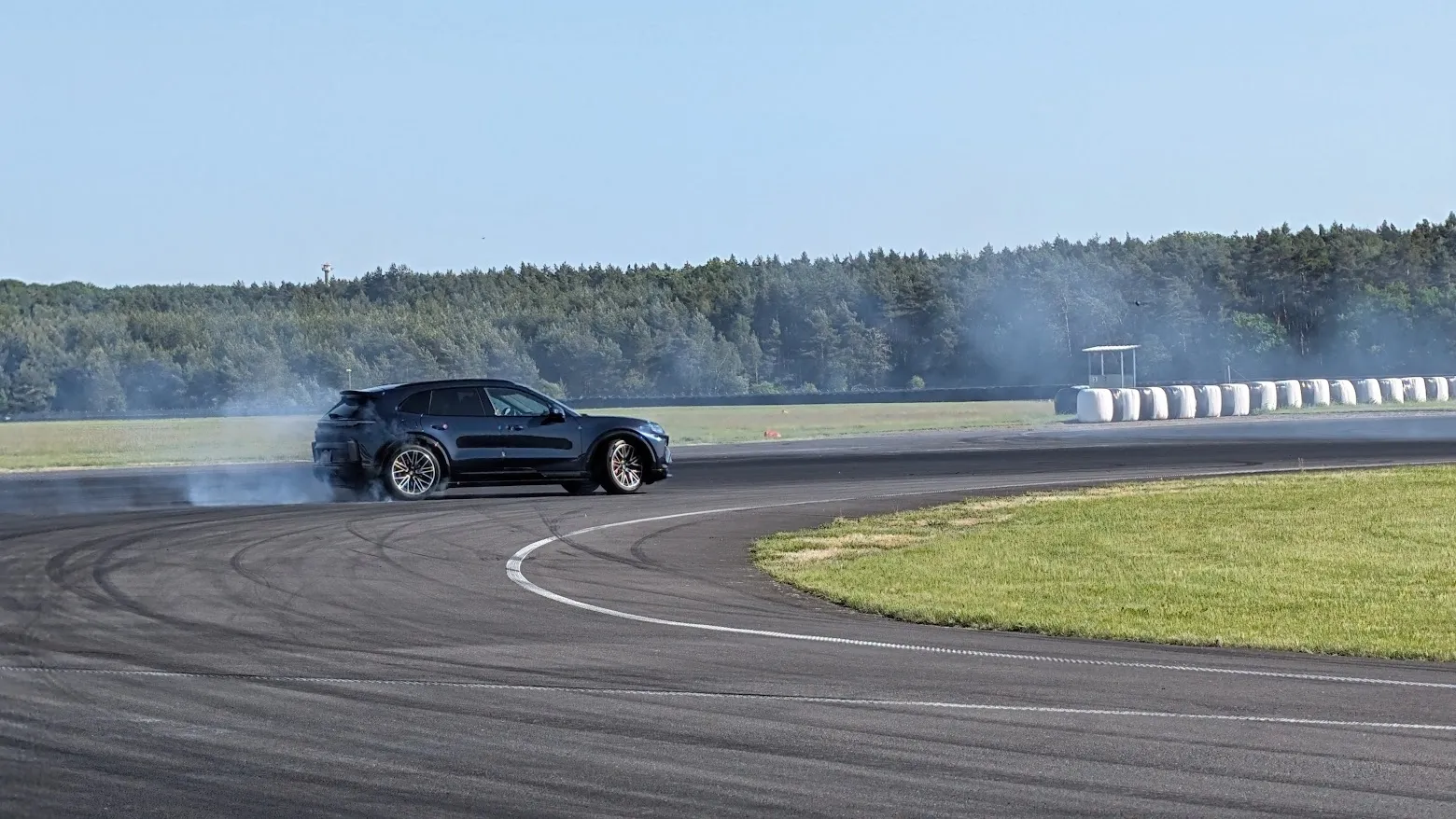
The new Cayenne Electric is more powerful, faster, more spacious, and cheaper in many versions than its gasoline counterparts. While driving on the Silesia Ring, we tested whether the advantages shown in the tables translate to real-world performance.
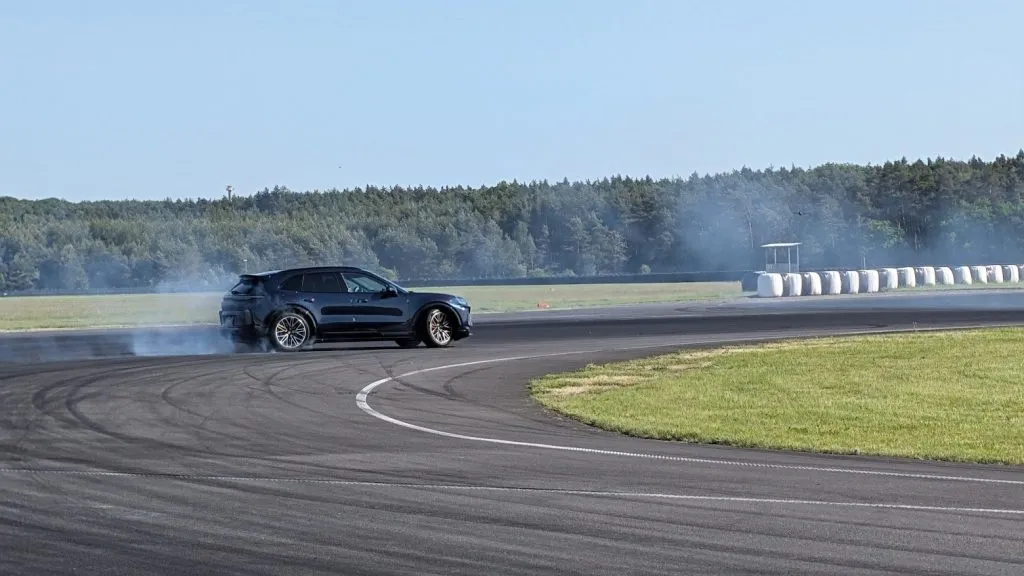
This is the most powerful Porsche in history (the powertrain can deliver a whopping 1156 HP, or rather 0.85 MW, since it’s an electric vehicle after all). It’s also the heaviest Porsche ever made—weighing nearly 2.6 tons (although the most powerful gasoline-powered version is only 100 kg lighter).
The new electric Cayenne is also the fastest SUV in the brand’s history, reaching 100 km/h in just 2.5 seconds. The fastest hybrid Cayenne takes 3.6 seconds, while the fastest purely gasoline-powered model requires 4.4 seconds.
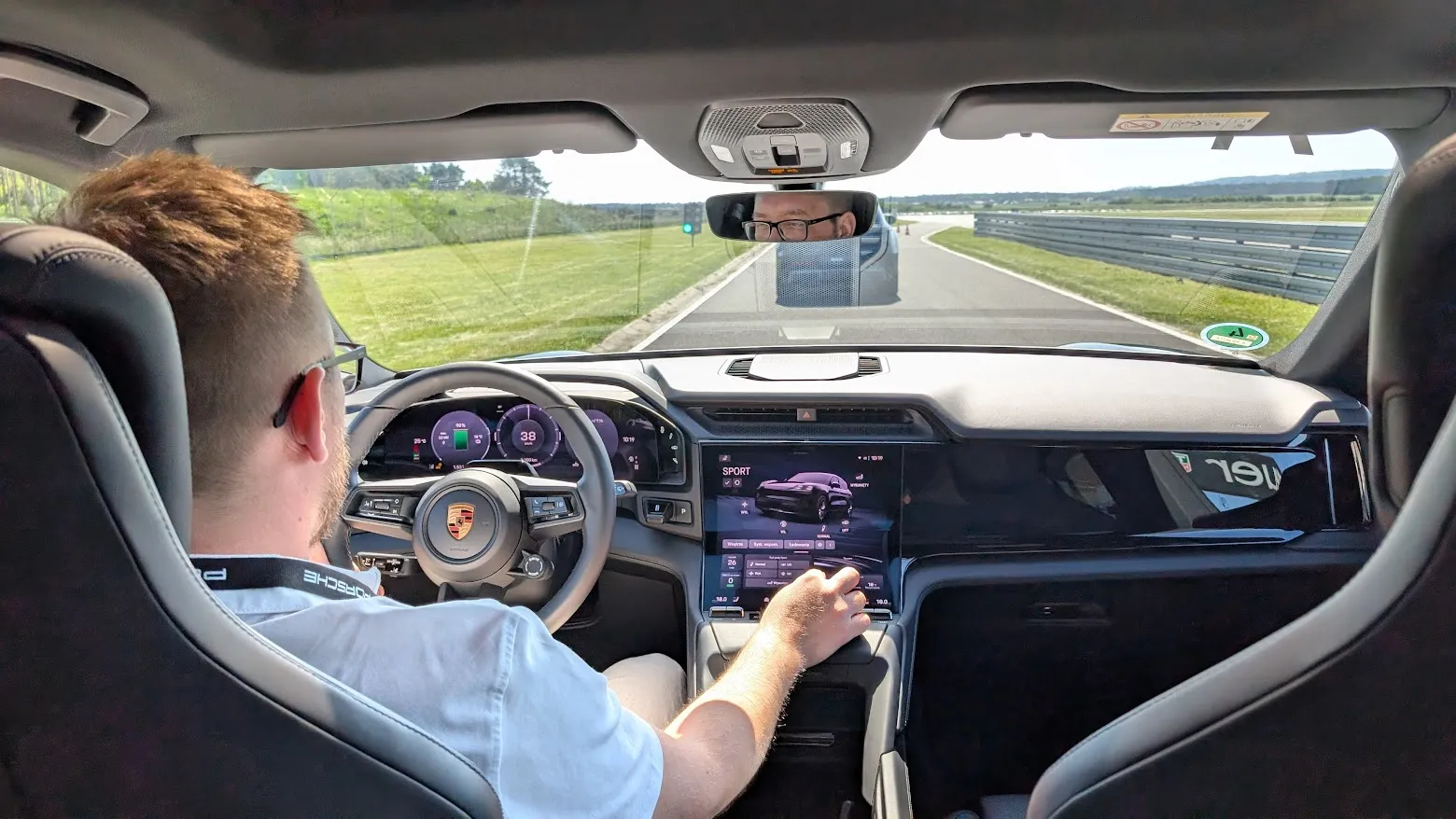
The electric Turbo Cayenne also far outperforms its hybrid counterpart in terms of cargo space (the electric version offers 747 liters of trunk space at the back plus an additional 90 liters under the hood, whereas the most powerful hybrid can only hold 434 liters).
At the same time, this powerful Cayenne Turbo Electric is exactly 333,000 zł cheaper than the most powerful gasoline version (the Cayenne Turbo E-Hybrid Coupé with GT package). The pricing for all Cayennes also includes an electric version – the base model Cayenne Electric costs 446,000 zł. The cheapest gasoline-powered Porsche Cayenne starts at 479,000 zł and is inferior to the electric version in virtually every technical aspect (power, acceleration, trunk capacity).
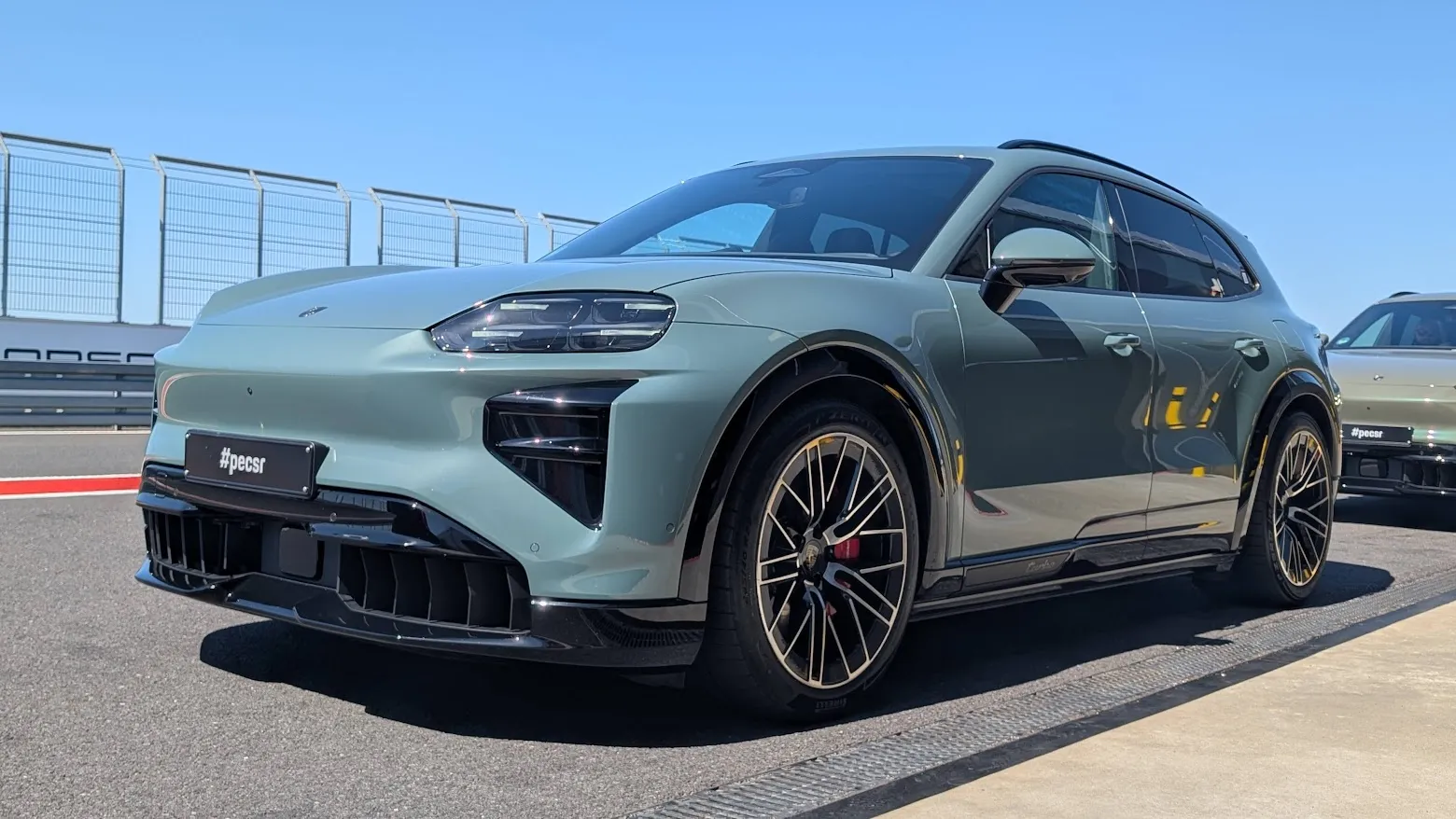
Everywhere? What about range? In the city, the electric car’s range will be incomparably greater than that of a 3-liter V6 engine. A Cayenne with a full battery can travel over 800 km, while one with a full tank only covers 500 km. It is only on long distances that the advantage shifts in favor of the gasoline version. However, under the WLTP mixed cycle test, the difference isn’t yet significant (644 km for the Cayenne Turbo Electric vs. 700 km for the gasoline-powered Cayenne). Only on highways does gasoline clearly outperform electricity, and even then only when there is no traffic, because during dynamic acceleration and braking, the electric car can match the internal combustion engine thanks to regenerative braking (recovering energy by using the engine to brake instead of relying on brake pads).
Okay, but refueling takes less time, right? Sure, that’s true for many cars, but Porsche has done a lot to reduce even those few advantages of the gasoline version. On the road, we can charge any electric Cayenne from 10% to 80% in just 16 minutes. That said, in everyday use, we can basically forget about charging the battery altogether. The Cayenne is the first series-produced model in Europe with wireless charging. We just need to park the car in the garage above the charger, and that’s it.
The new electric Porsche has a huge battery with new cells from Poland; it can be charged from 10% to 80% in 16 minutes on the road, and at home we can charge it… wirelessly. It’s the world’s first series-produced car with wireless charging available to all customers. See how it works… pic.twitter.com/KYkXogcuSK
— Bartłomiej Derski (@bderski) October 9, 2025
See also: You can order an electric Porsche Cayenne with a wireless charger
What’s left? V6 or V8 sounds? Indeed, the electric version can at most reproduce them. The list of real advantages over the gasoline Cayenne has thus shrunk to the sounds it makes... Well, some off-road features in the gasoline versions will also be slightly better—such as the approach angle or ground clearance. Interestingly, the wading depth (50 cm) is the same in both versions.

We’ll talk in a moment about why Zuffenhausen decided to make the electric versions stronger, larger, and essentially more comfortable than their gasoline counterparts, while also being cheaper, but first let’s take a look at the initial road and track tests with this car, which we had the chance to drive on the Silesia Ring in May.
Cayenne Turbo Electric on the Track
By setting successive records at Nürburgring, Porsche has accustomed us to the idea that its engineers in Weissach didn’t create their electric models just to have something electric in their lineup, but rather to develop this powertrain so it can compete with and surpass older combustion engine technology.
This is clearly visible on the track. With many electric cars, full power is available mainly during the first few minutes of driving. Afterwards, limitations arise from the temperature of the battery, inverters, motors, or braking system. In the electric Cayenne, after multiple laps around the Silesia Ring, there wasn’t even the slightest sign of such issues.
The 108 kWh (net) battery maintained its temperature within the optimal operating range, preventing any performance limitations, and it remained ready to accept very high charging rates even after the driving sessions. Energy and temperature management seems to be one of the greatest achievements of the engineers at Weissach. In practice, the driver doesn’t have to worry whether the next lap will be as fast as the first.
The electric Porsche Cayenne on the Silesia Ring did an amazing job today. This massive SUV accelerates to 200 km/h in 7.4 seconds and can be pushed hard all day on the track, delivering times typical of conventional gasoline sports cars. The 1156 HP it delivers to the seats is just one aspect... pic.twitter.com/ga5Jo1rBJN
— Bartłomiej Derski (@bderski) May 26, 2026
The advanced braking system also helps maintain its performance. The Cayenne Electric uses some of the largest brakes currently installed in production cars. Importantly, during most braking scenarios, regenerative braking handles a significant portion of the work. The maximum energy recovery power reaches as high as 600 kW.
On the track, just as impressive as the powertrain is Porsche Active Ride suspension. It is this system that creates the sensation that a car weighing over 2.6 tons behaves much lighter than its technical specifications would suggest. Each wheel can be controlled independently, and the suspension actively counters body roll, understeer during braking, and oversteer during sudden acceleration. The effect was most evident during slalom, where the Cayenne Electric almost “clung” to the asphalt, allowing for very precise maneuvering between the gates.
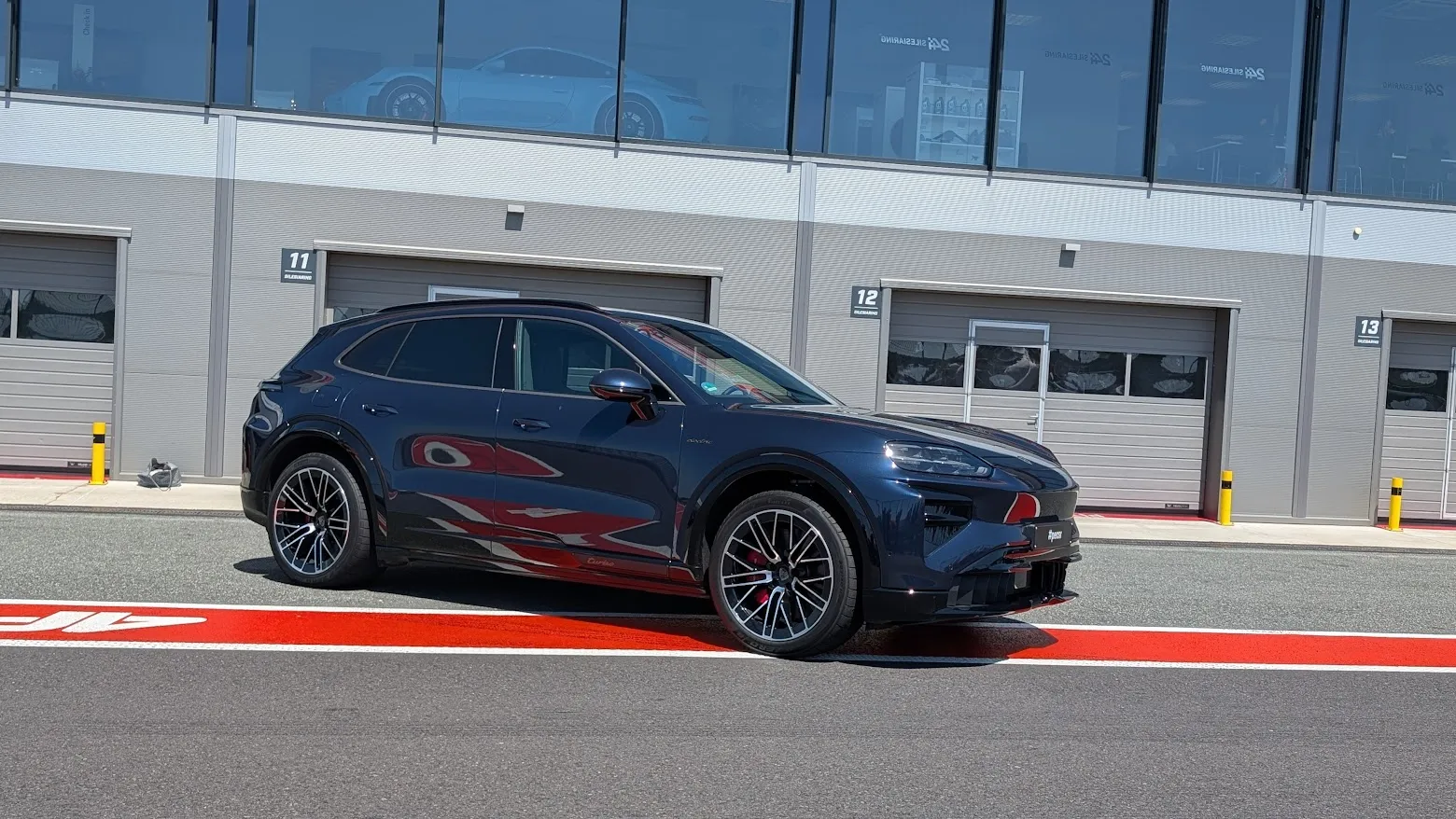
The agile rear axle also helps maintain stability by causing the rear wheels to turn in the opposite direction of the front wheels at lower speeds, improving maneuverability, and in the same direction as them at higher speeds, enhancing stability during rapid direction changes. Together, they create a system that effectively compensates for the mass of Porsche’s largest and heaviest production model in history.
How will the electric Porsche fare in the market?
The answer to this question is far from obvious. Porsche has already experienced both successes and disappointments related to electrification. The Taycan proved that the brand can build one of the most technologically advanced electric cars on the market, but its sales were lower than expected. The new Macan Electric is performing much better, quickly becoming one of the most important models in the company’s lineup.
Porsche no longer hides the fact that market transformation is progressing more slowly than anticipated just a few years ago. The manufacturer has scaled back its earlier plans for full electrification, increased investment in internal combustion and hybrid engines, and is even considering introducing a new generation of Macan with an internal combustion engine as well. This is due to both weaker demand for electric vehicles than expected and the preferences of Porsche’s customers, who often buy cars based on emotion rather than calculations and have not yet been convinced by electric options.
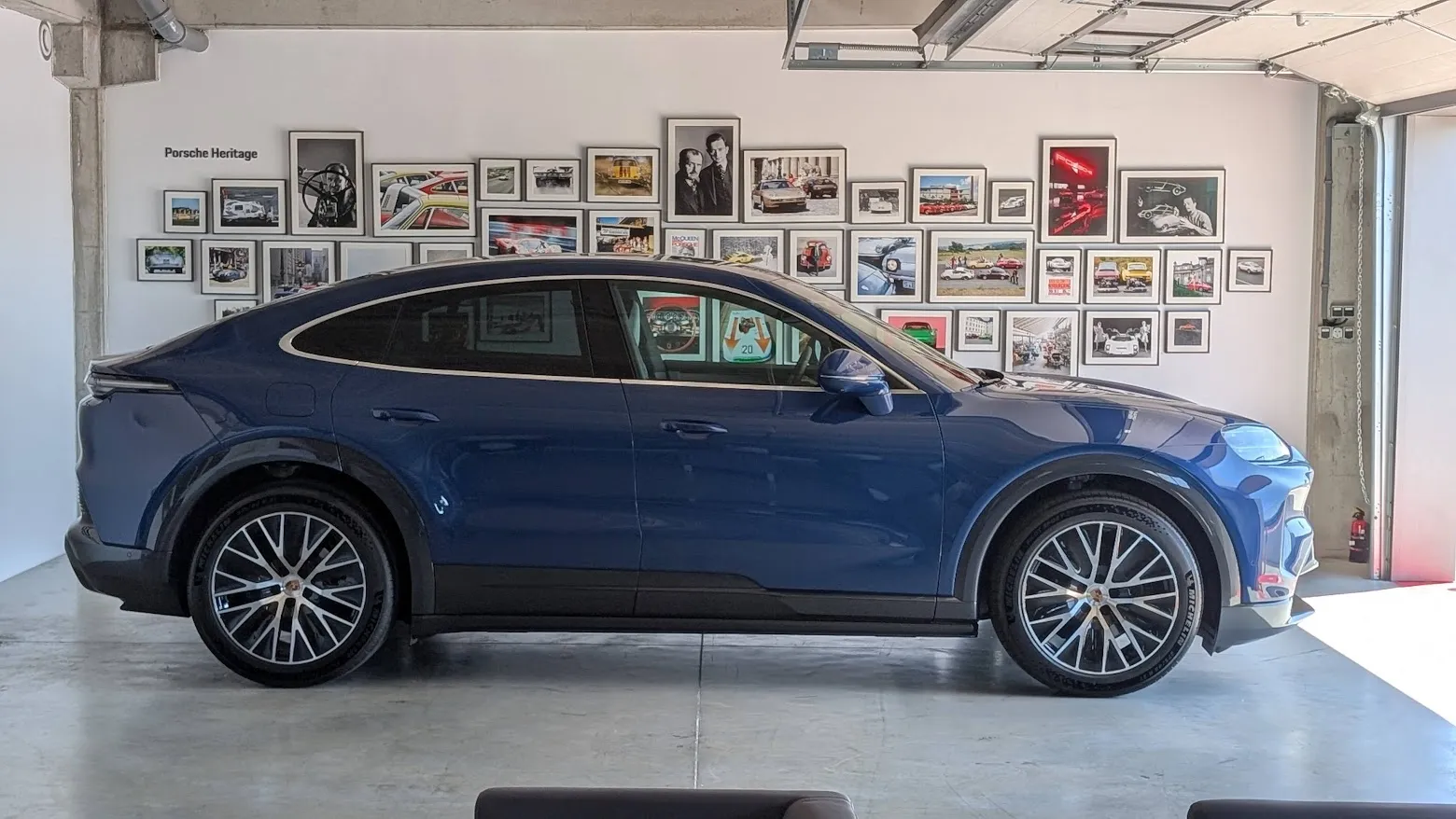
How will the Cayenne fare? It is SUVs that account for a significant portion of Porsche’s sales today, and the electric version requires almost no compromises from customers. It is faster than its gasoline-powered counterparts, offers a larger trunk, very fast charging, and is cheaper than comparable gasoline and hybrid versions. If any model is going to convince traditional Porsche customers to switch to electric power, could it be the Cayenne?
Just a few years ago, many experts predicted that electric cars would become increasingly similar to one another. However, Porsche shows the opposite. Success is no longer determined solely by battery capacity or engine power, but rather by how energy, temperature, suspension, and software are managed. After spending a day on the Silesia Ring, it’s hard not to conclude that the future of electrified mobility will not lie in standardizing cars, but rather in increasing their differentiation through technology. And the Cayenne Electric is one of the most convincing proofs of this theory. The new Cayenne leaves almost all its competitors far behind.