
An electric Corvette will still be produced. Chevrolet will wait for customers willing to give up V8 engines.
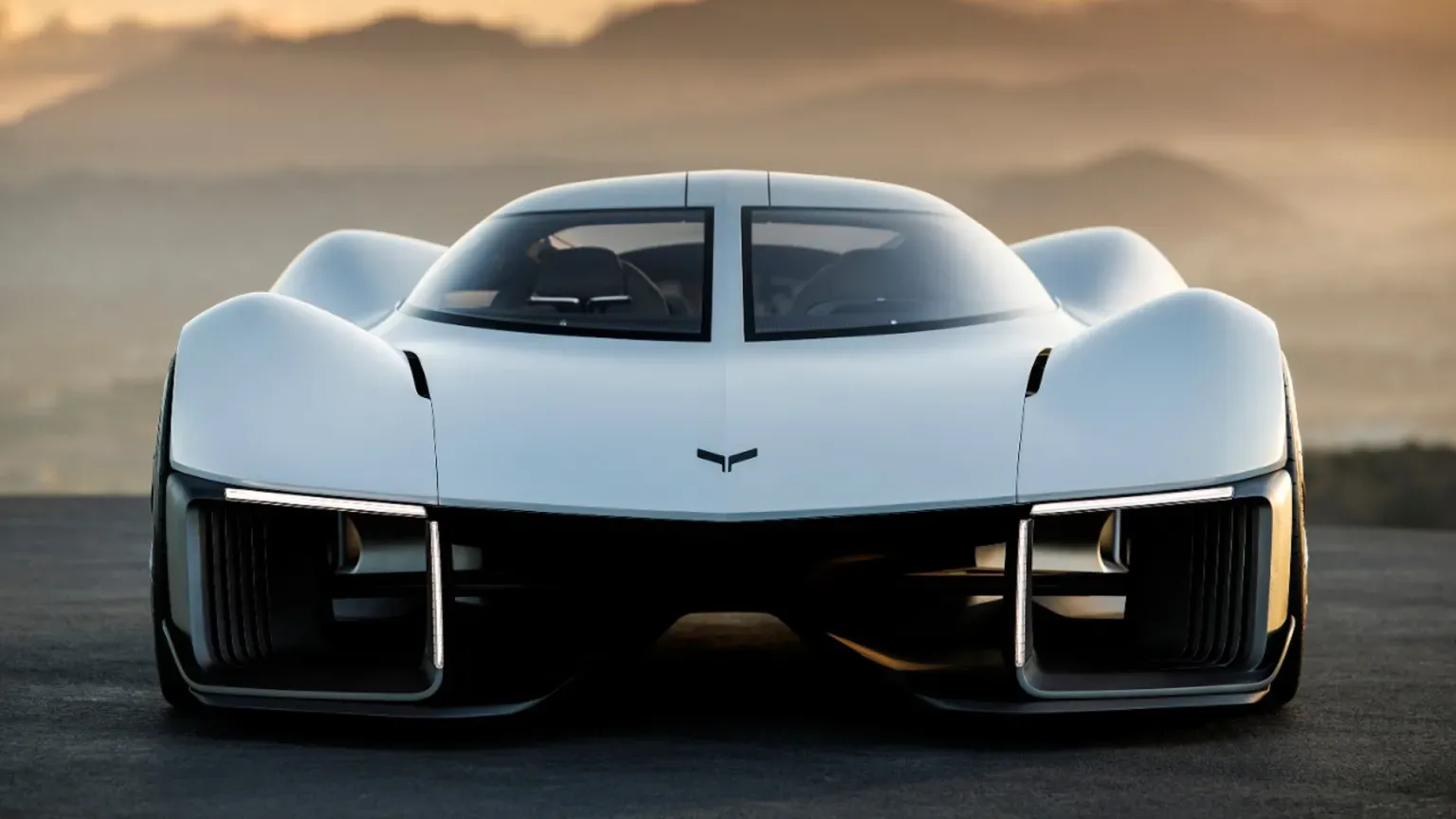
General Motors confirmed in 2026 that a fully electric Corvette remains on the roadmap. Tony Roma, the chief engineer responsible for the Corvette and GM’s sports cars, told The Drive that the company views such a powertrain as a long-term goal but has no intention of accelerating its launch.
The 2019 Corvette C8 has already received a driver-mounted engine, all-wheel drive, and performance levels comparable to expensive European supercars. However, it still lacks a version without an internal combustion engine.
From the 2022 announcement to a potential Corvette C9
General Motors CEO Mark Reuss announced in 2022 a first “electrified” Corvette, followed by a fully electric one. The first part of this promise was fulfilled by the E-Ray, which combines a V8 engine with an electric motor and all-wheel drive. A production-ready BEV has not yet been unveiled.
Roma confirmed that the direction remains unchanged. However, GM believes that sports car customers are still highly attached to internal combustion engines, their sound, and character. Chevrolet also has more to develop in the C8 generation, so a fully electric model may not appear until the Corvette C9. There is no official timeline.
The company likely does not lack technical capabilities. The Corvette CX concept featured four engines, all-wheel drive, and power exceeding 2000 horsepower. But this was a vision of an electric hypercar, not a preview of a model intended for production.
Electric supercars have performance, but the market is still hesitant
The Rimac Nevera has proven that battery-powered propulsion does not limit performance. Four engines generate 1,914 horsepower, with a 0-100 km/h sprint time of 1.81 seconds and a top speed of 412 km/h. The Nevera R boosts these figures to 2,107 horsepower, 1.72 seconds, and 430 km/h.
The Pininfarina Battista uses four engines along with a 120 kWh battery, delivering around 1,900 horsepower and reaching 100 km/h in less than two seconds. The Lotus Evija has approximately 2,000 horsepower but is produced in a very limited number of units.
BYD has also entered the competition. The Yangwang U9 produces 1,306 horsepower, while the U9 Xtreme boasts over 3,000 horsepower. During tests in Papenburg, the vehicle reached a speed of 496.22 km/h and completed the Nürburgring Nordschleife in 6:59.157. Acceleration is no longer the main challenge. Greater difficulties remain in terms of weight, maintaining performance on the track, cooling, and delivering the excitement expected by supercar buyers.
Ferrari unveiled its first all-electric model in 2026, featuring four motors, around 1000 horsepower, and a 122 kWh battery. The car is expected to accelerate from 0 to 100 km/h in about 2.5 seconds and achieve a range of over 500 km. However, this BEV will not replace V6, V8, V12, or hybrid models but will instead be added to the lineup.
Porsche is developing an electric 718, with the first full year of production scheduled for 2028. Lamborghini has changed its plans for the Lanzador and opted for a plug-in hybrid, while McLaren does not see sufficient interest in a fully electric model at the moment.
For Chevrolet, market acceptance of electric Porsche 718s might be a more valuable indicator than records for hypercars costing millions. It is still unclear whether an electric Corvette will be released alongside the V8 version or will introduce the C9 generation.
LovEV Newsletter
Want more content like this?
Sign up — we’ll send you a weekly summary once the newsletter starts.