
Decoupled water electrolysis, a method that produces green hydrogen at 20 €/MWh by taking advantage of the intermittency of renewable energy.
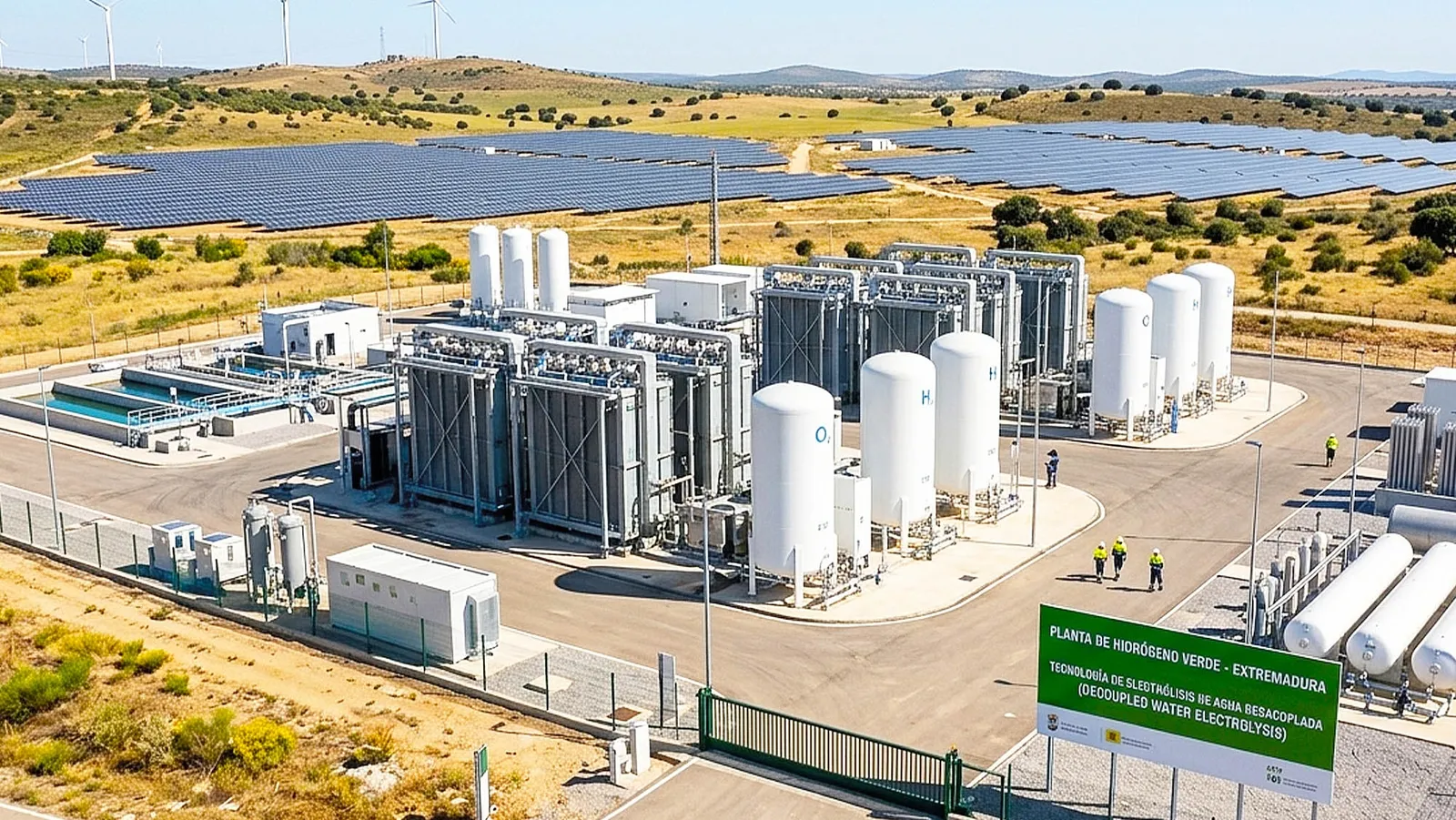
Spain is set to enter a new phase in renewable hydrogen production with a project that combines water, solar radiation, and a design intended to operate without grid connection.
Driven by H2Pro and international developer Doral Hydrogen, this initiative places Extremadura at the heart of an effort to reduce costs, ensure climate traceability, and explore the potential of a technology still in the demonstration stage.
The green hydrogen-renewable energy tandem
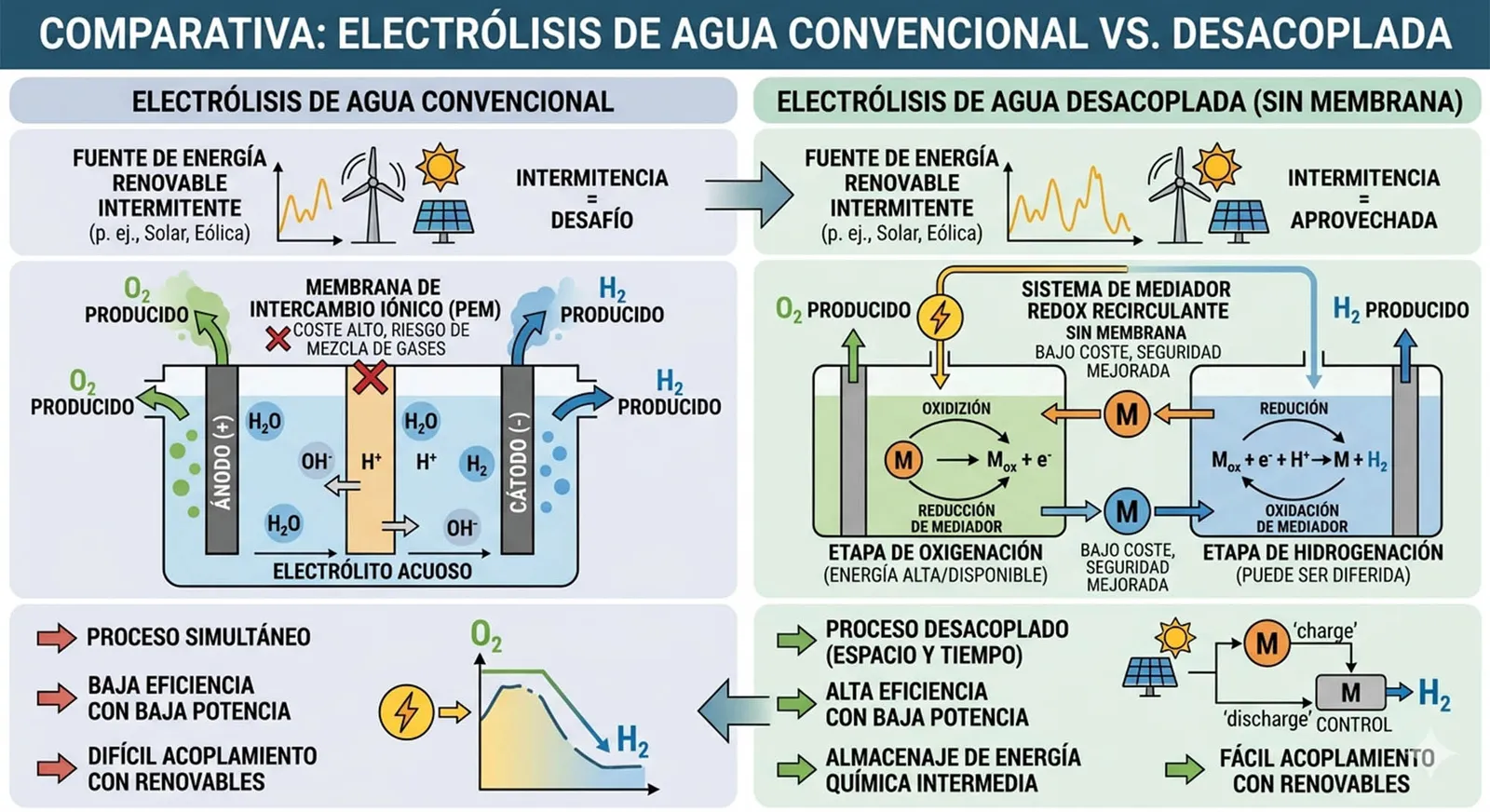
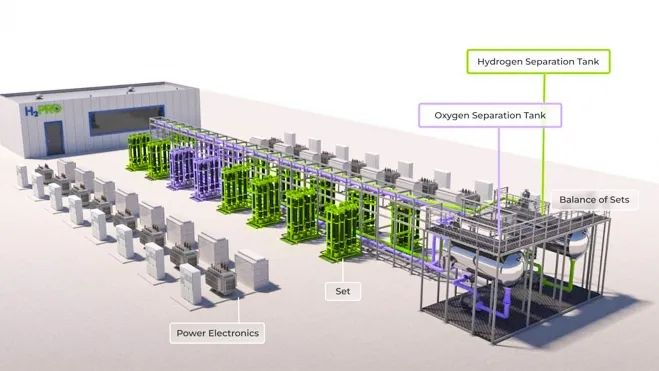
The project, presented as the first of its kind in Spain, will rely on DWE technology, short for Decoupled Water Electrolysis, a decoupled electrolysis system that separates hydrogen and oxygen production into two separate stages.
According to H2Pro, this architecture allows for handling the intermittency of photovoltaic power, operating without membranes, and avoiding some of the degradation and efficiency issues associated with conventional systems. The company also claims that its design better accommodates the start-up and shutdown cycles of renewable energy sources.
The first phase will begin with a 5 MW DWE electrolyzer connected directly, in direct current, to 10 MWp of solar generation. Eventually, the facility is planned to expand to 50 MW of electrolysis capacity and reach 80 MWp of photovoltaic capacity.
The goal is for the entire installation to operate off the grid and produce hydrogen powered solely by solar energy, meeting the strictest requirements for non-biological renewable fuels known as RFNBO.
The focus is not just technological. H2Pro argues that the drop in the price of renewable electricity has not translated to hydrogen at the same extent. According to their calculations, conventional projects tied to green energy purchase agreements cost around 50 euros per MWh, while an off-grid setup can reduce costs to approximately 20 euros per MWh.
The company calculates a 2.5 times savings and claims that its system avoids hot standby mode while maintaining high efficiency across a wide operating range—two factors it considers crucial for reducing the levelized cost of hydrogen, or LCOH.
From Hydrogen Europe’s perspective, the assessment is positive though with some nuances. The European association views this as one of the most demanding models among electrolysis options, precisely because the electrolyzer is connected to a dedicated solar plant and does not rely on the electrical grid.
In their view, this ensures completely renewable hydrogen, reduces pressure on an already congested grid, and improves traceability of energy supply. They also present it as a particularly useful solution in regions with abundant renewable resources and located near hydrogen injection points.
Why Extremadura?
The choice of Extremadura is not arbitrary either. H2Pro emphasizes that the region has some of Europe’s best solar resources, sufficient land for large-scale renewable projects, and is located near Enagás’ gas grid injection points.
This combination paves the way for initial hydrogen use by mixing it with natural gas, a solution the company describes as temporary and realistic. In the medium term, the site would gain value if development of the H2Med corridor progresses, which the company sees as a future injection point to connect production in Extremadura with European demand.
José María Sánchez, head of CIEMAT’s Combustion and Gasification division, views the proposal as “the forefront of energy autonomy,” though he warns that feasibility requires electrolysis with high tolerance for intermittency and a highly refined control system between renewable energy generation and the electrolyzer. According to this expert, it would be unrealistic to expect large-scale industrial deployment before 2030; that year should rather be seen as a deadline for validating prototypes and pilot plants.
H2Pro and Hydrogen Europe argue that blending can serve as an intermediate step to utilize existing infrastructure and reduce emissions quickly, but they also acknowledge it is not the most efficient use of renewable hydrogen. The challenge will be to prove that the gas can be produced where and when clean resources are available, integrated into a more flexible system, and to prevent the technology from remaining just a promise rather than a real solution.
Spain aims to establish itself as a testing ground for third-generation electrolysis, and with proper implementation, as a key component of the future H2Med corridor, designed to transport green hydrogen between the Iberian Peninsula and the rest of Europe.