
Electric company cars could create 344,000 EU jobs says T&E
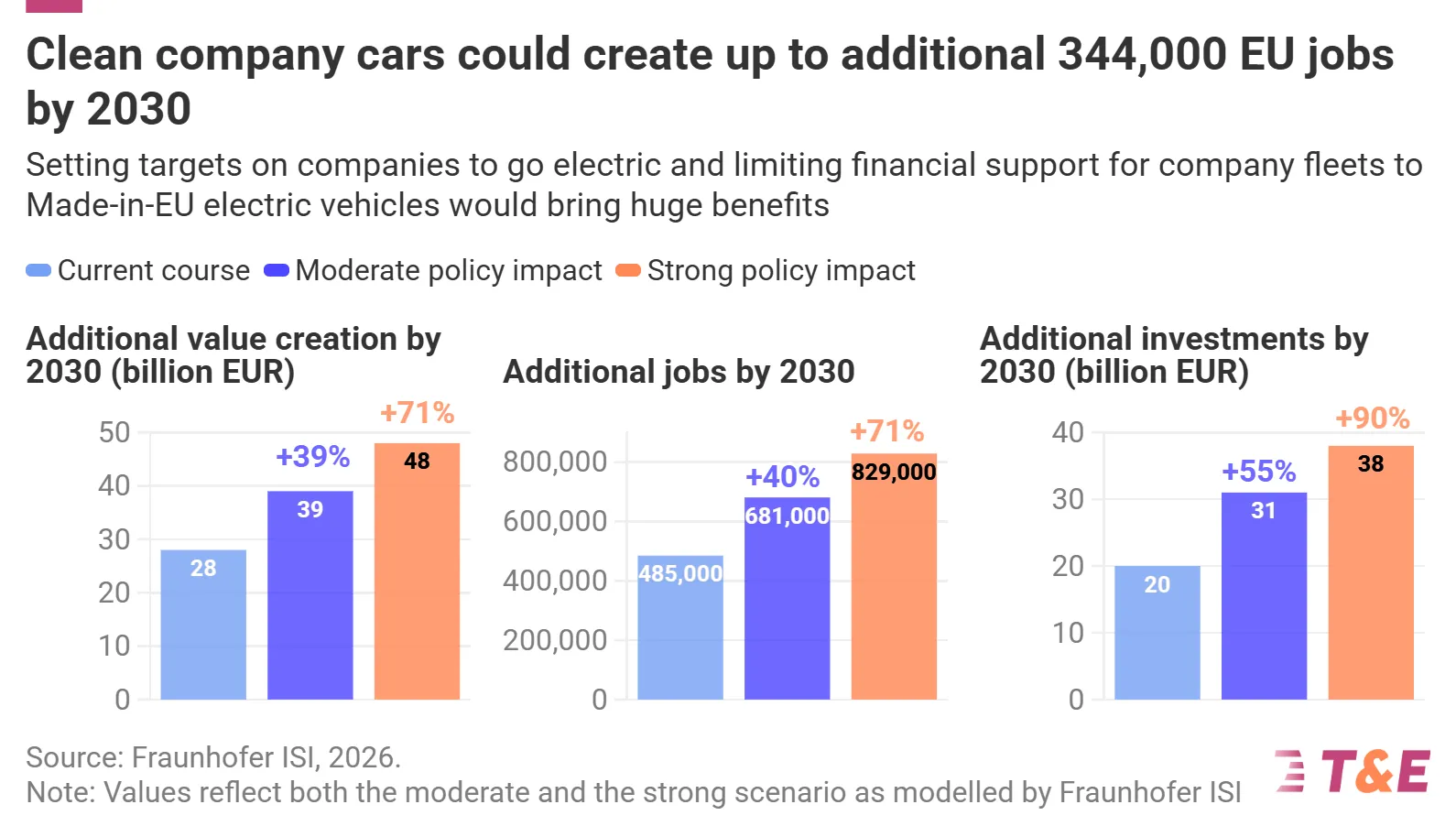
Accelerating the switch to electric company cars could generate 344,000 additional jobs across the European Union by 2030, according to Transport & Environment (T&E), which argues that fleet policy could help secure the future of Europe’s automotive industry.
The environmental campaign group says combining electrification targets for large corporate fleets with financial incentives reserved for European-made electric company cars could unlock an extra €20 billion in economic gains and €18 billion in investment compared with the current course.
Germany and Poland would be among the biggest beneficiaries, according to the analysis, with gains extending beyond vehicle assembly into battery manufacturing. Even under a moderate scenario, T&E forecasts 196,000 additional jobs above the current-course projection, highlighting the potential importance of company car purchasing to European industry.
However, the figures are modelled outcomes rather than confirmed recruitment or investment commitments. The largest benefits depend on companies replacing combustion cars more quickly and policymakers maintaining requirements intended to direct demand towards vehicles manufactured within Europe.
The study, announced on 21 October, puts company fleets at the centre of a broader argument about European competitiveness: securing buyers for electric vehicles could be as important to protecting manufacturing employment as supporting the factories that produce them.
Sofie Grande y Rodriguez, clean fleets policy manager at T&E, said: “Company cars are the quickest way to turn Europe’s EV transition into European jobs. Lawmakers have the opportunity to make the company cars regulation a key driver of Europe's automotive competitiveness.”
Faster fleet transition offers bigger gains
According to T&E’s release, the Clean Corporate Vehicles Regulation requires 45% of new car sales in large corporate fleets to be electric by 2030. The organisation describes this as a minimum floor for the transition, with the potential for substantially faster uptake.
Under its strong scenario, electric vehicles would account for 69% of new cars in these fleets by the end of the decade. That is 24 percentage points above the 45% benchmark, providing a significantly larger market for electric vehicle manufacturers and their suppliers.
These percentages concern new cars entering corporate fleets, rather than the entire existing company car fleet.
The modelling, credited to Fraunhofer ISI, projects 485,000 jobs being created by 2030 under the current course. That rises to 681,000 under moderate policy intervention and 829,000 under the strong scenario. The headline figure of 344,000 therefore represents the extra employment generated by stronger action, rather than the total number of jobs created.
T&E says economic gains could rise from €28 billion under the current course to €48 billion under the strong scenario, while investment could increase from €20 billion to €38 billion. Those differences underpin the headline figures of €20 billion in additional economic benefits and €18 billion in extra investment.
T&E identifies restrictions on financial support as particularly important. Its release says Article 4 of the regulation would limit support from January 2028 to company cars that are low or zero emissions and made in Europe. T&E advocates reserving fiscal benefits for European-made electric cars.
That distinction matters because an electrification target alone does not determine where the resulting vehicles or batteries will be manufactured. T&E’s argument is that purchasing requirements and the conditions attached to financial support must work together if European industry is to capture the potential gains.
European production requirements in focus
Grande y Rodriguez warned against weakening the manufacturing conditions or delaying their implementation.
“Watering down its ‘Made-in-EU' requirements would remove the incentive for carmakers to localise production. Equally important for securing at-risk jobs is keeping 2028 as the entry-into-force date,” she said.
T&E frames the issue as a test of Europe’s ability to compete with China in electric vehicles. It argues that the EU risks missing a significant opportunity if it fails to use corporate demand to support domestic production at a time when manufacturers face pressure on employment.
Germany could account for 134,000 of the additional jobs under the strong scenario, equivalent to approximately 39% of the total EU employment gain.
Volkswagen provides the study’s most striking company example. T&E says that, while the group plans to cut 35,000 jobs by 2030, the regulation could generate up to 56,300 additional direct jobs at the manufacturer over the same period under the strong scenario.
Those figures should not be interpreted as a Volkswagen announcement that planned reductions will be reversed. The potential additional roles are an output of the modelling presented by T&E, dependent on the stronger policy scenario, rather than a recruitment pledge from the carmaker.
The comparison illustrates T&E’s claim: a faster electric transition could create industrial opportunities alongside the disruption facing established automotive businesses. Whether those opportunities translate into employment would depend on demand being met through the production and investment decisions envisaged in the analysis.
Battery factories could share the benefits
Poland is another major potential winner, particularly through battery manufacturing. T&E forecasts 38,500 additional jobs in the country under its strong scenario, with 82% of that employment increase concentrated in the battery sector.
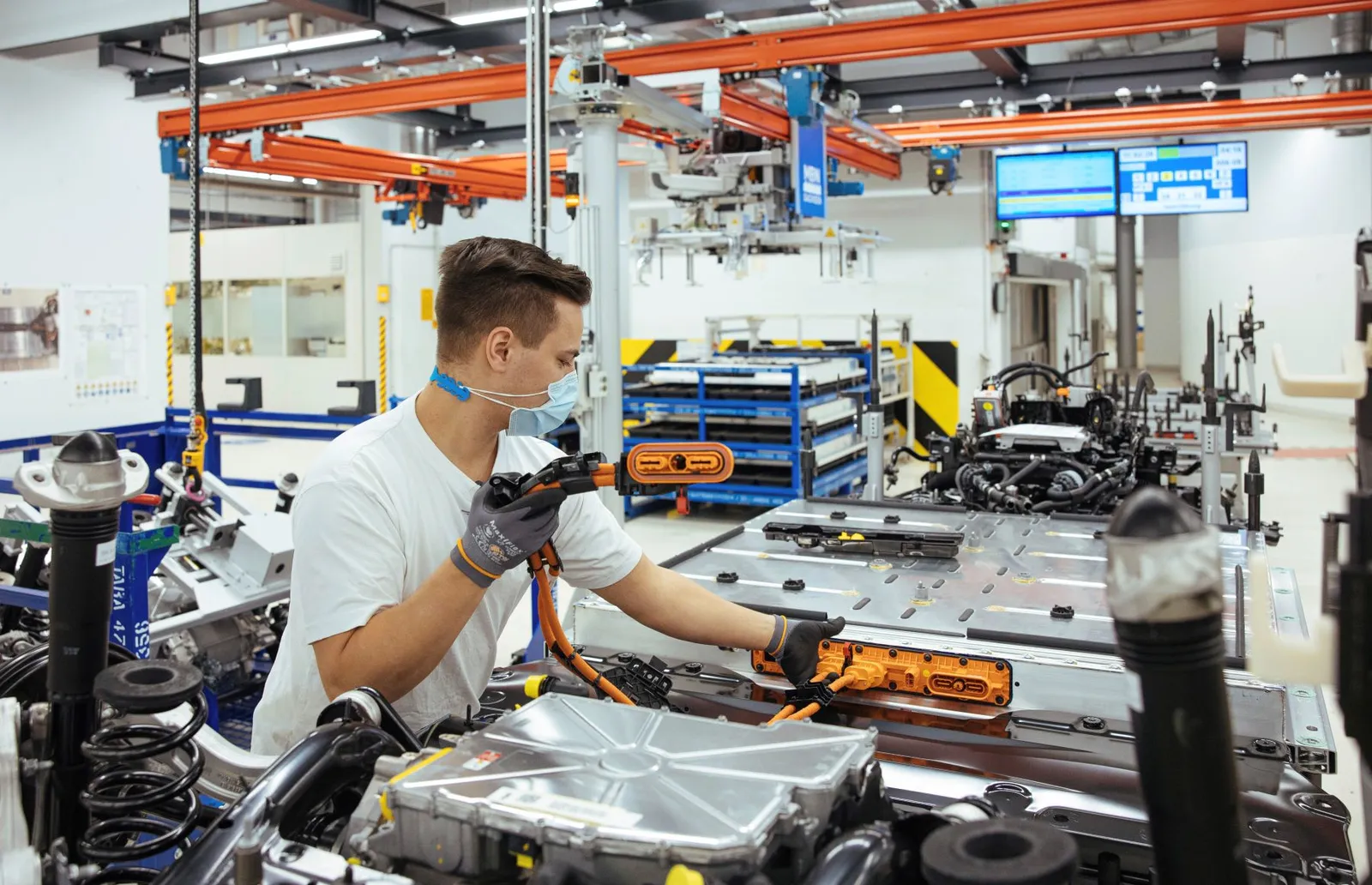
Its Polish case study projects battery cell production rising from 31GWh to 81GWh by 2030. That would represent an increase of 50GWh and take production to more than two and a half times the starting level cited in the release.
A company car policy that increases demand for European electric vehicles could also support the factories supplying their most important components, provided those supply chains develop within Europe.
Grande y Rodriguez said: “Electrifying the fleets of large companies is key to securing Europe’s EV value chain and reducing our dependence on dominant global suppliers.”
She added: “Europe already assembles most of its electric company cars. What it needs now is guaranteed demand, so the battery plants announced here actually get built.”
For fleet buyers, the analysis points to the influence that successive replacement cycles could exert over Europe’s manufacturing landscape. Large corporate purchasing decisions can provide manufacturers with a market around which to plan production, while incentives can influence which vehicles businesses choose.
The release does not provide a UK employment forecast, and its headline benefits concern the EU economy. British readers should therefore avoid treating the 344,000 figure as a prediction for Europe including the UK, or as a direct estimate of benefits for British factories.
The press release does not set out the full modelling methodology or detailed assumptions behind the employment estimates. Its projections should be read as the organisation’s assessment of the opportunity offered by these policies.
T&E’s message is that the scale and location of the benefits remain policy choices. Its strongest forecasts depend on faster electric purchasing, European manufacturing conditions and timely implementation. The organisation is urging lawmakers to preserve those elements so that company car demand supports investment throughout the European electric vehicle supply chain.