
European Vice President Stephane Séjourné praises the local production of this affordable electric car

05/10/2026 13:30
Updated to
05/10/2026 13:30
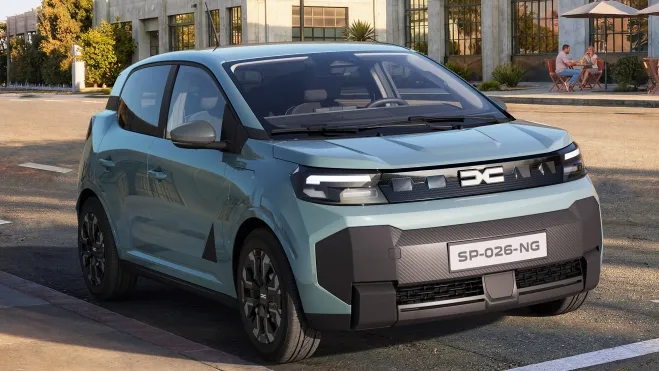
The new Dacia Spring moves to a different continent for its second generation: it leaves production in China and is now manufactured in Novo Mesto, Slovenia. The European Commission has cited this shift as an example of the industrial strategy it aims to promote for affordable electric vehicles, linking more and more subsidies and public policies to European production and employment. The Dacia Spring also arrives completely revamped, with the entire range available at competitive prices.
This relocation effectively summarizes one of the major changes underway in Europe’s automotive industry. For years, producing small and inexpensive electric cars in China was economically attractive. Now Brussels wants a growing share of that industrial value to return to the continent.
Stephane Séjourné, Executive Vice President for Prosperity and Industrial Strategy at the European Commission, praised the arrival of the Dacia Spring in Slovenia during a visit to the factory in Novo Mesto, where other electric vehicles from the Renault Group are also produced.
His message was clear: the next step should be to increase the European content of the components as well.
An electric car under 20,000 euros made in Europe
This decision is particularly significant because it affects one of the cheapest electric cars on the market.
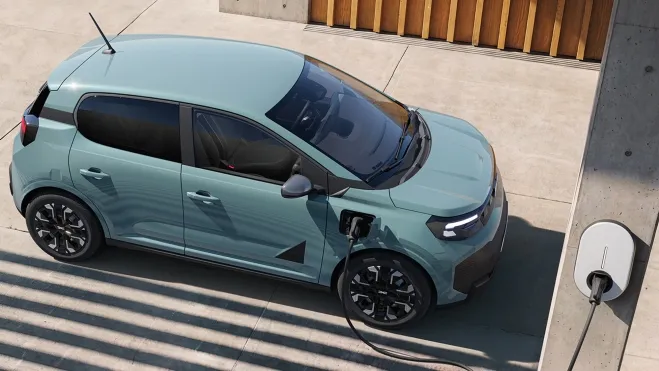
The second generation of the Dacia Spring features the new RG-EV Small platform and changes almost everything compared to its predecessor. It uses a 27.5 kWh battery, offers up to 250 kilometers of range according to the WLTP protocol, and its entire range remains below 20,000 euros before any possible government subsidies are applied.

Dacia also claims that over 210,000 customers have chosen the Dacia Spring since its launch in 2021 in more than 40 countries.
European production thus helps address one of the major doubts in the industry: whether it is possible to manufacture an urban electric vehicle at a very affordable price on the continent.
Brussels wants subsidies to also build factories
This push comes amid intense debate over the Industrial Accelerator Act, through which the European Commission aims to strengthen local manufacturing in strategic sectors.
The philosophy is simple: if Europe uses public funds to accelerate the transition to electric cars, a larger portion of that spending should support European factories, suppliers, and jobs, rather than merely subsidizing imported products.
Nevertheless, this approach has sparked debate within the industry itself. ACEA has called for future local content requirements to be flexible enough, especially since Europe still relies on imports for many components in the electric vehicle supply chain, from batteries to certain materials.
Manufacturing in Europe no longer means doing everything in Europe
And that brings us to the next challenge.
Shifting the final assembly of the Dacia Spring from China to Slovenia is an important industrial step, but it does not automatically make all of its components European.
That is precisely why Séjourné spoke of a subsequent phase focused on suppliers.
The situation encapsulates the challenge facing Europe: it is not enough to attract manufacturing lines if batteries, electronics, or essential materials still rely heavily on Asia.
The Dacia Spring thus becomes more than just a small electric vehicle with a 250-kilometer range. It is also an example of what Brussels aims to achieve: proving that Europe can produce affordable electric cars and then striving to keep an increasing share of their value added within the continent.