
The Tesla Semi arrives in Europe with a range of 550 km and an 800 kW charging capacity.
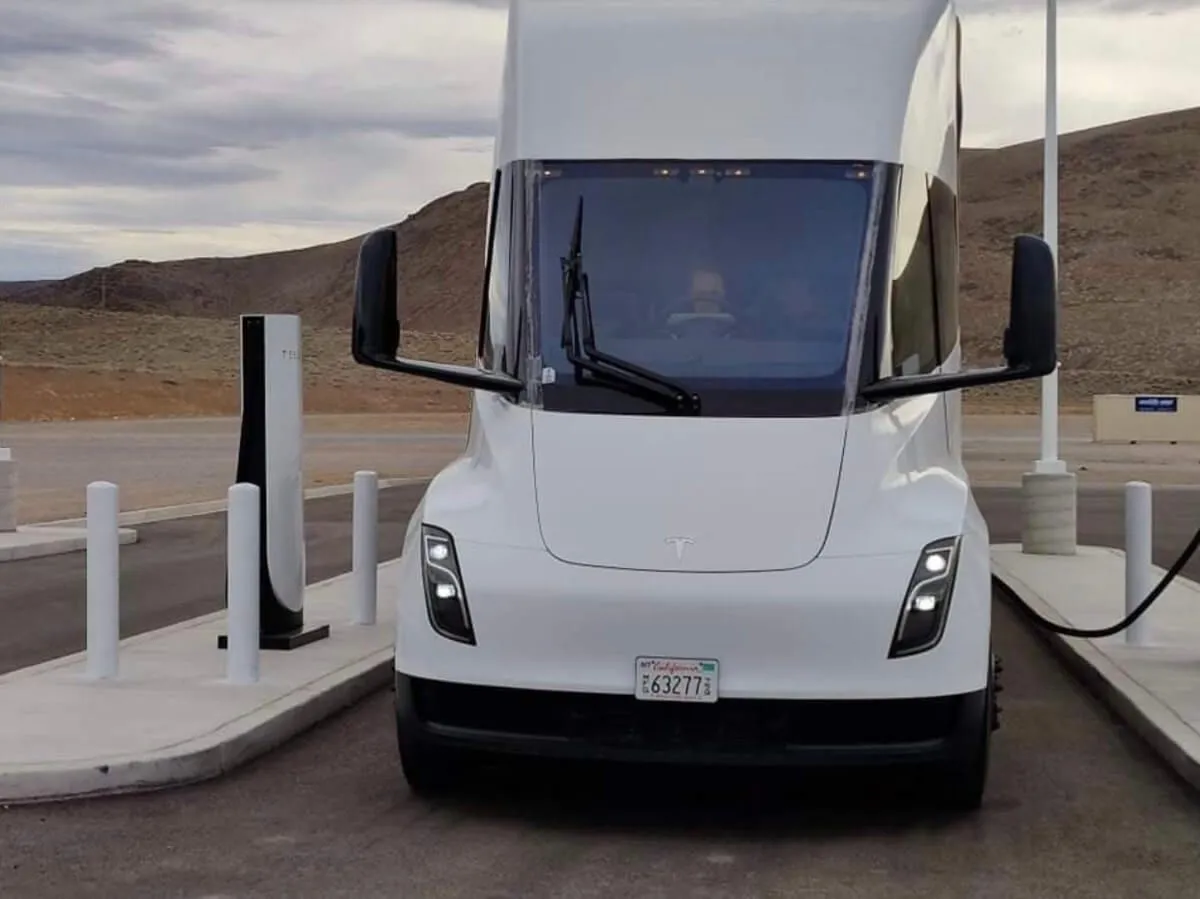
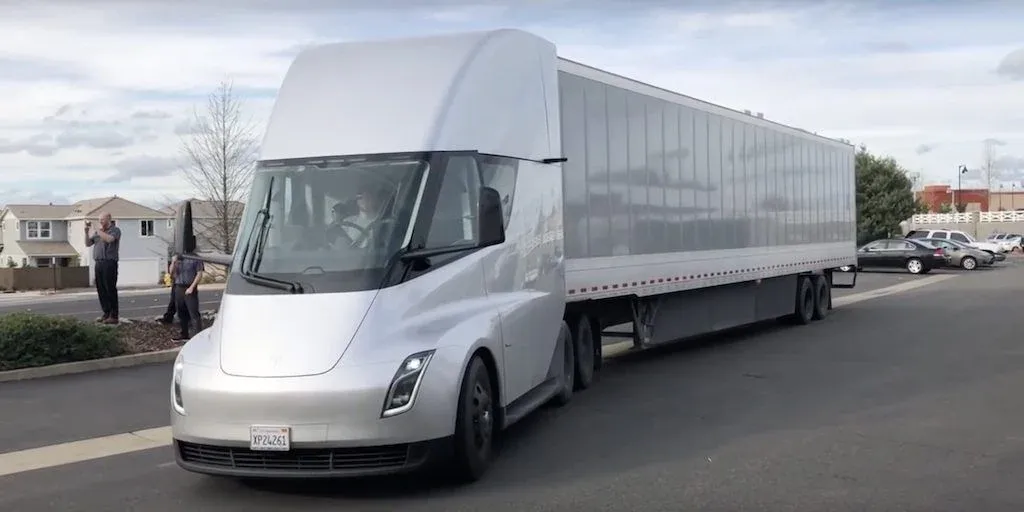
Tesla is finally preparing to introduce the Semi in Europe. The electric truck, first unveiled in 2017 and has been used on a limited scale in the United States for several years, will make its debut in our market at the IAA Transportation exhibition in Hannover. First deliveries to European customers are expected by 2027.
The company has revealed much of its specifications ahead of the German exhibition, confirming a configuration very similar to the one already known across the Atlantic, though with significant differences in range and regulatory compliance. The most notable feature is that the European Semi promises up to 550 kilometers of range with a payload of 40 tons, along with a charging capacity of up to 800 kW.
The Tesla Semi will thus become one of the main highlights at IAA Transportation, held in Hannover from September 15 to 20. Tesla will bring one unit to the event and also allow driving tests, marking the most significant step so far toward its commercial launch in Europe.
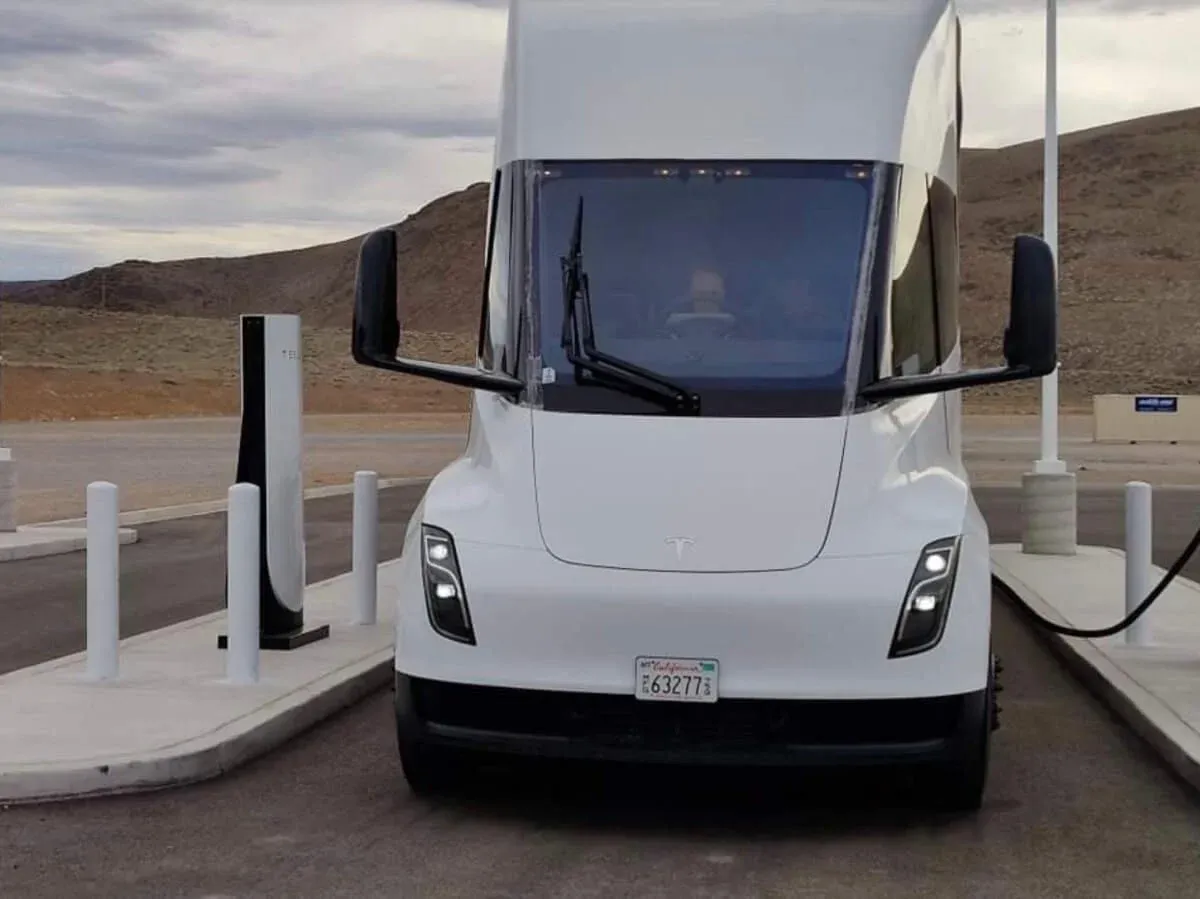
The European version of the Tesla Semi boasts an estimated range of 550 kilometers, with an energy consumption of about 1 kWh per kilometer. This figure is based on the truck operating within European limits, with a total weight of up to 40 tons. Tesla has not yet disclosed the exact battery capacity, so it is currently impossible to determine its size in kWh.
This is an interesting figure when compared to the American Semi. In the United States, Tesla sells a Standard Range version with a range of around 523 kilometers and a Long Range version that reaches approximately 805 kilometers. However, the homologation conditions are not directly comparable, as Tesla uses a total weight of 37.2 tons, a speed of 88 km/h, and a temperature of 20 degrees for its American estimates.
The European version is therefore far short of the 800 kilometers that had long been associated with the Semi, although it should be noted that Tesla is talking about a range of up to 550 kilometers with a 40-tonne payload. In heavy transportation, fuel consumption also depends heavily on the load, speed, aerodynamics of the trailer, and road conditions.
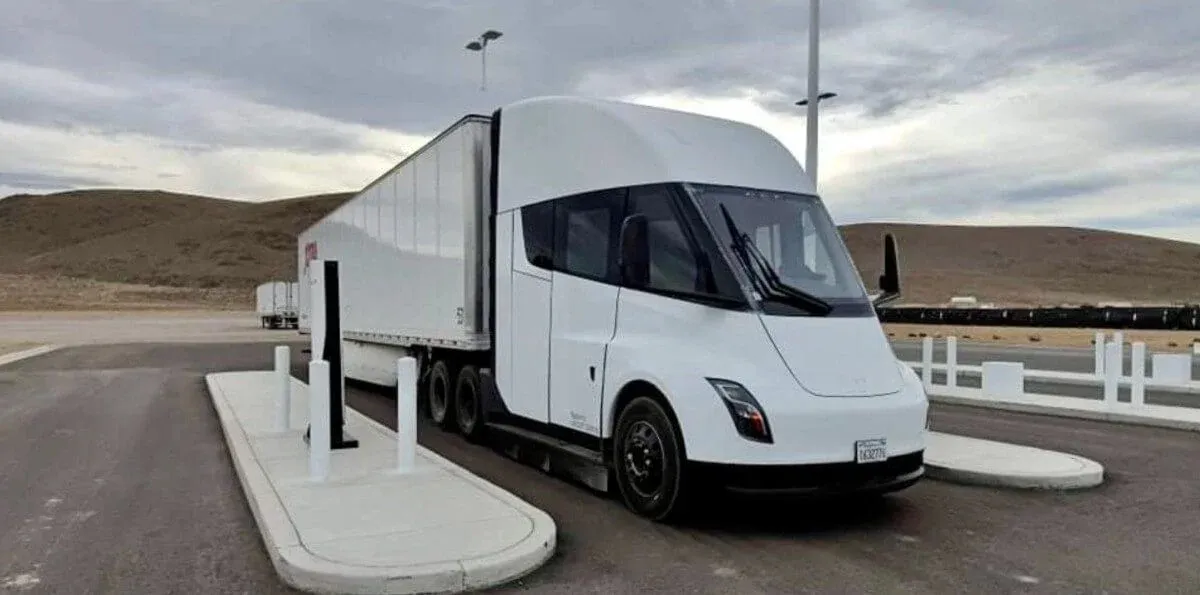
The Semi aims to stand out in terms of recharging. Tesla claims a power output of up to 800 kW via the MCS 3.2 system, enough to restore up to 60% of the range in 30 minutes. Based on the announced 550 kilometers, this would mean around 330 kilometers of range restored during that half hour, though this is a theoretical equivalence rather than a guarantee of additional kilometers under all conditions.
This figure is particularly significant for a truck that operates for many hours per day. A half-hour stop to restore a substantial portion of its range can fit within drivers’ usual breaks, although establishing infrastructure capable of supplying hundreds of kilowatts continuously will be one of the major challenges for transportation companies.
Tesla already has a charging technology for the Semi in the United States that can reach 1.2 MW, but the specification announced for Europe is currently 800 kW. The company itself offers MCS solutions for businesses, with systems capable of reaching up to 1.2 MW, although the required system and infrastructure depend on each installation.
As for the propulsion system, the European Tesla Semi uses three independent electric motors located on the rear axles, with a combined maximum power of up to 800 kW. This figure equals approximately 1,090 horsepower, a power level that allows the truck to maintain a huge amount of driving force even when fully loaded.
Tesla highlights the Semi’s performance in demanding situations, such as starting with a load or on steep slopes. Its three-motor architecture ensures high torque from the very beginning and allows power delivery to be adjusted according to the vehicle’s needs. Additionally, the truck features an ePTO electric power takeoff capable of supplying up to 25 kW to power certain auxiliary systems.
The weight is also one of the strengths of this version. Tesla claims a curb weight of 9,100 kg, a figure that is particularly interesting for a vehicle designed for freight transport, as every kilogram saved in the truck itself can translate into greater capacity to carry cargo. The maximum weight of the complete vehicle is 40 tons in the European configuration.
Inside, the Semi retains one of its most striking features: the centered driving position. Tesla has designed the cabin around the driver, offering excellent visibility and a different approach compared to conventional trucks. The company also highlights the sound insulation and reduced vibrations typical of electric propulsion, along with remote fleet management and diagnostics functions.
This technological aspect is precisely what will be crucial for Tesla. The company aims to make the Semi more than just a truck with a battery and three motors—it wants it to function as a tool that allows businesses to manage fuel consumption, charging, maintenance, and routes through their management systems. Remote diagnostics and software updates are also expected to reduce the need for service visits and, most importantly, the time each unit spends out of service.
Reducing operational costs is actually one of Tesla’s main selling points. An electric truck eliminates components typical of diesel vehicles, such as an internal combustion engine, conventional transmission, and exhaust treatment systems. Additionally, it features a propulsion system with fewer moving parts and the ability to perform much of the monitoring and diagnostics remotely.
Tesla claims that the cost of electricity per kilometer can be lower than that of diesel, and maintenance costs can also be significantly reduced. For a transportation company, however, the calculation will be much more complex than simply comparing the price of electricity with that of fuel. The cost of installing 800 kW chargers, adapting the electrical infrastructure at the facilities, and ensuring the truck can charge when needed will be decisive.
There is also one fundamental uncertainty: Tesla has not yet announced the price of the European Semi. For a vehicle intended for businesses, the purchase price is only part of the equation. The cost of infrastructure, the availability of truck chargers, maintenance, and daily use will ultimately determine whether the Semi can truly be competitive against its rivals.
Tesla’s entry into Europe also does not happen in a vacuum. Manufacturers such as Renault, Mercedes-Benz, Scania, Volvo, and MAN already have heavy-duty electric trucks and have been working with European operators for some time. Tesla will need to prove that its combination of range, energy consumption, charging speed, and operating costs offers a sufficient advantage to convince large fleets.
For now, the company has presented some figures that are quite impressive: 550 kilometers of range, 800 kW of charging power, 800 kW of maximum power output, and a weight of 9,100 kg in empty condition. Its first public appearance in Hannover will provide more details and, most importantly, show how well the Semi meets the actual demands of European transportation.
The first deliveries are expected in 2027, so there is still time to learn about the price, final configurations, and Tesla’s marketing strategy. Nearly a decade after its introduction, the company’s electric truck is finally on the verge of entering the European market. It will now need to prove that its promises align with the realities of roads and fleets across the continent.