
BYD’s largest electric SUV is now approved: 3 engines, 1,210 horsepower, and 3.2 tons of weight
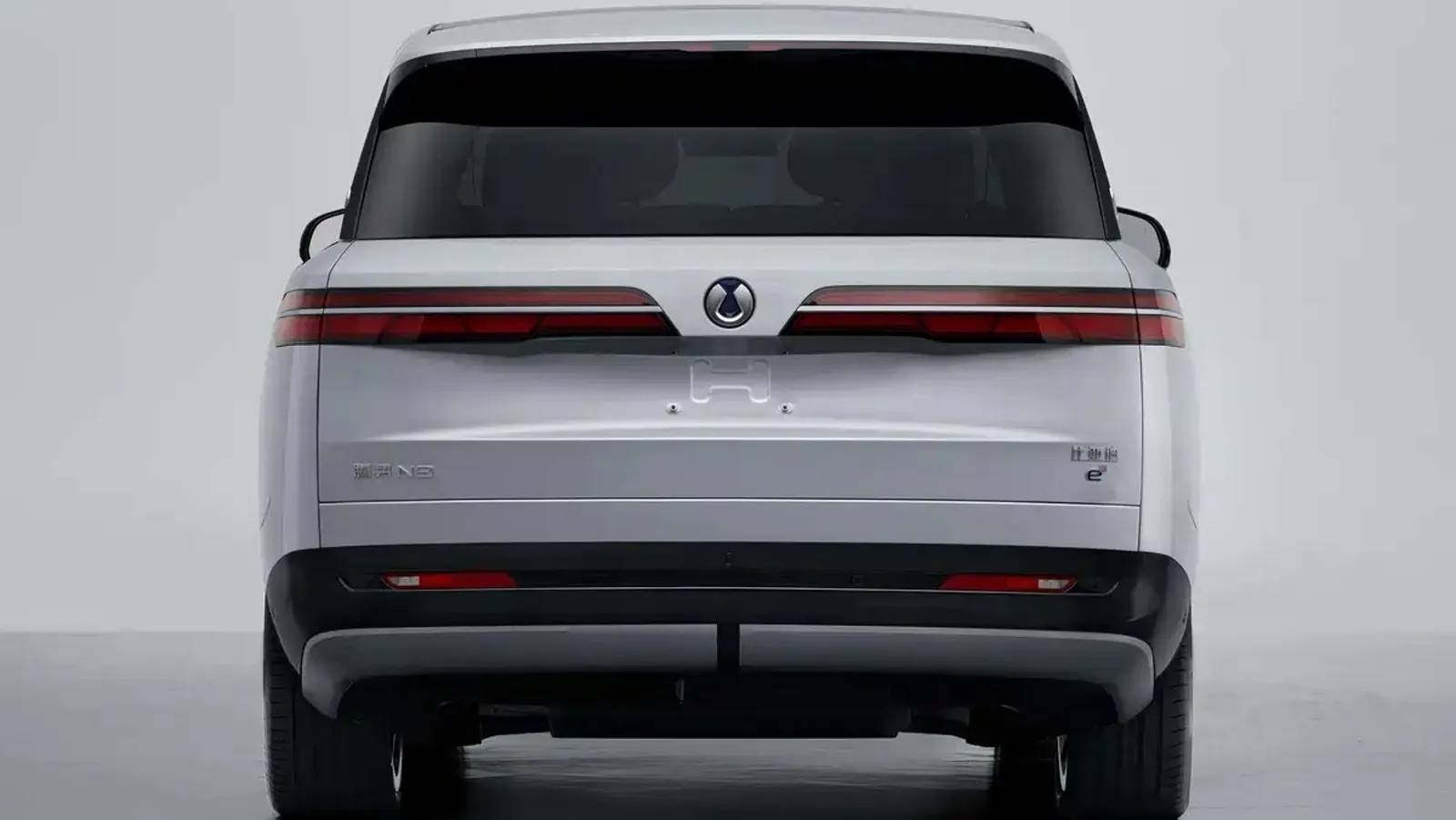
Denza was born as a joint venture between Germans (Mercedes-Benz) and Chinese companies (BYD). The goal was to explore the concept of a premium car in a country that at the time had little automotive culture. Today, Denza is a company fully controlled by the Chinese. They have caught up very quickly, and now Denza has become BYD’s premium brand, daring to bring cars like the new Denza N9 electric vehicle to market.
Its details have just appeared in China’s Ministry of Industry and Information Technology (MIIT) catalog of new vehicles, a prerequisite for sales in the country. So far, the N9 was only available as a plug-in hybrid, with prices ranging from 389,800 to 469,800 yuan, equivalent to 50,674 to 61,074 euros. The new version opens the door to one of the most competitive segments in the Chinese market, though its technical specifications still hide an important secret: the battery.
Three engines and over 1,200 horsepower
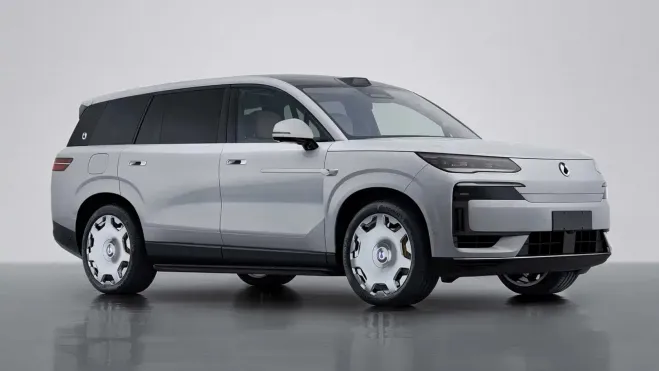
The N9 electric vehicle is equipped with three permanent magnet synchronous motors. The front motor delivers 367 horsepower, while the rear axle has two units of 421 horsepower, one per wheel. Together, they provide a maximum power output of 1,210 horsepower, with an approved top speed of 240 kilometers per hour.
This setup is part of BYD’s e³ technology, the same as that used in the Denza Z9 GT already available in Europe, which combines three independent motors with rear-wheel steering. In theory, it allows the vehicle to turn almost on its own axis, park using the rear axle, or maintain stability if a tire bursts at high speed. However, the certification does not confirm which of these functions will be standard on the SUV.
The two registered versions differ only in their braking systems. One is equipped with FinDreams’ IPB integrated braking system, a subsidiary of BYD’s components division, while the other uses Bosch’s BWA and ESP system.
Over three tons on the scale
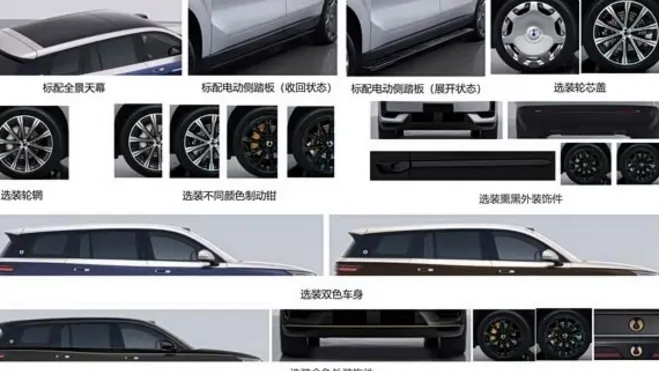
Externally, it changes little compared to the hybrid version. It measures 5.27 meters in length, 2.03 meters in width, and 1.83 meters in height, with a wheelbase of 3.125 meters, placing it in the E segment. It features a closed front end and can accommodate 22-inch forged wheels, a panoramic roof, electric side mirrors, and a two-tone paint scheme, with five or six seats.
It reads 3,105 or 3,180 kilograms on the scale depending on the version, with a maximum authorized weight of 3,760 kilograms. This is an enormous weight, although the upgraded N9 hybrid reaches 3,280 kilograms in its heaviest version. The configurations are not identical, so the comparison is not direct.
LFP Battery: What Is Known and What Is Missing
The battery is made of lithium iron phosphate (LFP). The cells are manufactured by Guangxi ASEAN FinDreams Battery, and the battery pack is assembled in Shenzhen at a company within the BYD group itself. It uses the same chemistry as the N9 hybrid, which in its latest version introduced the second generation of Blade batteries with 75.264 kWh capacity and ultra-fast Flash Charging.
On the other hand, the certification does not specify the capacity, package weight, range, or charging power, nor has it been confirmed that the N9 electric model will support such fast charging, although it is assumed to do so given its flagship status. With over three tons to move, the battery will need to be very large to provide an adequate range, and that will be the key to this model’s success.
Rivals with staggering specifications
Its most direct rival will be the Aito M9 electric vehicle, part of the partnership between Huawei and Seres. It starts at 499,800 yuan (64,974 euros) for the five-seater version and 509,800 yuan (66,274 euros) for the six-seater version, equipped with a 120 kWh ternary lithium (NCM) battery and two motors. Among plug-in hybrids, the benchmark is the Zeekr 9X from Geely’s premium brand. Its most powerful version combines three electric motors with a 2.0 turbo gasoline engine, delivering 1,400 horsepower. It measures 5.24 meters in length and has a wheelbase of 3.169 meters, figures that are almost identical to those of the Denza. It is already available in Spain.