
The electric Renault Twingo gets a commercial version: up to 800 liters of cargo space starting at 17,900 euros
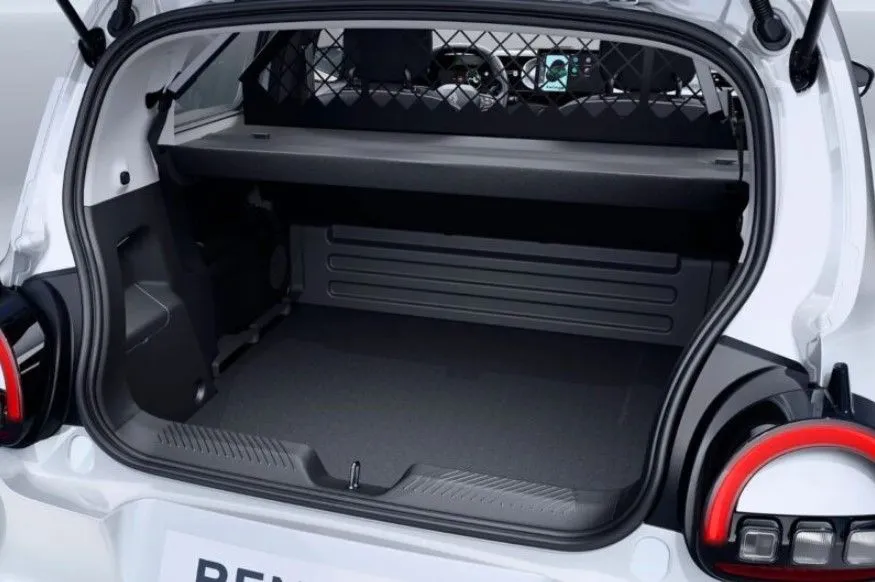
The electric Renault Twingo aims to establish itself as a work vehicle as well. Its size and urban-oriented design make it suitable for professionals who need to transport materials without relying on a larger van. Renault has already started accepting orders in France for an adaptation that retains the sedan’s appearance but changes the interior layout.
This commercial version, initially introduced through a prototype developed with EDF, expands Renault’s lineup of professional vehicles that also includes the electric Renault 5 and Renault 4. In Spain, Renault uses the term “Van” for commercial variants like the Renault 4, though there is no confirmation yet of an equivalent version of the Twingo being released in our market.
Externally, the vehicle retains the design of its passenger version. The transformation takes place behind the front seats, where the rear seating is replaced by a thermoformed plastic tray that fits snugly inside the cabin and protects its interiors. This solution is designed to carry boxes, tools, or small equipment without damaging the interior through daily use.
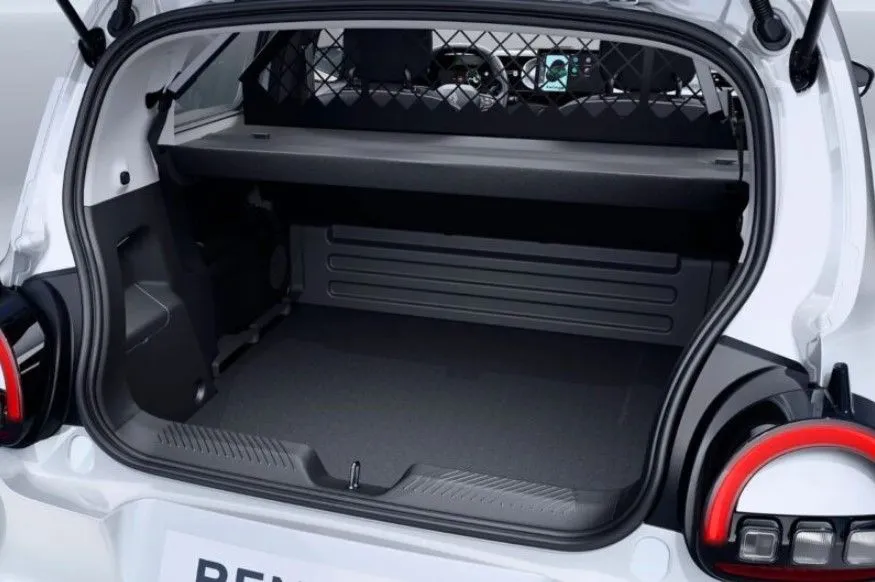
The result is a cargo area of nearly 800 liters, compared to 269 to 360 liters in the trunk offered by the sedan depending on the position of its rear seats. The modification includes a cargo cover to hide contents and allows for the addition of a partition grid behind the front seats. This variant is approved in the N1 category, which is for cargo transportation.
This conversion has another feature: it enables the original passenger configuration to be restored later. Renault retains the original rear seats and tray so they can be reinstalled before selling the car. This option may increase the number of interested buyers once its working use is completed, although the conversion must be carried out with the proper procedures.
The Evolution and Techno trims are available in this equipment package. The Evolution trim includes manual climate control, a 7-inch digital dashboard, and a 10.1-inch central screen with wireless mobile connectivity. It also features two USB-C ports, a two-speaker audio system, and rear parking sensors.
The Evolution’s driving aids include traffic sign recognition, speed control, lane-keeping assist, driver attention monitoring, and hill start assist. Additional features include LED headlights, 16-inch steel wheels with hubcaps, and a tinted rear window. It’s a basic equipment package, but it covers most of the typical needs for an urban work car.
The Techno adds automatic climate control, a navigation system, Reno voice assistant, and a six-speaker sound system. It also features electrically folding mirrors, a rear camera, adaptive cruise control, and automatic lighting and wiper activation. Darkened rear side windows complete the most noticeable differences.
City driving range, but no fast charging
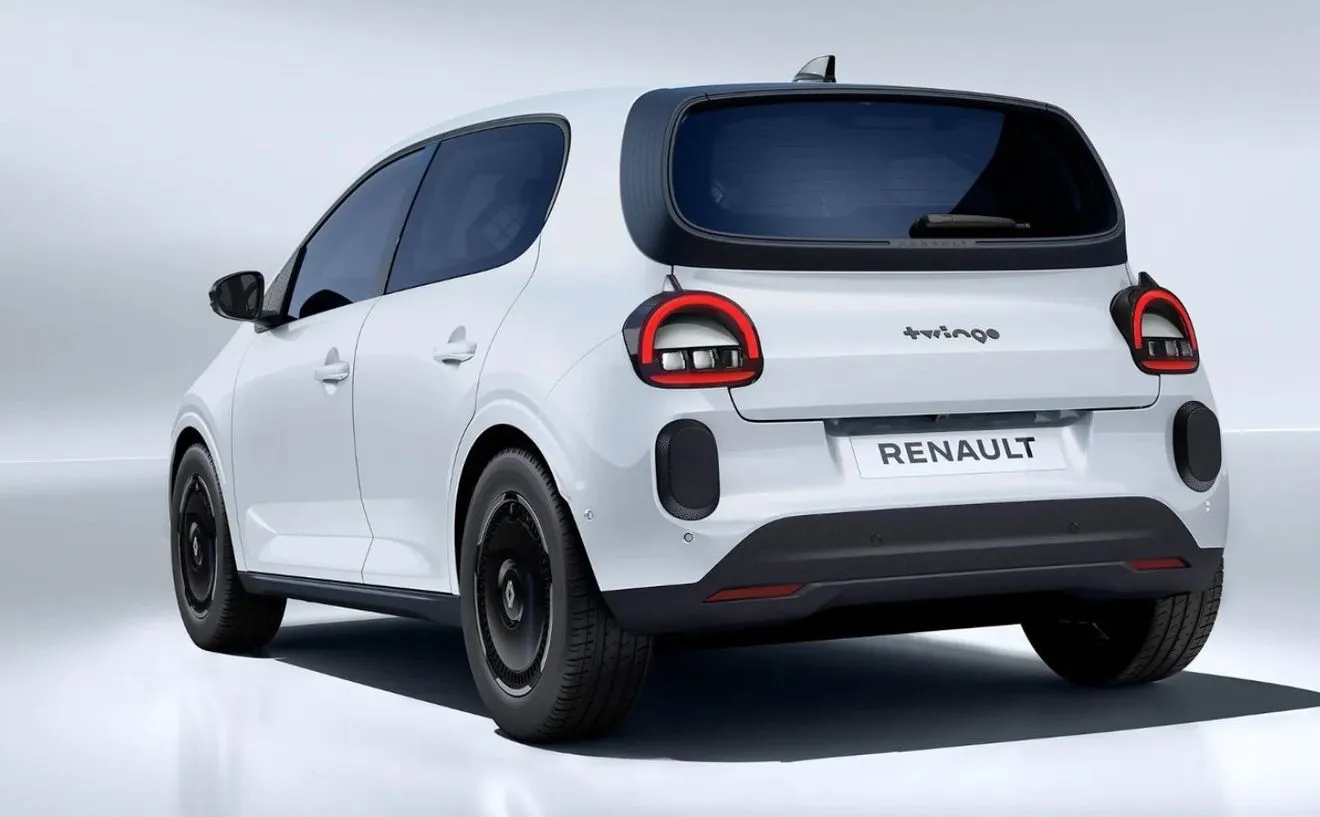
The propulsion system retains the 82 HP electric motor specified for the French version. No specific mechanical changes related to the commercial adaptation are announced, nor are there new acceleration figures. Its role remains focused on urban and suburban driving, now with more usable cargo space.
The battery uses LFP chemistry and has a capacity of 27.5 kWh, with an announced range of up to 264 kilometers under WLTP conditions. This refers to a homologation standard: the actual range for a single trip will depend on factors such as the load carried, temperature, climate control usage, and speed.
The main limitation lies in charging. The AC charger supports up to 6.6 kW, and this version does not offer fast DC charging. Therefore, it is better suited for businesses that can leave it connected overnight or take advantage of long stays at a base. For those who need to restore battery life within minutes between tasks, this lack of fast charging can be decisive.
The Evolution version has two regenerative braking modes, while the Techno model offers four and includes a one-pedal driving function. The latter can be convenient for trips with many stops, though it does not eliminate the need to plan charging sessions based on the expected distance for each day’s journey.
Orders are now open in its first market, France, where the Twingo commercial Evolution starts at 17,900 euros before VAT, and the Techno costs 19,200 euros, also prior to taxes and subsidies. The partition grid is available as an option for 400 euros, including taxes.