
Will the next Honda you buy have been built by a robot? “We’re still a long way from the idea of humanoid robots working throughout the factory.”
The automation of automobile factories is on the verge of taking a new step forward. Industrial robots have been used for decades to weld car bodies, paint vehicles, and perform repetitive tasks on assembly lines, but the next goal is to enable them to manipulate parts and tools with dexterity increasingly similar to that of humans.
Honda is working in this direction with robotic technologies that combine multi-fingered mechanical hands, remote control, and artificial intelligence. The Japanese company envisions a future where these systems can take over certain manufacturing tasks and even alter the way cars are designed.
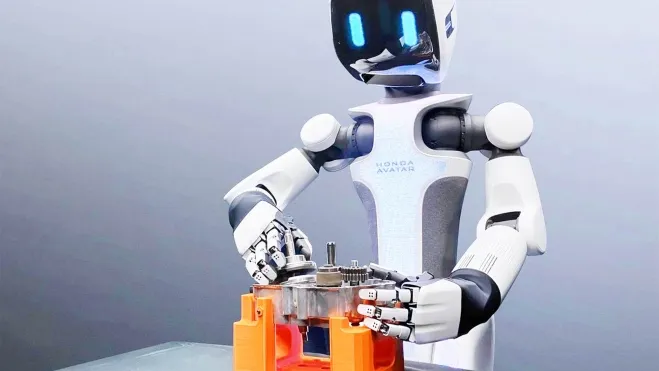
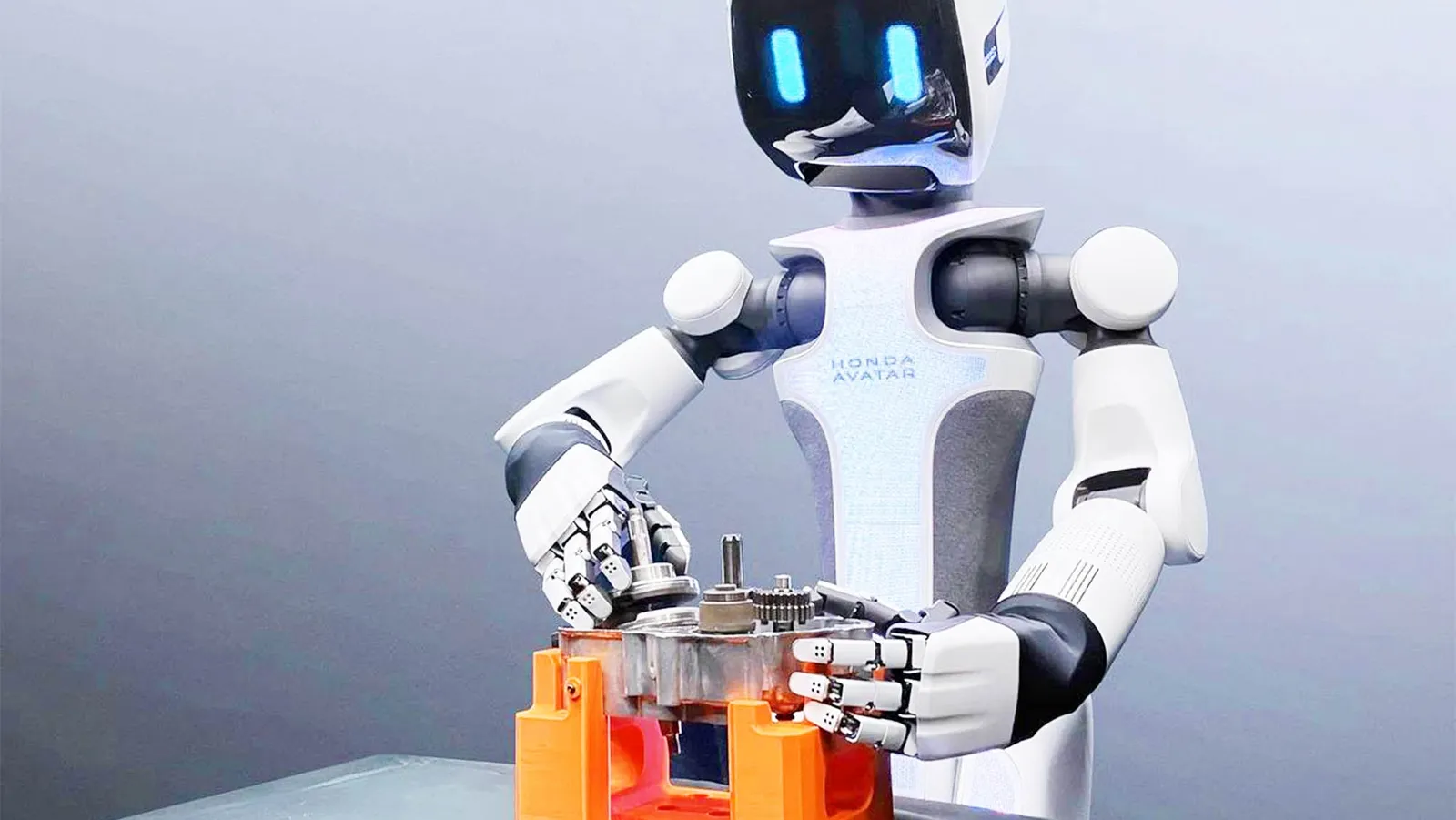
A robotic hand capable of manipulating tools
However, the manufacturer does not propose an immediate replacement of workers with humanoid robots. Toshihiro Mibe, president and CEO of Honda, acknowledges that there is still a long way to go before they can operate throughout an entire industrial plant.
We are still far from the idea of humanoid robots working throughout the factory. But robots are evolving gradually, and over time, parts will be handled by them. Our car manufacturing and design processes have also begun to take this into account, and we will start changing vehicle designs from the earliest stages with this in mind, said Mibe.
One of the most significant advancements is the development of a multi-fingered robotic hand designed to grasp objects and handle tools intended for humans. Unlike conventional industrial robots, which typically perform programmed movements in confined spaces, this technology aims to handle tasks that require greater precision and adaptability.
In a recent demonstration, the system showed how to pick up threaded screws and tighten them into the casing of a gearbox using a wrench. This is an operation that demands coordinating the hand’s movement, holding the tool properly, and applying the right amount of force to a specific component.
Artificial intelligence can help interpret the environment and facilitate control, though that doesn’t mean the robot is yet fully autonomous. In the case of Honda’s Avatar Robot technology, the approach includes remote operation by a person with artificial intelligence assistance.
This nuance is important: demonstrating that a robotic hand can perform a complex task does not equate to proving that a humanoid robot can work independently throughout an entire shift in an automobile factory.
Cars designed to facilitate robot work
The most significant part of Honda’s strategy isn’t just about introducing more machines into its facilities. The company is also considering adapting the design of future vehicles to facilitate their automated production.
If robots are to handle an increasing number of operations, engineers will need to consider issues such as the accessibility of components, the positioning of screws, the ease of holding parts, and the space required for tools from the earliest stages of development.
This approach could enable more standardized assembly processes and reduce certain manual tasks. It might also improve the repeatability of specific tasks and help control production costs, though the outcome will depend on the reliability, speed, and implementation cost of each system.
Honda has been researching these technologies for decades. The company began working on bipedal robotics in 1986 and introduced ASIMO in 2000. That research laid the foundation for subsequent developments in motion control, human-machine interaction, and robotic manipulation.
The current advancements expand on that area of work: it’s no longer just about making a robot walk, but about enabling it to perform useful tasks in real-world environments.
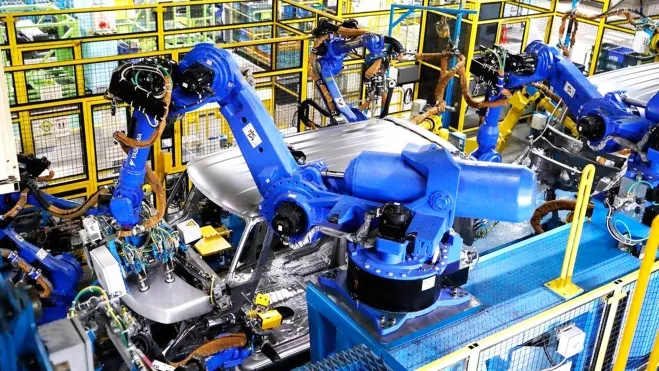
Toyota is also accelerating industrial automation
Honda is not the only Japanese manufacturer betting on this transformation. Toyota is developing its ELEY robot, designed for tasks such as supplying and placing components, as part of a broader strategy to automate its facilities.
The figures cited by Toyota illustrate the potential scale of this change: the company estimates that its industrial network, affiliated companies, and suppliers may need around 400,000 robots to modernize their processes. This projection includes conventional industrial machines, logistics systems, and humanoid robots; it does not mean they will install 400,000 humanoid robots. The potential annual investment has been estimated at around one trillion yen starting in 2028, though this is not a final commitment to spending.
The development of robots capable of manipulating parts presents a technical challenge different from automating welding or transporting components between stations. These systems must adapt to parts with varying geometries, operate with precision, and maintain safety conditions suitable for human presence.
Therefore, the outlook is not one of factories entirely operated by humanoid robots in the short term. It involves production where conventional robots, new manipulation systems, and human workers share tasks according to their respective capabilities.